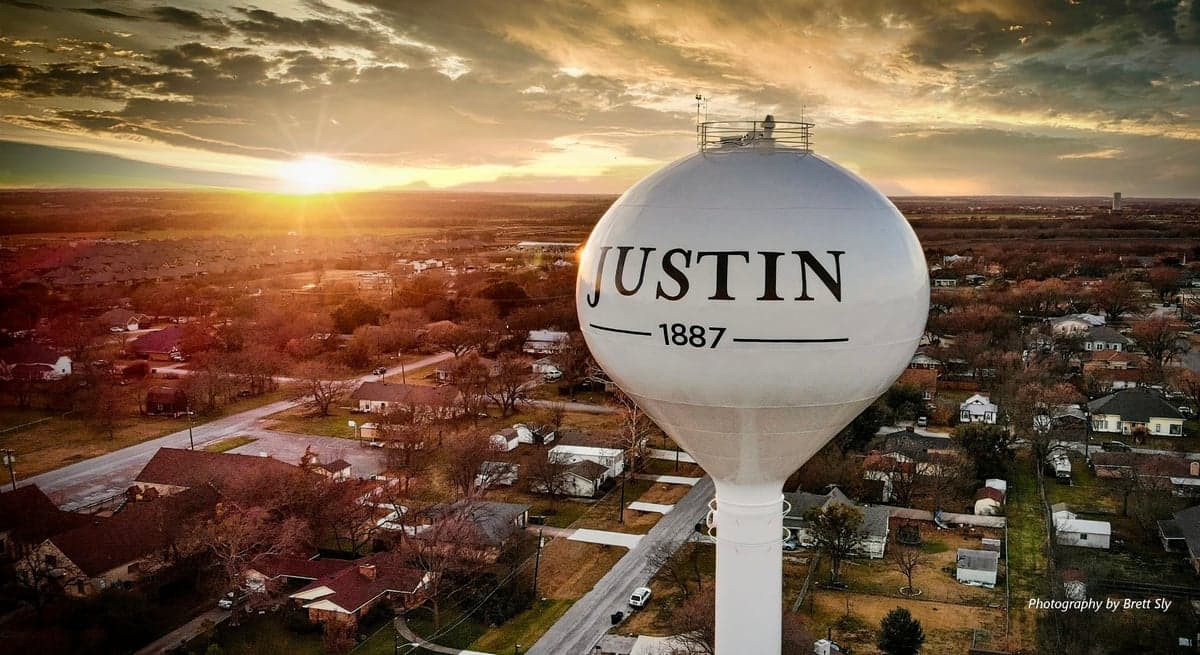
Photo: Wikipedia
Strategic Assessment of Justin, TX
Meaningful friction. Expect exposure to either population pressure, blast zones, or natural disaster risk. Consider buying a retreat property.
What does the Strategic Assessment tell us?
Our Strategic Assessment grades tactical survivability of an area. Major population centers, military targets, fallout zones, natural disasters, and border exposure all drive risk — lower exposure means a more defensible position in a crisis.
This is heavily inspired by Joel Skousen's Strategic Relocation book. Highly recommended you checkout the book ($)What does this tell us?
Our Strategic Assessment grades tactical survivability of an area. Major population centers, military targets, fallout zones, natural disasters, and border exposure all drive risk — lower exposure means a more defensible position in a crisis.
This is heavily inspired by Joel Skousen's Strategic Relocation book. Highly recommended you checkout the book ($)Strategic Pillars
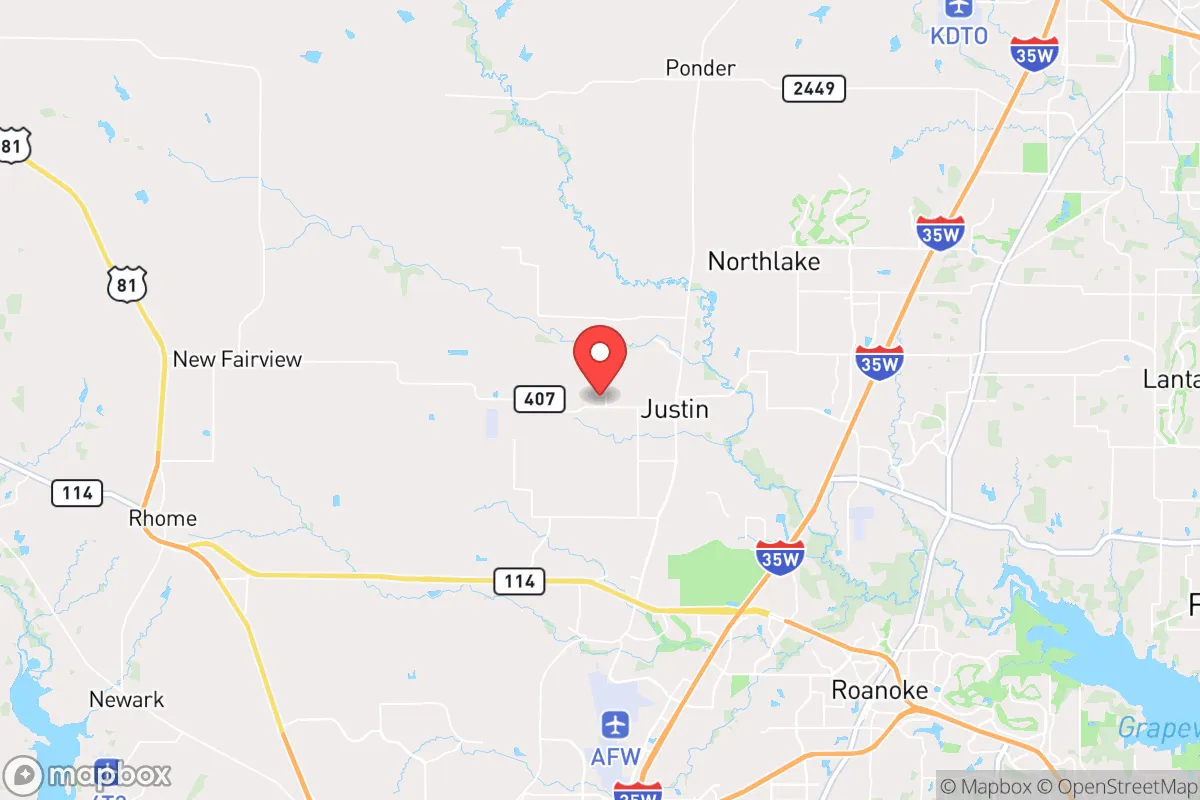
Key Distances
Regional Safe Places
Below is our recommended "safe zones" in Texas and the surrounding area based on our strategic heuristics. For most people, it's unrealistic to live in a “safe zone” full-time due to work, family or other personal reasons. They tend to be more rural. However, many of these areas are perfect for second homes and retreat properties that double as a vacation home or even a short-term rental.

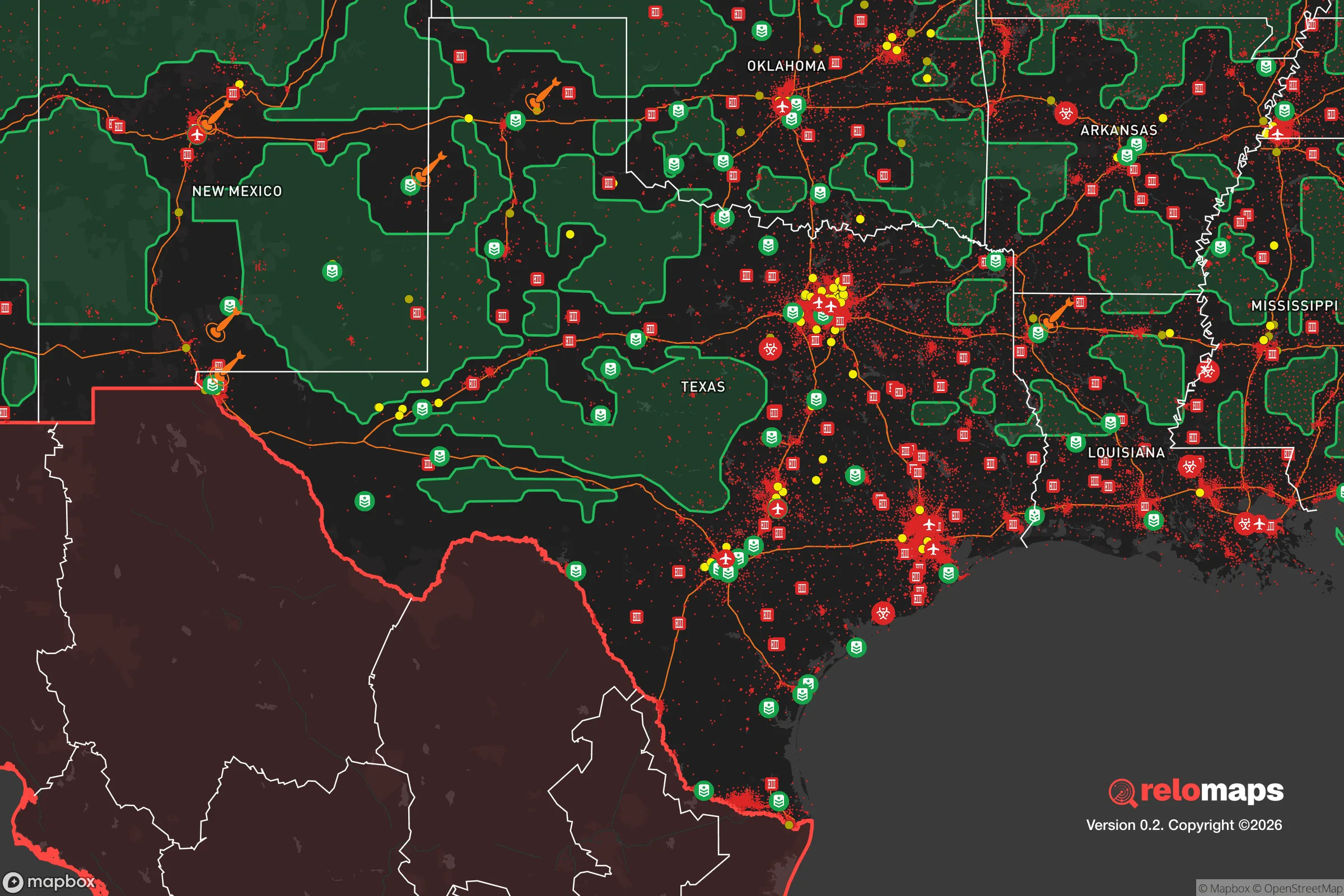


Important Note: For informational purposes only. This does not mean nothing bad ever happens in the green zones. Please use common sense. This is based on public data and modeled with AI. We tried to take a conservative approach but mistakes happen. We update this regularly as new information becomes available.
Solar Generator Recommendations
Backup power matters more here than in safer locations. We've picked three solar generators across budgets and capacity tiers — start with the budget unit if you only need a few essentials, or step up if you want to run a fridge and HVAC for days at a time.
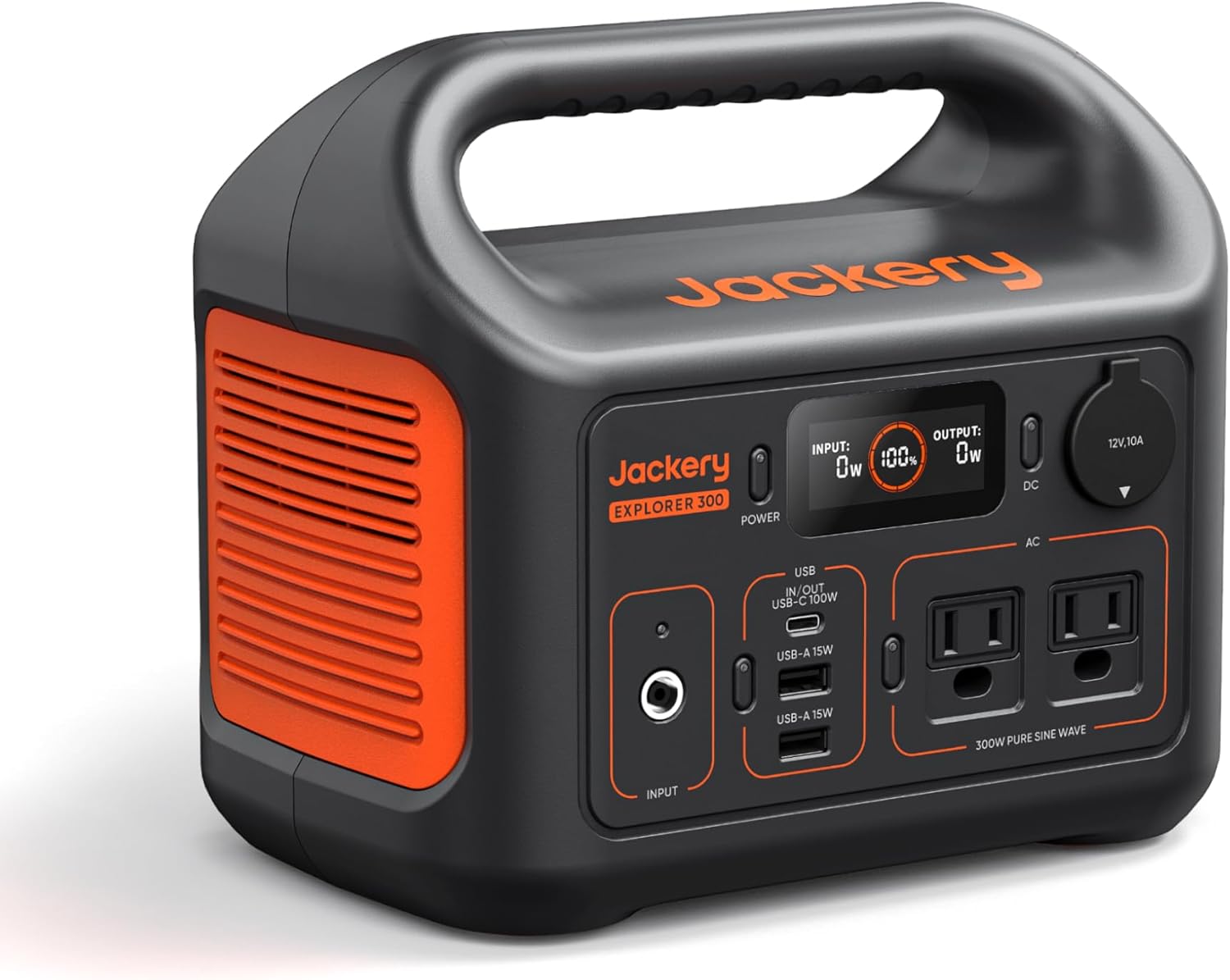
Jackery Portable Power Station Explorer 300
Budget OptionPower on the Go: Weighing only 11 lbs, it's convenient to set up and store with book-sized foldable solar panels

BLUETTI Portable Power Station AC180
Designed for both indoor and outdoor scenarios, AC180 is highly capable as it has a robost capacity and continuous output power.

EF ECOFLOW DELTA Pro Ultra Power Station
Upgraded PickEcoFlow DELTA Pro Ultra is a whole-home energy system designed to grow with your family. Integrated with the Smart Home Panel 2, it scales to meet your evolving energy needs — keeping your home powered, intelligent, and secure through every stage of life.
We earn a commission, at no additional cost to you.
Strategic Assessment Analysis
Justin, Texas, occupies a strategic position in the far northwest corner of the Dallas-Fort Worth metroplex, offering a blend of rural buffer and suburban infrastructure that appeals to relocation-minded individuals and families with a conservative, self-reliant outlook. The town’s resilience profile is shaped by its location roughly 30 miles northwest of downtown Fort Worth, placing it beyond the immediate urban core while still within commuting distance of major employment centers like the AllianceTexas development and the Perot Field Fort Worth Alliance Airport. For a reader weighing disaster readiness and long-term stability, Justin’s advantages lie in its low population density—around 4,000 residents as of 2025—its position atop the Barnett Shale formation, and its access to major highways (US 377 and I-35W) that provide egress routes north and west. However, proximity to the metroplex also introduces risks tied to infrastructure dependency, industrial activity, and potential fallout scenarios that require careful consideration.
Geographic position and natural advantages for long-term stability
Justin sits on the eastern edge of the Cross Timbers ecoregion, a transitional zone between the Blackland Prairie and the rolling hills of North Texas. This geography offers several natural advantages: the area is not prone to hurricanes, storm surges, or significant flooding, as it lies well inland and at an elevation of roughly 700 feet above sea level. The local topography is gently undulating, with clay-loam soils that support moderate agriculture and groundwater recharge. The Trinity Aquifer underlies the region, providing a potential groundwater source for private wells, though most residential properties in Justin rely on municipal water from the City of Justin or the nearby City of Roanoke. The climate is humid subtropical, with hot summers and mild winters, allowing for year-round gardening and livestock management—key considerations for a self-sufficiency plan. The area’s low tornado risk relative to the Dallas-Fort Worth core is notable; Justin sits on the western fringe of the “Tornado Alley” corridor, where severe weather events are less frequent than in counties to the east and north. This geographic buffer, combined with the town’s small footprint, reduces the likelihood of catastrophic infrastructure failure from natural disasters.
Risks, exposures, and proximity to fallout-relevant landmarks
The most significant risk for Justin is its proximity to the Dallas-Fort Worth metroplex, a dense concentration of population, industry, and critical infrastructure that could become a target in a conflict or a source of cascading failures during a major disaster. The town lies roughly 15 miles from the AllianceTexas logistics hub, which includes a major FedEx sorting facility, a BNSF Railway intermodal yard, and the Perot Field airport—all potential choke points in a supply chain disruption. Additionally, Justin is within 25 miles of the Fort Worth Stockyards and the Naval Air Station Joint Reserve Base Fort Worth (formerly Carswell Air Force Base), a military installation that could be a target in a conventional or asymmetric conflict. The Barnett Shale natural gas fields, while an energy asset, also introduce risks: the area has numerous well pads, compressor stations, and pipelines that could pose explosion or contamination hazards in a seismic event or industrial accident. For a relocator concerned about fallout from a nuclear event, Justin’s distance from major cities is a double-edged sword—it is far enough to avoid the immediate blast zone of a strike on Dallas or Fort Worth, but close enough to be affected by radioactive fallout carried by prevailing winds from the south and east. The town’s lack of a dedicated fallout shelter or community preparedness program is a notable gap, though individual homeowners can retrofit basements or storm shelters for dual use.
Practical resilience for a relocator: food, water, energy, and defensibility
For a family or individual prioritizing self-sufficiency, Justin offers a mixed picture. The town’s agricultural heritage is still visible, with several working ranches and farms in the surrounding unincorporated areas of Denton County. This means access to local food sources—farmers’ markets in nearby Roanoke and Argyle, as well as the potential for direct purchase of beef, poultry, and produce from neighboring operations. However, Justin itself has limited retail grocery options; the nearest full-service supermarkets are in Roanoke (4 miles south) or Keller (8 miles southeast), creating a dependency on vehicle travel for food resupply. Water resilience is a concern: the municipal supply comes from the City of Justin’s water treatment plant, which draws from the Trinity Aquifer and surface water from the Elm Fork of the Trinity River. A prolonged power outage or contamination event could disrupt this supply, making a private well or rainwater catchment system a wise investment for long-term residents. The area’s energy grid is part of the ERCOT system, which has shown vulnerability to winter storms (as in 2021) and summer heat waves. Natural gas is the primary heating fuel, and many homes have backup propane tanks, but solar panel adoption is low due to the region’s frequent cloud cover and the absence of strong state incentives. Defensibility is a relative strength: Justin’s low density and rural character mean that a determined household can create a secure perimeter with fencing, motion-sensor lighting, and a clear line of sight to approach roads. The town’s volunteer fire department and small police force (around 10 officers) are adequate for routine incidents but would be overwhelmed in a large-scale emergency, reinforcing the need for personal preparedness and community mutual aid networks.
Overall, Justin presents a viable option for the conservative-leaning relocator who values a quiet, low-density lifestyle with reasonable access to urban resources, but who is willing to invest in redundancy for water, energy, and food. The town’s strategic position—close enough to the metroplex for employment and supply runs, yet far enough to avoid the worst of urban chaos—makes it a middle-ground choice in a resilience assessment. The key vulnerabilities are infrastructure dependency (grid, water, and supply chains) and proximity to potential targets, but these can be mitigated with proactive measures like well drilling, solar-plus-battery systems, and a well-stocked pantry. For a family or individual serious about disaster readiness, Justin offers a solid foundation that requires deliberate effort to fortify, rather than a turnkey solution. The surrounding rural areas of Denton and Wise counties provide additional buffer, and the town’s conservative culture aligns with a self-reliant mindset. In the broader strategic picture, Justin is not a fortress, but it is a defensible outpost—one that rewards preparation and community engagement over passive reliance on government systems.

* Values derived from national, state, county, city and local statistics and may differ in a specific area. Last updated: 2026-11-23T19:49:14.000Z
Narrative content on this page is AI-generated and may contain mistakes. Verify any details that matter before acting on them.
ReloMaps may earn a commission from affiliate links at no extra cost to you.

