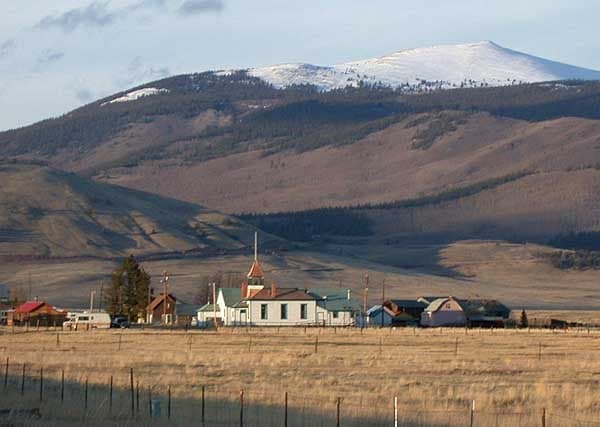
Photo: Wikipedia
Political ClimatePolitical Climate in Jefferson, CO
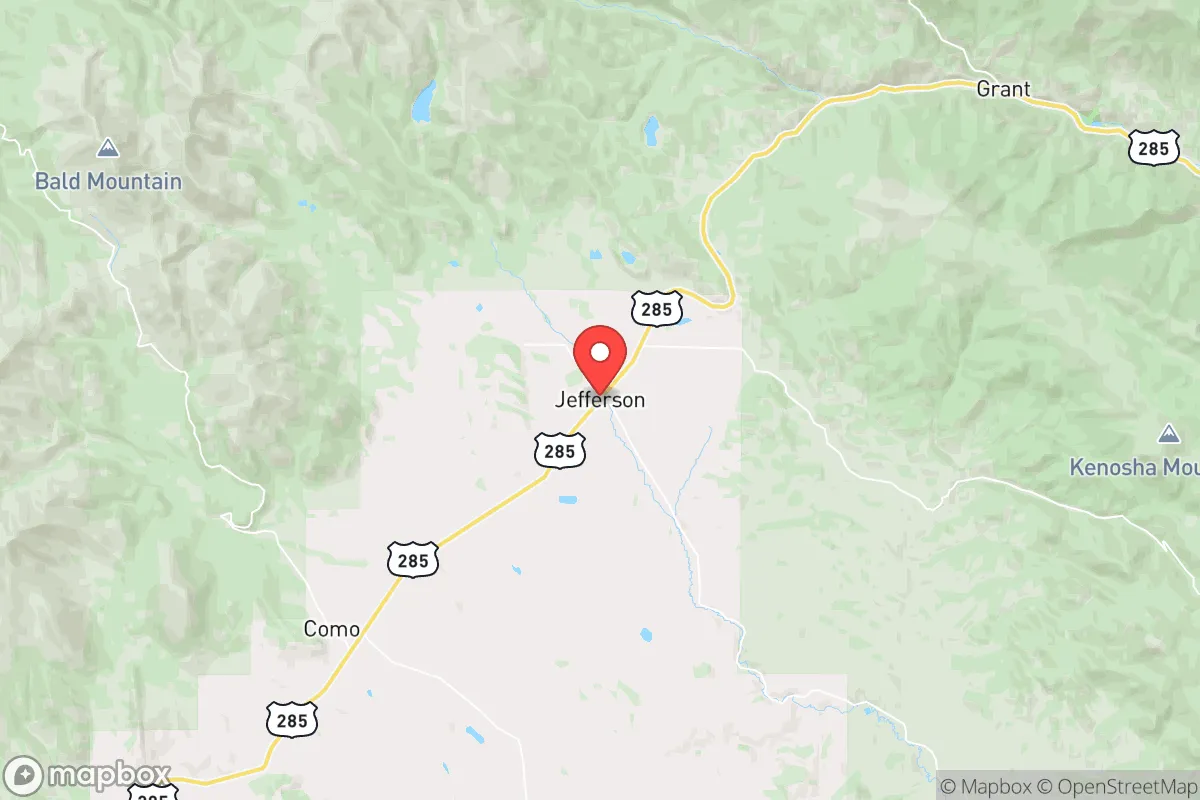
District shown is the primary district for this city’s centroid. Cities may span multiple districts.
Local Political AnalysisPolitical Analysis of Jefferson, CO
Jefferson County, Colorado, has a Cook PVI of D+8, making it significantly more Democratic than the state as a whole, which sits at D+6. This isn't just a number on a map; it’s a lived reality that’s shifted dramatically over the last decade. If you’ve been here as long as I have, you remember when this was a reliably purple county, a place where common-sense fiscal conservatism and a live-and-let-live attitude held sway. Now, the political energy is overwhelmingly progressive, and the old-timers feel it in everything from school board meetings to county commission decisions. The trajectory is clearly toward a deeper blue, and that’s a concern for anyone who values personal freedoms and limited government.
How it compares
To understand Jefferson County’s politics, you have to look at its neighbors. Drive north to Broomfield or east into Denver proper, and you’re in even bluer territory—places where the progressive agenda is fully embraced. But head west into Clear Creek County or south into Douglas County, and the contrast is stark. Douglas County is a stronghold of conservative values, with a Cook PVI that leans Republican. That’s the Jefferson County many of us remember: a place where property rights were respected, taxes were kept low, and the government stayed out of your business. Today, the county’s D+8 rating puts it to the left of the state average, meaning local policies are often more aggressive on environmental regulations, land-use restrictions, and social mandates than what you’d see in the rest of Colorado. The state itself is already trending left, but Jefferson County is sprinting ahead of the pack.
What this means for residents
For a long-time resident, the practical effect is a growing sense of government overreach. You see it in the push for stricter building codes that drive up housing costs, in the county’s aggressive pursuit of renewable energy mandates that can limit your property choices, and in school policies that prioritize ideological conformity over academic excellence. The county commission and school board have become battlegrounds where progressive activists push for policies that feel more like social engineering than good governance. If you value the freedom to run your business without endless red tape, or to raise your kids without a political agenda in the classroom, you’re likely feeling squeezed. The shift isn’t subtle—it’s a steady erosion of the individual liberties that made this area a great place to live.
Looking ahead, the near-term future doesn’t offer much relief. With the county’s demographic trends favoring younger, more urban voters, the political pendulum is unlikely to swing back anytime soon. The long-term picture is even more concerning: as progressive policies become entrenched, you can expect higher taxes, more restrictive land-use laws, and a cultural environment that’s increasingly hostile to traditional values. For those who can, moving to a neighboring county like Douglas or Elbert might be the practical choice. For those who stay, it’s about picking your battles—showing up at local meetings, supporting conservative candidates, and holding the line where you can. The Jefferson County I grew up in is fading, but the fight for personal freedom isn’t over yet.

State Political ClimatePolitical Climate in Colorado
State Political AnalysisPolitical Environment in the State
Colorado has shifted from a classic purple swing state to a solidly blue one over the past two decades, now carrying a Cook PVI of D+6. The Democratic coalition is anchored by the Denver-Boulder-Aurora metroplex and the I-25 corridor, while the Eastern Plains, Western Slope, and southern mountain counties remain reliably red. The state’s trajectory has been a steady march leftward since 2004, when it voted for George W. Bush, but the real acceleration came after 2016, with Democrats now holding every statewide office and both chambers of the legislature.
Urban vs. rural divide
The political map of Colorado is a tale of two states. The Front Range urban corridor—Denver, Boulder, Fort Collins, and Colorado Springs—contains roughly 80% of the population. Denver and Boulder are deep blue strongholds, routinely delivering 70-80% of the vote to Democrats. Fort Collins, home to Colorado State University, has trended blue over the last decade, while Colorado Springs remains the state’s largest conservative redoubt, though even it has shifted leftward in recent cycles. The rural Eastern Plains—places like Yuma, Burlington, and Lamar—vote Republican by margins of 60-70%, but their populations are tiny. The Western Slope, including Grand Junction and Montrose, is reliably red, but the resort counties of Pitkin (Aspen), Summit, and Eagle have become increasingly Democratic as wealthy out-of-state transplants reshape the electorate. The key battleground has been the suburban ring around Denver—Jefferson, Arapahoe, and Douglas counties. Douglas County, once a GOP stronghold, flipped to Biden in 2020 and has not looked back, a bellwether for the state’s overall shift.
Policy environment
Colorado’s policy environment reflects its Democratic trifecta. The state income tax is a flat 4.4%, down from 4.63% in 2020 thanks to a voter-approved Taxpayer Bill of Rights (TABOR) refund mechanism, but property taxes have risen sharply, especially in the Front Range, due to surging home values and local mill levies. The regulatory posture is among the most aggressive in the Mountain West. The state has a strict renewable energy mandate (100% clean electricity by 2040), a paid family leave program funded by payroll taxes, and a red-flag gun law (HB 19-1177) that allows courts to temporarily seize firearms from individuals deemed a risk. Education policy is dominated by the Colorado Department of Education, which has pushed progressive curricula and gender-inclusive policies; school choice exists via charter schools, but the state has resisted voucher programs. Healthcare is heavily regulated, with a state-run reinsurance program that has stabilized premiums but limited insurer competition. Election laws are among the most liberal: universal mail-in ballots, same-day registration, and automatic voter registration at the DMV. There is no voter ID requirement for mail ballots, though in-person voters must show ID.
Trajectory & freedom
Colorado is becoming less free by nearly any measure of personal liberty, especially for conservatives. The 2023 legislative session saw a flurry of bills that expanded government control: a ban on so-called “assault weapons” (HB 24-1292) that effectively outlaws many common semi-automatic rifles, a 10-day waiting period for all firearm purchases, and a requirement that gun dealers obtain state licenses. Parental rights have been eroded by a 2023 law that prohibits schools from notifying parents if a child changes their gender identity or pronouns without the child’s consent. Medical autonomy took a hit with a 2022 law that codified abortion access and removed parental notification requirements for minors. Property rights are under pressure from a 2024 law that allows local governments to impose rent control on mobile home parks, and from a statewide land-use reform bill (SB 23-213) that preempts local zoning to force higher-density housing near transit. On the positive side for liberty, Colorado has legalized recreational marijuana and maintains a relatively low flat income tax, but the trend is unmistakably toward more regulation, higher costs, and less individual discretion.
Civil unrest & political movements
Colorado has seen significant political activism on both sides. The 2020 George Floyd protests in Denver turned violent, with property damage and clashes between police and demonstrators that lasted weeks. The state’s sanctuary policies—Denver and Boulder County limit cooperation with federal immigration enforcement—have made Colorado a destination for illegal border crossers, straining public services. In 2023, Denver spent over $40 million on migrant housing and services, sparking backlash from residents. On the right, the Colorado Republican Party has fractured between establishment and populist factions, with the state party endorsing election integrity audits and challenging the 2020 results. The “Weld County secession” movement, which proposed creating a 51st state from rural Colorado counties, gained traction in 2013 and 2019 but has stalled. Election integrity remains a flashpoint: the 2020 election saw no evidence of widespread fraud, but distrust persists, especially in rural areas where mail-in ballots are viewed skeptically. Visible flashpoints for a new resident include frequent protests at the state capitol, competing rallies on issues like gun rights and abortion, and a palpable cultural divide between the urban core and the rest of the state.
Projection
Over the next 5-10 years, Colorado will likely become more Democratic and more regulated. In-migration from California, Texas, and the Northeast continues to fuel the blue shift, particularly in the Denver suburbs and mountain resort towns. The state’s population is projected to grow by 1-2% annually, with most newcomers settling in the Front Range. This demographic change will reinforce the Democratic majority, making a Republican statewide win increasingly unlikely. Expect further gun control measures, including a possible magazine capacity ban and universal background checks. Housing costs will remain high due to supply constraints and the new land-use mandates, pushing working-class families further out. The state’s energy transition will accelerate, with oil and gas production declining as regulations tighten. For conservatives, the outlook is grim: Colorado will continue to be a laboratory for progressive policy, with little chance of a political realignment absent a major economic or security crisis.
For a new resident, the bottom line is this: Colorado offers stunning natural beauty, a strong economy, and a relatively low income tax, but it comes with a heavy regulatory hand, rising costs, and a political culture that is increasingly hostile to conservative values. If you value gun rights, parental authority, and limited government, you will find yourself swimming against a strong current. The state is best suited for those who can afford the lifestyle and are willing to accept a trade-off between personal freedom and quality of life. If you’re moving here, choose your county carefully—Douglas or El Paso counties offer a more conservative environment, while Boulder and Denver will feel like a different country entirely.
* Values derived from national, state, county, city and local statistics and may differ in a specific area. Last updated: 2026-05-28T15:55:53.000Z
Narrative content on this page is AI-generated and may contain mistakes. Verify any details that matter before acting on them.
ReloMaps may earn a commission from affiliate links at no extra cost to you.

