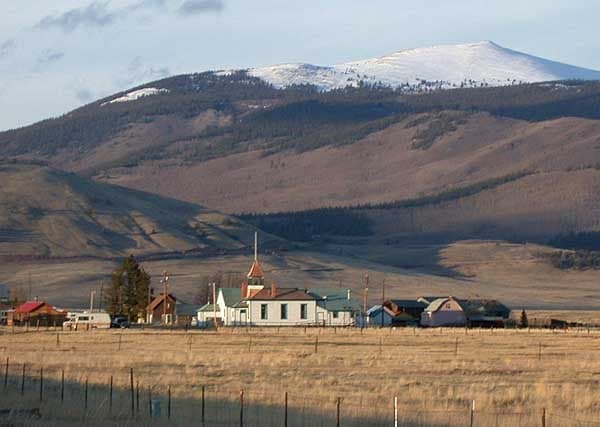
Photo: Wikipedia
Personal Sovereignty in Jefferson, CO
Viable for self-reliance. Generally workable, though some barriers may limit total independence.
What does Personal Sovereignty tell us?
Personal Sovereignty measures your capacity for self-reliance and independence with minimal government friction. Higher scores mean fewer barriers between you and the way you want to live... but it assumes you have the space you need and good neighbors.
What does this tell us?
Personal Sovereignty measures your capacity for self-reliance and independence with minimal government friction. Higher scores mean fewer barriers between you and the way you want to live... but it assumes you have the space you need and good neighbors.
State Policy
Energy independence: Net exporter (110% of energy produced in-state)
Personal Liberty
Homesteading

Personal Liberty Analysis
Jefferson County, Colorado, offers a notably high degree of personal sovereignty compared to the Denver metro core, but it is not a libertarian free zone. The county’s political geography is a patchwork: the mountainous western half (Conifer, Evergreen, Bailey) leans heavily conservative and self-reliant, while the suburban eastern edge (Lakewood, Golden) trends more progressive and regulatory. For a survivalist or prepper mindset, the key takeaway is that Jefferson County provides a viable buffer—close enough to urban resources but far enough to avoid the worst of metro-area overreach. However, state-level mandates from Denver (especially on energy, water, and health) still apply, meaning you must pick your location within the county carefully to maximize autonomy.
Tax burden and regulatory posture: How much the state and county take from your wallet and freedom
Colorado’s state income tax is a flat 4.4% as of 2025, with a history of modest rate reductions under the Taxpayer’s Bill of Rights (TABOR). This constitutional amendment, unique to Colorado, limits state revenue growth and requires voter approval for tax increases—a structural safeguard that appeals to those wary of government expansion. Jefferson County itself imposes a property tax rate around 0.55% of actual value, which is moderate for the Front Range. However, the county’s assessed valuation has surged over 40% since 2020, meaning property tax bills have risen even with a stable mill levy. Sales tax is a combined 4.5% state plus 1.0% county, with some municipalities adding their own (e.g., Golden tacks on 2.5%). For a prepper, the regulatory posture is more concerning: Jefferson County enforces strict building codes in unincorporated areas, including wildfire mitigation zones that mandate defensible space and fire-resistant materials. This is a double-edged sword—it reduces risk but also limits your ability to build off-grid structures without permits. The county also has a minimum lot size of 35 acres in many rural zones for new subdivisions, which preserves space but drives up land costs. Overall, the tax burden is manageable, but the regulatory creep from Denver—especially on energy (state mandates for electric vehicles by 2032) and water rights—means you cannot fully escape government oversight.
Self-defense and gun law specifics: What you can own, carry, and where you can't
Colorado is a “shall-issue” state for concealed carry permits, and Jefferson County’s sheriff historically processes applications efficiently—typically within 30 days. The state does not require a permit for open carry, but Jefferson County prohibits open carry in county buildings and parks, a local ordinance that preempts state law. For preppers, the critical detail is magazine capacity: Colorado bans the sale of magazines holding more than 15 rounds, though pre-ban magazines are grandfathered and legal to possess. This restriction, passed in 2013, has survived legal challenges and is actively enforced. Private firearm sales between individuals do not require a background check in Colorado, but all sales from licensed dealers do. The state also has a “red flag” law (Extreme Risk Protection Order) that allows family or law enforcement to petition for temporary firearm seizure. Jefferson County’s sheriff has publicly stated he will not enforce orders he deems unconstitutional, but the law remains on the books and can be used by a judge in the county. For those prioritizing self-defense, the practical reality is: you can own most rifles and handguns, but you are limited on magazine capacity, and you must be aware of local restrictions on carry in government spaces. The county’s rural areas are generally gun-friendly, but the suburban east is more restrictive in practice.
Self-reliance and homesteading viability: Lot sizes, zoning, and off-grid feasibility
Jefferson County’s zoning is a mixed bag for homesteaders. In the unincorporated mountain areas (Conifer, Pine, Buffalo Creek), the minimum lot size is typically 2.5 to 5 acres, but many parcels are 10 acres or more. This allows for gardens, small livestock (chickens, goats, even a cow on larger plots), and rainwater collection—though Colorado law restricts rainwater harvesting to properties with a well or a pond permit. Off-grid solar is legal and common, but the county requires a permit for any electrical system over 1 kW, and net metering rules with Xcel Energy can be bureaucratic. Composting toilets are allowed in rural zones where septic systems are impractical, but you must get a county health department permit. The biggest hurdle is water: new wells in the mountain areas can cost $20,000–$40,000 to drill, and water rights are complex. Many properties rely on cisterns with delivered water, which adds a recurring cost. For a prepper, the viability is real but requires capital: you can achieve significant self-reliance on 5+ acres with a well, solar, and a greenhouse, but you will still pay property taxes and face county inspections for any new structures. The county’s wildfire risk (high in many areas) also means you must invest in fire mitigation—clearing brush, metal roofs, and possibly a pond for firefighting water. It is not a free homestead, but it is one of the better options within an hour of Denver.
Personal liberties: Parental rights, medical autonomy, speech, and property
Colorado’s state government has increasingly encroached on parental rights, particularly with the 2023 law requiring schools to allow students to use names and pronouns without parental notification. Jefferson County Public Schools (the largest district) has implemented this policy, which is a red flag for conservative parents. However, the county also has several charter schools and homeschooling co-ops that operate with more autonomy. Medical autonomy is mixed: Colorado has legalized medical aid-in-dying (2016) and recreational marijuana (2012), but it also mandates vaccines for school attendance (with limited exemptions) and has strict telemedicine abortion laws. For those concerned with medical freedom, the county has a growing network of independent clinics and naturopathic practitioners, but hospital systems (Centura, UCHealth) follow state protocols. Free speech is protected under the Colorado Constitution, which has stronger protections than the U.S. Constitution in some areas (e.g., political speech on private property open to the public). Property rights are generally respected, but the county’s land-use regulations—especially in wildfire zones and near water bodies—can feel intrusive. The Colorado Open Records Act gives citizens strong access to government documents, which is a tool for oversight. Overall, Jefferson County offers more personal liberty than Denver or Boulder, but less than rural counties like Park or Teller. The key is choosing the right neighborhood: the western mountain communities are more aligned with self-reliance values, while the eastern suburbs lean collectivist.
Compared to other Front Range counties, Jefferson County strikes a pragmatic balance for the sovereignty-minded. It is not as free as rural Las Animas or Costilla counties, where zoning is minimal and gun laws are looser, but it offers better access to supplies, healthcare, and community networks. The county’s active prepper community (with groups like the Colorado Preparedness Network meeting in Conifer) provides a social infrastructure that raw rural areas lack. The biggest threat to personal sovereignty here is state-level creep—Denver’s progressive legislature continues to pass laws on energy, health, and education that override local control. If you are willing to navigate those mandates and invest in a well and solar, Jefferson County’s western half is a strong base for a self-reliant lifestyle. Just know that you are buying into a buffer zone, not a fortress.

* Values derived from national, state, county, city and local statistics and may differ in a specific area. Last updated: 2026-05-28T15:55:53.000Z
Narrative content on this page is AI-generated and may contain mistakes. Verify any details that matter before acting on them.
ReloMaps may earn a commission from affiliate links at no extra cost to you.

