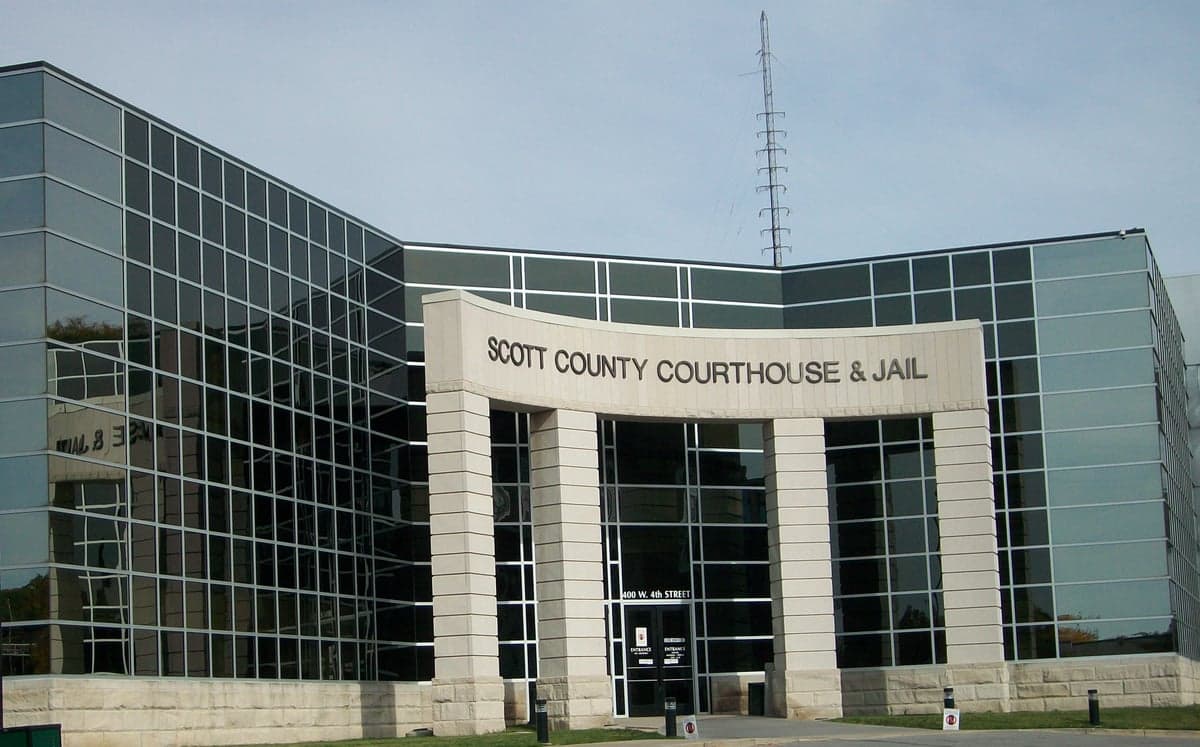
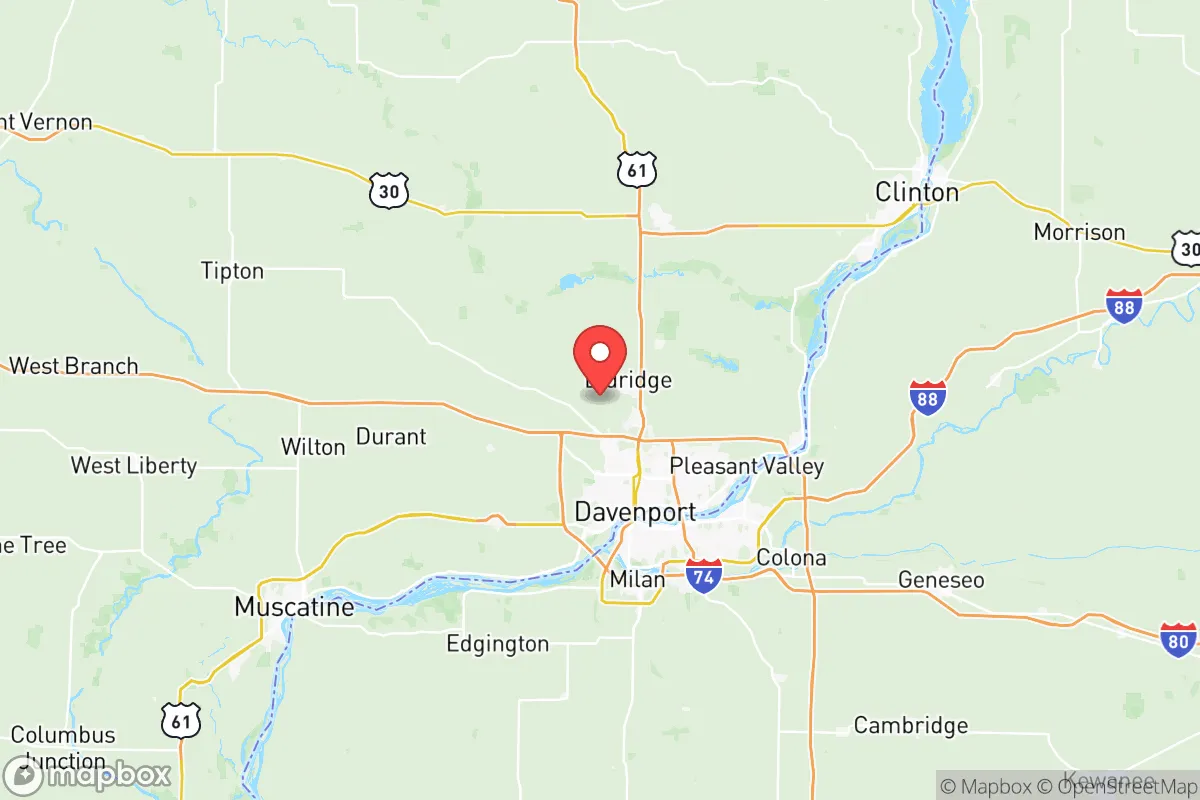
Photo: Wikipedia
Quality of Life in Scott County
A livable area that tracks near national norms for affordability, walkability, and neighborhood health.
What does Quality of Life tell us?
Quality of Life measures an area by evaluating factors like cost of living, nearby amenities, country club access, airport proximity, socioeconomic signals and neighborhood character. For large states, this is a general average — quality of life can vary dramatically between metro areas, suburbs, and rural communities within the same state.
What does this tell us?
Quality of Life measures an area by evaluating factors like cost of living, nearby amenities, country club access, airport proximity, socioeconomic signals and neighborhood character. For large states, this is a general average — quality of life can vary dramatically between metro areas, suburbs, and rural communities within the same state.
Cost of Living
20% below national average
126%
The Real Cost of Living in Scott County for 2026
| Tier | Individual | Family (4) |
|---|---|---|
| Survival | $15k | $29k |
| Comfortable | $41k | $61k |
| Luxury | $136k+ | $211k+ |
| Elite (Top 5%) | $160k+ | $249k+ |
Quality-of-Life Analysis
Scott County, Iowa, offers a broad quality-of-life spectrum anchored by the urban energy of the Quad Cities and stretching into quiet, agricultural towns and unincorporated rural pockets. The county’s overall cost of living index sits at 80 (20% below the U.S. average), with a median home value of $212,500 and median rent of $958, making it accessible to a wide range of households. The average commute of just under 20 minutes means residents in even the most rural corners can reach the county’s job centers without a punishing drive. This mix attracts everyone from young professionals and families seeking walkable neighborhoods to farmers and retirees looking for land and quiet.
Largest town(s) & population centers
Davenport is the county’s largest city and its economic and cultural hub, home to the Figge Art Museum, the Putnam Museum, and the Quad Cities River Bandits minor-league baseball team. Daily life here offers a dense mix of dining, nightlife, and riverfront recreation, with neighborhoods ranging from the historic Gold Coast district to newer suburban-style developments on the city’s west side. Bettendorf and Eldridge function as the primary suburban centers, with Bettendorf known for its highly rated Pleasant Valley Community School District and a concentration of retail along Middle Road. Eldridge, while smaller, has seen steady residential growth and offers a quieter suburban feel with easy access to Davenport’s amenities. These population centers provide the county’s highest concentration of jobs, healthcare facilities, and public transit options, including the CitiBus system serving the Quad Cities metro.
Smaller towns & rural pockets
South of the urban core, Walcott is a small town of roughly 1,600 residents known for the Iowa 80 Truckstop, the world’s largest, but its residential side offers a classic small-town Main Street and a strong sense of community. Blue Grass and Buffalo, both along the Mississippi River, are former railroad and river towns that now serve as bedroom communities for Davenport and Bettendorf, with Buffalo offering direct river access and a handful of local eateries. Le Claire, best known as the hometown of the American Pickers television show, draws tourists to its riverfront antique shops but maintains a quiet residential character. Further inland, Dixon and Donahue are unincorporated rural pockets where homes sit on acreage and the nearest grocery store may be a 15-minute drive. These areas lack municipal services like public water and sewer in many cases, but offer privacy, lower property taxes, and space for hobby farms or horses.
Cost & lifestyle range
The cost spread across Scott County is significant. At the high end, Bettendorf and the Pleasant Valley area command median home values well above the county average, often exceeding $300,000, with newer subdivisions and top-ranked schools driving demand. Rentals in these areas are scarce and typically above $1,200 per month. At the low end, Davenport’s central city neighborhoods and Buffalo offer median home values closer to $150,000 and rents under $800, making homeownership attainable for first-time buyers and lower-income households. Rural properties in Dixon and Donahue can be found for under $200,000, but buyers should budget for well maintenance, septic system costs, and longer drives to schools and shopping. Lifestyle varies accordingly: Bettendorf residents enjoy walkable parks, bike trails, and a full calendar of community events, while rural residents trade those amenities for acreage, lower noise, and the ability to keep livestock or large gardens.
Scott County suits a wide range of residents, from Quad Cities commuters who want urban amenities and short drives to work, to families prioritizing school districts in Bettendorf or Pleasant Valley, to rural homesteaders seeking affordable land near a metro area. The county’s low cost of living and short average commute make it particularly attractive for remote workers and tradespeople who need to reach job sites across the Quad Cities region without living in a high-cost city.

Crime in Scott County
Generally safer than 69% of comparable U.S. locations.
Violent CrimeViolent Crime Analysis
Property CrimeProperty Crime Analysis
Crime Analysis
Scott County, Iowa, reports a violent crime rate of 230.9 incidents per 100,000 residents and a property crime rate of 1,168.5 per 100,000, placing it in a middle tier for safety within the state. The county’s overall crime picture is heavily influenced by its largest city, Davenport, which accounts for a disproportionate share of reported offenses, while smaller communities like Bettendorf and Le Claire generally experience lower incident rates. Residents considering a move to the Quad Cities region should weigh these figures against the specific neighborhood and municipal policing strategies that create significant variation across the county.
Crime in context
Scott County’s violent crime rate of 230.9 per 100,000 sits roughly 20% below the national average of approximately 380 per 100,000, but it runs notably higher than the Iowa state average of about 210 per 100,000. Property crime in the county, at 1,168.5 per 100,000, is elevated compared to both the state average (roughly 1,050) and the national average (approximately 1,100). These numbers are pulled upward primarily by Davenport, where concentrated property offenses—vehicle theft, burglary, and larceny—are more common. In contrast, Bettendorf and Eldridge report property crime rates that are often half the county average, reflecting stronger neighborhood watch programs and more responsive local policing. The disparity between the county’s largest urban center and its suburban and rural towns is the single most important factor in understanding these aggregate statistics.
What residents experience
Daily life in Scott County varies sharply by jurisdiction. In Davenport, residents frequently cite concerns about property crime and drug-related offenses, particularly in the central city and areas near Interstate 80. The Scott County Attorney’s office, which prosecutes felony cases countywide, has faced criticism from some residents for what they perceive as a lenient approach to repeat offenders and drug possession cases. Progressive prosecutorial policies in the county have raised alarms among safety-conscious homebuyers, as critics argue that reduced sentencing and diversion programs for property and drug crimes contribute to higher recidivism and embolden offenders. In Bettendorf and the smaller town of Walcott, residents report a markedly different experience—lower police response times, fewer visible signs of disorder, and a stronger sense of security in public spaces. The contrast is most evident in property crime: a resident of Bettendorf is far less likely to experience a break-in or vehicle theft than a resident of central Davenport.
Neighborhood-level variation
Within Davenport itself, safety is not uniform. Neighborhoods west of Marquette Street and south of Locust Street tend to report higher concentrations of violent and property crime, while areas near Vander Veer Park and the Village of East Davenport see lower incident rates. Bettendorf’s residential districts east of Middle Road are consistently among the safest in the county, with crime rates comparable to small towns like Le Claire and Princeton. For those considering a move to Scott County, the choice of municipality and even specific neighborhood within Davenport can mean the difference between living in an area with crime rates near the state average and one where rates are double or triple that benchmark. Prospective residents should examine block-level crime maps and consult local police department reports, as the county’s aggregate numbers obscure wide internal disparities that directly affect daily safety and property values.
* Values derived from national, state, county, city and local statistics and may differ in a specific area. Last updated: 2026-07-21T22:39:08.000Z
Narrative content on this page is AI-generated and may contain mistakes. Verify any details that matter before acting on them.
ReloMaps may earn a commission from affiliate links at no extra cost to you.

