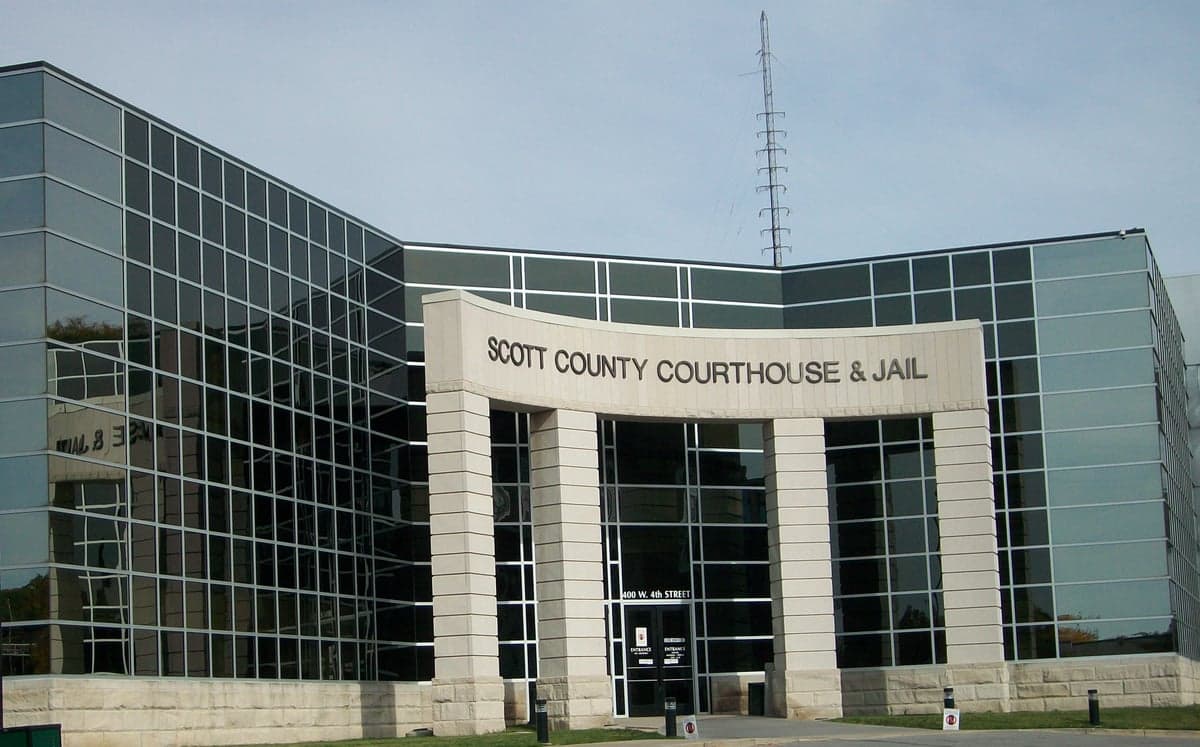
Photo: Wikipedia
Personal Sovereignty in Scott County
Viable for self-reliance. Generally workable, though some barriers may limit total independence.
What does Personal Sovereignty tell us?
Personal Sovereignty measures your capacity for self-reliance and independence with minimal government friction. Higher scores mean fewer barriers between you and the way you want to live... but it assumes you have the space you need and good neighbors.
What does this tell us?
Personal Sovereignty measures your capacity for self-reliance and independence with minimal government friction. Higher scores mean fewer barriers between you and the way you want to live... but it assumes you have the space you need and good neighbors.
State Policy
Energy independence: Importer (50% of energy produced in-state)
Personal Liberty
Homesteading

Personal Liberty Analysis
Scott County, Iowa, offers a notably high degree of personal sovereignty, blending a conservative-leaning regulatory environment with the practical freedoms of the Midwest. Residents in the county seat of Davenport and surrounding communities like Bettendorf, LeClaire, and Eldridge experience a lighter touch from local government compared to many urban areas, particularly in matters of taxation, self-defense, and property use. While Iowa’s state-level framework provides a strong baseline for individual liberty, Scott County’s local implementation—especially outside the core urban corridor—reinforces an autonomy-friendly atmosphere for families and single individuals alike.
Tax burden and regulatory posture in Scott County
Iowa’s state tax structure is undergoing a significant shift toward lower burdens, with a flat individual income tax rate of 3.8% scheduled to drop to 3.65% by 2026, and a corporate rate falling to 5.5%. Scott County’s property tax rates are moderate for the state, with the countywide levy hovering around $12.50 per $1,000 of assessed value, though rates vary by city—Davenport’s combined city-school levy is slightly higher than in Bettendorf or LeClaire. The regulatory posture is generally permissive: there is no countywide zoning overlay for agricultural or rural residential parcels, meaning landowners in unincorporated areas near Blue Grass or Buffalo face fewer permitting hurdles for accessory structures, home businesses, or livestock. Occupational licensing is not a local issue, but Iowa’s state-level licensing requirements are less onerous than in neighboring Illinois, a fact that appeals to cross-border workers and entrepreneurs. The absence of a county income tax and the state’s phase-out of inheritance taxes further reduce the fiscal drag on personal autonomy.
Self-defense and gun law specifics in Scott County
Iowa is a “shall-issue” state for concealed carry permits, and Scott County’s sheriff’s office processes applications efficiently, with typical turnaround under 30 days. The state’s permitless carry law, effective since 2021, allows any legal resident 21 or older to carry a concealed firearm without a permit, though a permit remains useful for reciprocity in other states. Scott County’s gun culture is robust but not extreme; ranges like the Davenport Gun Club and Bettendorf’s Izaak Walton League offer training and competition. Local law enforcement in cities like Eldridge and LeClaire is generally supportive of Second Amendment rights, and there are no county-specific restrictions beyond state law. Stand-your-ground principles apply statewide, and the castle doctrine protects use of force in one’s home or vehicle. For a relocation-minded reader, the key takeaway is that Scott County offers full exercise of self-defense rights without the friction found in more restrictive jurisdictions like Cook County, Illinois, just across the river.
Self-reliance and homesteading viability across Scott County
Homesteading and off-grid living are viable in Scott County’s rural townships, though feasibility varies sharply by location. In unincorporated areas near Walcott and Stockton, minimum lot sizes for agricultural zoning are typically 5 acres, and there are no county-level bans on rainwater collection, composting toilets, or solar panel installation. The county’s building code applies only to new construction and major renovations, leaving existing structures largely unregulated for owner-occupied repairs. Off-grid energy is straightforward: Iowa’s net metering policy allows grid-tied solar, and standalone systems require no county permit. However, within Davenport and Bettendorf city limits, zoning restricts livestock (no chickens in most residential zones) and imposes stricter setback requirements for sheds and workshops. LeClaire’s historic district adds another layer of design review for exterior changes. For those seeking maximum self-reliance, rural parcels near Blue Grass or Buffalo offer the best combination of low regulation, affordable land (typically $5,000–$8,000 per acre), and proximity to supplies in the Quad Cities.
Personal liberties in Scott County: parental rights, medical autonomy, speech, and property
Scott County reflects Iowa’s broader tilt toward individual liberty in several key areas. Parental rights are strongly protected: Iowa law requires parental consent for minors’ medical procedures, and the state’s “Parents’ Bill of Rights” (enacted in 2023) gives parents explicit authority over educational and healthcare decisions. School boards in Bettendorf and Pleasant Valley have been responsive to parental input on curriculum and library materials. Medical autonomy is more constrained—Iowa has a six-week abortion ban (enacted 2023) and requires a 24-hour waiting period, but the county’s health systems (UnityPoint and Genesis) offer a full range of other services without local interference. Free speech is robust, with no county-level restrictions on public assembly or expression; Davenport’s downtown has hosted both political rallies and pride events without incident. Property rights are well-protected: eminent domain is rarely used outside of infrastructure projects, and the county’s assessor’s office provides transparent appeal processes for tax valuations. For a reader prioritizing personal sovereignty, Scott County’s balance of state-level protections and local permissiveness creates a favorable environment, though those seeking maximal medical or educational freedom may find rural counties farther west even less restrictive.
Overall, Scott County offers a strong but not extreme level of personal sovereignty, ranking favorably against most of the Midwest and far ahead of nearby Illinois. The combination of permitless carry, low and falling taxes, minimal rural zoning, and robust parental rights makes it a practical choice for families and individuals who value self-reliance. The main trade-offs are the moderate property tax burden in the urban core and the state’s recent restrictions on medical autonomy, which may matter more to some readers than others. For those comparing relocation options, Scott County’s autonomy environment is roughly on par with other Iowa counties like Johnson or Linn, but with a more conservative tilt and easier access to the amenities of the Quad Cities metro area.

* Values derived from national, state, county, city and local statistics and may differ in a specific area. Last updated: 2026-07-21T22:39:08.000Z
Narrative content on this page is AI-generated and may contain mistakes. Verify any details that matter before acting on them.
ReloMaps may earn a commission from affiliate links at no extra cost to you.

