Photo: Wikipedia
Demographics of Scott County
Affluence Level in Scott County
A middle-class area roughly in line with national averages across income, home values, education, and employment.
People of Scott County
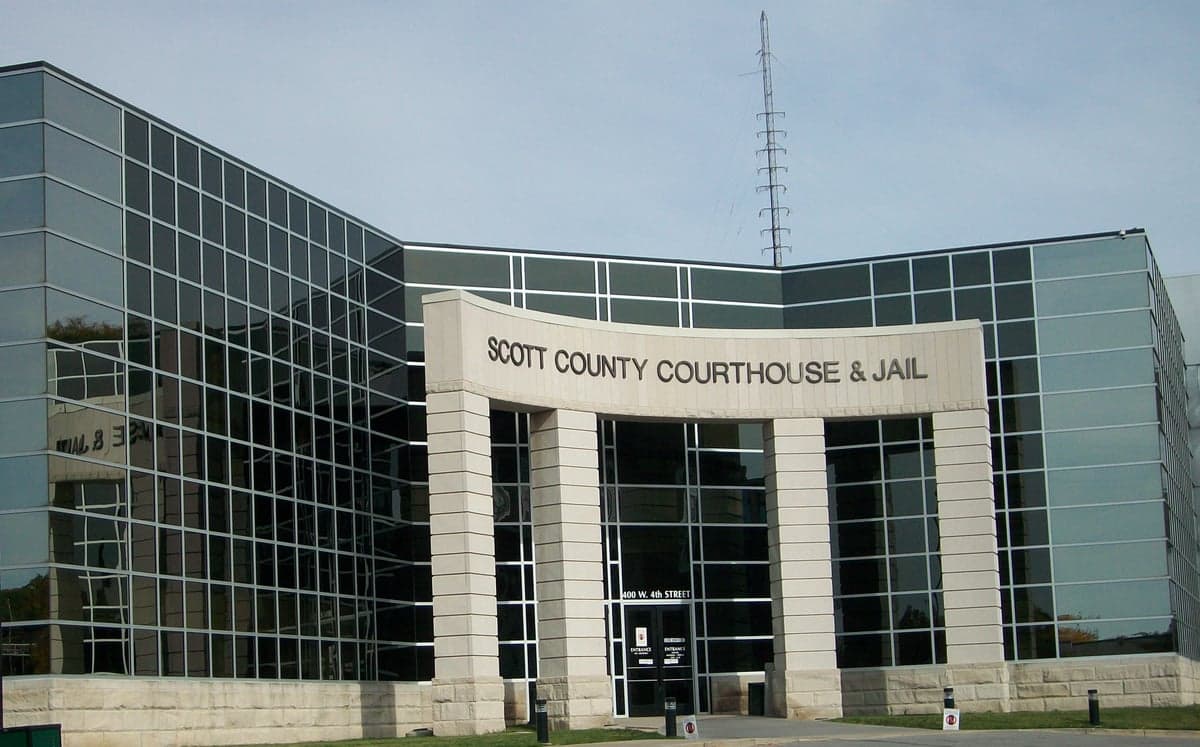
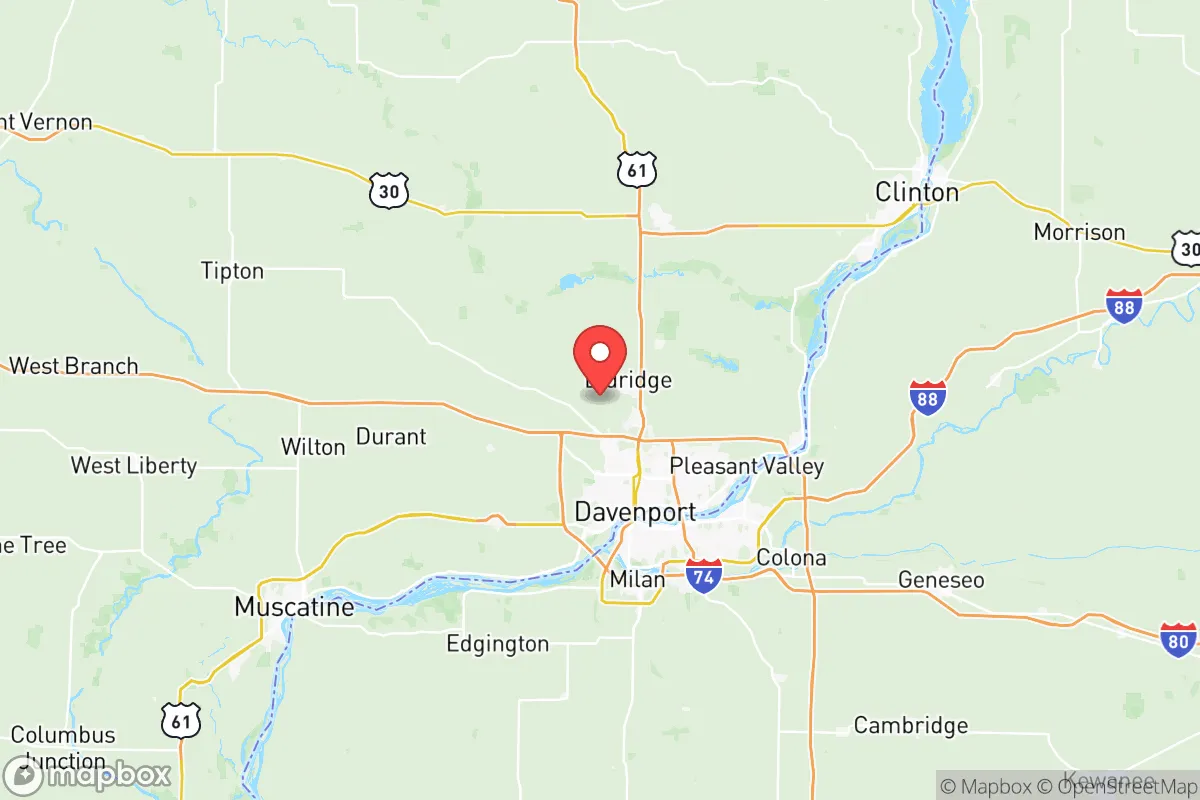
Scott County, Iowa, is home to roughly 174,300 residents, making it the third-most populous county in the state and the anchor of the Quad Cities metropolitan area. Its population is notably less diverse than the national average, with a population that is 77.6% white, 7.2% Hispanic, 7.0% Black, 1.7% East/Southeast Asian, and 1.2% Indian (subcontinent). The county's character is defined by its historic river-town roots, a strong manufacturing and logistics economy, and a cultural identity that blends Midwestern pragmatism with a distinct, working-class pride centered on the Mississippi River.
Settlement & growth (pre-1960)
Before American settlement, the region was inhabited by the Sauk and Meskwaki (Fox) nations, who used the Mississippi River valley for fishing, hunting, and seasonal agriculture. The first permanent American settlers arrived in the 1830s, shortly after the Black Hawk Purchase opened the land to white settlement. The county was officially established in 1837, and the city of Davenport was founded on the river's eastern bank, quickly becoming the region's commercial and political hub. Early settlers were primarily Yankees from New England and New York, drawn by the promise of fertile farmland and river trade.
The first major demographic shift came with the arrival of German immigrants in the 1840s and 1850s. These settlers were attracted by the availability of cheap land and the growing industrial base along the Mississippi. They established strong communities in Davenport and the surrounding townships, particularly in the West End of Davenport and the village of Walcott. German-language newspapers, churches, and social clubs flourished, and the German influence remains visible today in local cuisine, architecture, and family names. A smaller wave of Irish immigrants arrived in the same period, many working on the railroad and in river industries, settling primarily in Davenport's near-north side.
The late 19th and early 20th centuries saw the arrival of Swedish and Danish immigrants, who found work in the county's burgeoning manufacturing sector, including the Rock Island Arsenal and the John Deere plants. These Scandinavian communities concentrated in Bettendorf and Le Claire, where they built Lutheran churches and established tight-knit farming and industrial networks. The county's population grew steadily through the early 1900s, fueled by industrial expansion and the river's role as a transportation artery. By 1960, Scott County was overwhelmingly white, with a small Black population concentrated in Davenport's central neighborhoods, many of whom were descendants of the Great Migration from the South.
Modern era (post-1965)
The 1965 Hart-Cellar Act had a relatively muted effect on Scott County compared to coastal and Sun Belt regions. The county's foreign-born population remains low at just 1.9%, well below the national average. However, the post-1965 period did bring new diversity, primarily through domestic migration and refugee resettlement. The most significant change has been the growth of the Hispanic population, which now stands at 7.2%. This community is largely Mexican-American, with roots in agricultural labor and meatpacking industries that expanded in the 1970s and 1980s. Today, the Hispanic population is concentrated in Davenport's west side and in the smaller communities of Eldridge and Blue Grass, where families have established churches, grocery stores, and cultural organizations.
The Black population, at 7.0%, has remained relatively stable since the 1970s, with most residents living in Davenport's central and near-east neighborhoods. This community is largely multi-generational, with roots in the Great Migration and later waves of domestic migration from Chicago and St. Louis. The East/Southeast Asian community (1.7%) is a more recent addition, with many families arriving in the 1990s and 2000s as professionals in healthcare and engineering, settling in Bettendorf and Davenport's eastern suburbs. The Indian (subcontinent) population (1.2%) is similarly concentrated in Bettendorf and Pleasant Valley, often drawn by jobs at the area's hospitals and the John Deere technology center.
Suburbanization has reshaped the county since the 1970s. Bettendorf has grown from a small river town into a prosperous suburb with strong schools and a high rate of college-educated residents (36.2% countywide). Le Claire and Eldridge have also seen steady growth as bedroom communities for workers commuting to Davenport and the Quad Cities. Meanwhile, Davenport's urban core has experienced population decline and disinvestment, though recent downtown revitalization efforts are beginning to attract younger residents and new businesses.
The future
Scott County's population is projected to grow slowly, with most new residents settling in the eastern suburbs of Bettendorf and Pleasant Valley. The county is becoming slightly more diverse, driven primarily by Hispanic and Asian (East/Southeast Asian) growth, but the overall foreign-born share is expected to remain low. The white population, while still the majority, is aging, and the county's future demographic profile will depend on whether it can attract and retain younger, more diverse families. The Indian (subcontinent) and East/Southeast Asian communities are likely to continue growing, particularly in professional and tech sectors, while the Black and Hispanic populations will likely remain concentrated in Davenport and its near suburbs.
Culturally, Scott County is evolving from its historic German-Scandinavian identity into a more pluralistic, though still predominantly white, Midwestern community. The county's conservative-leaning political character is tempered by the urban-rural divide, with Davenport voting more Democratic and the suburbs and rural areas leaning Republican. For someone moving in now, Scott County offers a stable, family-oriented environment with a strong sense of place, affordable housing, and access to the amenities of the Quad Cities. The trade-off is a slower pace of change and a less diverse social landscape than many coastal or Sun Belt metros.
For the relocating individual or family, Scott County represents a classic Midwestern compromise: a place with deep roots, a solid economy, and a community that values stability and neighborliness, but one that is only gradually becoming more diverse and cosmopolitan. The next decade will likely see continued suburban growth, a modest increase in diversity, and a slow but steady shift toward a more inclusive, though still predominantly white, cultural identity.

* Values derived from national, state, county, city and local statistics and may differ in a specific area. Last updated: 2026-07-21T22:39:08.000Z
Narrative content on this page is AI-generated and may contain mistakes. Verify any details that matter before acting on them.
ReloMaps may earn a commission from affiliate links at no extra cost to you.

