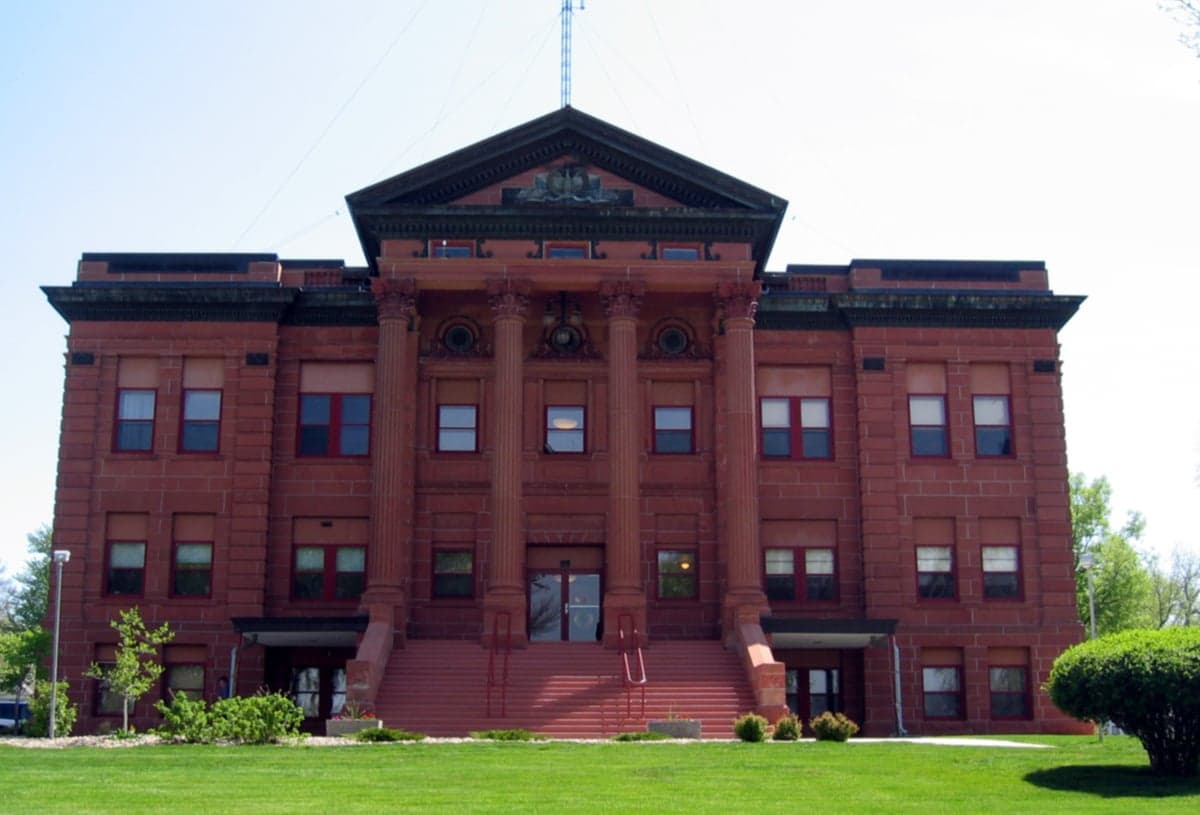
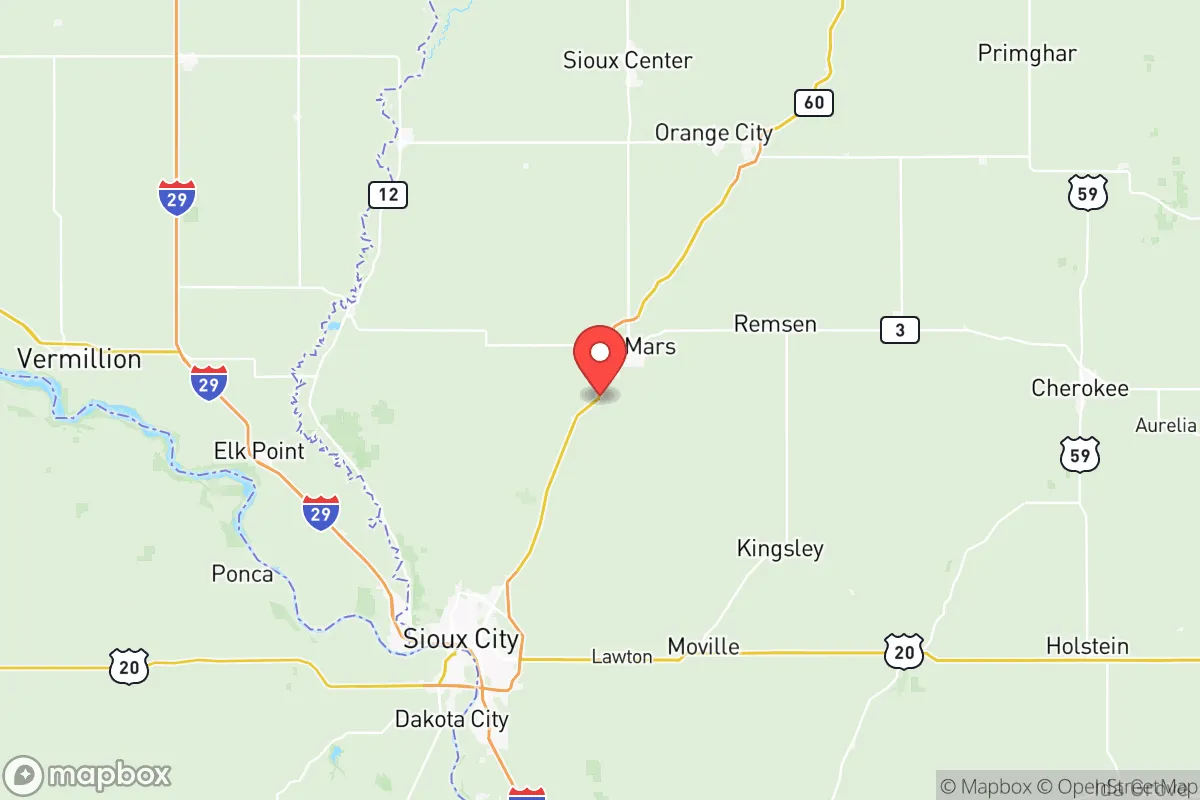
Photo: Wikipedia
Personal Sovereignty in Plymouth County
Viable for self-reliance. Generally workable, though some barriers may limit total independence.
What does Personal Sovereignty tell us?
Personal Sovereignty measures your capacity for self-reliance and independence with minimal government friction. Higher scores mean fewer barriers between you and the way you want to live... but it assumes you have the space you need and good neighbors.
What does this tell us?
Personal Sovereignty measures your capacity for self-reliance and independence with minimal government friction. Higher scores mean fewer barriers between you and the way you want to live... but it assumes you have the space you need and good neighbors.
State Policy
Energy independence: Importer (50% of energy produced in-state)
Personal Liberty
Homesteading

Personal Liberty Analysis
Plymouth County, Iowa, offers a notably high degree of personal sovereignty, grounded in a state-level legal framework that prioritizes low taxation, expansive gun rights, and minimal land-use regulation. For individuals and families seeking to maximize autonomy—whether through self-reliance, homesteading, or simply living with fewer government constraints—this northwestern Iowa county presents a practical environment where local governance tends to reinforce, rather than restrict, personal freedom. The county seat, Le Mars, along with smaller communities like Remsen, Kingsley, and Merrill, each reflect this ethos, though with subtle differences in zoning and community expectations that matter for those considering a move.
Tax burden and regulatory posture in Plymouth County
Iowa's state-level tax climate is among the more favorable in the Midwest for those prioritizing financial autonomy. The state has a flat individual income tax rate of 3.8% as of 2025, with a scheduled reduction to 3.65% by 2026, and no inheritance tax. Property taxes in Plymouth County are moderate: the average effective property tax rate hovers around 1.2% of assessed home value, slightly below the national average. For a $200,000 home, that translates to roughly $2,400 annually. The county's regulatory posture is light-touch. There is no county-wide zoning ordinance in unincorporated areas, meaning land use is largely governed by state minimum standards rather than local overlay restrictions. In Le Mars, the largest city, zoning exists but is applied pragmatically—home-based businesses and small-scale agricultural activities are generally permitted without onerous permitting. In contrast, smaller towns like Remsen and Kingsley have even fewer bureaucratic hurdles; a resident can typically build a shed, keep livestock, or operate a repair shop without navigating complex approval processes. The county's approach to business regulation is similarly streamlined: no local business license is required for most sole proprietorships, and sales tax collection is handled entirely at the state level. This combination of low taxes and minimal local bureaucracy creates a baseline of financial and operational freedom that appeals to conservative-leaning relocators.
Self-defense and gun law specifics in Plymouth County
Iowa is a "shall-issue" state for concealed carry permits, and as of 2021, it became a permitless carry state for anyone legally allowed to possess a firearm. This means that in Plymouth County, a resident can carry a concealed handgun without a permit, though a permit is still available for reciprocity purposes. The county sheriff's office in Le Mars processes permits efficiently, typically within 30 days. There are no county-level restrictions on magazine capacity, firearm types, or ammunition. Stand-your-ground laws apply statewide, meaning there is no duty to retreat before using deadly force in self-defense if lawfully present. Plymouth County's gun culture is deeply ingrained; shooting ranges are common, with the Le Mars Sportsmen's Club offering a 300-yard rifle range and multiple pistol bays. In rural areas like the unincorporated communities of Oyens and Struble, firearm ownership is nearly universal, and hunting is a primary recreational activity. The county has no local ordinances restricting where firearms can be carried—beyond state-mandated prohibitions like courthouses and schools—so a resident can legally carry in most businesses and public spaces. For those prioritizing self-defense autonomy, Plymouth County represents a near-maximum freedom environment within the bounds of federal law.
Self-reliance and homesteading viability in Plymouth County
Homesteading and off-grid living are highly viable in Plymouth County, particularly outside incorporated city limits. In unincorporated areas, there are no county-level restrictions on rainwater collection, composting toilets, or alternative energy systems. Solar panels and small wind turbines can be installed without permits, and many rural properties already rely on private wells and septic systems. Lot sizes vary widely: agricultural parcels start at 40 acres, but smaller hobby farms of 5–10 acres are common near Merrill and Kingsley. Zoning in these areas is essentially nonexistent—a resident can keep chickens, goats, or even a few head of cattle on a 5-acre parcel without special approval. In Le Mars, city ordinances allow up to four chickens per household with a permit, but prohibit larger livestock. For those seeking full off-grid independence, the unincorporated areas around Oyens and Struble offer the most freedom, with no building codes enforced beyond state minimums for structural safety. The county's soil is fertile, part of the Loess Hills region, supporting gardens and small-scale crop production. Water access is reliable via private wells, and the average depth to groundwater is 50–100 feet, making drilling affordable (typically $3,000–$5,000). The county's agricultural extension office in Le Mars provides resources for soil testing and pest management, but does not mandate any specific farming practices. For a family wanting to live largely self-sufficiently, Plymouth County offers one of the most permissive regulatory environments in the upper Midwest.
Personal liberties in Plymouth County: parental rights, medical autonomy, speech, and property
Iowa law provides strong protections for parental rights, including a 2021 law that requires parental consent for most medical procedures on minors and a 2023 law that prohibits instruction on gender identity and sexual orientation in K-6 classrooms. Plymouth County school districts—including Le Mars Community Schools, Remsen-Union, and Kingsley-Pierson—have implemented these policies with minimal local variation. Medical autonomy is similarly broad: Iowa has no state-level vaccine mandate for adults, and COVID-19-era restrictions were lifted early in 2021. The county has no local health orders that override individual choice; mask mandates or business closures are not part of the current landscape. Free speech is robustly protected, with no county-level ordinances restricting political signage, public assembly, or expressive conduct. Property rights are strong: eminent domain is rarely used for private development, and the county assessor's office in Le Mars provides transparent property records. There are no rent control measures, no short-term rental bans, and no tree ordinances that restrict what a homeowner can do on their own land. For those who value the ability to speak, parent, and manage their health without government interference, Plymouth County's legal environment is consistently permissive.
Overall, Plymouth County ranks among the most sovereignty-friendly areas in Iowa, comparable to neighboring Sioux County but with slightly lower property taxes and even less zoning. For a conservative-leaning individual or family seeking a place where personal autonomy is the default—not something to be negotiated with local authorities—this county delivers a practical, low-friction environment. The combination of permitless carry, no county zoning in rural areas, low taxes, and strong parental rights creates a cohesive framework for self-reliant living. While no location is entirely free of regulation, Plymouth County's approach is consistently light-touch, making it a strong candidate for those prioritizing personal sovereignty in their relocation decision.

* Values derived from national, state, county, city and local statistics and may differ in a specific area. Last updated: 2026-06-30T01:30:17.000Z
Narrative content on this page is AI-generated and may contain mistakes. Verify any details that matter before acting on them.
ReloMaps may earn a commission from affiliate links at no extra cost to you.

