Photo: Wikipedia
Demographics of Plymouth County
Affluence Level in Plymouth County
A middle-class area roughly in line with national averages across income, home values, education, and employment.
People of Plymouth County
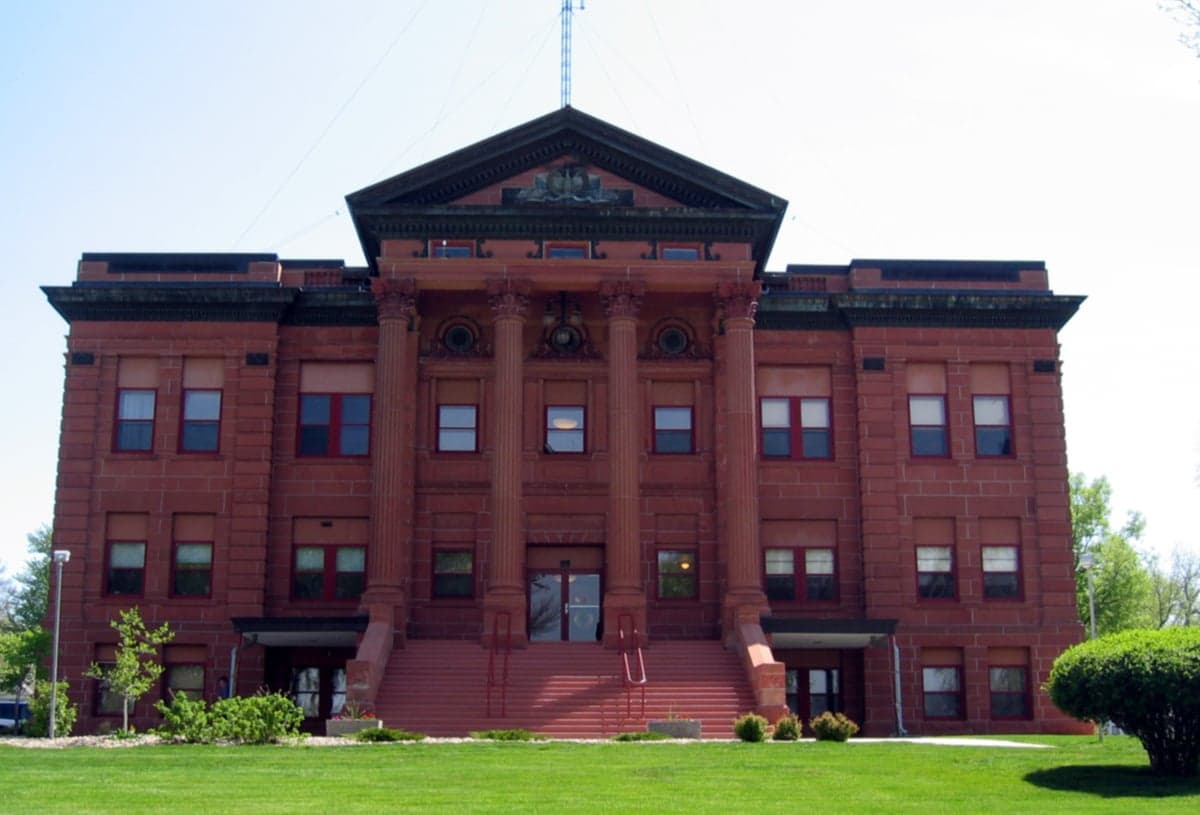
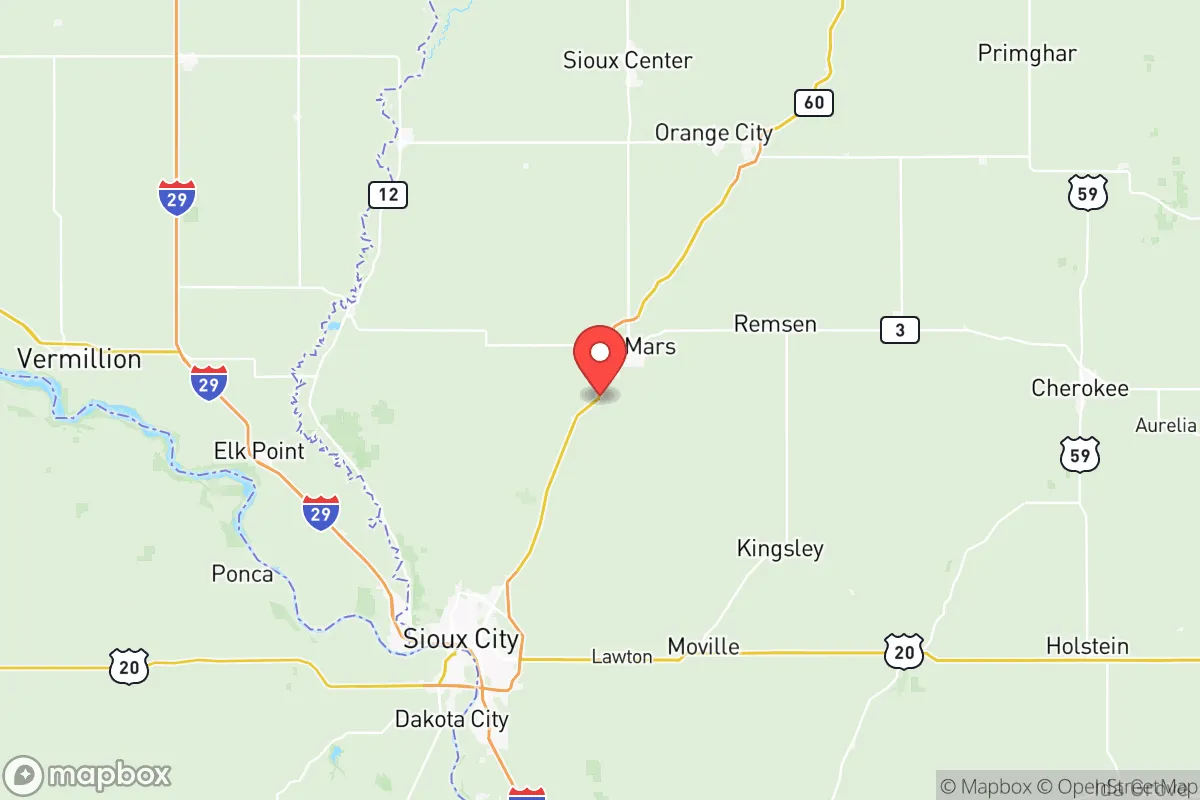
Plymouth County, Iowa, is a predominantly white, rural community of 25,699 residents, characterized by a strong agricultural heritage and a conservative social fabric. The population is notably less diverse than the national average, with 88.8% identifying as white, a 2.5% foreign-born share, and a modest 6.1% Hispanic presence. The county's identity is rooted in its history as a destination for German and Irish settlers, and today it retains a quiet, family-oriented character centered around its small towns and the county seat of Le Mars, known as the "Ice Cream Capital of the World."
Settlement & growth (pre-1960)
Before American settlement, the area that is now Plymouth County was part of the traditional territory of the Sioux (Dakota) people, particularly the Yankton and Santee bands. These nomadic groups followed the bison herds across the tallgrass prairie and along the Floyd and Little Sioux Rivers. The first permanent American presence came with the establishment of Fort Atkinson in neighboring Winneshiek County in the 1840s, but significant white settlement in Plymouth County did not begin until after the 1851 Treaty of Traverse des Sioux, which opened the region to Euro-American homesteaders.
The first major wave of settlers arrived in the 1850s and 1860s, primarily from New England and New York, drawn by the promise of cheap land under the Preemption Act and later the Homestead Act of 1862. These early pioneers established the first towns along the Floyd River, including Le Mars (founded 1869) and Merrill (1870). However, the largest and most enduring population wave came from German and Irish immigrants in the 1870s through the 1890s. German Catholics and Lutherans, fleeing economic hardship and political instability in the German states, settled heavily in the northern and central parts of the county, founding communities like Remsen (1883) and Marcus (1882). Irish immigrants, many of whom had worked on the railroad or in Eastern factories, were drawn to the area by the promise of farmland and established a strong presence in Kingsley (1882) and the southern part of the county. These groups brought with them distinct religious and cultural institutions—Catholic and Lutheran churches, German-language newspapers, and fraternal organizations—that shaped the county's social life for generations.
By 1900, Plymouth County's population had reached over 22,000, a figure it would not consistently surpass again until the late 20th century. The economy was overwhelmingly agricultural, with corn, oats, and livestock dominating. The arrival of the railroad in the 1870s and 1880s cemented the county's role as a grain and livestock shipping hub. Small towns like Akron (1882) and Hinton (1884) grew as service centers for the surrounding farm population. The population remained remarkably stable through the first half of the 20th century, with only modest growth during the 1910s and 1920s. The Great Depression and the Dust Bowl years of the 1930s caused a slight decline, as some farm families left for urban areas, but the county's agricultural base proved resilient. The post-World War II era saw a continuation of this stability, with the population hovering around 23,000 through the 1950s, as farm consolidation began to reduce the number of families needed to work the land.
Modern era (post-1965)
The 1965 Hart-Cellar Act, which abolished national-origin quotas, had a minimal direct impact on Plymouth County. Unlike major metropolitan areas, the county did not experience a significant influx of new immigrant groups from Asia, Africa, or Latin America during the late 20th century. The foreign-born population today stands at just 2.5%, a figure that has remained relatively constant for decades. The most notable demographic shift in the modern era has been the gradual growth of the Hispanic population, which now accounts for 6.1% of the county. This growth is primarily the result of domestic migration from other parts of the United States, particularly from Texas and California, as well as some direct immigration from Mexico and Central America. These new residents have been drawn to the area by jobs in meatpacking and food processing, particularly at the Wells Enterprises ice cream plant in Le Mars and at agricultural processing facilities in the region. The Hispanic community is concentrated in Le Mars and, to a lesser extent, in Remsen, where they have established small but growing enclaves.
The Black population, at 2.4%, is also a relatively recent addition, driven by similar economic opportunities in manufacturing and food processing. The East/Southeast Asian population (0.5%) and the Indian subcontinent population (0.0%) remain negligible. The county's overall racial and ethnic composition has remained overwhelmingly white, but the Hispanic share has increased from roughly 2% in 1990 to its current 6.1%, representing the most significant demographic change in a generation. Suburbanization has been limited; the county has not experienced the exurban sprawl seen in counties closer to Sioux City or the Des Moines metro. Instead, the population has slowly shifted from rural farmsteads into the incorporated towns, with Le Mars (population ~10,000) serving as the primary population center. The county's college-educated share of 23.9% is below the national average, reflecting the area's strong blue-collar and agricultural employment base.
The future
Plymouth County's population is projected to remain relatively stable or experience modest decline over the next 10-20 years, mirroring trends across much of rural Iowa. The county's population peaked at 25,699 in the 2020 census, and the 2023 estimates show a slight decrease. The aging of the white, non-Hispanic population—a cohort with a median age well above the national average—will drive natural decrease (more deaths than births) in the coming decades. The Hispanic population is likely to continue its gradual growth, potentially reaching 8-10% of the total by 2040, as younger families move in for employment opportunities and as the existing community matures and has children. This growth will be concentrated in Le Mars and Remsen, where social networks and services for Spanish-speaking residents are already established. The Black and Asian populations are expected to remain small, with growth dependent on specific employer recruitment efforts.
The county's cultural identity is evolving slowly. The historically dominant German and Irish Catholic heritage remains strong, evident in the numerous church festivals, the annual Le Mars Ice Cream Days, and the county's conservative voting patterns. However, the growing Hispanic presence is adding new cultural elements, including Spanish-language church services, Mexican restaurants, and a small but visible quinceañera tradition. The county is unlikely to become a diverse, multicultural hub in the foreseeable future. Instead, it will likely remain a predominantly white, rural community with a slowly diversifying Hispanic minority. For a family or individual moving in now, Plymouth County offers a stable, safe, and affordable environment with strong community ties, but with limited racial or ethnic diversity and a cultural landscape that remains deeply rooted in its 19th-century settler heritage.
Plymouth County is becoming a slightly more diverse version of its historical self—a place where the old German and Irish foundations remain solid, but where a growing Hispanic community is gradually reshaping the social and economic landscape. For a new resident, this means moving into a community that values tradition, stability, and neighborliness, but one that is also quietly adapting to the demographic realities of 21st-century rural America.

* Values derived from national, state, county, city and local statistics and may differ in a specific area. Last updated: 2026-06-30T01:30:17.000Z
Narrative content on this page is AI-generated and may contain mistakes. Verify any details that matter before acting on them.
ReloMaps may earn a commission from affiliate links at no extra cost to you.

