Photo: Wikipedia
Political ClimatePolitical Climate in Marion County
Showing district-level results — no local-only data available.
Local Political AnalysisPolitical Analysis of Marion County
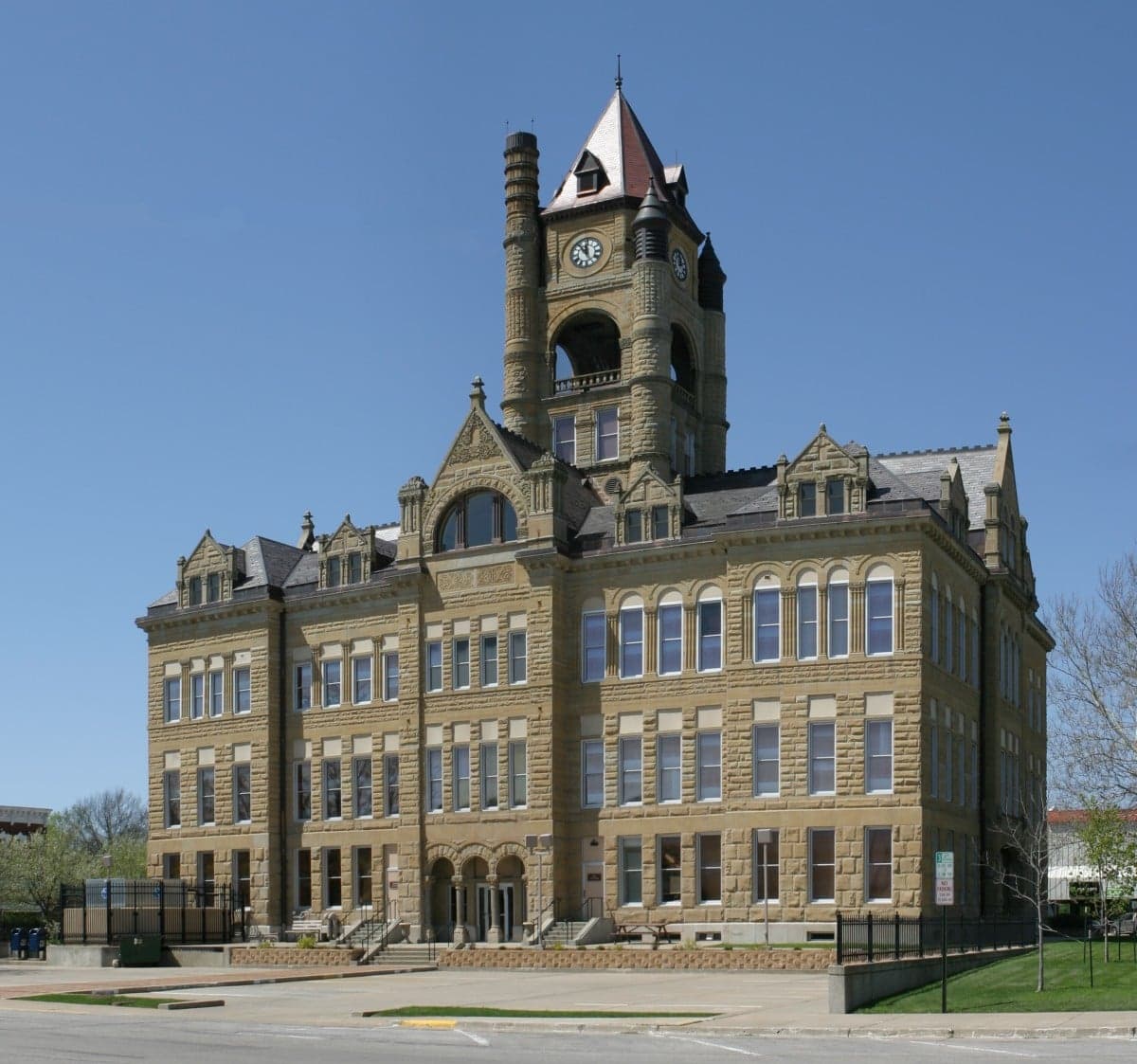
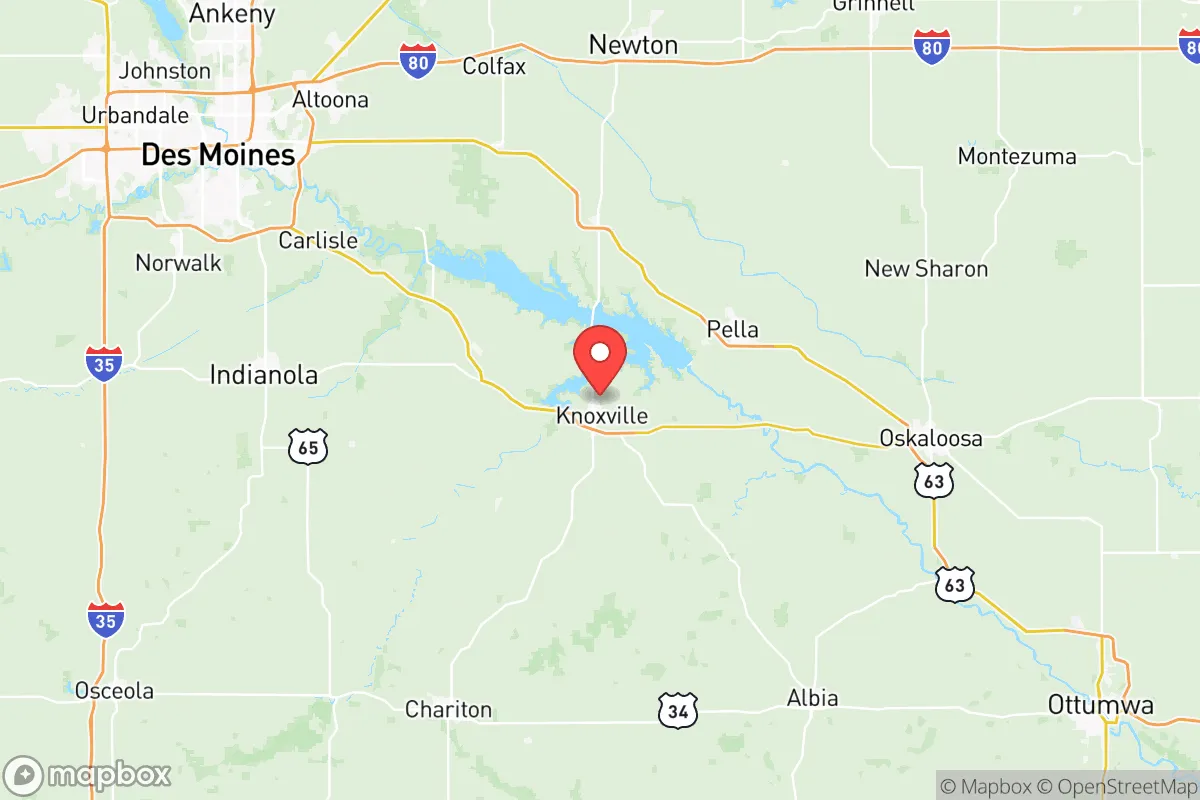
Marion County, Iowa, leans reliably Republican, but it’s not the deep red you might expect from a rural central Iowa county. The Cook PVI of R+4 is actually a shade more competitive than the state’s overall R+6, and that two-point gap tells a real story. Pella is the big reason. That town, with its strong Dutch Reformed heritage and Central College, consistently votes more moderately than the rest of the county, sometimes even tipping toward Democrats in local races. Meanwhile, the county seat of Knoxville and smaller towns like Pleasantville and Bussey are solidly Republican. The county has been drifting rightward slowly since the 2000s, but Pella’s influence keeps it from being a lock for the most conservative candidates in every election.
How it compares
Compared to Iowa as a whole, Marion County is slightly less Republican, which surprises a lot of people. The state’s R+6 PVI is driven by huge margins in rural northwest and north-central counties, plus the Des Moines suburbs that have shifted hard right since 2016. Marion County’s R+4 reflects a more balanced split: Pella’s precincts around Central College and the downtown core often vote within 5 points of even, while Knoxville’s rural precincts can go 65-35 Republican. In the 2022 governor’s race, Kim Reynolds won Marion County by about 12 points, but that was a few points behind her statewide margin. The county also has a small but active Democratic party organization in Pella, which is unusual for a county this size. So while the county is red, it’s a lighter shade than most of Iowa’s rural counties, and it has a genuine two-party dynamic in local races that you don’t see in, say, Lucas or Monroe counties to the south.
What this means for residents
For conservative residents, Marion County is a comfortable place to live politically. The county commission and school boards in Knoxville and Pleasantville are reliably Republican, and the local Republican party is well-organized. But it’s not a place where liberal residents feel isolated. Pella provides a visible counterweight: the city council often has Democratic members, and the annual Tulip Time festival is a genuinely nonpartisan community event. The practical effect is that political conversations here are less heated than in many other parts of Iowa. People tend to know their neighbors across party lines, especially in Pella where the college and the business community overlap. The main policy distinction is around land use and development: Marion County has been slower to adopt zoning changes than some neighboring counties, and there’s a strong preservationist streak in Pella that cuts across party lines. That means new housing developments and commercial projects often face more scrutiny here than in, say, Jasper County to the north.
Culturally, the county’s Dutch Reformed heritage in Pella creates a distinct flavor. The Christian Reformed Church and the Reformed Church in America are influential, and that tradition emphasizes community service and education in a way that shapes local politics. You see it in the strong support for the public library and the parks system, even from conservative voters. The county also has a notable libertarian streak, especially in the rural areas around Knoxville, where people are skeptical of both state and federal mandates. That combination — a moderate Republican majority with a strong, organized minority in Pella — makes Marion County one of the more politically interesting places in central Iowa. It’s not going to flip blue anytime soon, but it’s also not the kind of place where a single party can take the electorate for granted.

State Political ClimatePolitical Climate in Iowa
State Political AnalysisPolitical Environment in the State
Iowa has shifted from a classic purple swing state to a solidly Republican-leaning one, carrying a Cook PVI of R+6 after a decade-long rightward march. The state backed Donald Trump by 8 points in 2016 and 2020, and in 2024, the margin widened further as rural and exurban turnout solidified behind the GOP while Democratic strength concentrated in a handful of metro cores. This isn't a sudden flip—it's the culmination of a 20-year realignment where culturally conservative, union-heavy rural voters broke from their New Deal roots and aligned with the national GOP, while college-educated suburbanites in places like Iowa City and Des Moines moved the opposite direction.
Urban vs. rural divide
The political map of Iowa is a study in stark contrasts. The state's two largest metros—Des Moines and the Quad Cities—are competitive but trending differently. Polk County (Des Moines) voted for Hillary Clinton in 2016 and has stayed blue since, but its margins aren't growing fast enough to offset losses elsewhere. Johnson County, home to the University of Iowa in Iowa City, is the state's deepest blue stronghold, routinely delivering 70%+ Democratic votes. Story County (Ames, Iowa State University) and Black Hawk County (Waterloo, Cedar Falls) also lean Democratic, driven by university populations and union legacy. Meanwhile, the rest of the state is overwhelmingly red. Sioux County in northwest Iowa is one of the most Republican counties in the nation, routinely hitting 80%+ GOP. Dallas County, a fast-growing Des Moines exurb, flipped from blue-leaning to solidly red as new subdivisions filled with families fleeing urban school districts. The rural small towns that once anchored the state's Democratic Party—places like Ottumwa, Fort Dodge, and Mason City—now vote Republican by wide margins, reflecting a national pattern where cultural values and gun rights outweigh old economic loyalties.
Policy environment
Iowa's policy environment is defined by a low-tax, limited-government posture that has intensified under unified Republican control. The state has a flat income tax of 3.8% (phasing down to 3.5% by 2027), no inheritance tax, and property taxes that are among the lowest in the Midwest. There is no state-level rent control, no statewide zoning mandates, and no prevailing wage law for public construction projects. Education policy has been a flashpoint: Iowa enacted a universal school voucher program in 2023 (Students First Act), allowing any K-12 student to use state funds for private or homeschool expenses. The state also passed a law requiring schools to notify parents of any student requests for name or pronoun changes, and banned books with explicit sexual content from school libraries. On healthcare, Iowa expanded Medicaid under the Affordable Care Act but has since pursued a privatized managed-care model (IA Health Link). The state has a 24-hour waiting period for abortions and a ban on most abortions after six weeks (the "fetal heartbeat" law), which took effect in 2024 after a court ruling. Election laws have tightened: Iowa now requires voter ID, limits early voting to 20 days, and closes polls at 8 p.m. sharp. There is no state-level data privacy law comparable to California or Virginia, and no broad surveillance restrictions beyond federal standards.
Recent policy direction
The last five years have seen Iowa move decisively on a conservative agenda. On gun and self-defense law, Iowa became a permitless carry state in 2021—any law-abiding adult can carry a concealed firearm without a permit or training. The state also passed a "stand your ground" law in 2017, removing the duty to retreat in any place where a person has a right to be. On parental and education rights, the 2023 Students First Act is the marquee achievement, but the state also banned critical race theory and diversity, equity, and inclusion (DEI) programs in K-12 schools, and prohibited transgender girls from participating in girls' sports (2022). On speech and expression, Iowa passed a law in 2024 banning TikTok from state devices and networks, and has considered broader social media age-verification requirements. On privacy and surveillance, the state has not enacted a comprehensive data privacy law, though a bill (HF 2505) was introduced in 2024 to regulate biometric data collection. On medical and bodily autonomy, the six-week abortion ban is the headline, but Iowa also passed a law requiring parental consent for minors' abortions (already in effect) and banned gender-affirming care for minors in 2023. On property rights, Iowa has strong eminent domain protections for landowners, and the 2023 law restricting county-level wind and solar siting decisions was a win for rural property owners who opposed large renewable projects. On taxation, the flat tax phase-down is ongoing, and the state eliminated the inheritance tax entirely in 2021. On voting and ballot access, the voter ID law (2017) and the shortened early voting window (2021) have been controversial but remain in effect, with no signs of rollback.
Civil unrest & political movements
Iowa has not seen the large-scale civil unrest of coastal states, but it has had its share of organized political activity. The 2020 Black Lives Matter protests in Des Moines and Iowa City were significant, with several nights of demonstrations and some property damage, but they did not reach the intensity of Minneapolis or Portland. On the right, the "Parents' Rights" movement has been highly organized, particularly around school board meetings in suburban districts like Ankeny and Waukee, where debates over library books and curriculum have drawn hundreds of attendees. Immigration politics are less visible than in border states, but Iowa has seen a small but vocal movement opposing refugee resettlement, particularly in Marshalltown and Storm Lake, where meatpacking plants have drawn immigrant labor. There is no sanctuary city policy anywhere in Iowa; in fact, a 2024 state law requires local law enforcement to cooperate with federal immigration authorities. Election integrity controversies have been muted compared to states like Arizona or Georgia, though the 2020 audit in Linn County (Cedar Rapids) drew some attention. The state's Republican Party has not embraced secession or nullification rhetoric, but there is a persistent undercurrent of "county supremacy" activism in a few rural counties, where local officials have passed resolutions asserting local control over gun laws and federal land management.
Projection
Over the next 5-10 years, Iowa's political trajectory points further right, but with a caveat. The state's population is aging and slowly declining in rural areas, while the Des Moines metro continues to grow. If that growth brings in more college-educated, moderate professionals—as it has in Dallas County—the GOP's margins could soften in the suburbs. But the rural vote is not going anywhere, and the state's Republican Party has shown no interest in moderating. The flat tax phase-down will continue, making Iowa even more attractive to high-income earners and retirees. The voucher program will likely expand, and the abortion ban will remain unless a statewide ballot measure or federal action intervenes. A new resident moving to Iowa in 2026 should expect a state that is reliably Republican in statewide elections, with a policy environment that favors low taxes, school choice, gun rights, and limited government, but with sharp cultural divides between the university towns and the rest of the state. The Democratic Party will remain competitive only in the handful of counties anchored by universities and the Des Moines core, and will have little influence over state policy for the foreseeable future.
For a new resident, the bottom line is straightforward: if you value low taxes, school choice, gun rights, and a conservative cultural environment, Iowa will feel welcoming and aligned with your priorities. If you lean left, you'll find like-minded communities in Iowa City, Ames, and parts of Des Moines, but you'll have little say in state-level policy. The state is stable, affordable, and politically predictable—what you see now is likely what you'll get for the next decade, with no major surprises on the horizon.
* Values derived from national, state, county, city and local statistics and may differ in a specific area. Last updated: 2026-07-26T11:16:35.000Z
Narrative content on this page is AI-generated and may contain mistakes. Verify any details that matter before acting on them.
ReloMaps may earn a commission from affiliate links at no extra cost to you.

