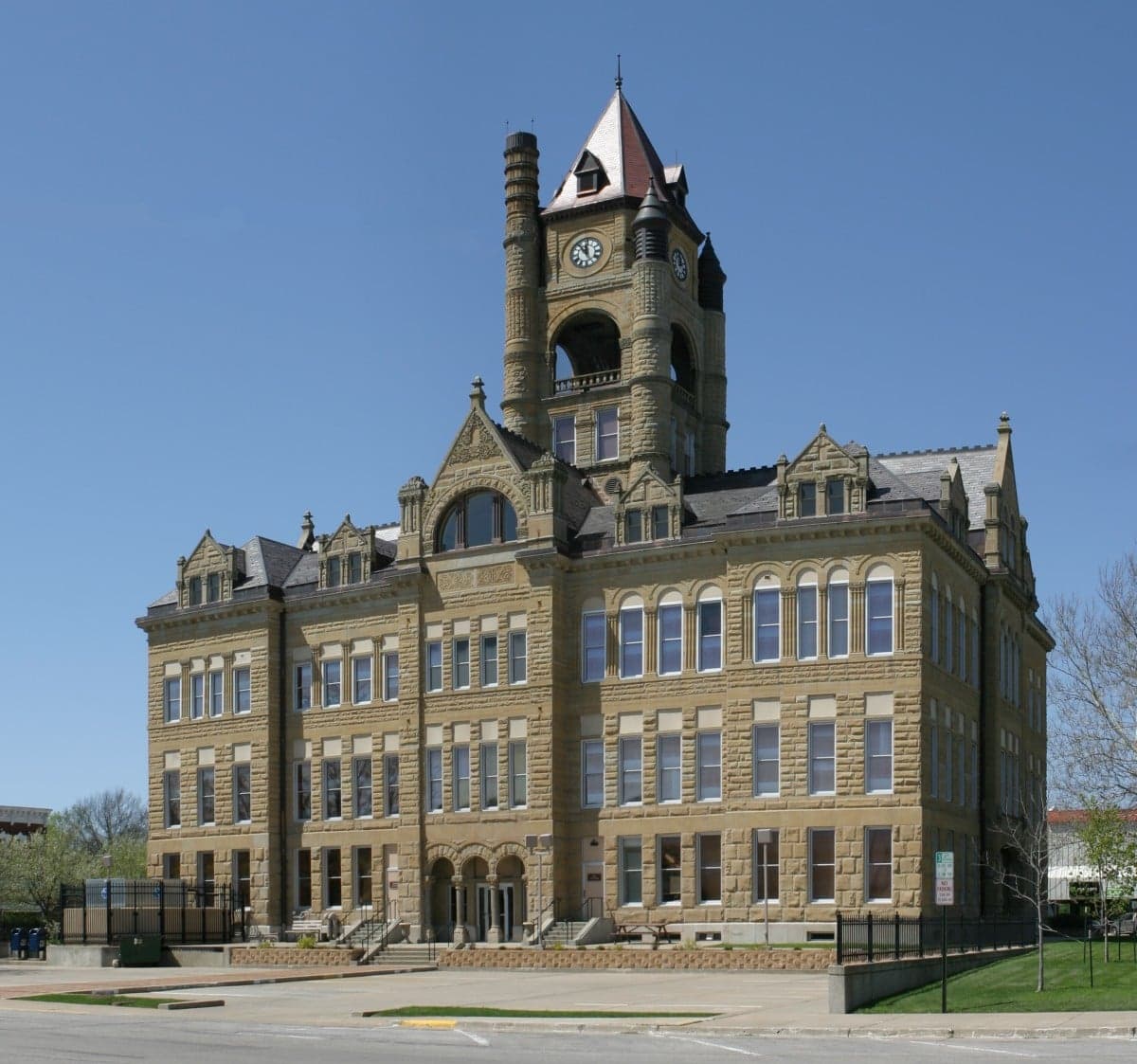
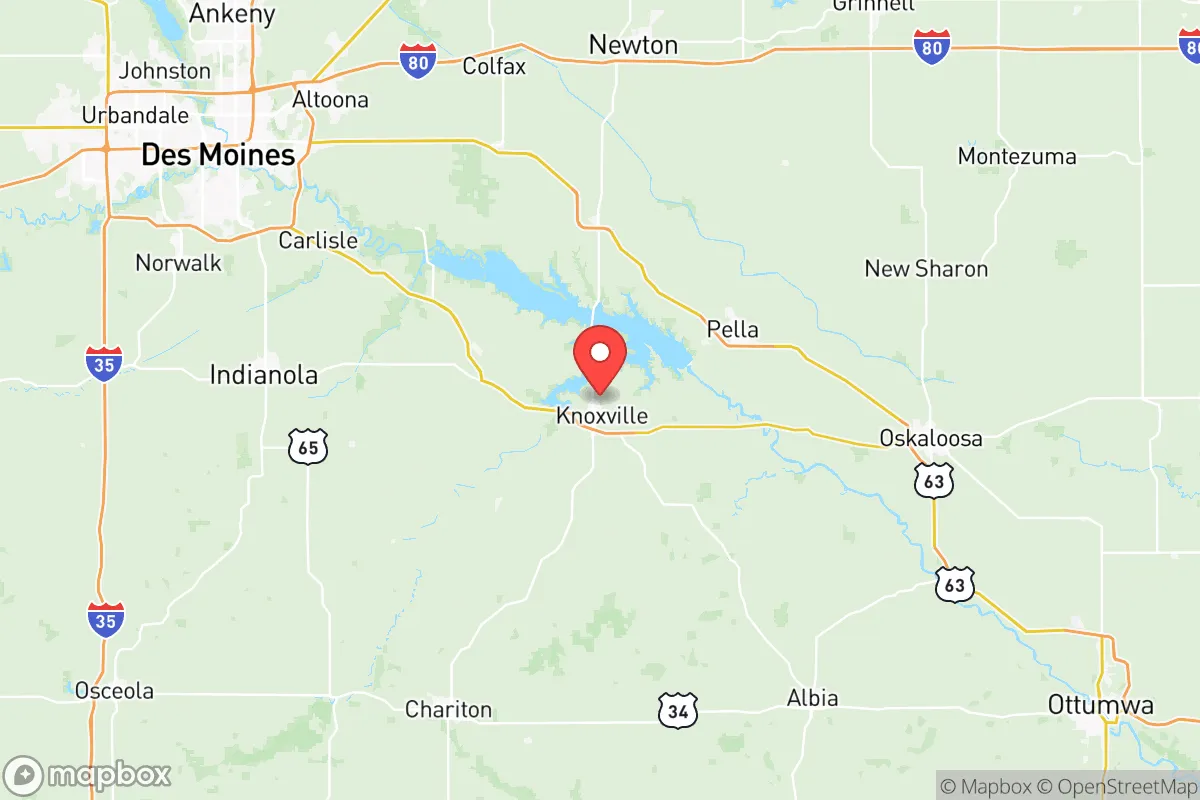
Photo: Wikipedia
Demographics of Marion County
Affluence Level in Marion County
A middle-class area roughly in line with national averages across income, home values, education, and employment.
People of Marion County
Marion County, Iowa, today is a predominantly white, rural community of 33,551 residents, characterized by a strong agricultural heritage and a population density of roughly 30 people per square mile. The county’s identity is rooted in its historic role as a crossroads for settlers moving west, with a present-day population that is 93.6% white and a foreign-born share of just 0.9%, reflecting limited recent international immigration. Distinctive markers include a deep connection to the land, a network of small towns like Pella and Knoxville that anchor local culture, and a political and social conservatism that aligns with much of rural Iowa. For those considering a move here, the county offers a stable, slow-growing community where family ties and local institutions remain central to daily life.
Settlement & growth (pre-1960)
Before American settlement, the land that is now Marion County was part of the traditional territory of the Sauk and Meskwaki (Fox) peoples, who used the area for hunting and seasonal camps. The region was ceded to the United States through a series of treaties in the 1830s and 1840s, most notably the 1842 Treaty of the Sauk and Fox, which opened the land to Euro-American settlers. No permanent European colonial settlements existed here prior to U.S. expansion; the first white settlers arrived after Iowa became a territory in 1838.
The first major wave of American settlers came in the 1840s and 1850s, primarily from the Upper South and the Ohio River Valley—Kentucky, Tennessee, and southern Ohio. These were largely Scots-Irish and English-stock farmers seeking cheap, fertile land in the newly opened Iowa Territory. They founded the county’s earliest towns, including Knoxville (established 1845), which became the county seat, and Pella (1847), which took on a distinct character as a planned Dutch settlement. The Dutch immigrants who founded Pella were religious separatists fleeing the Netherlands under the leadership of Dominie Hendrik Scholte; they brought with them a strong Calvinist faith, a tradition of craftsmanship, and a tight-knit community structure that persists today. Other early settlements included Bussey (1850s) and Hamilton (1850s), both of which grew as agricultural service centers.
A second significant wave arrived in the 1870s and 1880s, drawn by the expansion of the railroad and the promise of land under the Homestead Act. This period brought a mix of native-born Americans from the eastern states and a smaller number of German and Scandinavian immigrants, who settled in farming communities like Harvey and Melcher-Dallas. The railroad also spurred the growth of Pleasantville (platted 1875), which became a shipping point for grain and livestock. By 1900, Marion County’s population had reached roughly 25,000, a figure it would not substantially exceed for over a century.
The early 20th century saw little new immigration; the county’s population remained overwhelmingly native-born white, with a small African American community concentrated in Knoxville and Pella, largely employed as domestic workers and laborers. The Great Depression and the Dust Bowl of the 1930s had a muted direct effect here—Iowa was not a Dust Bowl state—but the agricultural downturn drove some farm families off the land and into nearby towns. World War II brought a temporary population boost as the Knoxville area became a center for munitions production at the Iowa Ordnance Plant, which employed thousands of workers, including women and African Americans from the South. After the war, many of these workers left, and the county settled into a pattern of steady, slow decline as younger generations moved to urban centers like Des Moines.
Modern era (post-1965)
The 1965 Hart-Cellar Act, which reshaped U.S. immigration policy, had almost no direct impact on Marion County. The foreign-born population today stands at just 0.9%, and the county’s racial composition has remained remarkably stable: 93.6% white, with a Hispanic population of 2.2%, a Black population of 0.5%, and East/Southeast Asian communities at 0.9%. The Indian-subcontinent population is a tiny 0.4%. These numbers reflect the county’s limited draw for international immigrants, who overwhelmingly settle in larger Iowa cities like Des Moines, Iowa City, and Cedar Rapids.
The most significant demographic shift since 1965 has been internal: the continued suburbanization of the county’s population around its two largest towns, Pella and Knoxville. Pella, in particular, has grown steadily, driven by the presence of Pella Corporation, a major window and door manufacturer founded in 1925 that now employs over 2,000 people locally. This employer has attracted some domestic migration from other parts of Iowa and the Midwest, but the newcomers are overwhelmingly white and culturally similar to the existing population. Knoxville, meanwhile, has seen modest growth as a bedroom community for Des Moines, located about 40 miles to the northwest, though the commute limits its appeal to those seeking a truly rural lifestyle.
Domestic migration patterns have been shaped by the broader trend of rural-to-urban movement that has hollowed out many small towns across the Midwest. Towns like Bussey, Harvey, and Hamilton have lost population since their mid-20th-century peaks, as young people leave for college and jobs in larger cities. The county’s overall population has been essentially flat for decades—33,551 in the 2020 census, compared to 33,308 in 2000—indicating a stable but aging demographic. The median age is likely higher than the national average, as younger families are outnumbered by retirees and empty-nesters.
The future
Marion County’s population is projected to remain stable or decline slightly over the next 10–20 years, barring a major economic shock or policy change. The county is not becoming more diverse; the white share of the population has held above 93% for decades, and the small Hispanic and Asian communities are unlikely to grow significantly without a major employer recruiting immigrant labor. The most likely scenario is a continuation of current trends: slow growth in Pella and Knoxville, driven by local employment and some Des Moines spillover, and continued decline in the smaller rural towns.
Culturally, the county will likely remain a conservative, family-oriented, and religiously active area, with the Dutch Reformed tradition in Pella and a broader evangelical Protestant presence elsewhere. The annual Tulip Time festival in Pella, which celebrates the town’s Dutch heritage, will continue to be a major cultural touchstone, drawing visitors from across the state. For newcomers, the county offers a predictable, low-crime environment with strong schools in Pella and Knoxville, but limited diversity and few opportunities for those outside agriculture, manufacturing, or retail.
In sum, Marion County is a place where the past is still very much present. The Dutch settlers of Pella, the Scots-Irish farmers of Knoxville, and the railroad towns of the late 19th century have left a lasting imprint that shows no sign of fading. For someone moving in now, the county offers a stable, homogeneous community with deep roots and a clear sense of identity—but little demographic change on the horizon.

* Values derived from national, state, county, city and local statistics and may differ in a specific area. Last updated: 2026-07-26T11:16:35.000Z
Narrative content on this page is AI-generated and may contain mistakes. Verify any details that matter before acting on them.
ReloMaps may earn a commission from affiliate links at no extra cost to you.

