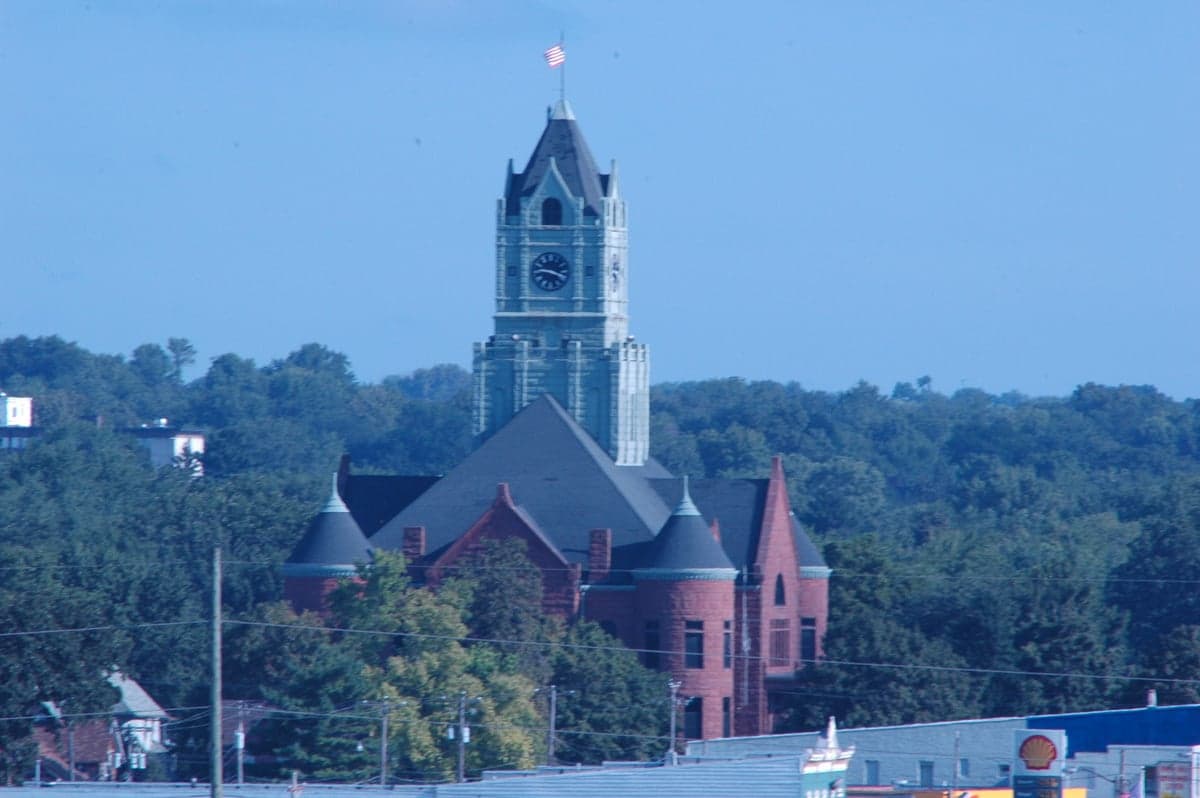
Photo: Wikipedia
Quality of Life in Clinton County
A livable area that tracks near national norms for affordability, walkability, and neighborhood health.
What does Quality of Life tell us?
Quality of Life measures an area by evaluating factors like cost of living, nearby amenities, country club access, airport proximity, socioeconomic signals and neighborhood character. For large states, this is a general average — quality of life can vary dramatically between metro areas, suburbs, and rural communities within the same state.
What does this tell us?
Quality of Life measures an area by evaluating factors like cost of living, nearby amenities, country club access, airport proximity, socioeconomic signals and neighborhood character. For large states, this is a general average — quality of life can vary dramatically between metro areas, suburbs, and rural communities within the same state.
Cost of Living
36% below national average
148%
The Real Cost of Living in Clinton County for 2026
| Tier | Individual | Family (4) |
|---|---|---|
| Survival | $13k | $25k |
| Comfortable | $30k | $44k |
| Luxury | $111k+ | $172k+ |
| Elite (Top 5%) | $130k+ | $202k+ |
Quality-of-Life Analysis
Clinton County, Iowa, offers a quality-of-life spectrum that ranges from the Mississippi River-focused amenities of its county seat to the quiet, land-based rhythms of its small farming communities and unincorporated rural pockets. With a cost of living index of 64—well below the national average of 100—the county attracts a mix of river-industry workers, remote professionals seeking affordable acreage, and retirees looking for a slower pace. The character of daily life shifts noticeably between the largest town, Clinton, and the smaller communities like DeWitt, Camanche, and Charlotte, each offering a distinct balance of convenience, community, and space.
Largest town(s) & population centers
Clinton, the county seat and largest city (population roughly 24,000), is the economic and cultural anchor. Daily life here centers on the Mississippi Riverfront, with the Riverview Park, the Clinton Area Showboat Theatre, and the Bickelhaupt Arboretum providing recreation. The city has a working-class industrial backbone, anchored by employers like LyondellBasell (chemical manufacturing) and Arconic (aluminum production), but also supports a growing healthcare sector via MercyOne Clinton Medical Center. Housing is notably affordable: the median home value in Clinton County is $153,800, and median rent is $825, making homeownership accessible for many. The average commute of 21.1 minutes is manageable, though traffic can bottleneck on US-30 and the Lyons Bridge during shift changes. DeWitt (pop. ~5,200), the second-largest town, offers a more suburban feel with its own hospital, a historic downtown square, and a strong school system, drawing families who work in Clinton or commute east to the Quad Cities (about 25 minutes away).
Smaller towns & rural pockets
Beyond the population centers, the county is dotted with smaller communities that define its rural character. Camanche (pop. ~2,400) sits directly south of Clinton along the river, offering a tight-knit community with a public golf course and direct access to the Mississippi River Trail. Charlotte (pop. ~400) and Grand Mound (pop. ~600) are classic Iowa farm towns—each with a grain elevator, a church or two, and a volunteer fire department—where residents often drive 15–20 minutes to Clinton or DeWitt for groceries and medical care. Unincorporated areas like Elvira and Teeds Grove are purely agricultural, with scattered farmsteads and no commercial services; residents here rely on well water, septic systems, and gravel roads. These pockets offer the lowest property costs in the county, with some older farmhouses selling for under $100,000, but they also lack public transit and high-speed internet in many spots.
Cost & lifestyle range
The cost-of-living spread across Clinton County is narrow but meaningful. At the low end, rural properties in Charlotte or Elvira can be found for $80,000–$120,000, with property taxes among the lowest in the state (roughly 1.2% of assessed value). Renters in these areas are scarce; the median rent of $825 is almost entirely driven by Clinton and DeWitt. At the higher end, riverfront homes in Clinton's South End or newer subdivisions in DeWitt (like the Prairie Hills development) can reach $250,000–$350,000, offering views, larger lots, and proximity to parks. Amenities follow the same gradient: Clinton has a Walmart Supercenter, a regional hospital, and multiple fast-food chains, while Charlotte and Grand Mound have only a gas station or a small grocery. For entertainment, Clinton offers the Wild Rose Casino and the Clinton Symphony Orchestra, whereas rural residents rely on hunting, fishing, and community festivals like the Camanche River Days.
This county is best suited for people who value affordability and space over urban density. Remote workers and retirees with a car will find the low housing costs and short commutes appealing, especially in DeWitt or the outskirts of Clinton. Families seeking good schools should focus on the Clinton Community School District or the Central DeWitt School District, both of which have graduation rates above 90%. Those who need walkable amenities, nightlife, or robust public transit will likely find the county too sparse. For anyone comfortable with a 20-minute drive to most services, Clinton County delivers a stable, low-stress quality of life at a price that is increasingly rare in the Midwest.

Crime in Clinton County
Generally safer than 69% of comparable U.S. locations.
Violent CrimeViolent Crime Analysis
Property CrimeProperty Crime Analysis
Crime Analysis
Clinton County, Iowa, reports a violent crime rate of 230.5 per 100,000 residents and a property crime rate of 1,167.7 per 100,000, figures that place the county below the national average but somewhat above the Iowa statewide baseline. The safety picture varies noticeably across the county, with the city of Clinton accounting for the majority of reported offenses while smaller communities like Camanche and DeWitt experience significantly fewer incidents. Residents considering relocation should weigh these aggregate numbers against specific neighborhood dynamics and the prevailing legal environment shaped by local judicial officials.
Crime in context
At 230.5 per 100,000, Clinton County’s violent crime rate sits roughly 30% below the national average, a positive indicator for a rural Mississippi River region. Property crime, however, at 1,167.7 per 100,000, runs about 25% below the national figure but is more concentrated in the county’s urban core. Comparatively, the statewide Iowa violent crime rate is approximately 280 per 100,000, meaning Clinton County is safer on that metric than many of its peer counties in eastern Iowa. Property crime in the county is slightly elevated relative to the state average, driven largely by theft and burglary reports from the city of Clinton. Neighboring Jackson County to the north posts lower property crime numbers, while Scott County (home to Davenport) reports higher totals, illustrating the localized nature of risk.
What residents experience
The overall safety experience in Clinton County is shaped by a stark urban-rural divide. The city of Clinton, with roughly 25,000 residents, generates the vast majority of police calls, including the county’s few annual homicide and aggravated assault incidents. By contrast, Camanche (pop. ~4,500) reports violent crime rates roughly 60% lower than the county average, and DeWitt (pop. ~5,300) consistently logs property crime rates below 800 per 100,000 — well under half the county figure. Property crimes such as vehicle theft and garage burglaries are the primary concerns for residents in unincorporated areas and smaller towns, while downtown Clinton sees occasional drug-related offenses tied to its position along the Interstate 80 corridor. The Clinton County Sheriff’s Office maintains a visible presence in rural townships, and the Clinton Police Department has emphasized community policing in recent years to address repeat-offender issues.
A significant factor influencing long-term safety is the ideological orientation of the local justice system. The 7th Judicial District, which covers Clinton County, has seen a shift toward progressive prosecution policies in recent years, including expanded diversion programs for property crimes and reduced sentencing recommendations for non-violent repeat offenders. While these measures aim to reduce incarceration rates, critics argue such leniency emboldens habitual thieves and burglars, particularly in the county’s more transient neighborhoods. Residents in the city of Clinton’s south side have reported frustration with what they perceive as a revolving-door justice system, where individuals arrested for theft are released quickly only to reoffend. This dynamic is less pronounced in DeWitt, where the local police department maintains stricter enforcement protocols and the municipal court takes a harder line on property crime.
Neighborhood-level variation
Within the city of Clinton, safety diverges sharply by neighborhood. The area around Riverview Drive and the downtown commercial district sees the highest concentration of property crimes, including vehicle break-ins and shoplifting, particularly during summer tourism months. The northern residential neighborhoods near Eagle Point Park report violent crime rates below 100 per 100,000, making them among the safest urban pockets in the county. Suburban enclaves like the Country Club Estates and the areas around Clinton Community College see minimal incidents, while the industrial corridor along Mill Creek experiences elevated drug-related calls. In smaller towns, the key variable is proximity to major highways: the stretch of US-30 between DeWitt and the county line has seen a rise in catalytic converter thefts, but residential streets remain quiet. Prospective residents should consult the Clinton Police Department’s online crime mapping tool, which shows that blocks within a half-mile of the main thoroughfares in the city of Clinton account for roughly 70% of all property crime reports.
* Values derived from national, state, county, city and local statistics and may differ in a specific area. Last updated: 2026-07-03T00:43:13.000Z
Narrative content on this page is AI-generated and may contain mistakes. Verify any details that matter before acting on them.
ReloMaps may earn a commission from affiliate links at no extra cost to you.

