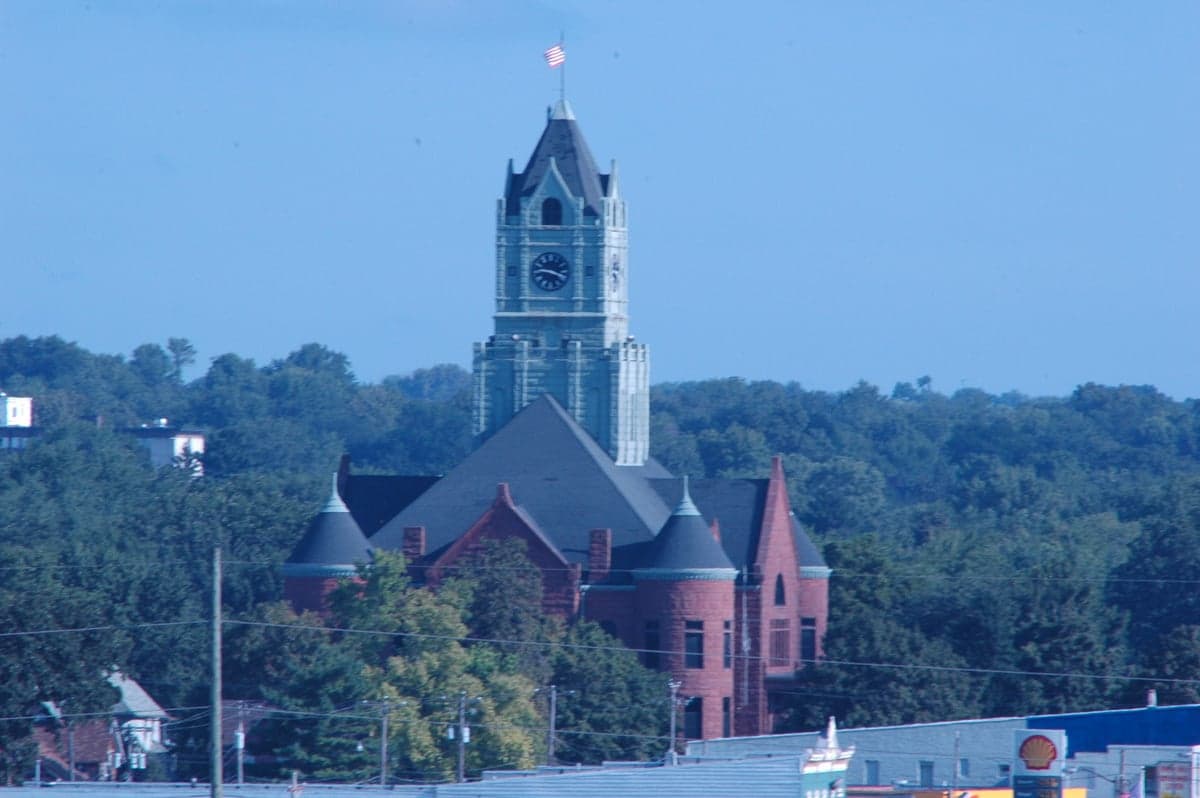
Photo: Wikipedia
Demographics of Clinton County
Affluence Level in Clinton County
A middle-class area roughly in line with national averages across income, home values, education, and employment.
People of Clinton County
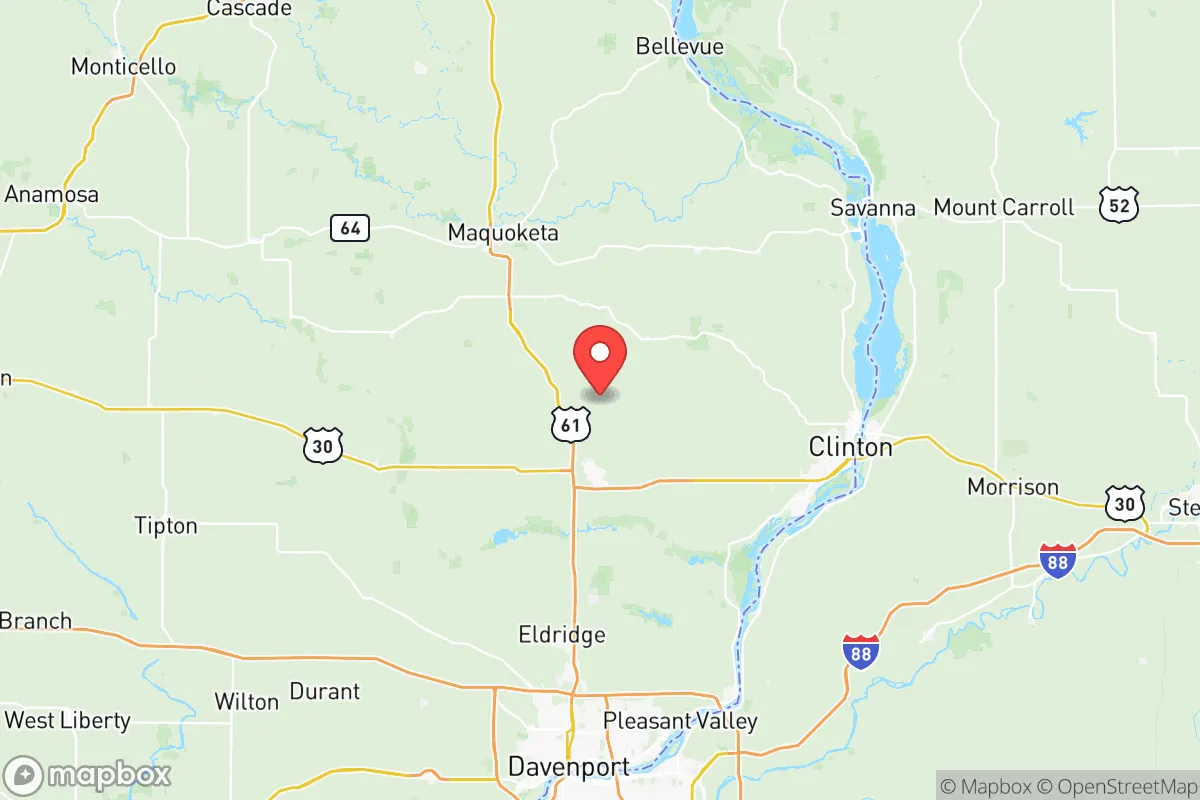
Clinton County, Iowa, is a predominantly white, working-class community of 46,383 residents, anchored by the Mississippi River city of Clinton and a scattering of smaller towns like DeWitt, Camanche, and Wheatland. With a foreign-born population of just 0.8% and a 89.5% white demographic, the county retains a strong sense of its 19th-century ethnic roots—primarily German and Irish—while experiencing slow, modest diversification driven by Hispanic and Black residents. The county’s identity is shaped by its industrial past, agricultural present, and a population that is older, less college-educated (22.1%), and more politically conservative than the state average, making it a place where tradition and stability matter more than rapid change.
Settlement & growth (pre-1960)
The land that became Clinton County was originally home to the Sauk and Meskwaki (Fox) nations, who used the Mississippi River floodplains for seasonal hunting and farming. European-American settlement began in earnest after the Black Hawk Purchase of 1832 opened the region to white settlers. The first wave, arriving in the 1830s and 1840s, was overwhelmingly Yankee—English-descended migrants from New England and upstate New York—who established the county’s earliest towns: Clinton (originally named Lyons), DeWitt, and Camanche. These settlers were farmers, millers, and small merchants, drawn by cheap land along the river and the promise of trade via steamboat.
The second major wave, from the 1850s through the 1880s, was German and Irish. Germans, in particular, formed the largest ethnic bloc, settling heavily in Clinton and Wheatland, where they worked in the burgeoning lumber and railroad industries. The Chicago & North Western Railway and the Milwaukee Road both laid tracks through the county, turning Clinton into a major rail hub and lumber-processing center. Irish immigrants, many fleeing the Great Famine, found work building those railroads and later in the sawmills and factories. By 1900, Clinton County was a classic Midwestern industrial-agricultural mix: German and Irish Catholics in the river towns, Yankee Protestants on the farms, and a small but visible Swedish community in Grand Mound and Lost Nation.
The 20th century brought a third wave: Southern and Eastern European immigrants, primarily Poles and Italians, who arrived between 1900 and 1920 to work in Clinton’s expanding manufacturing base—especially the Clinton Corn Processing Company (later Archer Daniels Midland) and the DuPont powder plant. These groups concentrated in Clinton’s south side and in Camanche, where the DuPont plant employed hundreds. The Great Depression and World War II slowed immigration, but the post-war boom of the 1950s saw a modest influx of Appalachian whites from Kentucky and Tennessee, drawn by factory jobs. The county’s population peaked at around 51,000 in 1960, reflecting the high-water mark of its industrial era.
Modern era (post-1965)
The 1965 Hart-Cellar Act, which ended national-origin quotas, had little immediate effect on Clinton County. The county’s foreign-born population remains minuscule (0.8%), and the few immigrants who arrived after 1965 were primarily Mexican and Central American laborers, drawn by agricultural work in the county’s corn and soybean fields and by meatpacking jobs in nearby plants. These Hispanic residents settled mainly in Clinton and DeWitt, forming small but growing communities. The Hispanic share of the population now stands at 3.5%, up from less than 1% in 1990.
The most significant demographic shift since 1965 has been domestic out-migration. As manufacturing declined—the Clinton Corn plant downsized, DuPont reduced operations, and the lumber industry collapsed—the county lost population steadily, dropping from 51,000 in 1960 to 46,383 today. Young adults, especially those with college degrees, have left for larger cities like the Quad Cities, Des Moines, or Chicago. This has left an older, more settled population. The Black population, at 2.9%, is concentrated in Clinton and Camanche, with roots in the post-World War II Great Migration of African Americans from the South seeking industrial work. The East/Southeast Asian population (0.8%) is tiny, mostly Vietnamese and Filipino families who arrived in the 1980s and 1990s, again tied to manufacturing and healthcare jobs. The Indian-subcontinent population is effectively zero.
Suburbanization has been limited. DeWitt, the county seat, has grown modestly as a bedroom community for the Quad Cities, while Camanche and Wheatland have remained small, stable towns. The county’s rural areas have seen depopulation, with farms consolidating and small hamlets like Charlotte and Goose Lake shrinking.
The future
Clinton County is projected to continue its slow population decline, with the state forecasting a drop to roughly 44,000 by 2040. The population is aging—the median age is 42.5, above the national average—and the county’s low college attainment rate (22.1%) limits its ability to attract knowledge-economy jobs. The Hispanic share is likely to grow slowly, perhaps reaching 5-6% by 2040, driven by natural increase and continued agricultural labor demand. The Black and Asian shares are expected to remain stable or grow only slightly, as the county lacks the economic pull to attract significant new immigrant communities.
The county’s cultural identity is likely to remain predominantly white, working-class, and conservative, with a strong sense of local history and place. New residents will mostly be domestic migrants—retirees, remote workers, or people seeking lower housing costs—rather than immigrants. The county’s few growing towns, particularly DeWitt and the western edge of Clinton, may see modest infill, but the overall trend is toward a smaller, older, and slightly more diverse population.
For someone moving in now, Clinton County offers a stable, affordable, and safe environment with a strong sense of community, but it is not a place of rapid demographic or economic change. The people are rooted, the pace is slow, and the future is one of gradual contraction rather than transformation. It is a good fit for those who value tradition, low cost of living, and a quiet, rural-adjacent lifestyle, but less so for those seeking diversity, career growth, or a dynamic social scene.

* Values derived from national, state, county, city and local statistics and may differ in a specific area. Last updated: 2026-07-03T00:43:13.000Z
Narrative content on this page is AI-generated and may contain mistakes. Verify any details that matter before acting on them.
ReloMaps may earn a commission from affiliate links at no extra cost to you.

