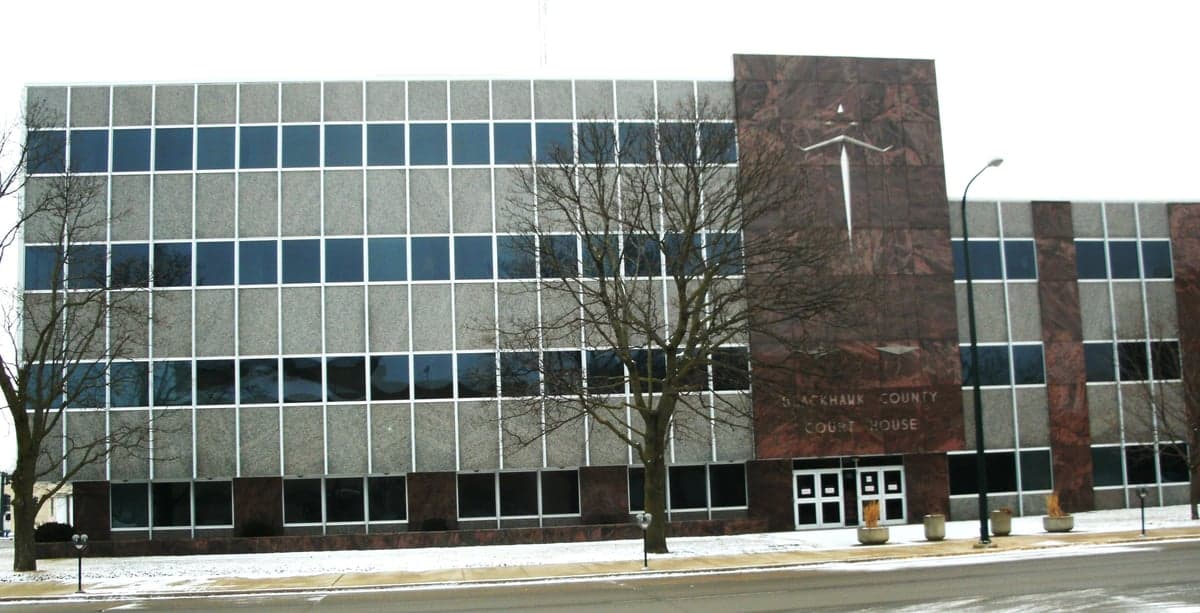
Photo: Wikipedia
Political ClimatePolitical Climate in Black Hawk County
Showing district-level results — no local-only data available.
Local Political AnalysisPolitical Analysis of Black Hawk County
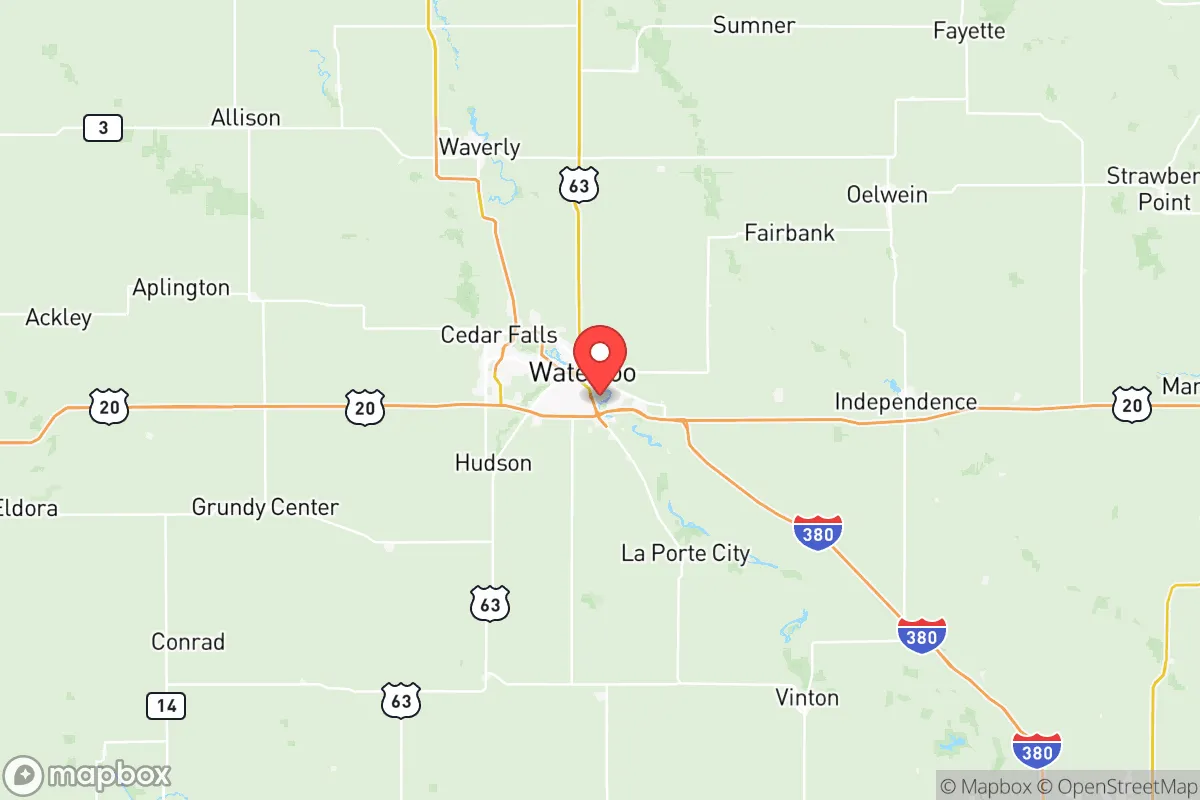
Black Hawk County, Iowa, has been trending in a concerning direction for those who value limited government and personal freedoms. While the county’s Cook PVI of R+4 suggests a slight Republican lean, the reality on the ground is more complicated—Waterloo and Cedar Falls have become strongholds for progressive policies, while the rural towns like Hudson, La Porte City, and Dunkerton still hold the line for conservative values. The county as a whole is shifting leftward faster than the state’s R+6 average, and that’s something folks here are watching closely.
How it compares
Compared to the rest of Iowa, Black Hawk County is a political outlier. The state’s R+6 PVI reflects a reliably conservative electorate, but Black Hawk’s R+4 shows it’s three points more competitive—and trending blue. The University of Northern Iowa in Cedar Falls brings in a younger, more transient population that votes heavily Democratic, while Waterloo’s industrial base has seen union influence push the city council toward progressive tax and zoning policies. In contrast, towns like Evansdale and Raymond still vote red by wide margins, but their populations are shrinking. The swing precincts are in the suburban fringe around Cedar Falls—places like the area near Viking Road—where moderate voters are increasingly swayed by national Democratic messaging on healthcare and education, even if it means more government control.
What this means for residents
For residents who believe in personal responsibility and limited government, the trend is worrying. Waterloo’s city council has pushed for higher property taxes to fund expanded social programs, and there’s been talk of rent control measures that would restrict property owners’ rights. The county’s school board elections have become battlegrounds, with progressive candidates winning seats in Cedar Falls and pushing for curriculum changes that some parents see as overreach. Meanwhile, rural towns like Jesup and Gilbertville still enjoy low taxes and minimal regulation, but they’re losing representation as the county’s population concentrates in the urban core. If you’re a conservative, you’re increasingly feeling like your voice is drowned out by the noise from the university and the union halls.
Culturally, the divide is stark. Waterloo has embraced “sanctuary city” policies that limit cooperation with federal immigration enforcement, while rural towns maintain strong ties to local law enforcement and traditional values. The county’s gun rights are still protected by state preemption laws, but local ordinances on noise and public gatherings have been used to restrict Second Amendment activities in city limits. Longtime residents remember when Black Hawk County was a bellwether for common-sense conservatism—now, it feels like we’re fighting to keep the government out of our backyards, one city council meeting at a time. If this trajectory holds, expect more families to head for the rural towns or even cross into neighboring counties like Buchanan or Bremer, where the political climate still respects individual freedoms.

State Political ClimatePolitical Climate in Iowa
State Political AnalysisPolitical Environment in the State
Iowa has been a reliably Republican state for the better part of the last decade, with a Cook PVI of R+6, but it wasn’t always this way. As recently as 2012, the state was a true battleground, splitting its electoral votes and electing Democrats to the Senate and Governor’s mansion. Over the last 10-20 years, a steady rightward shift has taken hold, driven by rural and exurban voters abandoning the Democratic brand over cultural and economic issues. The dominant coalition today is a mix of small-town conservatives, evangelical Christians, and suburban families who have grown wary of progressive overreach from the coasts. The state is now solidly red at the presidential level, with Republicans controlling the legislature and governor’s office, but the path here was not a straight line — it was a reaction to national trends that many Iowans felt were leaving them behind.
Urban vs. rural divide
The political map of Iowa is a textbook example of the urban-rural split. The two major metros — Des Moines and Iowa City — are the blue islands in a sea of red. Polk County (Des Moines) has trended leftward, voting for Biden by 18 points in 2020, while Johnson County (Iowa City) is the state’s most liberal stronghold, home to the University of Iowa and a heavily Democratic electorate. But outside these corridors, the landscape flips hard. Rural counties like Lyon, Sioux, and Osceola in the northwest routinely vote 75-80% Republican. The real story is in the suburbs and small cities that have flipped decisively. Places like Cedar Rapids (Linn County) and Davenport (Scott County) were once swing areas but have moved right, with Scott County voting for Trump by 5 points in 2024 after backing Obama twice. The Dubuque area and Council Bluffs are also now reliably red, reflecting a broader exodus of working-class voters from the Democratic coalition. The divide isn’t just about population density — it’s about culture. Urban Iowans tend to prioritize climate and social issues, while rural and suburban Iowans focus on agriculture, gun rights, and local control.
Policy environment
Iowa’s policy environment has shifted sharply conservative over the past five years, and the results are tangible. The state passed a flat income tax of 3.9% in 2022, with a path to a 3.5% rate by 2026, making it one of the most tax-competitive states in the Midwest. Property taxes are relatively low, and there is no estate tax. On education, Iowa enacted a universal school voucher program in 2023 (the Students First Act), allowing any family to use state funds for private or homeschool expenses — a major win for parental rights. The state also passed a six-week abortion ban in 2023 (HF 732), which was upheld by the Iowa Supreme Court in 2024, effectively ending most abortions in the state. Election integrity saw a tightening with voter ID requirements and restrictions on ballot drop boxes (SF 413 in 2021). On the regulatory front, Iowa is a right-to-work state with minimal business licensing hurdles. The state has also preempted local ordinances on firearms, meaning cities like Des Moines cannot impose their own gun restrictions. For a conservative family or individual, the policy environment is deliberately designed to maximize personal freedom and limit government overreach — at least at the state level.
Trajectory & freedom
Iowa is becoming more free in several key areas, but not without some concerning trends. The most significant expansion of liberty came in 2021 with permitless carry (SF 507), allowing any legal adult to carry a concealed firearm without a permit. This was followed by the elimination of the permit requirement entirely in 2024. On medical freedom, Iowa passed a law in 2023 (HF 649) prohibiting mask and vaccine mandates in schools and government buildings, a direct response to COVID-era overreach. Parental rights were strengthened with the Students First Act and a 2022 law requiring schools to notify parents of any changes to a student’s health or emotional well-being (SF 496). However, there are red flags. The state has aggressively expanded its power in the name of public health, including a 2024 law that allows the governor to declare a public health emergency and impose restrictions without legislative approval — a concerning precedent. Additionally, property rights have been tested by a 2023 law allowing carbon pipeline companies to use eminent domain for private projects, which has sparked fierce backlash from landowners in counties like Humboldt and Palo Alto. The trajectory is generally toward more personal freedom, but the pipeline fight shows that corporate interests can sometimes override individual rights.
Civil unrest & political movements
Iowa has seen relatively little civil unrest compared to coastal states, but there have been flashpoints. The most visible was the 2020 protests in Des Moines and Iowa City following George Floyd’s death, which included some property damage and clashes with police. Since then, organized activism has been more subdued but persistent. On the left, groups like Iowa Citizens for Community Improvement push for environmental and social justice causes, while the Iowa Democratic Party has struggled to maintain relevance. On the right, the most active movement is the anti-carbon pipeline coalition, which has held rallies at the state capitol and successfully pressured some county boards to reject pipeline permits. Immigration politics are less heated than in border states, but a 2024 law (HF 260) made it a state crime to be in Iowa illegally, mirroring Texas-style enforcement. Election integrity remains a hot topic; the 2020 and 2022 cycles saw no major scandals, but the state’s move to paper ballots and voter ID has satisfied most concerns. The most visible political flashpoint for a new resident would likely be the pipeline issue, which has united rural conservatives and some environmentalists against the state government and corporate interests.
Projection
Over the next 5-10 years, Iowa is likely to become more conservative, but not without internal friction. Demographic trends favor the GOP: the state is aging, with a growing retiree population in places like Clear Lake and Okoboji, and in-migration from blue states like Illinois and California is modest but increasing. These newcomers tend to be more conservative than the average transplant, often moving for lower taxes and gun-friendly laws. The urban centers of Des Moines and Iowa City will continue to drift left, but they are not growing fast enough to offset rural and suburban gains. The biggest wildcard is the carbon pipeline fight — if the state continues to side with corporate interests over landowners, it could erode trust in the Republican majority. However, the overall trajectory is toward a more solidly red state, with continued expansion of school choice, tax cuts, and Second Amendment protections. A new resident moving in now should expect to find a state that values personal liberty but is not afraid to use government power to enforce cultural norms — a trade-off that most conservatives will find acceptable.
For a new resident, the bottom line is this: Iowa offers a high degree of personal freedom in terms of taxes, guns, and education, but it is not a libertarian paradise. The state government is willing to intervene on moral issues (abortion, immigration) and corporate interests (pipelines), which can feel like overreach depending on your perspective. If you value low taxes, school choice, and a culture that respects traditional values, Iowa is a strong bet. Just keep an eye on the pipeline fight — it’s the canary in the coal mine for whether the state will prioritize individual property rights or corporate power in the years ahead.
* Values derived from national, state, county, city and local statistics and may differ in a specific area. Last updated: 2026-05-15T21:48:51.000Z
Narrative content on this page is AI-generated and may contain mistakes. Verify any details that matter before acting on them.
ReloMaps may earn a commission from affiliate links at no extra cost to you.

