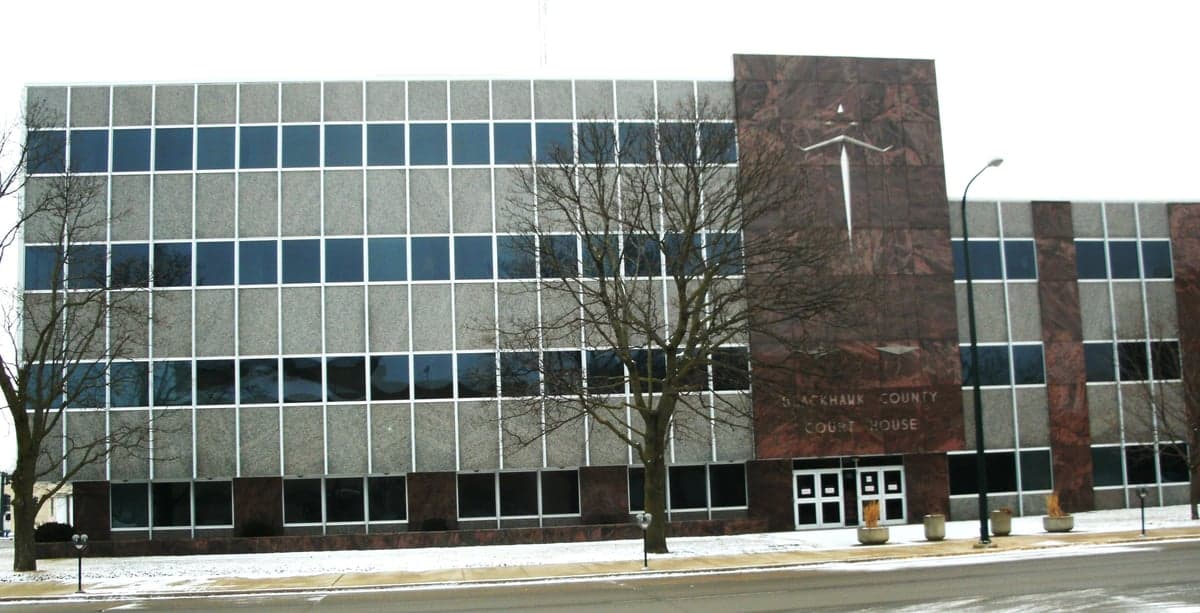
Photo: Wikipedia
Personal Sovereignty in Black Hawk County
Viable for self-reliance. Generally workable, though some barriers may limit total independence.
What does Personal Sovereignty tell us?
Personal Sovereignty measures your capacity for self-reliance and independence with minimal government friction. Higher scores mean fewer barriers between you and the way you want to live... but it assumes you have the space you need and good neighbors.
What does this tell us?
Personal Sovereignty measures your capacity for self-reliance and independence with minimal government friction. Higher scores mean fewer barriers between you and the way you want to live... but it assumes you have the space you need and good neighbors.
State Policy
Energy independence: Importer (50% of energy produced in-state)
Personal Liberty
Homesteading

Personal Liberty Analysis
Black Hawk County, Iowa, offers a mixed bag for those prioritizing personal sovereignty, with a legal environment that generally respects gun rights and property autonomy but is tempered by a state-level tax burden that ranks among the highest in the Midwest. For the survivalist or prepper, the county’s rural towns—like Hudson, La Porte City, and Dunkerton—provide a more hands-off regulatory atmosphere compared to the urban core of Waterloo and Cedar Falls, where local ordinances and higher population density can create friction. The key is understanding where the county’s autonomy-friendly pockets lie and where state-level policies, particularly on taxation and medical freedom, may require strategic navigation.
Tax burden and regulatory posture in Black Hawk County
Iowa’s state income tax, which was a flat 3.8% in 2025 after recent reforms, still places a noticeable drag on earnings compared to zero-income-tax states like Texas or Florida. Property taxes in Black Hawk County average around 1.7% of assessed value, slightly above the state median, with Waterloo and Cedar Falls carrying higher mill levies due to school district and municipal services. For a prepper focused on self-reliance, this means every dollar earned is taxed before you can put it into supplies, land, or infrastructure. The regulatory posture at the county level is relatively light—zoning in unincorporated areas and towns like Gilbertville and Raymond is minimal, allowing for backyard workshops, livestock, and rainwater collection without the permitting headaches common in larger cities. However, the state’s building code adoption (based on the 2021 International Residential Code) can complicate off-grid construction if you’re not careful about permits. The silver lining: Iowa has no state-level business inventory tax and a relatively low corporate tax rate (8.4% flat), which keeps small-scale homestead operations—like selling eggs or timber—from being crushed by red tape.
Self-defense and gun law specifics in Black Hawk County
Iowa is a “shall-issue” state for concealed carry, and as of 2021, it became a permitless carry state for anyone 21 or older who can legally possess a firearm. This is a major win for personal sovereignty. In Black Hawk County, the sheriff’s office in Waterloo processes permits efficiently, and there is no county-level magazine capacity ban or assault weapon restriction—state preemption law blocks local governments from enacting their own gun control. For the survivalist, this means you can carry openly or concealed in most of the county, including in rural areas like Evansdale and Elk Run Heights, without fear of local overreach. The one caveat: Iowa law prohibits firearms in courthouses, schools, and certain government buildings, and private property rights mean businesses in Cedar Falls (especially near the university) may post “no guns” signs. Stand-your-ground laws are in effect, with no duty to retreat in any place you are lawfully present. For a prepper, this legal framework is solid—you can defend your home, vehicle, or person without worrying about a prosecutor second-guessing your actions, provided you use reasonable force.
Self-reliance and homesteading viability across the county
Homesteading viability in Black Hawk County varies dramatically by location. In the unincorporated areas around Dunkerton and La Porte City, you can find parcels of 5 to 40 acres for $4,000–$8,000 per acre, with minimal zoning restrictions on outbuildings, chicken coops, or even a small orchard. Off-grid feasibility is high in these areas: well water is common (drilling runs $8,000–$15,000), septic systems are standard, and solar panels face no county-level obstruction. However, in Waterloo and Cedar Falls, city codes require connection to municipal water and sewer, and zoning limits livestock to small flocks of chickens (no roosters) and bans pigs or goats on lots under an acre. For a prepper wanting true self-reliance—think rainwater catchment, composting toilets, and a wood-fired generator—the rural townships are the only viable option. The county’s soil is rich (Iowa’s famous loam), so gardening is productive, but note that agricultural land is often leased to commodity farmers, so buying a small parcel that isn’t part of a larger farm operation requires careful title searching. The biggest regulatory hurdle: Iowa’s building code requires a permit for any structure over 200 square feet, so a shipping container cabin or a tiny house on wheels may need to be classified as a “recreational vehicle” to avoid inspection costs.
Personal liberties: parental rights, medical autonomy, speech, and property
Iowa has strong parental rights in education—the state’s “backpack” funding law allows parents to use public school funds for private or homeschool expenses, and Black Hawk County has a growing homeschool community, particularly in the rural areas around Hudson and Gilbertville. Medical autonomy is more constrained: Iowa requires parental consent for minors’ medical procedures, but the state has not passed broad medical freedom legislation (like a ban on vaccine mandates for employment), so private employers in Waterloo and Cedar Falls may still require COVID-19 or flu shots. Speech protections are robust under the Iowa Constitution, and there are no county-level hate speech ordinances that chill political expression. Property rights are generally respected, but the county’s floodplain regulations along the Cedar River (which runs through Waterloo and Cedar Falls) can restrict building and land use—if you buy near the river, expect FEMA-mandated elevation requirements that add $20,000–$40,000 to construction costs. For a prepper, the biggest liberty concern is the state’s emergency powers: Iowa’s governor can declare a disaster and issue orders that override local control, as seen during the 2020 pandemic when business closures and gathering limits were enforced. This means your personal sovereignty is ultimately subject to Des Moines, not the county sheriff.
Overall, Black Hawk County ranks as a moderate-to-strong sovereignty zone compared to the rest of the Midwest—better than Illinois or Minnesota for gun rights and property autonomy, but weaker than South Dakota or Missouri for tax burden and medical freedom. The sweet spot for a prepper is the rural triangle of Dunkerton, La Porte City, and Hudson, where you can own land, carry a firearm, and homeschool without significant government interference. The urban centers of Waterloo and Cedar Falls are best avoided if you value low taxes and minimal regulation. If you can stomach Iowa’s income tax and the occasional state-level overreach, Black Hawk County offers a defensible base for self-reliant living—just be ready to drive 20 minutes to the county line for the truly hands-off lifestyle.

* Values derived from national, state, county, city and local statistics and may differ in a specific area. Last updated: 2026-05-15T21:48:51.000Z
Narrative content on this page is AI-generated and may contain mistakes. Verify any details that matter before acting on them.
ReloMaps may earn a commission from affiliate links at no extra cost to you.

