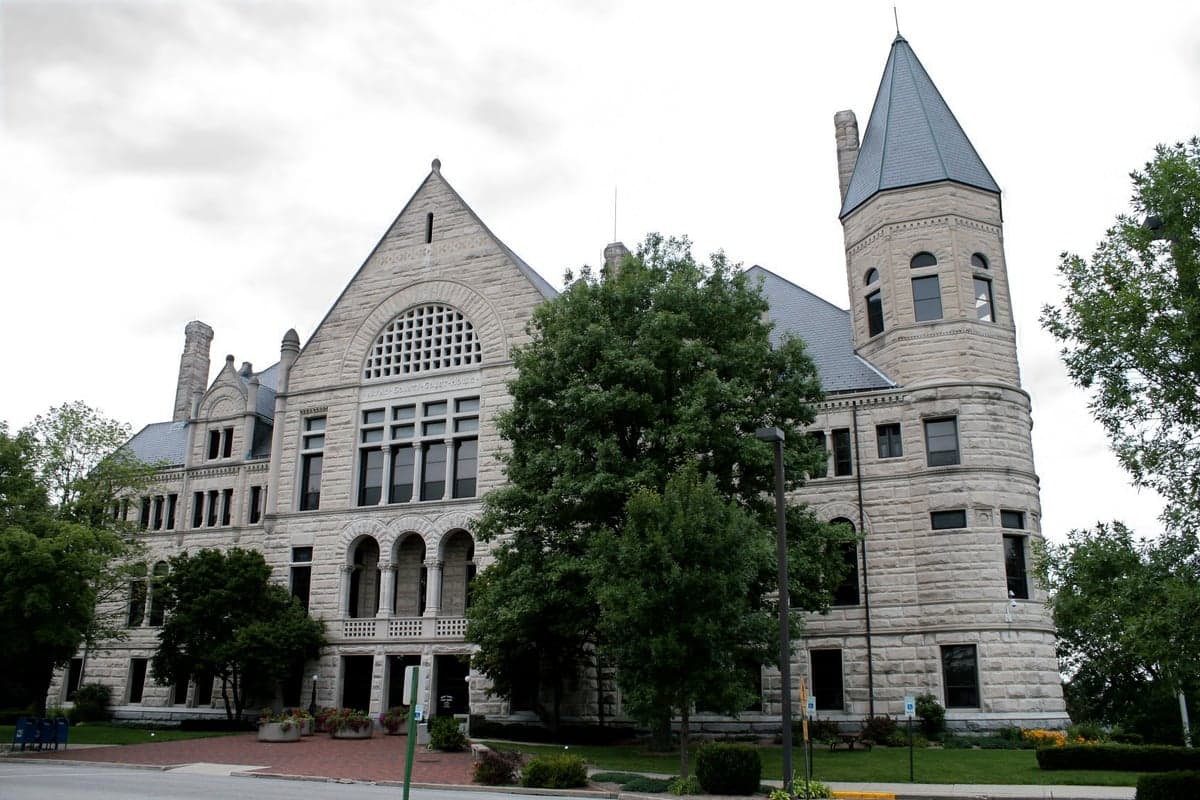
Photo: Wikipedia
Personal Sovereignty in Wayne County
Viable for self-reliance. Generally workable, though some barriers may limit total independence.
What does Personal Sovereignty tell us?
Personal Sovereignty measures your capacity for self-reliance and independence with minimal government friction. Higher scores mean fewer barriers between you and the way you want to live... but it assumes you have the space you need and good neighbors.
What does this tell us?
Personal Sovereignty measures your capacity for self-reliance and independence with minimal government friction. Higher scores mean fewer barriers between you and the way you want to live... but it assumes you have the space you need and good neighbors.
State Policy
Energy independence: Importer (35% of energy produced in-state)
Personal Liberty
Homesteading

Personal Liberty Analysis
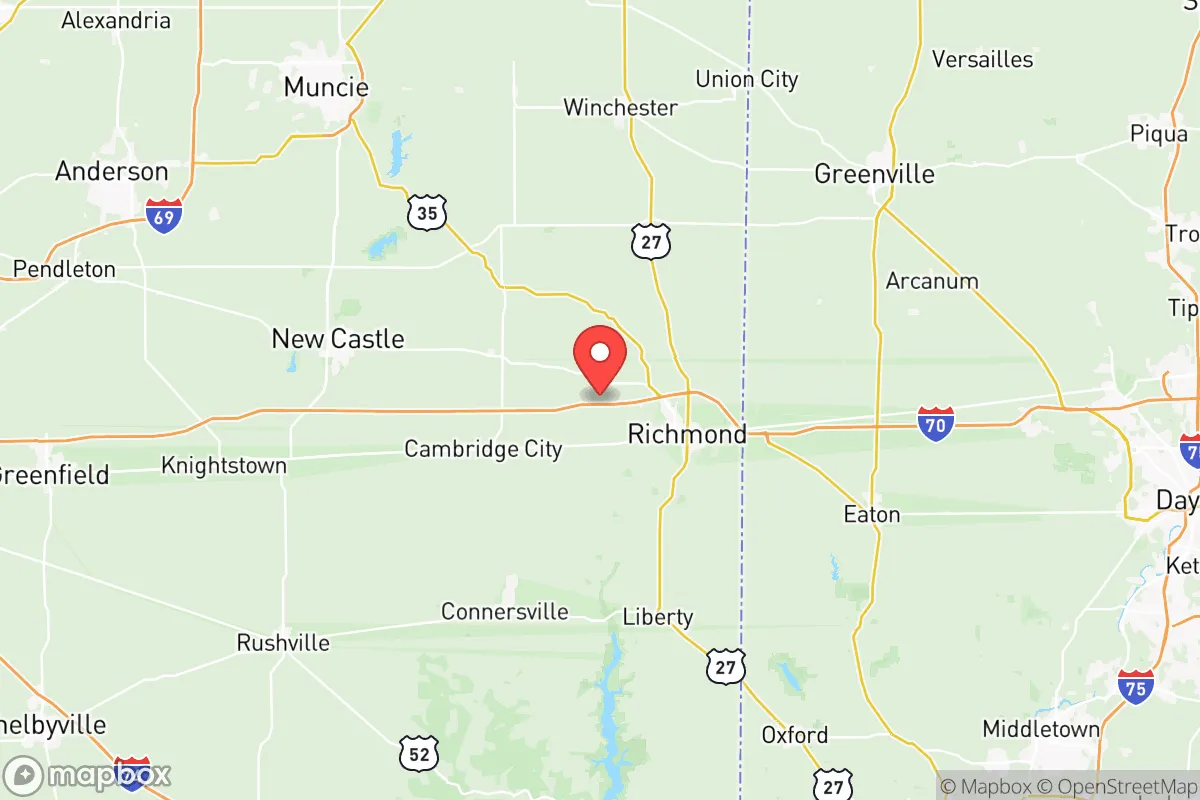
Wayne County, Indiana, offers a notably high degree of personal sovereignty, especially when compared to metro areas in neighboring states or even the more regulated corners of central Indiana. The county seat of Richmond anchors a region where state-level protections for gun rights, low taxes, and permissive land-use policies give residents tangible autonomy over their daily lives. While Richmond itself provides urban convenience, surrounding communities like Centerville, Hagerstown, and Cambridge City often allow even more room for self-reliance, making the county a practical choice for single individuals and families who prioritize independence over government services. Indiana’s conservative tilt—the state voted +11 Republican in the 2020 presidential race—colors the entire region, and Wayne County’s local politics generally align with that restraint.
Tax burden and regulatory posture in Wayne County
Indiana’s overall tax environment is among the most business- and resident-friendly in the Midwest, and Wayne County mirrors that approach. The state levies a flat income tax of 3.05% as of 2024, with a scheduled reduction to 2.9% by 2027. Wayne County adds a small county income tax—typically around 0.5% depending on the township—but that remains lower than many other Indiana counties. Property taxes in Wayne County average roughly 0.9% of assessed home value, well under the national median. Sales tax is a flat 7% statewide with no local add-ons, meaning no surprises at the register. On the regulatory side, Wayne County does not impose heavy business licensing or home-occupation restrictions in unincorporated areas. Richmond has a municipal code that governs zoning for commercial activities inside city limits, but rural townships such as Boston, Williamsburg, and Economy operate with minimal interference. For someone starting a small repair shop, running a home-based bakery, or operating a single-owner trucking business, the county’s posture is genuinely light-touch compared to urban counties in Ohio or Illinois within a two-hour drive.
Self-defense and gun law specifics in Wayne County’s communities
Indiana is a constitutional carry state, meaning that as of July 2022, no permit is required to carry a handgun openly or concealed for any law-abiding adult 18 or older. This applies uniformly across Wayne County, including Richmond, Centerville, and every unincorporated area. The state also has strong preemption laws that prohibit local governments from enacting their own firearm restrictions or registration schemes. As a result, Wayne County residents enjoy the full force of state-level gun rights without the patchwork of city ordinances seen in, say, Colorado or Washington. Richmond, a city of roughly 35,000, does not have any additional firearm-related ordinances beyond state law. Gun shops and ranges are present in the county; for example, Ron’s Guns & Indoor Range in Richmond provides training and sales. The county is part of Indiana’s “Stand Your Ground” territory, and no duty to retreat applies when a person is in a place they have a right to be. For practical self-defense, Wayne County presents a straightforward scenario: the legal framework is permissive, enforcement is generally gun-friendly, and residents from Cambridge City to Hagerstown can expect consistent treatment under the same rules.
Self-reliance and homesteading viability: lot sizes, zoning, and off-grid feasibility
For those interested in growing food, raising livestock, or building an independent household, Wayne County offers a range of options depending on location. Within Richmond’s city limits, standard residential lots are often under a quarter-acre, and zoning requires connection to municipal water and sewer. Livestock such as chickens are permitted but limited to a small number and subject to setback rules. Move just a few miles out to Centerville (population ~2,600) or Fountain City (population ~800), and lot sizes jump to half an acre or more, with many properties offering one to ten acres. In unincorporated townships like Washington, Jackson, and Franklin, there are essentially no lot-size minimums beyond state health requirements for septic, and the county imposes no general prohibition on keeping pigs, goats, or cattle. Off-grid feasibility is high in these rural areas: Indiana has no state restriction on solar panel installation, rainwater catchment, or composting toilets, though a building permit is required for any new structure. Richmond’s code does not allow full off-grid living inside city limits (you must connect to utilities), but in towns like Hagerstown (population ~1,800) or Cambridge City (population ~1,800), residents can legally disconnect from the grid if they meet well and septic standards. The county extension office and local farming cooperatives provide resources for self-sufficiency, and the area’s agricultural history means many properties already have barns, fencing, and water access. For someone seeking a homestead on a budget, Wayne County’s median home price is around $130,000, with many rural properties well under $200,000.
Personal liberties: parental rights, medical autonomy, speech, and property
Indiana’s legal environment leans heavily toward individual and parental control. A 2022 Parental Bill of Rights requires schools to obtain parental consent before administering physical exams, mental health screenings, or surveys on sensitive topics. Parents also have the explicit right to opt out of any sex education or controversial instructional materials. In Wayne County, the Richmond Community Schools and smaller districts like Centerville-Abington and Hagerstown-Jefferson comply with these state mandates, giving families a clear line of authority. Medical autonomy is more nuanced; Indiana does not have a broad religious or conscientious exemption for vaccine mandates in employment, but it does protect the right to refuse any medical treatment for oneself or one’s minor children (subject to child welfare override in extreme cases). Telehealth and out-of-state prescriptions are generally accessible through Indiana-licensed providers. Speech protections align with the First Amendment, and Wayne County has no local ordinances restricting signs, public gatherings, or expression beyond basic noise and trespass laws. Property rights are well-protected: Indiana is a “right to farm” state, shielding agricultural operations from nuisance lawsuits as long as they follow generally accepted practices. In Wayne County, this means a resident raising chickens or keeping bees in a rural township can do so without fear of neighbor-driven code enforcement. Eminent domain is rarely used for private development, and the county assessor’s office provides transparent appraisal processes.
Overall, Wayne County offers a balanced package of personal sovereignty that stands out among eastern Indiana counties. The combination of constitutional carry, low tax rates, rural zoning

* Values derived from national, state, county, city and local statistics and may differ in a specific area. Last updated: 2026-06-20T18:52:18.000Z
Narrative content on this page is AI-generated and may contain mistakes. Verify any details that matter before acting on them.
ReloMaps may earn a commission from affiliate links at no extra cost to you.

