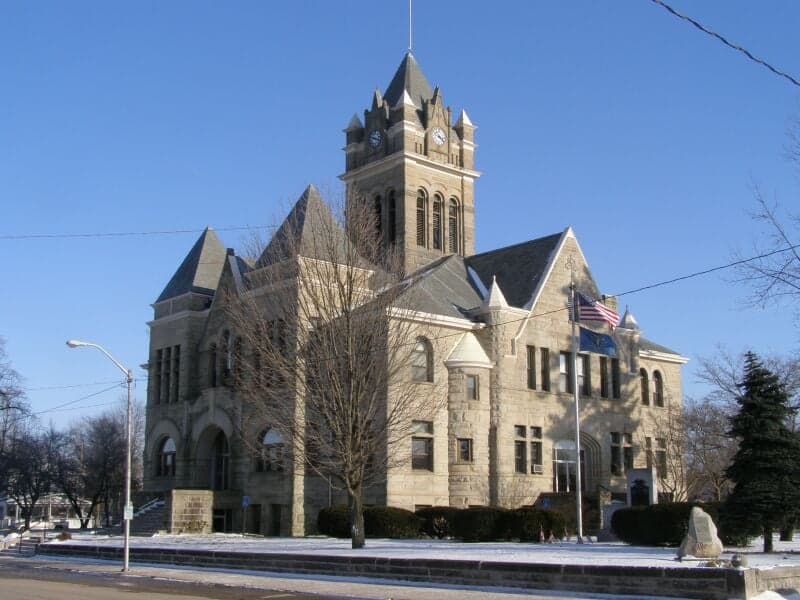
Photo: Wikipedia
Personal Sovereignty in Pulaski County
Viable for self-reliance. Generally workable, though some barriers may limit total independence.
What does Personal Sovereignty tell us?
Personal Sovereignty measures your capacity for self-reliance and independence with minimal government friction. Higher scores mean fewer barriers between you and the way you want to live... but it assumes you have the space you need and good neighbors.
What does this tell us?
Personal Sovereignty measures your capacity for self-reliance and independence with minimal government friction. Higher scores mean fewer barriers between you and the way you want to live... but it assumes you have the space you need and good neighbors.
State Policy
Energy independence: Importer (29% of energy produced in-state)
Personal Liberty
Homesteading

Personal Liberty Analysis
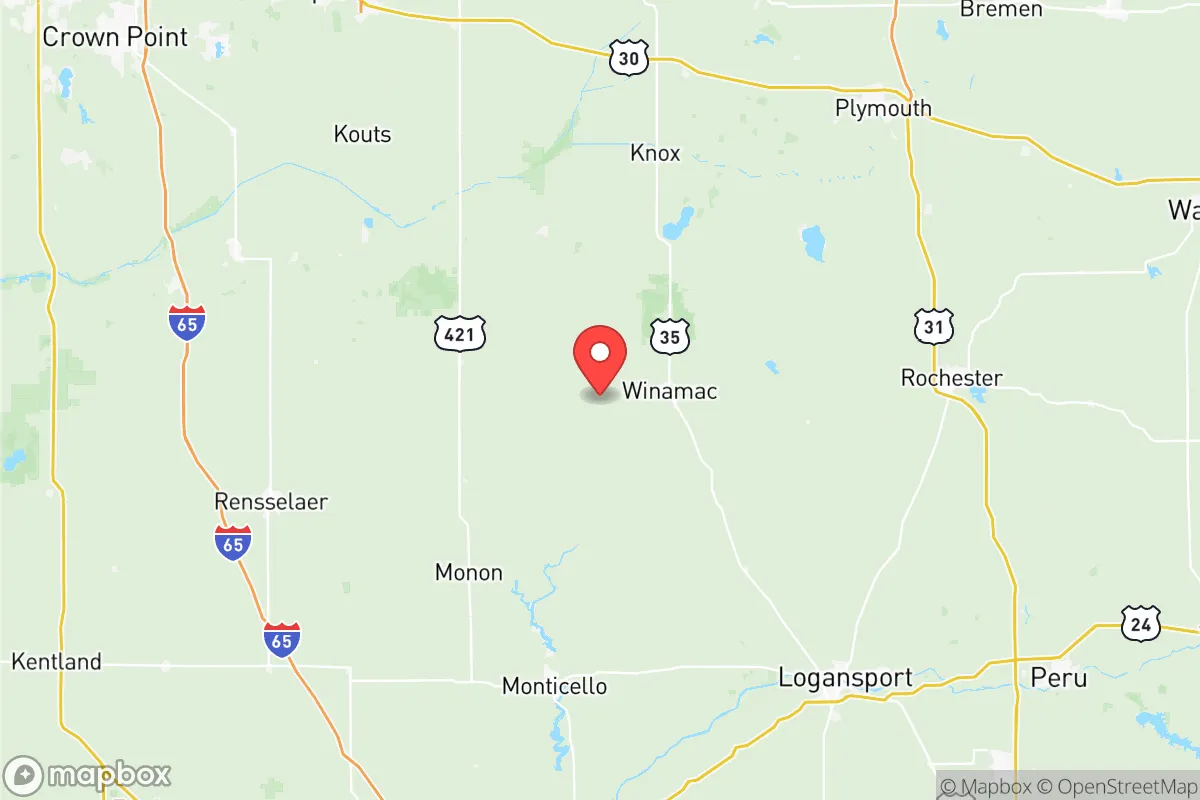
Pulaski County, Indiana, offers a notably high degree of personal sovereignty, shaped by a combination of low population density, a limited local government footprint, and the broader legal framework of a state that consistently ranks among the most freedom-oriented in the Midwest. For individuals and families prioritizing autonomy, the county presents an environment where self-reliance is not just possible but often the default, with fewer layers of regulation and oversight than one would encounter in more urbanized or coastal regions. The county seat of Winamac, along with smaller communities like Francesville and Medaryville, embodies a culture where personal responsibility and local control are deeply ingrained, making it a viable option for those seeking to minimize external interference in their daily lives.
Tax burden and regulatory posture in Pulaski County
Indiana’s overall tax climate is favorable for those seeking to keep more of their earnings, and Pulaski County benefits directly from this state-level posture. The state imposes a flat individual income tax rate of 3.15% as of 2026, with no local income taxes layered on top in Pulaski County, keeping the effective rate low. Property taxes are assessed at the county level, and Pulaski County’s rates are among the more moderate in the state, with the average effective property tax rate hovering around 0.85% of assessed home value—well below the national average. The county government operates with a lean budget, and there is no county-level sales tax beyond the state’s 7% rate. Regulatory oversight is minimal: there is no county-wide zoning ordinance in unincorporated areas, meaning that in places like Star City and Monterey, landowners face few restrictions on how they use their property, provided they comply with basic state health and safety codes. This light-touch regulatory environment extends to business licensing and building permits, which are handled with minimal bureaucracy compared to more densely populated counties.
Self-defense and gun law specifics in Pulaski County
Indiana is a constitutional carry state, and Pulaski County reflects this permissive stance on firearm ownership and self-defense. As of 2026, no permit is required to carry a handgun openly or concealed for any law-abiding adult 18 or older, a right codified in state law. The county sheriff’s office in Winamac issues lifetime handgun licenses for those who still wish to obtain one for reciprocity purposes, but the process is straightforward and shall-issue. There are no county-specific firearm restrictions, and local law enforcement generally respects the Second Amendment as a fundamental right. The county’s rural character means that gun ownership is widespread, and shooting on private property is common, provided it is done safely and not within 500 feet of an occupied dwelling without permission. The Tippecanoe River area and the wooded tracts near Pulaski and Medaryville are popular for recreational shooting and hunting, with no additional county-level noise or discharge ordinances beyond state law. For those prioritizing self-defense autonomy, Pulaski County offers a legal environment with few barriers to ownership or carry.
Self-reliance and homesteading viability in Pulaski County
Homesteading and off-grid living are highly viable in Pulaski County, particularly in its unincorporated areas. Lot sizes in the county vary widely, but agricultural and rural residential parcels of 5 to 40 acres are common and affordable, with median land prices around $4,000 to $6,000 per acre as of 2026. There is no county-wide zoning in unincorporated areas, which means that in communities like Francesville, Star City, and Monterey, residents can build a home, keep livestock, install solar panels, drill a well, and use composting toilets without seeking special permits, as long as they meet basic state septic and well water standards. The county does not enforce building codes outside of incorporated town limits, giving property owners full control over construction methods and materials. Off-grid energy systems, including solar and wind, are not restricted by county ordinance, and net metering is available through the local electric cooperative, Pulaski-White REMC. Water access is straightforward: the county’s aquifer is plentiful, and drilling a private well typically costs between $3,000 and $6,000. For those seeking to raise animals, the county allows chickens, goats, and even larger livestock on parcels as small as one acre in unincorporated areas, with no county-level animal limits. The town of Winamac does have some basic nuisance ordinances, but they are rarely enforced against standard homesteading practices.
Personal liberties in Pulaski County: parental rights, medical autonomy, and property
Pulaski County operates within Indiana’s broader legal framework, which strongly emphasizes parental rights and limited government intervention in family matters. Indiana law grants parents broad authority over their children’s education, healthcare, and upbringing, and the county’s school districts—Eastern Pulaski Community Schools and West Central School Corporation—generally defer to parental decisions on curriculum-related matters and opt-out requests. Medical autonomy is supported by Indiana’s lack of a state-level vaccine mandate for adults and its relatively permissive stance on alternative medical treatments, though the county itself has no additional healthcare regulations. Property rights are robust: the county does not impose rent control, and there are no county-level restrictions on short-term rentals like Airbnb in unincorporated areas. The county’s planning department in Winamac handles only basic subdivision and drainage reviews, leaving landowners with substantial freedom to develop or improve their property as they see fit. Speech and assembly are protected under state and federal law, and the county’s small, close-knit communities tend to resolve disputes informally rather than through litigation, further reducing the role of government in daily life.
Overall, Pulaski County offers a level of personal sovereignty that is increasingly rare in the United States, particularly when compared to the regulatory density of the Chicago metropolitan area or even larger Indiana cities like Indianapolis or Fort Wayne. The combination of low taxes, minimal zoning, constitutional carry, and strong property rights creates an environment where self-reliance is the norm rather than an exception. For those considering relocation from states with heavier regulatory burdens, the county’s unincorporated areas—especially around Francesville, Star City, and Monterey—provide a practical and legally straightforward path to a more autonomous lifestyle, while the incorporated towns like Winamac offer a modest level of services without sacrificing the core freedoms that define the area.

* Values derived from national, state, county, city and local statistics and may differ in a specific area. Last updated: 2026-11-08T12:39:31.000Z
Narrative content on this page is AI-generated and may contain mistakes. Verify any details that matter before acting on them.
ReloMaps may earn a commission from affiliate links at no extra cost to you.

