Photo: Wikipedia
Quality of Life in Marshall County
A livable area that tracks near national norms for affordability, walkability, and neighborhood health.
What does Quality of Life tell us?
Quality of Life measures an area by evaluating factors like cost of living, nearby amenities, country club access, airport proximity, socioeconomic signals and neighborhood character. For large states, this is a general average — quality of life can vary dramatically between metro areas, suburbs, and rural communities within the same state.
What does this tell us?
Quality of Life measures an area by evaluating factors like cost of living, nearby amenities, country club access, airport proximity, socioeconomic signals and neighborhood character. For large states, this is a general average — quality of life can vary dramatically between metro areas, suburbs, and rural communities within the same state.
Cost of Living
26% below national average
129%
The Real Cost of Living in Marshall County for 2026
| Tier | Individual | Family (4) |
|---|---|---|
| Survival | $15k | $28k |
| Comfortable | $36k | $53k |
| Luxury | $107k+ | $166k+ |
| Elite (Top 5%) | $126k+ | $195k+ |
Quality-of-Life Analysis
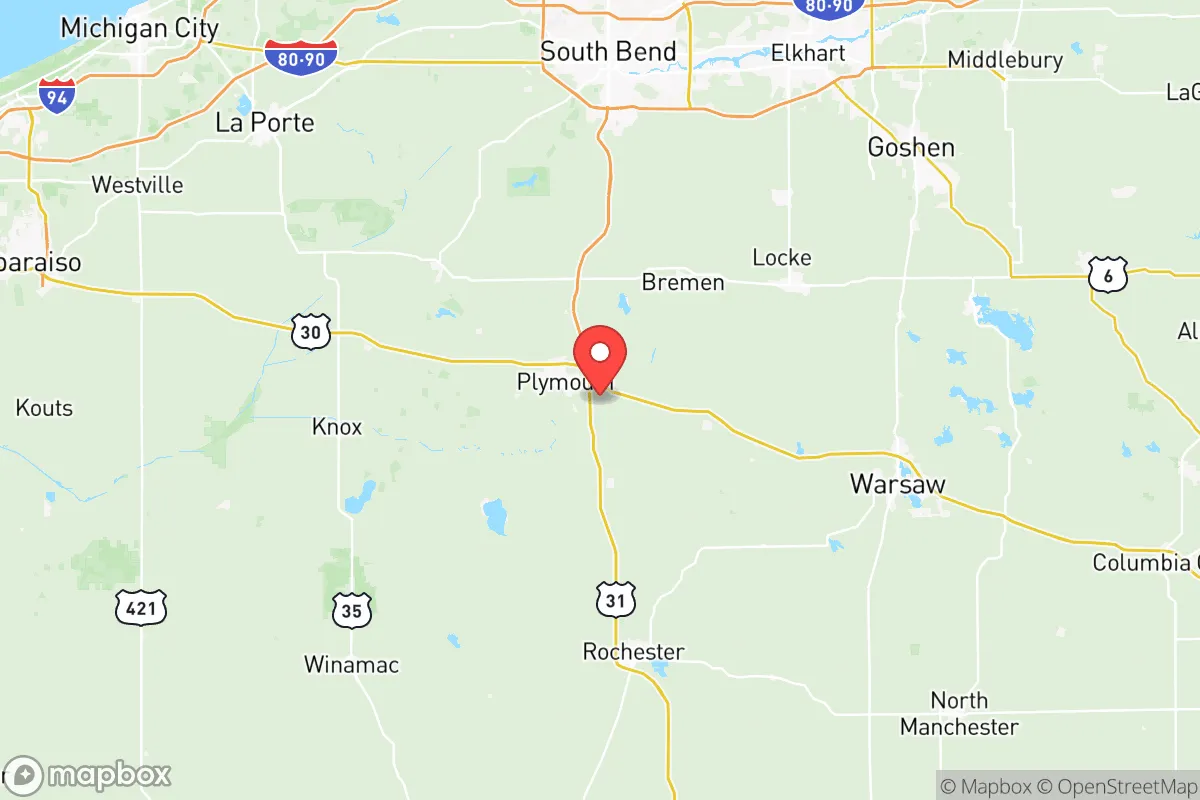
Marshall County, Indiana, offers one of the most pronounced urban-to-rural spectrums in the northern part of the state, anchored by the micropolitan hub of Plymouth and dissolving into the agricultural flatlands of towns like Bourbon and Culver. With a cost of living index of 74 (well below the 100 U.S. average), the county attracts both manufacturing workers seeking affordable housing and lakefront retirees drawn to the Chain O' Lakes region. The character of daily life shifts dramatically depending on whether you are in a walkable downtown, a small-town main street, or a farmstead outside Tippecanoe, making the county a genuine mosaic of lifestyle choices rather than a single homogeneous community.
Largest town(s) & population centers
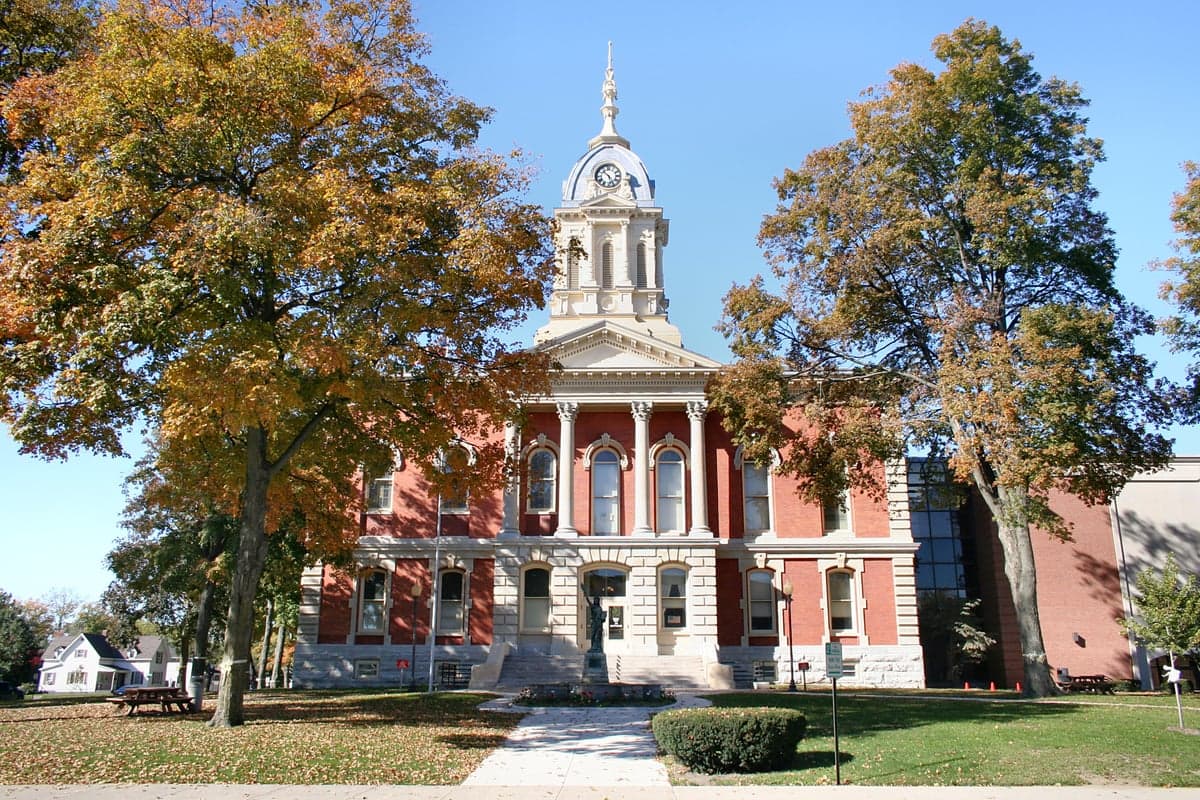
Plymouth is the county seat and the undisputed economic and retail center, home to roughly 10,000 residents and the region's largest concentration of jobs, anchored by major employers like the AM General plant and a cluster of plastics and food-processing manufacturers. Daily life in Plymouth revolves around the historic downtown along Michigan Street, where the Marshall County Courthouse anchors a walkable core of local restaurants, boutique shops, and the well-regarded Plymouth High School. The town offers the most complete set of amenities in the county, including a YMCA, a hospital (Saint Joseph Health System), and the Ancilla College campus, making it the default destination for shopping and services for residents from all corners of the county. Housing here is a mix of older Victorians near downtown and newer subdivisions on the east side, with median home values around $184,500 and median rents near $936, both of which stretch further here than in neighboring St. Joseph County to the north.
Smaller towns & rural pockets
Beyond Plymouth, the county's smaller communities each carry a distinct identity. Culver, on the shores of Lake Maxinkuckee, is the county's most affluent and recreation-oriented town, anchored by the prestigious Culver Academies boarding school and a summer-cottage culture that draws seasonal residents from Chicago and Indianapolis. Bourbon, to the south, is a classic working-class railroad town with a compact downtown, a strong community festival tradition, and some of the most affordable housing in the county. The unincorporated hamlets of Tippecanoe, Argos, and La Paz offer the most rural experience, with grain elevators, volunteer fire departments, and homes set on acreage where the nearest grocery store may be a 15-minute drive. In these pockets, the average commute of 22.8 minutes is often a straight shot down U.S. 30 or State Road 17, and residents trade convenience for space, privacy, and property taxes that rank among the lowest in the state.
Cost & lifestyle range
The cost spread across Marshall County is real but not extreme. At the low end, Bourbon and the rural townships around Tippecanoe offer homes frequently priced below $150,000, with rents that can dip under $800 for older two-bedroom units, making them attractive to first-time buyers and young families willing to drive for work. At the high end, Culver's lakefront properties and the gated communities along Lake Maxinkuckee push well above the county median, with many homes exceeding $400,000, though even these carry a cost of living that remains roughly 26% below the national average. The lifestyle trade-off is straightforward: Plymouth offers the most restaurants, events, and employment options within a 10-minute drive, while Culver offers a resort-like atmosphere with the county's best dining and a vibrant summer social calendar, and the rural south offers the quietest, cheapest, and most land-rich option. Utilities, groceries, and healthcare costs are consistently low across all three zones, which is a major reason the county retains residents even as younger workers commute to South Bend or Warsaw for higher salaries.
Marshall County is best suited for those who value affordability and are willing to accept a trade-off between convenience and space. Families with school-age children thrive in Plymouth and Culver, where the school systems are the county's strongest; retirees and remote workers gravitate to the lake communities; and agricultural workers or commuters who prioritize land over amenities find their niche in the southern townships. The county does not offer the nightlife or cultural density of a metro area, but for a median home price of $184,500 and a commute under 25 minutes, it delivers a stable, safe, and genuinely varied quality of life that few other Indiana counties can match at this price point.

Crime in Marshall County
Generally safer than 58% of comparable U.S. locations.
Violent CrimeViolent Crime Analysis
Property CrimeProperty Crime Analysis
Crime Analysis
Marshall County, Indiana, reports a violent crime rate of 264.1 incidents per 100,000 residents and a property crime rate of 1,100.9 per 100,000, placing it in a moderate range for the state. The county’s safety picture is uneven, with the small cities of Plymouth and Bourbon experiencing the majority of reported incidents, while rural townships and the community of Culver consistently report lower crime volumes. For prospective residents, the data suggests that safety is highly dependent on which of Marshall County’s distinct municipalities you choose as home.
Crime in context
Marshall County’s violent crime rate of 264.1 per 100,000 is roughly 25% below the national average of approximately 380 per 100,000, but it sits slightly above the Indiana state average of about 250 per 100,000. The property crime rate of 1,100.9 per 100,000 is notably lower than the national figure of roughly 1,950 per 100,000, indicating that theft and burglary are less pervasive here than in many parts of the country. However, these county-wide averages mask significant internal differences. The county seat, Plymouth, which holds roughly 10,000 of the county’s 46,000 residents, accounts for a disproportionate share of both violent and property offenses, driven largely by its commercial corridors along US-30 and Michigan Street. By contrast, the lakeside community of Culver, home to Culver Military Academy, consistently reports violent crime rates below 100 per 100,000, making it one of the safest incorporated areas in the county.
What residents experience
Residents in Marshall County’s smaller towns report that crime is primarily a property issue rather than a violent one. The most common offenses in Plymouth and the unincorporated areas around LaPaz are vehicle break-ins, shed burglaries, and theft from construction sites, often tied to transient activity along the US-30 and US-31 corridors. The Marshall County Sheriff’s Office, which patrols the unincorporated areas and the towns of Bourbon, Bremen, and Argos, has emphasized a community-policing model, and response times in rural townships are generally under 10 minutes. One notable concern for residents is the county’s proximity to South Bend and St. Joseph County to the north, where progressive prosecutorial policies have led to lower bail requirements and faster release for repeat offenders. Law enforcement officials in Marshall County have publicly noted that some of these offenders cross county lines to commit property crimes, particularly in the northern townships bordering St. Joseph County. The Marshall County Prosecutor’s Office, by contrast, maintains a more traditional approach to charging and bail, which local residents generally view as a positive factor in keeping repeat offenders off the streets.
Neighborhood-level variation
Neighborhood-level safety in Marshall County varies more by municipality than by street. Plymouth’s east side, near the industrial parks and the Oak Hill neighborhood, sees the highest concentration of reported incidents, while the west side near Centennial Park and the historic downtown district is markedly quieter. Culver, with its lakefront properties and seasonal tourist population, experiences a summer uptick in petty theft and noise complaints but remains a low-crime enclave. The unincorporated areas around Tippecanoe and the rural stretches near the Fulton County line report almost negligible violent crime, with residents’ primary concerns being agricultural equipment theft and occasional methamphetamine-related activity. For families, the school districts in Culver and Bremen consistently report fewer safety incidents than Plymouth’s district, a factor worth weighing when choosing a neighborhood. Overall, Marshall County offers a safer profile than the national average, but prospective residents should prioritize the specific town and neighborhood, as the difference between Plymouth’s east side and rural Culver is substantial.
* Values derived from national, state, county, city and local statistics and may differ in a specific area. Last updated: 2026-10-21T00:47:37.000Z
Narrative content on this page is AI-generated and may contain mistakes. Verify any details that matter before acting on them.
ReloMaps may earn a commission from affiliate links at no extra cost to you.

