Photo: Wikipedia
Personal Sovereignty in Marshall County
Viable for self-reliance. Generally workable, though some barriers may limit total independence.
What does Personal Sovereignty tell us?
Personal Sovereignty measures your capacity for self-reliance and independence with minimal government friction. Higher scores mean fewer barriers between you and the way you want to live... but it assumes you have the space you need and good neighbors.
What does this tell us?
Personal Sovereignty measures your capacity for self-reliance and independence with minimal government friction. Higher scores mean fewer barriers between you and the way you want to live... but it assumes you have the space you need and good neighbors.
State Policy
Energy independence: Importer (35% of energy produced in-state)
Personal Liberty
Homesteading

Personal Liberty Analysis
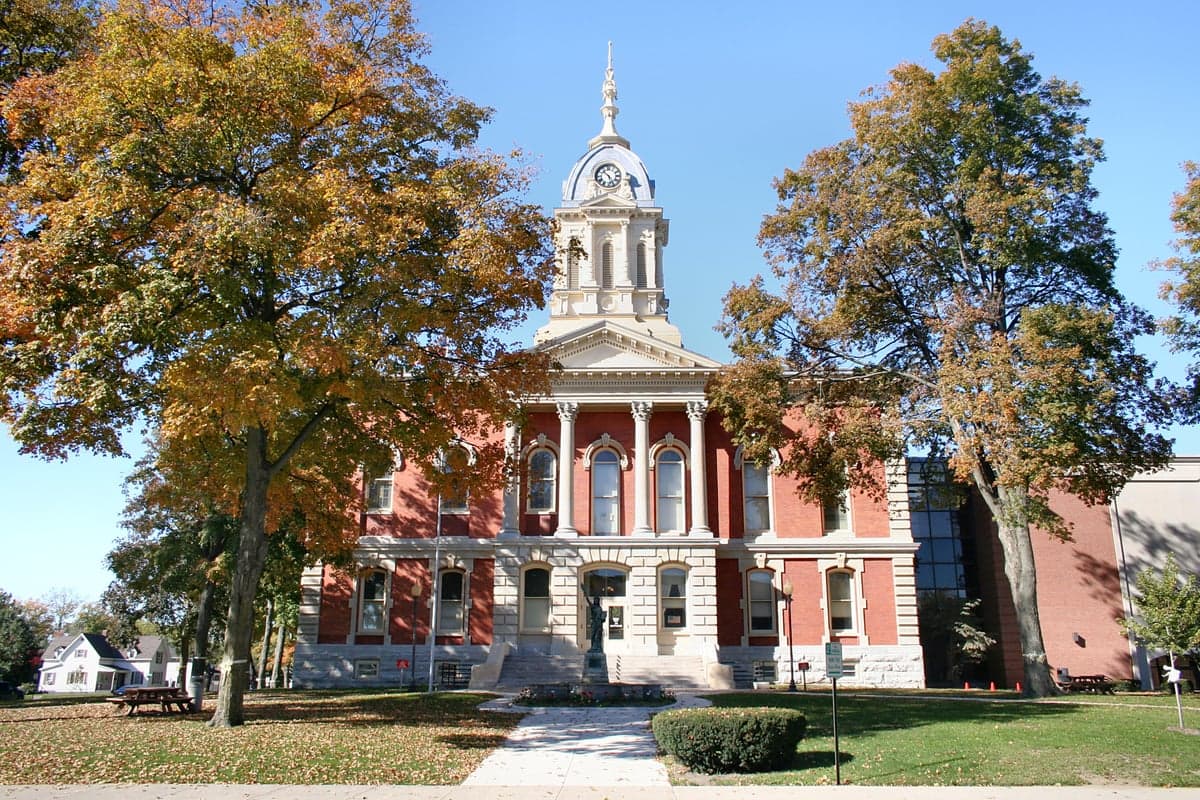
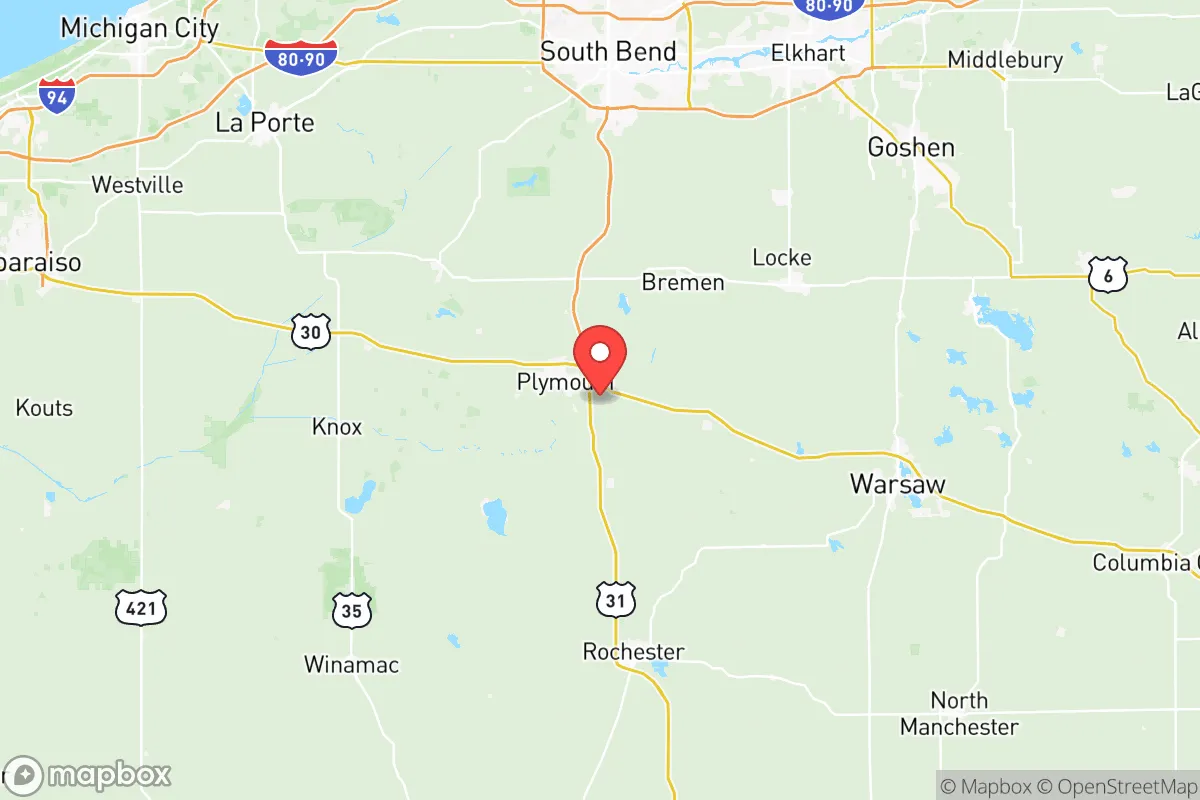
Marshall County, Indiana, offers a notably high degree of personal sovereignty compared to the urbanized corridors of the Midwest, with a regulatory environment that leans light-touch and a cultural baseline that assumes self-reliance. The county seat, Plymouth, anchors a region where the tax burden is moderate, gun laws are permissive, and the rural townships—Bourbon, Culver, and Argos—retain a homesteading ethos that has largely vanished from suburban Indianapolis or Chicago exurbs. For a single individual or family prioritizing autonomy, the trade-off is clear: you gain operational freedom in daily life, but you also inherit the responsibility for your own outcomes, from property maintenance to personal security.
How the tax burden and regulatory posture compare to neighboring counties
Marshall County’s tax environment is competitive within north-central Indiana, though not the absolute lowest in the state. The combined state and local income tax rate for residents sits at roughly 3.15% (Indiana’s flat 3.05% plus a county option income tax of 0.10%), which is below the national average and significantly lighter than Illinois’ 4.95% flat rate just across the border. Property taxes are the more meaningful variable: the average effective property tax rate in Marshall County is approximately 0.92% of assessed home value, which is slightly below the Indiana statewide average of 0.99% and far below the 2.0%+ rates common in Cook County, Illinois. The state’s constitutional property tax caps—1% of gross assessed value for homesteads, 2% for other residential, and 3% for business—provide a hard ceiling that prevents the kind of assessment creep seen in states without such limits.
Regulatory posture is where Marshall County genuinely distinguishes itself. The county operates under Indiana’s “minimum zoning” framework for unincorporated areas, meaning that outside the town limits of Plymouth, Culver, Bourbon, Argos, and Bremen, there is no county-wide zoning ordinance. This is a critical fact for anyone who values property autonomy: you can park an RV, build a detached workshop, or keep livestock on your land without seeking a county variance. The incorporated towns do have zoning codes—Plymouth’s is the most detailed, with standard setback and use restrictions—but even there, the permitting process is streamlined compared to cities like South Bend or Fort Wayne. Building permits in unincorporated Marshall County are essentially limited to septic system approval through the health department and electrical inspections; there is no design review board and no aesthetic oversight.
Self-defense rights and gun law specifics in Marshall County
Indiana is a constitutional carry state, and Marshall County law enforcement operates accordingly. Since July 2022, no permit is required to carry a handgun openly or concealed for any person 18 or older who is legally allowed to possess a firearm. The county sheriff’s office in Plymouth still issues lifetime carry permits for reciprocity purposes—useful if you travel to states that recognize Indiana’s permit—but the permit is optional, not mandatory. Indiana’s self-defense statute (IC 35-41-3-2) provides a broad “castle doctrine” with no duty to retreat in your home, vehicle, or place of business, and extends to any place where you are lawfully present, provided you are not engaged in criminal activity.
The practical culture in Marshall County is pro-gun without being performative. The Plymouth Gun Show is a regular fixture at the county fairgrounds, and the Marshall County Fish & Game Association, located just south of Plymouth, maintains a 200-yard rifle range and a separate pistol range that are open to members and guests. Culver, home to the Culver Academies (a military-style boarding school), has a slightly more formal relationship with firearms due to the academy’s presence, but the town itself has no restrictive ordinances. Argos and Bourbon, the smaller towns, have no local gun regulations whatsoever beyond state law. For a family with firearms, the key takeaway is that storage laws are minimal (no mandatory safe storage statutes), and there is no state-level red flag law, though county courts can issue protective orders in domestic cases that temporarily restrict firearm possession.
Self-reliance and homesteading viability: lot sizes, zoning, and off-grid feasibility
Homesteading in Marshall County is not a niche lifestyle—it is a continuation of the area’s agricultural baseline. The county is roughly 70% farmland, and the unincorporated areas have no minimum lot size for agricultural use, meaning you can purchase a 1-acre parcel or a 40-acre parcel with equal regulatory ease. The townships of Bourbon (in the northwest), Tippecanoe (in the northeast), and Union (in the south) have the most available land, with prices ranging from $6,000 to $12,000 per acre depending on drainage and soil quality. The county’s soil is predominantly prime farmland (Miami and Brookston series), which is excellent for row crops but requires attention to drainage—many parcels need tile lines to be productive.
Off-grid feasibility is genuinely high, with one significant caveat. Indiana has no state-level law prohibiting rainwater collection, and Marshall County has no ordinance restricting it; a 1,000-square-foot roof can capture roughly 600 gallons per inch of rain, which is meaningful given the county’s ~38 inches of annual precipitation. Solar panels are permitted without restriction in unincorporated areas, and net metering is available through the local utility, Marshall County REMC, which serves most rural addresses. The caveat is septic systems: the county health department requires a permitted septic system for any dwelling with plumbing, and the soil in parts of the county (particularly near the Yellow River and Lake Maxinkuckee) has high clay content that may require a mound system, adding $8,000–$15,000 to setup costs. Composting toilets are not explicitly prohibited, but the health department will require a septic permit for gray water, so full off-grid living requires either a compliant system or a willingness to operate in a legal gray area.
Personal liberties: parental rights, medical autonomy, speech, and property
Indiana’s legal framework in Marshall County supports a high degree of personal liberty across several domains. Parental rights are explicitly protected under state law (IC 31-19-2), and the county’s school districts—Plymouth Community Schools, Culver Community Schools, and Triton School Corporation (serving Bourbon and Argos)—all operate under a curriculum transparency law that requires instructional materials to be available for parental review. The state’s “Parental Bill of Rights” (enacted 2022) gives parents the explicit right to direct the upbringing, education, and health care of their minor children, and Marshall County courts have historically deferred to parents in custody and education disputes.
Medical autonomy is more mixed. Indiana has no state-level vaccine mandate, and Marshall County has no local mandate; the county health department in Plymouth does not require immunizations for school attendance beyond the state’s standard list, which includes exemptions for medical and religious reasons. However, Indiana does not have a broad medical freedom law comparable to Montana’s, and the state’s abortion law (a near-total ban with narrow exceptions) is among the most restrictive in the Midwest, which may be a factor for some families. On speech and property, the county is firmly libertarian: there are no local noise ordinances in unincorporated areas, no sign restrictions outside town limits, and no short-term rental regulations—Airbnb and VRBO operations in Lake Maxinkuckee’s shoreline areas (Culver and the surrounding township) operate without county oversight, though the town of Culver itself has a modest lodging tax.
Relative to the broader Midwest, Marshall County ranks in the top tier for personal sovereignty. It lacks the extreme low-tax posture of a place like neighboring Fulton County (which has no county income tax at all), but it compensates with a regulatory environment that is genuinely hands-off in the rural townships and only moderately involved in the incorporated towns. For a family that wants to own land, carry a firearm, homeschool without excessive oversight, and live with minimal government interface, Plymouth, Bourbon, and the unincorporated areas between them offer a coherent package. The trade-off is that this freedom is conditional on self-management—there is no safety net beyond what you build, and the county’s small population (about 45,000) means services are limited. If you are prepared to handle your own water, waste, and security, Marshall County delivers an autonomy environment that is hard to beat in the region.

* Values derived from national, state, county, city and local statistics and may differ in a specific area. Last updated: 2026-10-21T00:47:37.000Z
Narrative content on this page is AI-generated and may contain mistakes. Verify any details that matter before acting on them.
ReloMaps may earn a commission from affiliate links at no extra cost to you.

