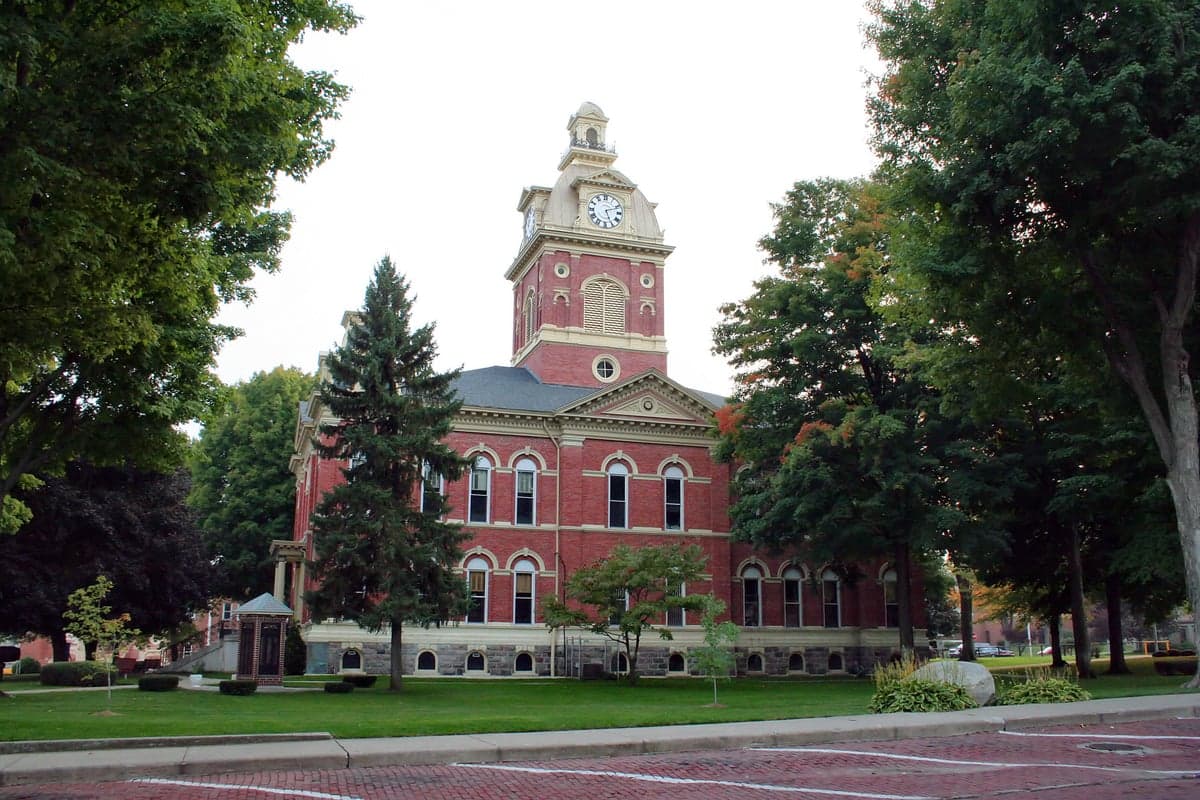
Photo: Wikipedia
Personal Sovereignty in LaGrange County
Viable for self-reliance. Generally workable, though some barriers may limit total independence.
What does Personal Sovereignty tell us?
Personal Sovereignty measures your capacity for self-reliance and independence with minimal government friction. Higher scores mean fewer barriers between you and the way you want to live... but it assumes you have the space you need and good neighbors.
What does this tell us?
Personal Sovereignty measures your capacity for self-reliance and independence with minimal government friction. Higher scores mean fewer barriers between you and the way you want to live... but it assumes you have the space you need and good neighbors.
State Policy
Energy independence: Importer (29% of energy produced in-state)
Personal Liberty
Homesteading

Personal Liberty Analysis
LaGrange County, Indiana, offers a notably high degree of personal sovereignty, particularly for those seeking an environment where local governance and state law align to minimize interference in daily life. Located in the state's northeast corner, the county is home to a significant Amish and Mennonite population, which has historically shaped a culture of self-reliance and limited government. For relocation-minded individuals and families with a conservative-leaning outlook, the area presents a regulatory and tax climate that consistently prioritizes individual autonomy over collective mandates, though the specifics vary between the county's small towns and unincorporated areas.
Tax burden and regulatory posture in LaGrange County
Indiana's state-level tax structure is generally favorable to personal sovereignty, and LaGrange County operates within that framework with a notably light touch. The state's flat income tax rate of 3.15% (as of 2025) and a capped property tax rate—1% of assessed value for owner-occupied homes—keep the direct tax burden low. In LaGrange County, the effective property tax rate often falls below the state average, with the median homeowner paying roughly 0.8% of home value annually. Towns like Shipshewana and Topeka have no additional local income taxes beyond the county's modest 0.5% option, keeping overall tax liability low. Regulatory posture is equally restrained: the county has no zoning ordinances in unincorporated areas, a rarity in Indiana, meaning property owners in places like Howe or Wolcottville can build, operate home businesses, or keep livestock without seeking variances. The Amish community's influence has normalized a "live and let live" approach, with county commissioners historically resisting state pressure to adopt uniform building codes or land-use restrictions. This creates a regulatory environment where personal decisions—from housing construction to business operations—face minimal bureaucratic hurdles.
Self-defense and gun law specifics in LaGrange County
Indiana is a constitutional carry state, and LaGrange County reflects that ethos fully. Since July 2022, no permit is required to carry a handgun openly or concealed for any law-abiding adult 18 or older. The county sheriff's office in LaGrange, the county seat, is known for a pro-Second Amendment stance, with no local ordinances restricting firearm possession beyond state law. Gun ranges and private shooting clubs are common in the rural areas around Mongo and Ontario, and the county has no waiting periods or magazine capacity limits. Stand-your-ground laws apply statewide, with no duty to retreat in any place where a person has a legal right to be. For those prioritizing self-defense autonomy, LaGrange County offers one of the most permissive environments in the Midwest. The only notable restriction is the federal prohibition on firearm possession in school zones, which is enforced but rarely an issue given the county's low population density. Local gun culture is practical and non-political; firearms are viewed as tools for hunting, pest control, and personal protection rather than as political symbols.
Self-reliance and homesteading viability in LaGrange County
Homesteading and off-grid living are not just viable in LaGrange County—they are a cultural norm. The Amish and Mennonite communities have long demonstrated that self-sufficient living is achievable without reliance on municipal utilities. In unincorporated areas, there are no county requirements for grid-tied electricity, municipal water, or sewer connections. Properties in Shipshewana and Topeka routinely use well water, septic systems, solar panels, and propane for heating. Lot sizes vary widely: agricultural parcels start at 5 acres, but many homesteaders operate on 1-3 acre lots in rural subdivisions. The county's zoning code (where it exists in incorporated towns) is permissive, allowing chickens, goats, and even small livestock on residential lots under 1 acre in most areas. Off-grid feasibility is high: the county has no building code enforcement outside incorporated town limits, meaning structures can be built to owner specifications without permits. However, the county does require septic system permits through the health department, and well permits are required by the state. For those seeking to minimize utility bills and government oversight, the area around Howe and Wolcottville offers abundant land at prices well below state averages—typically $5,000–$10,000 per acre for raw land. The climate (cold winters, moderate summers) requires careful planning for off-grid heating and water systems, but the regulatory environment imposes no barriers to such setups.
Personal liberties in LaGrange County: parental rights, medical autonomy, speech, and property
Parental rights are strongly protected in LaGrange County, reflecting both state law and local culture. Indiana's 2022 law requiring schools to notify parents of any changes in a student's health or well-being is actively enforced, and the county's school districts—including Lakeland School Corporation and Westview School Corporation—have policies that defer to parental authority on medical and educational decisions. Medical autonomy is similarly robust: Indiana has no vaccine mandates for adults, and the county's health department does not impose local mandates beyond state requirements. During the COVID-19 pandemic, LaGrange County was one of the few in Indiana that never issued a mask mandate, and local businesses largely operated without restrictions. Speech protections are strong under both the First Amendment and Indiana's state constitution, with no local ordinances restricting public expression. Property rights are the bedrock of the county's sovereignty ethos: the lack of zoning in unincorporated areas means landowners can use their property for virtually any lawful purpose, from operating a sawmill to hosting a church service. The county's assessor's office is known for straightforward property valuations, with few appeals needed. The only notable limitation is the state's ban on recreational marijuana, which remains in effect and is enforced by local law enforcement, though enforcement is generally low-priority for non-commercial possession.
Overall, LaGrange County ranks among the most sovereignty-friendly areas in Indiana, particularly for those who value minimal government interference in daily life. Compared to more regulated counties in central or southern Indiana, LaGrange offers a distinctly lighter touch on zoning, building codes, and personal conduct. The Amish influence has created a cultural baseline of self-reliance that benefits all residents, regardless of lifestyle. For a conservative-leaning individual or family seeking a place where personal autonomy is respected rather than managed, LaGrange County—especially the unincorporated areas around Shipshewana, Topeka, and Howe—provides a rare combination of low taxes, permissive gun laws, and genuine off-grid viability. The trade-off is limited public services and infrastructure, but for those prioritizing freedom over convenience, that is precisely the point.

* Values derived from national, state, county, city and local statistics and may differ in a specific area. Last updated: 2026-10-31T19:20:04.000Z
Narrative content on this page is AI-generated and may contain mistakes. Verify any details that matter before acting on them.
ReloMaps may earn a commission from affiliate links at no extra cost to you.

