Photo: Wikipedia
Quality of Life in Huntington County
A livable area that tracks near national norms for affordability, walkability, and neighborhood health.
What does Quality of Life tell us?
Quality of Life measures an area by evaluating factors like cost of living, nearby amenities, country club access, airport proximity, socioeconomic signals and neighborhood character. For large states, this is a general average — quality of life can vary dramatically between metro areas, suburbs, and rural communities within the same state.
What does this tell us?
Quality of Life measures an area by evaluating factors like cost of living, nearby amenities, country club access, airport proximity, socioeconomic signals and neighborhood character. For large states, this is a general average — quality of life can vary dramatically between metro areas, suburbs, and rural communities within the same state.
Cost of Living
35% below national average
150%
The Real Cost of Living in Huntington County for 2026
| Tier | Individual | Family (4) |
|---|---|---|
| Survival | $14k | $26k |
| Comfortable | $28k | $42k |
| Luxury | $105k+ | $162k+ |
| Elite (Top 5%) | $123k+ | $191k+ |
Quality-of-Life Analysis
Huntington County, Indiana, offers a distinct quality-of-life spectrum that ranges from the walkable, historic core of its county seat to quiet, unincorporated crossroads and open farmland. With a cost of living index of 65—well below the national average of 100—and a median home value of $146,400, the county attracts a mix of manufacturing workers, commuters to Fort Wayne, and families seeking affordable acreage. The character of daily life shifts noticeably between the town of Huntington, its smaller satellite communities, and the rural townships that define the county's eastern and western flanks.
Largest town(s) & population centers
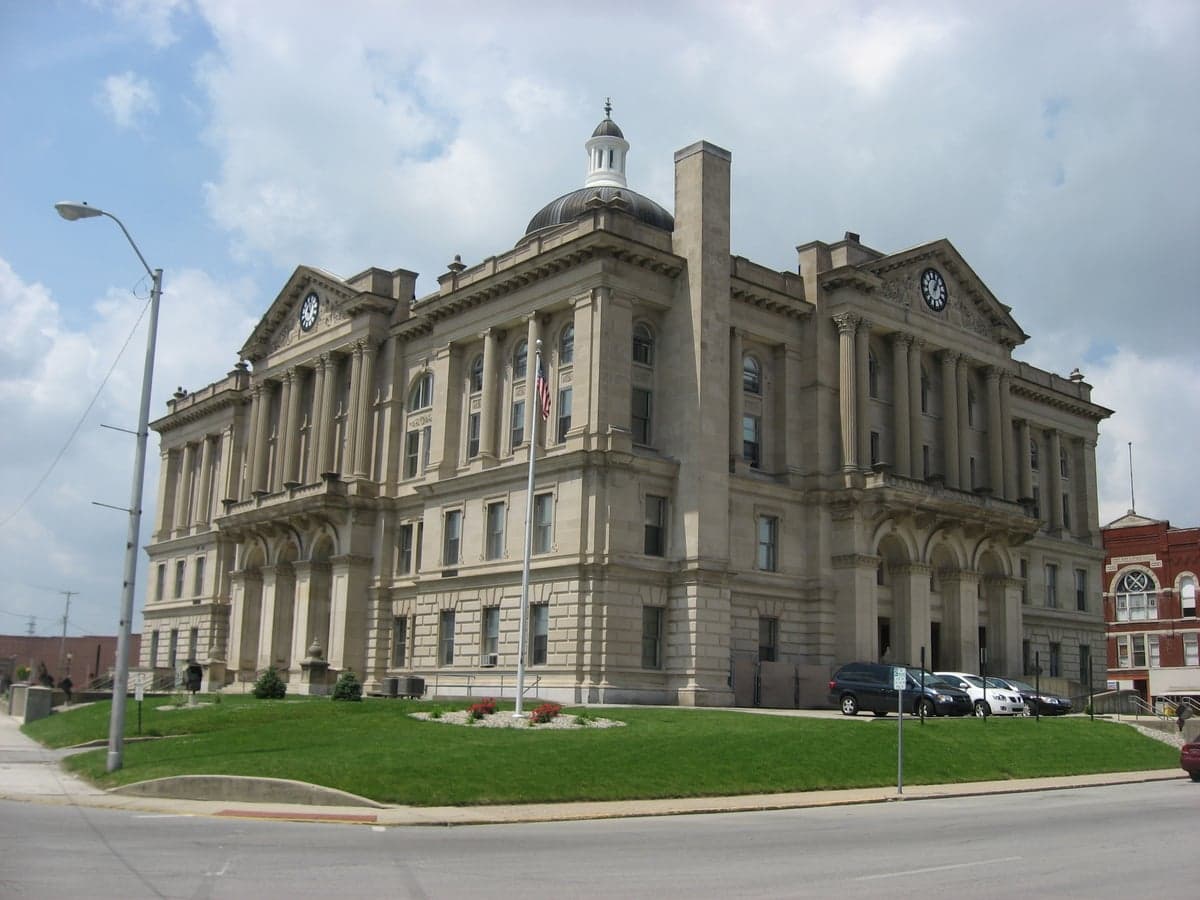
Huntington is the county's sole city and primary population center, home to roughly 17,000 residents. Daily life here centers on a compact downtown anchored by the historic Huntington County Courthouse and the Huntington University campus, a private Christian liberal arts college. The city offers a range of local retail, dining, and services along Washington Street, with major employers including Huntington University, Parkview Huntington Hospital, and manufacturing firms like Bendix Commercial Vehicle Systems. The average commute of 21.5 minutes reflects the county's manageable scale, though many residents drive 25-30 minutes east to Fort Wayne for higher-paying jobs. Housing in Huntington itself is affordable, with median rent at $866, and the city provides the county's densest concentration of amenities: a YMCA, the Huntington City-Township Public Library, and the Huntington Reservoir for outdoor recreation.
Smaller towns & rural pockets
Beyond Huntington, the county is dotted with smaller incorporated towns and unincorporated communities that offer a quieter, more rural lifestyle. Roanoke, about 10 miles southeast of Huntington, is a growing town of roughly 1,700 with a popular downtown strip featuring local eateries and antique shops, plus direct access to the Wabash River and the Pufferbelly Trail for biking. Andrews, to the north, is a smaller community of about 1,100 with a strong agricultural base and a few local businesses. Markle, straddling the Huntington-Wells county line, offers a small-town feel with a historic downtown and proximity to the Wabash River. Unincorporated areas like Lancaster, Majenica, and Bowerstown consist largely of farmsteads, scattered homes, and grain elevators, where residents rely on Huntington or Fort Wayne for most shopping and services. These rural pockets are defined by quiet roads, open fields, and a pace of life that appeals to those seeking space and privacy.
Cost & lifestyle range
The cost of living across Huntington County is uniformly low, but the lifestyle range is significant. At the more urbanized end, Huntington offers the highest concentration of rental units, with median rent at $866, and the most diverse housing stock, including historic homes near the courthouse and newer subdivisions on the city's west side. Home values here typically range from $120,000 to $180,000. At the rural end, Lancaster Township and Dallas Township (around the unincorporated community of Dallas) offer the lowest property costs, with some homes under $100,000 and larger lots of 1-5 acres. The median home value countywide of $146,400 means that even a modest income can secure a detached single-family home. Amenities thin out quickly outside Huntington: Roanoke has a grocery store and a few restaurants, but Andrews and Markle have limited retail, requiring a 10-15 minute drive for most errands. The trade-off is lower taxes and more land—a 3-bedroom farmhouse on two acres in Jefferson Township might cost the same as a small bungalow in Huntington.
This county is best suited for those who value affordability, short commutes, and a clear choice between small-city convenience and rural solitude. Families and first-time homebuyers priced out of Fort Wayne's market find strong value in Huntington's walkable neighborhoods and university amenities. Retirees and remote workers often gravitate to Roanoke's walkable downtown or to a quiet acreage in Union Township. The county's low cost of living and stable manufacturing base make it a practical choice, while its mix of historic towns and open farmland ensures that residents can tailor their daily environment to their preferences.

Crime in Huntington County
Generally safer than 58% of comparable U.S. locations.
Violent CrimeViolent Crime Analysis
Property CrimeProperty Crime Analysis
Crime Analysis
Huntington County, Indiana, presents a mixed safety profile for prospective residents, with violent crime rates below the national average but property crime rates that exceed both state and national benchmarks. The county recorded a violent crime rate of 264.1 per 100,000 residents, while property crime stood at 1,100.9 per 100,000, according to the most recent data. These figures place Huntington County in a middle tier for safety within Indiana, where outcomes vary significantly depending on whether you live in the county seat of Huntington, the smaller town of Roanoke, or the more rural townships like Warren and Salamonie.
Crime in context
Huntington County’s violent crime rate of 264.1 per 100,000 is roughly 25% lower than the national average of 380 per 100,000, but slightly above the Indiana state average of approximately 240 per 100,000. The property crime rate of 1,100.9 per 100,000, however, is about 15% higher than the national average of 960 per 100,000 and significantly above Indiana’s state average of roughly 850 per 100,000. This divergence means that while residents face a lower risk of violent offenses like homicide, robbery, and aggravated assault, they are more likely to experience burglary, theft, and motor vehicle theft than the typical Hoosier. The county’s proximity to larger urban centers like Fort Wayne (about 20 miles east) may contribute to property crime spillover, as transient offenders target less-dense areas with easier access to vehicles and unsecured homes.
What residents experience
Daily life in Huntington County is shaped by a justice system that leans conservative, with the Huntington County Prosecutor’s Office and local judges generally taking a tough-on-crime stance. This is a positive factor for public safety, as progressive prosecutor policies seen in larger cities like Indianapolis or Fort Wayne have not taken hold here. The county’s judicial district, part of Indiana’s 56th Judicial Circuit, has not adopted the kind of bail reform or sentencing leniency that critics argue leads to higher recidivism and more criminals on the street. Residents in the city of Huntington itself report occasional property crime issues, particularly in neighborhoods near the downtown core and along the U.S. 24 corridor, where thefts from vehicles and minor burglaries are the most common complaints. In contrast, the town of Roanoke—a smaller, more affluent community—enjoys notably lower crime rates, with many residents leaving doors unlocked without incident. Rural areas like Warren Township and Lancaster Township see very little crime, though agricultural theft (fuel, equipment, and livestock) is a periodic concern.
Neighborhood-level variation is pronounced. The safest areas are generally the outlying townships and the village of Andrews, where violent crime is virtually nonexistent. The city of Huntington itself has pockets of higher risk, particularly around the Huntington University campus and the industrial zones near the Wabash River. Property crime is the primary driver of the county’s elevated overall rate, and residents are advised to secure vehicles and outbuildings, especially in the more densely populated parts of the county. The Huntington County Sheriff’s Department maintains a visible presence in unincorporated areas, while the Huntington Police Department handles the city’s calls. Both agencies report clearance rates near the state average, but the sheer volume of property crimes—often linked to drug-related offenses—means many cases go unsolved. For families and retirees seeking a low-crime environment, Roanoke and the rural townships offer the best balance, while the city of Huntington requires more vigilance, particularly regarding property security.
* Values derived from national, state, county, city and local statistics and may differ in a specific area. Last updated: 2026-11-10T01:16:36.000Z
Narrative content on this page is AI-generated and may contain mistakes. Verify any details that matter before acting on them.
ReloMaps may earn a commission from affiliate links at no extra cost to you.

