Photo: Wikipedia
Political ClimatePolitical Climate in Floyd County
Showing district-level results — no local-only data available.
Local Political AnalysisPolitical Analysis of Floyd County
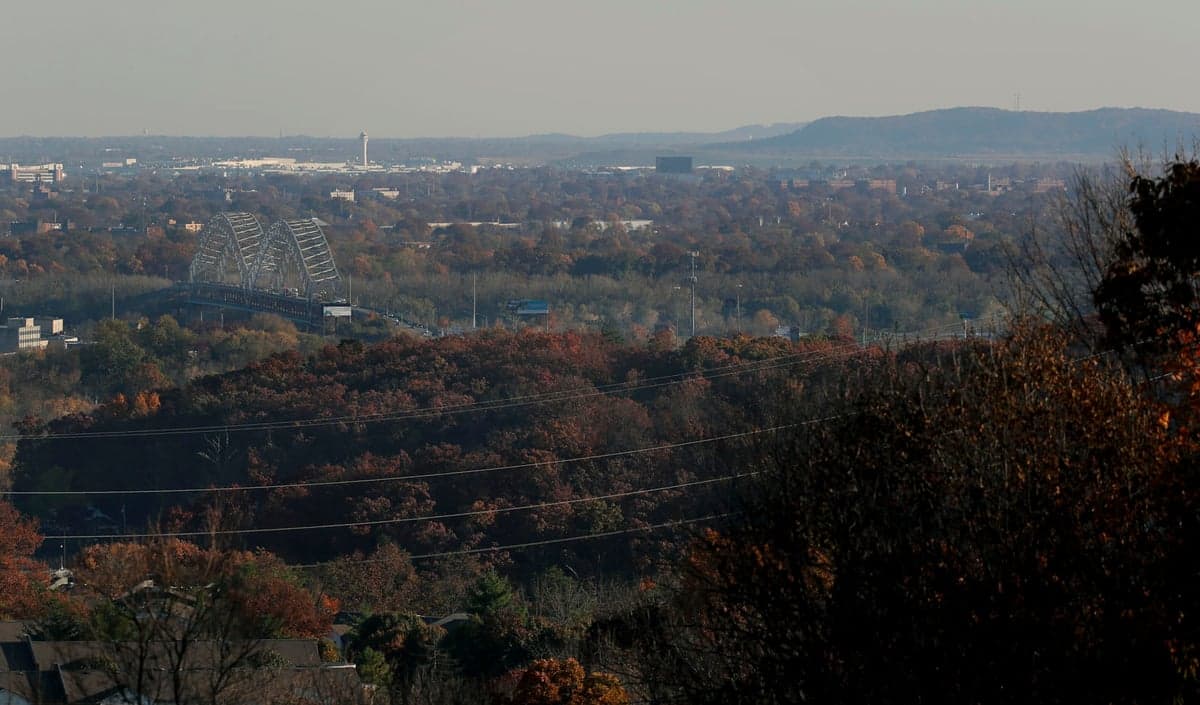
Floyd County, Indiana, is a reliably Republican stronghold with a Cook PVI of R+15, making it significantly more conservative than the state of Indiana as a whole, which sits at R+9. This isn't a new development; the county has been trending red for decades, but the margin has widened in recent cycles, particularly in the rural and suburban precincts outside of New Albany. The city of New Albany itself is the main exception, with its downtown and older neighborhoods near the Ohio River consistently voting blue, while the sprawling subdivisions and farmland to the north and west—places like Georgetown, Greenville, and the area around Edwardsville—are where the GOP's numbers pile up. The swing precincts are mostly in the middle-ring suburbs of New Albany, like the area around Grant Line Road, where ticket-splitting still happens but has become rarer since 2016.
How it compares
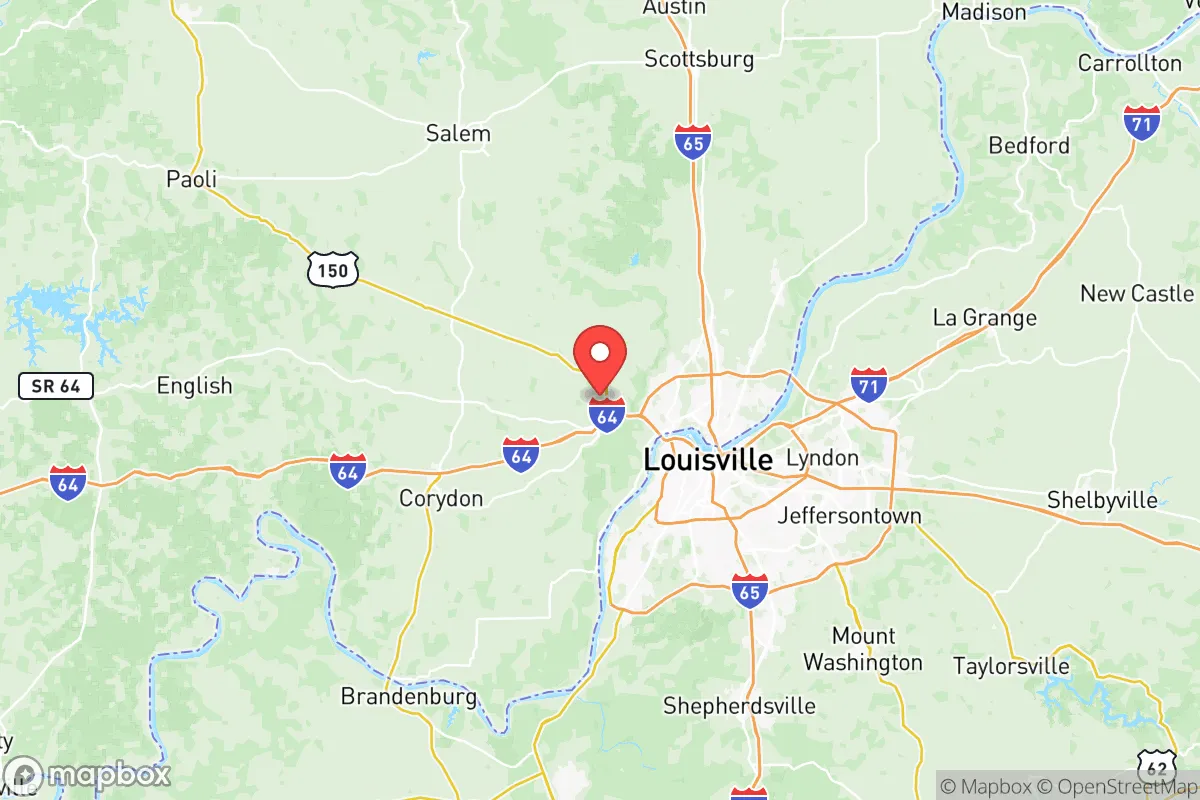
Compared to the rest of Indiana, Floyd County is about six points more Republican on the Cook PVI scale, which puts it in the same ballpark as neighboring Harrison County (R+16) but well to the right of Clark County (R+11) just across the river. The difference is partly cultural: Floyd County lacks a major urban center like Louisville (which is just south but in Kentucky) and has a stronger rural and small-town identity. The state-level trend is also relevant—Indiana has been moving rightward overall, but Floyd County has moved faster, driven by the same exurban growth that has transformed places like Hamilton County. In the 2024 presidential election, the county gave Trump a 62% to 36% margin, which was actually a slight improvement for Republicans over 2020, even as some suburban counties nationally shifted left. The local GOP is well-organized, with the county party controlling most township and county-level offices, though the city of New Albany has a Democratic mayor and a split city council, which creates a visible tension between the county's red tilt and the city's blue pockets.
What this means for residents
For conservative residents, Floyd County is a comfortable place to live politically. The local government is generally pro-business, taxes are kept low (the county's property tax rate is among the lowest in the Louisville metro), and there's little pushback on issues like gun rights or school choice. The county's Republican precinct committeemen are active, and the party holds regular events at the Floyd County 4-H Fairgrounds. For liberal residents, the reality is more mixed. You can find like-minded people in New Albany's downtown, where the local Democratic Party is active and there are progressive groups focused on housing and environmental issues, but outside the city limits, it can feel isolating. The county's school board, for example, has been a flashpoint, with conservative majorities in recent years, and the local library board has seen debates over book challenges. That said, the political divide isn't as sharp as in some other parts of the country—people tend to get along day-to-day, and the shared identity of being "from Floyd County" (or "Floyd County proud," as the local bumper stickers say) often trumps partisan differences in casual settings.
Culturally, Floyd County is distinct from the rest of Indiana in a few ways. It's part of the Louisville metro area, so residents watch Kentucky news and sports, and the local dialect and food (think breaded pork tenderloin sandwiches and Derby pie) reflect that border-region blend. The county is also more Catholic than the rest of Indiana, thanks to its German and Irish heritage, which moderates some social issues compared to the more evangelical parts of the state. Policy-wise, the county has been slower to adopt the kind of aggressive conservative legislation seen in places like the Indiana Statehouse—for example, Floyd County's health department has been more cautious on public health measures, and the local zoning board has resisted some of the more extreme property-rights pushes. Looking ahead, the political trajectory seems set: the rural and suburban areas will keep getting redder, while New Albany's urban core will hold its blue ground. The wildcard is growth—if the county continues to attract new residents from Louisville and other parts of the country, the political balance could shift, but for now, the R+15 lean looks stable for the next decade.

State Political ClimatePolitical Climate in Indiana
State Political AnalysisPolitical Environment in the State
Indiana has been a reliably Republican state for decades, with a Cook Partisan Voting Index of R+9, meaning it votes about nine points more Republican than the nation as a whole. The state hasn't backed a Democrat for president since 2008, when Barack Obama narrowly won it, and that now looks like an anomaly driven by a perfect storm of economic anxiety and a strong ground game in the industrial northwest. The dominant coalition is a mix of socially conservative rural voters, fiscally conservative suburbanites, and a growing number of working-class voters who have shifted right on cultural and economic issues. Over the last 10-20 years, the trajectory has been a steady march rightward, with the notable exception of the Indianapolis metro area, which has become more Democratic and now serves as the state's primary political battleground.
Urban vs. rural divide
The political map of Indiana is a classic study in contrasts. The urban core of Indianapolis (Marion County) is a Democratic stronghold, consistently delivering 60-65% of the vote for Democratic candidates. This is driven by a diverse population, a growing professional class, and strong support from Black and Latino communities. However, the surrounding suburban counties—Hamilton, Hendricks, Johnson, and Boone—are where the real action is. Hamilton County, home to affluent suburbs like Carmel and Fishers, is one of the most reliably Republican large counties in the nation, often voting 60%+ for GOP candidates. That said, these suburbs have been inching leftward in recent cycles, particularly among college-educated women, making them the key swing territory for any future Democratic gains. Meanwhile, the rest of the state is deeply red. The industrial northwest, including Gary and Hammond (Lake County), is a Democratic holdout due to union legacy and a large Black population, but its influence is waning as population declines. The southern part of the state, from Evansville to Bloomington to the Ohio River counties, is overwhelmingly Republican, with the exception of Monroe County (home to Indiana University), which is a liberal island in a sea of red. The rural counties in the central and eastern parts of the state, like Rush and Decatur, routinely vote 75-80% Republican.
Policy environment
Indiana's policy environment is a reflection of its Republican dominance. The state has a flat income tax rate of 3.15%, one of the lowest in the nation, and the legislature has been actively working to phase it out entirely. Property taxes are relatively low, capped at 1% of assessed value for owner-occupied homes. The regulatory posture is business-friendly, with a right-to-work law on the books and a strong tort reform environment. On education, the state has a robust school choice program, including vouchers and charter schools, which is a major draw for conservative families. Healthcare policy is more mixed; the state expanded Medicaid under the Affordable Care Act via a conservative waiver program (the Healthy Indiana Plan), but it has not pursued a state-based exchange. Election laws have been tightened in recent years, with a strict voter ID law and limits on early voting. The state also has a "stand your ground" self-defense law and is a "shall issue" state for concealed carry permits, though permitless carry was enacted in 2022.
Recent policy direction
The last few years have seen a clear acceleration of conservative policy priorities. In 2022, the legislature passed a near-total abortion ban, with exceptions only for rape, incest, and the life of the mother, which took effect after a court challenge. This was a major shift from the state's previous 20-week ban. On gun rights, Indiana enacted permitless carry in 2022, allowing any law-abiding adult to carry a handgun without a license. The state also passed a "Second Amendment Preservation Act" in 2023, which attempts to nullify federal gun laws. On education, the state expanded its school voucher program to near-universal eligibility in 2023, making it one of the most expansive in the country. Parental rights were bolstered with a law requiring schools to notify parents of any changes to a student's health or well-being, including gender identity. On the tax front, the legislature passed a law in 2023 to gradually reduce the state's flat income tax from 3.15% to 2.9% by 2027. On voting, the state has maintained its strict voter ID law and has not expanded mail-in voting, though it has also not enacted the kind of restrictive omnibus bills seen in some other states. Privacy and surveillance laws are relatively weak, with no comprehensive data privacy law on the books, though the state has passed a law restricting the use of facial recognition technology by law enforcement.
Civil unrest & political movements
Indiana has seen its share of political activism, but it has generally been less intense than in some other states. The 2020 protests following the murder of George Floyd were significant in Indianapolis, with several nights of demonstrations and some property damage, but they did not reach the scale or duration of protests in larger cities. The state has a strong anti-abortion movement, with groups like Indiana Right to Life wielding significant influence in the legislature. On the left, the Indiana Democratic Party has struggled to maintain a foothold outside of Indianapolis and Lake County, though grassroots groups like Hoosiers for a Fair and Just Democracy have been active on voting rights and criminal justice reform. Immigration politics are less of a flashpoint than in border states, but there have been controversies over sanctuary city policies, with the legislature passing a law in 2011 prohibiting local governments from adopting such policies. Election integrity has been a recurring theme, with Republican officials frequently touting the state's voter ID law as a model, while Democrats argue it suppresses turnout. There has been no serious secession or nullification rhetoric, though the Second Amendment Preservation Act mentioned earlier is a form of nullification.
Projection
Over the next 5-10 years, Indiana is likely to remain a solidly Republican state, but the margins may narrow slightly as the Indianapolis suburbs continue to diversify and shift left. The state's population growth is concentrated in the Indianapolis metro area, particularly in Hamilton and Hendricks counties, which are becoming more moderate. Meanwhile, rural counties are losing population, which will slowly erode the Republican base. However, the state's political map is so heavily gerrymandered that the legislature will remain in GOP hands for the foreseeable future. The biggest wildcard is the impact of the abortion ban, which could mobilize suburban women and younger voters in a way that changes the calculus in statewide races. A new resident moving in now should expect a state that is culturally and politically conservative, with a low-tax, low-regulation environment, but with a growing urban center that is increasingly at odds with the rest of the state. The policy direction will continue to be driven by the legislature's conservative majority, with further tax cuts, school choice expansion, and cultural legislation on issues like gender and education likely.
For a new resident, the bottom line is that Indiana offers a stable, predictable political environment that leans heavily conservative. If you align with that, you'll find a state that is actively moving in your direction on taxes, education, and gun rights. If you don't, you'll find a state where your vote in statewide races is unlikely to matter much, but where local elections in the Indianapolis suburbs or in Bloomington can still be competitive. The practical takeaway is that Indiana is a place where policy is made by a unified Republican government, and that is unlikely to change anytime soon. The cultural and political divide between Indianapolis and the rest of the state will only grow, but the state's overall trajectory will remain firmly red.
* Values derived from national, state, county, city and local statistics and may differ in a specific area. Last updated: 2026-07-03T21:31:34.000Z
Narrative content on this page is AI-generated and may contain mistakes. Verify any details that matter before acting on them.
ReloMaps may earn a commission from affiliate links at no extra cost to you.

