Photo: Wikipedia
Demographics of Floyd County
Affluence Level in Floyd County
A middle-class area roughly in line with national averages across income, home values, education, and employment.
People of Floyd County
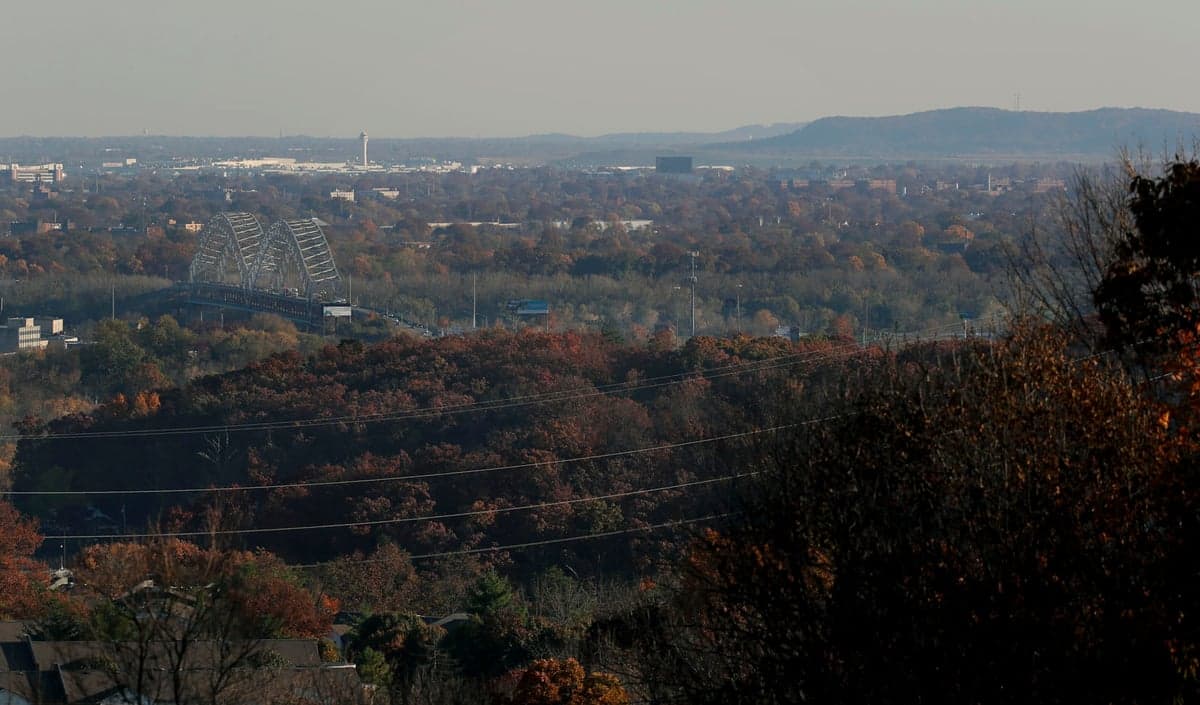
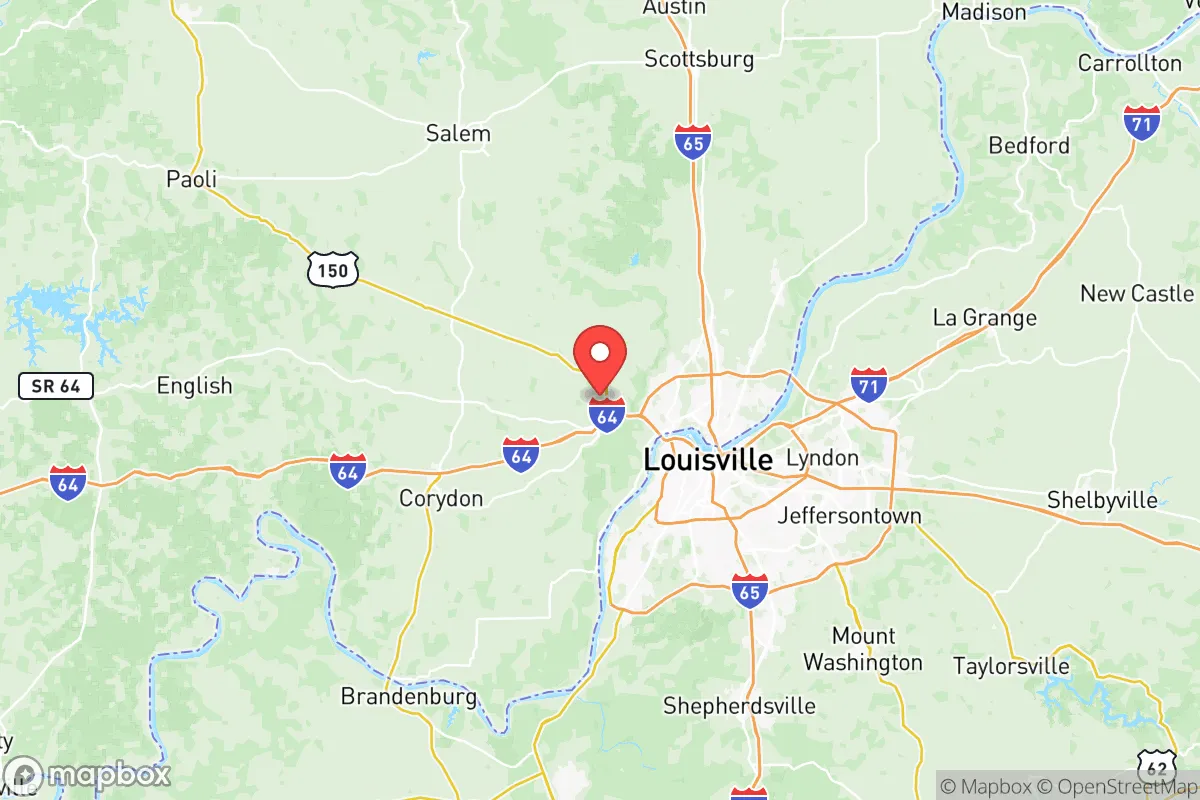
Floyd County, Indiana, is a community of roughly 80,500 residents where a strong sense of place is rooted in its Ohio River border location and a history shaped by German Catholic and Protestant immigration, with a modern identity that remains predominantly white (85.8%) and native-born (only 1.6% foreign-born). The county seat of New Albany anchors a region that feels both historically Midwestern and increasingly connected to the Louisville metropolitan area just across the river. Residents often describe the county as a place where family ties run deep, church attendance is above the national average, and the pace of life is slower than the nearby Kentucky city, yet with enough local employment and amenities to keep most families from needing to commute daily.
Settlement & growth (pre-1960)
Before European settlement, the area that is now Floyd County was part of the hunting grounds of the Miami and Shawnee nations, who used the Ohio River corridor for travel and trade. French fur traders passed through in the 17th and 18th centuries, but no permanent European settlement occurred until after the American Revolution. The 1783 Treaty of Paris opened the region to American expansion, and by the early 1800s, the first wave of settlers arrived: primarily Scots-Irish and English families moving west from Virginia, Kentucky, and Pennsylvania. They were drawn by cheap land in the newly formed Indiana Territory and the strategic location along the Falls of the Ohio, a natural navigation break that made the area a natural port and trading post.
The town of New Albany was platted in 1813 and quickly became the county's dominant settlement. Its location on the Ohio River made it a major shipbuilding center by the 1830s and 1840s, with steamboat construction employing hundreds of workers. This industrial boom attracted a second major wave: German immigrants, who began arriving in significant numbers in the 1840s and 1850s. Many were Catholic and Lutheran farmers and craftsmen fleeing economic hardship and political unrest in the German states. They settled not only in New Albany but also in the surrounding rural areas that would later become Georgetown and Greenville, where German surnames remain common today. A smaller number of Irish immigrants also came during this period, working on the canal and railroad projects that connected the county to the interior.
By the late 19th century, Floyd County's economy diversified beyond shipbuilding into furniture manufacturing, glassmaking, and iron works. The county's population grew steadily, reaching 30,000 by 1900. African Americans, who had been present since the early days of settlement as both free people and enslaved (Indiana was a free state, but Kentucky was not, and the river border meant a complex racial history), formed a small but established community concentrated in New Albany's west end. The early 20th century saw little new immigration; the county's growth came primarily from natural increase and domestic migration from surrounding rural areas. The post-World War II era brought suburban expansion, with new housing developments spreading into Floyds Knobs and Galena, as families sought larger lots and newer homes while still commuting to jobs in New Albany or across the river to Louisville.
Modern era (post-1965)
The 1965 Hart-Cellar Act, which ended national-origin quotas, had a minimal direct effect on Floyd County. Unlike many metropolitan areas that saw a surge of new immigration from Asia and Latin America, Floyd County's foreign-born population remains very low at just 1.6% — far below the national average of roughly 14%. The county's demographic changes since 1965 have been driven almost entirely by domestic migration and suburbanization rather than international arrivals. The construction of Interstate 64 in the 1960s and 1970s made Floyd County more accessible to Louisville commuters, accelerating the growth of bedroom communities like Edwardsville and the unincorporated areas around Floyds Knobs.
The county's Hispanic population, now 4.0%, began to grow in the 1990s and 2000s, largely through domestic migration from other parts of the United States rather than direct immigration. Many Hispanic residents work in construction, landscaping, and the service industry, and they are dispersed throughout the county rather than concentrated in a single enclave. The Black population, at 5.1%, remains centered in New Albany, where a historically Black neighborhood near the river has persisted, though many Black families have also moved into newer subdivisions in the eastern part of the county. The East/Southeast Asian population (0.7%) and Indian-subcontinent population (0.5%) are small but present, often associated with professional jobs at the nearby University of Louisville or regional hospitals. The county's college-educated share of 31.3% is slightly below the national average, reflecting a workforce that still includes a significant manufacturing and logistics base alongside growing healthcare and education sectors.
Suburbanization has reshaped the county's geography. While New Albany remains the population center and commercial hub, the unincorporated areas — particularly Floyds Knobs and Galena — have seen the fastest housing growth since the 1990s. These areas offer larger lots, newer schools, and a more rural feel while still being within a 20-minute drive of downtown Louisville. The county's overall population has grown from about 61,000 in 1970 to 80,512 today, a modest but steady increase that reflects both in-migration from the Louisville area and some out-migration of younger adults to larger cities.
The future
Floyd County is projected to continue slow, steady growth over the next 10-20 years, driven primarily by continued suburban spillover from Louisville and by the expansion of regional employment in healthcare and logistics. The county's demographic profile is likely to become slightly more diverse, but at a pace much slower than the nation as a whole. The Hispanic share may rise to 6-7% by 2040, and the Black share may approach 7-8%, while the white share will likely decline gradually from its current 85.8%. The foreign-born population may increase modestly as professionals from Asia and India are recruited to fill specialized roles at regional hospitals and the nearby River Ridge Commerce Center, but Floyd County is unlikely to become a major immigrant destination.
The most significant demographic trend is the aging of the population. Like much of the Midwest, Floyd County has a median age above the national average, and younger adults often leave for college or career opportunities in Indianapolis, Louisville, or beyond. The county's school-age population has been relatively flat, and some rural schools have seen enrollment declines. New housing developments in Floyds Knobs and along the State Road 64 corridor are attracting families with children, but the overall growth is modest. The county's cultural identity — rooted in its German Catholic heritage, its river-town history, and its role as a quiet, family-oriented suburb of Louisville — is likely to persist, even as the population becomes slightly more diverse and more connected to the broader metropolitan economy.
For someone moving in now, Floyd County offers a stable, low-crime, family-friendly environment with good schools (particularly in the New Albany-Floyd County Consolidated School Corporation) and a strong sense of community. The trade-off is limited diversity, a slower pace of life, and fewer cultural and entertainment options than a larger city would provide. The county is becoming more suburban and slightly more diverse, but it remains fundamentally a place where the people are rooted in generations of local history, and newcomers are expected to integrate into existing community institutions rather than forming new enclaves.

* Values derived from national, state, county, city and local statistics and may differ in a specific area. Last updated: 2026-07-03T21:31:34.000Z
Narrative content on this page is AI-generated and may contain mistakes. Verify any details that matter before acting on them.
ReloMaps may earn a commission from affiliate links at no extra cost to you.

