
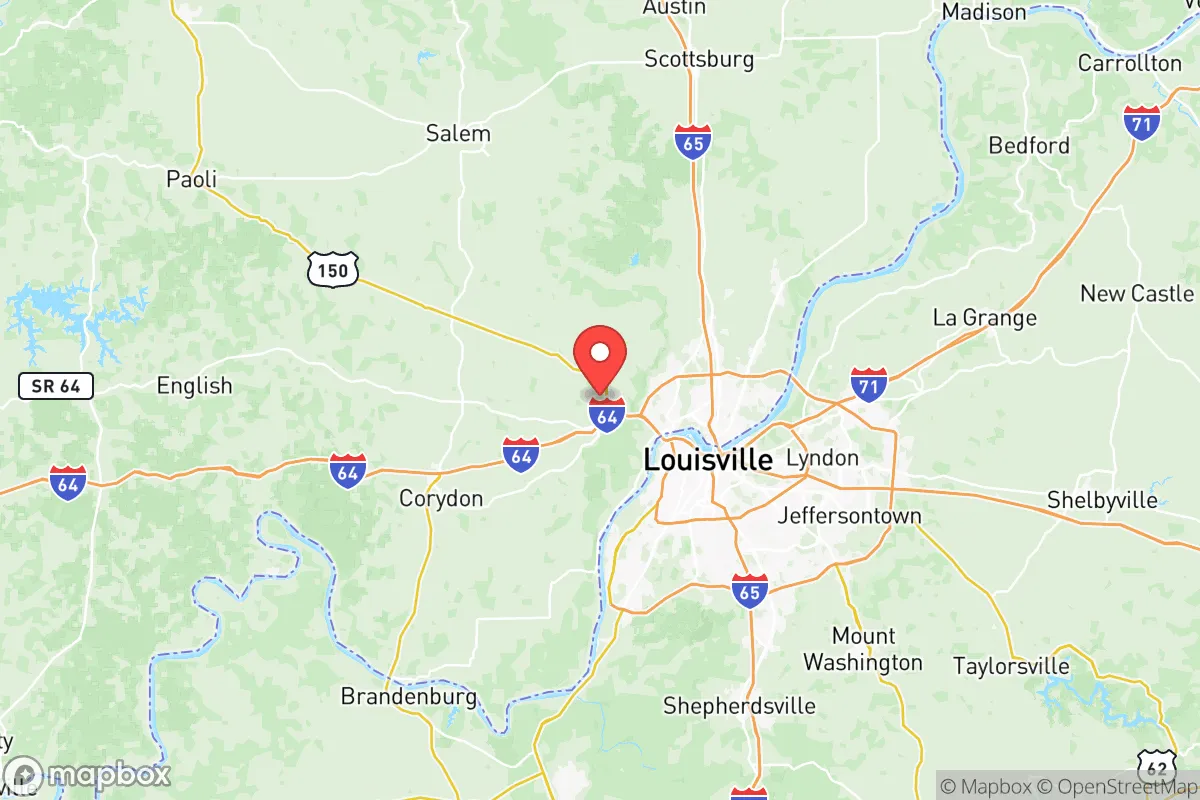
Photo: Wikipedia
Personal Sovereignty in Floyd County
Viable for self-reliance. Generally workable, though some barriers may limit total independence.
What does Personal Sovereignty tell us?
Personal Sovereignty measures your capacity for self-reliance and independence with minimal government friction. Higher scores mean fewer barriers between you and the way you want to live... but it assumes you have the space you need and good neighbors.
What does this tell us?
Personal Sovereignty measures your capacity for self-reliance and independence with minimal government friction. Higher scores mean fewer barriers between you and the way you want to live... but it assumes you have the space you need and good neighbors.
State Policy
Energy independence: Importer (35% of energy produced in-state)
Personal Liberty
Homesteading

Personal Liberty Analysis
Floyd County, Indiana, offers a notably high degree of personal sovereignty relative to much of the Louisville metropolitan area, driven by Indiana’s broadly permissive state preemption laws and a local culture that values self-reliance. Residents in towns like New Albany, Georgetown, and Greenville experience a regulatory environment that is generally light-touch, particularly in unincorporated areas, though the county seat of New Albany imposes slightly more municipal oversight. For individuals and families prioritizing autonomy, the county provides a strong foundation for self-directed living, with specific advantages in taxation, self-defense, and property use that distinguish it from neighboring Kentucky and more regulated parts of the Midwest.
Tax burden and regulatory posture in Floyd County
Indiana’s state-level tax structure is among the most favorable in the region for those seeking to minimize government overhead. The state imposes a flat income tax rate of 3.15% as of 2025, with Floyd County adding a local option income tax of approximately 1.5%, bringing the combined rate to around 4.65% — well below the rates in Louisville’s Jefferson County, Kentucky, which can exceed 5% for city residents. Property taxes in Floyd County are also restrained, with the state’s constitutional cap limiting residential property taxes to 1% of assessed value. In practice, effective rates in unincorporated areas like Floyds Knobs and Galena often fall below that cap, while New Albany’s slightly higher rates reflect its municipal services. The regulatory posture is similarly restrained: Indiana is a right-to-work state, and Floyd County does not impose significant local business licensing or zoning hurdles beyond basic building codes. For homesteaders and small-scale entrepreneurs, this means fewer bureaucratic obstacles than in many comparable counties in the Ohio River Valley.
Self-defense and gun law specifics in Floyd County
Indiana is a constitutional carry state, meaning no permit is required to carry a handgun openly or concealed for anyone legally allowed to possess a firearm. Floyd County fully aligns with this framework, and local law enforcement in New Albany, Georgetown, and Greenville generally respects the right to carry without harassment. The state also maintains strong preemption laws that prohibit local governments from enacting their own firearm ordinances, so residents in all parts of the county — from the more urban streets of New Albany to the rural lanes of Edwardsville — enjoy uniform gun rights. Stand-your-ground laws apply, and there is no duty to retreat in any place where a person is lawfully present. Background checks are required only for dealer sales, with private transfers remaining unregulated. For those prioritizing self-defense autonomy, Floyd County offers a legal environment that is among the most permissive in the Midwest, comparable to Kentucky but with the added stability of Indiana’s preemption protections.
Self-reliance and homesteading viability across Floyd County
Homesteading and off-grid living are viable in Floyd County, though feasibility varies significantly by location. Unincorporated areas like Floyds Knobs and Galena offer larger parcels — often 1 to 5 acres — with minimal zoning restrictions, allowing for gardens, small livestock, and rainwater collection without special permits. In contrast, New Albany’s city limits impose standard suburban lot sizes (typically 0.25 acres or less) and require permits for structures like sheds or chicken coops, making intensive homesteading more difficult. Off-grid energy systems, such as solar panels, are permitted throughout the county, but grid-tied systems are more common due to net metering policies from Duke Energy. Septic systems are standard in rural areas, and well water is accessible in most parts of the county outside New Albany. The county’s agricultural zoning in areas like Greenville and Edwardsville explicitly supports farming operations, including beekeeping and pastured poultry, without the nuisance complaints that might arise in denser suburbs. For those seeking a self-reliant lifestyle, the rural northern and western parts of Floyd County offer the most freedom, while the southern corridor near the Ohio River is more constrained by suburban development patterns.
Personal liberties in Floyd County: parental rights, medical autonomy, speech, and property
Indiana’s legal framework generally supports broad personal liberties, and Floyd County reflects this state-level posture. Parental rights are strongly protected: Indiana law grants parents explicit authority over their children’s education, healthcare, and religious upbringing, and the state has not adopted controversial child welfare mandates seen in some coastal states. Medical autonomy is more nuanced — Indiana has not expanded Medicaid under the Affordable Care Act in a way that imposes individual mandates, and vaccine mandates for adults are absent, though school immunization requirements remain standard. Free speech and property rights are robust, with no local ordinances in Floyd County restricting political signage or expressive conduct beyond basic time-place-manner rules. Property rights are further secured by Indiana’s strong eminent domain protections, which require just compensation and public use justification. In practice, residents of Georgetown and Greenville report fewer HOA restrictions than in newer subdivisions, and unincorporated areas have no homeowners’ associations at all, allowing for greater personal expression in landscaping, vehicle storage, and home-based businesses.
Overall, Floyd County ranks among the more sovereignty-friendly counties in the Louisville metropolitan area, offering a combination of low taxes, permissive gun laws, and viable homesteading options that are difficult to find in Kentucky’s Jefferson County or in more regulated Indiana counties like Marion (Indianapolis). The county’s balance of rural freedom in its northern and western townships with the practical amenities of New Albany makes it a strong choice for individuals and families who prioritize personal autonomy without sacrificing access to urban infrastructure. For those weighing relocation, Floyd County represents a solid middle ground — not as libertarian as some rural Western counties, but significantly more permissive than the average Midwestern suburb.

* Values derived from national, state, county, city and local statistics and may differ in a specific area. Last updated: 2026-07-03T21:31:34.000Z
Narrative content on this page is AI-generated and may contain mistakes. Verify any details that matter before acting on them.
ReloMaps may earn a commission from affiliate links at no extra cost to you.

