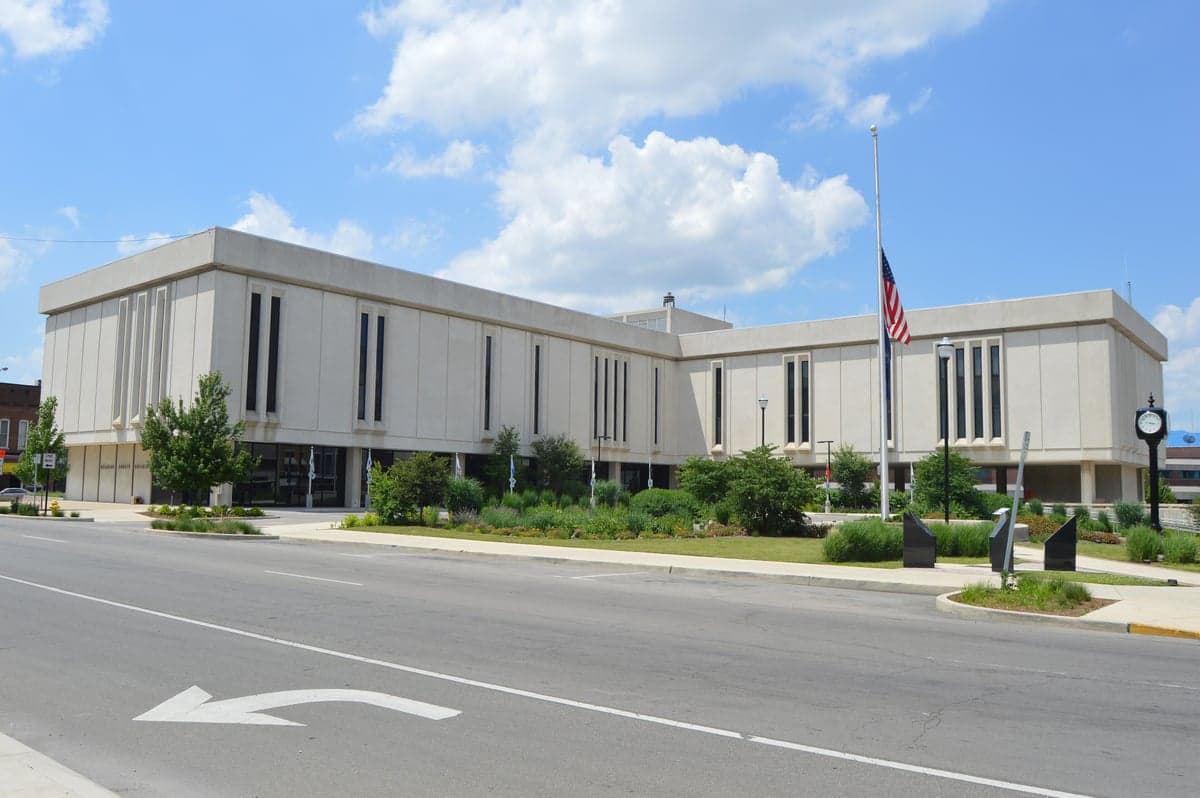
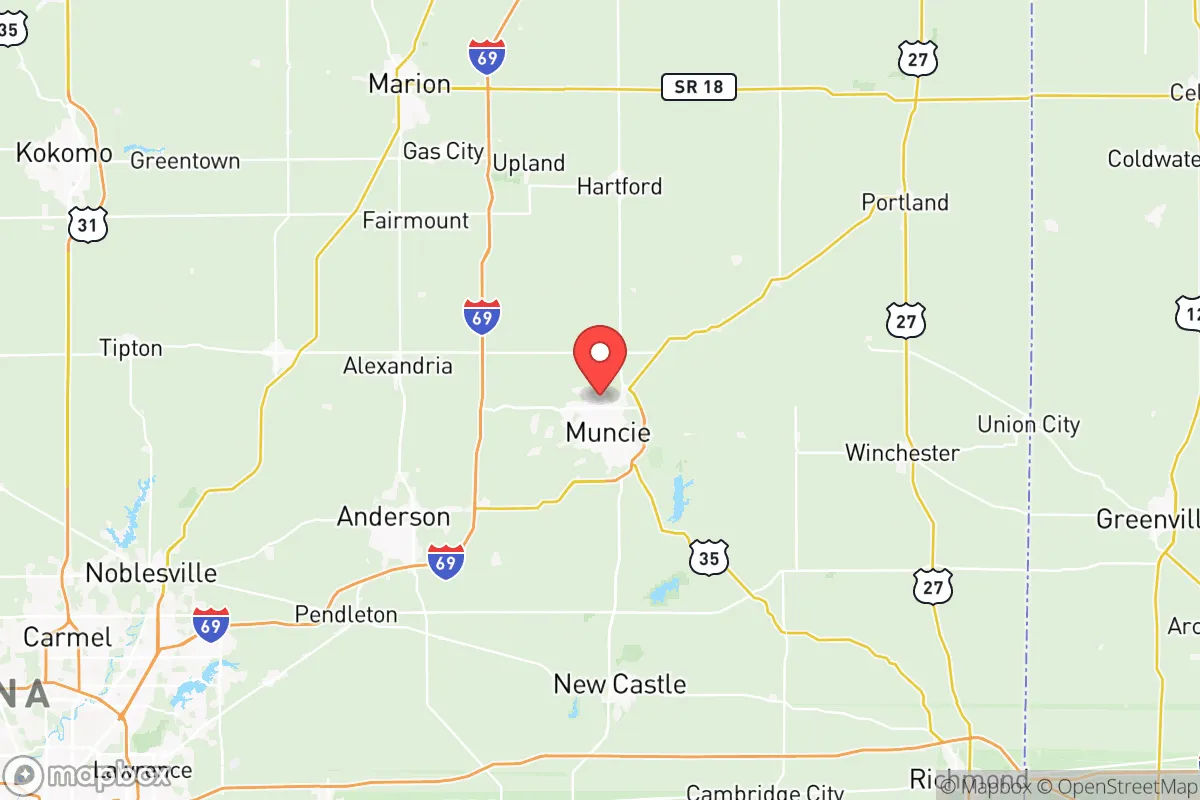
Photo: Wikipedia
Quality of Life in Delaware County
A livable area that tracks near national norms for affordability, walkability, and neighborhood health.
What does Quality of Life tell us?
Quality of Life measures an area by evaluating factors like cost of living, nearby amenities, country club access, airport proximity, socioeconomic signals and neighborhood character. For large states, this is a general average — quality of life can vary dramatically between metro areas, suburbs, and rural communities within the same state.
What does this tell us?
Quality of Life measures an area by evaluating factors like cost of living, nearby amenities, country club access, airport proximity, socioeconomic signals and neighborhood character. For large states, this is a general average — quality of life can vary dramatically between metro areas, suburbs, and rural communities within the same state.
Cost of Living
37% below national average
156%
The Real Cost of Living in Delaware County for 2026
| Tier | Individual | Family (4) |
|---|---|---|
| Survival | $14k | $26k |
| Comfortable | $25k | $36k |
| Luxury | $93k+ | $144k+ |
| Elite (Top 5%) | $109k+ | $169k+ |
Quality-of-Life Analysis
Delaware County, Indiana, offers a quality-of-life spectrum that spans from the college-town energy and historic architecture of Muncie to the quiet agricultural rhythms of communities like Selma and Royerton, drawing residents who want either walkable urban amenities or affordable rural acreage. With a cost-of-living index of 63 (37% below the U.S. average), a median home value of $127,600, and a median rent of $874, the county provides a low-cost base that appeals to Ball State University students, young families, and retirees seeking space without financial strain. The average commute of about 22 minutes keeps work and leisure close, but the character of life changes noticeably as you move outward from the county seat.
Largest town(s) & population centers
Muncie, the county seat and home to roughly 65,000 residents, is the undisputed hub. Daily life here centers on Ball State University, which shapes the local economy, cultural calendar, and housing stock—neighborhoods near campus feature large Victorian homes converted to student rentals, while areas like the Old West End offer more owner-occupied historic houses. The city’s downtown has seen reinvestment in restaurants and venues like the Canan Commons outdoor plaza, and major employers such as IU Health Ball Memorial Hospital and the local school corporation provide steady white-collar jobs. By contrast, Yorktown, the county’s second-largest town with about 11,000 people, feels more suburban and family-oriented. Its schools are consistently rated highly within the county, and its stretch of State Road 32 is lined with chain retailers, newer subdivisions, and the Dickmann Town Center, making it a practical choice for commuters who want quick access to both Muncie and Interstate 69.
Smaller towns & rural pockets
Outside the population centers, several unincorporated communities and small towns define the quieter end of the spectrum. Selma, located south of Muncie along the White River, is a census-designated place of roughly 600 residents with a single gas station and a heavy presence of manufactured homes on large lots. Royerton, on the county’s eastern edge near the boundary with Randolph County, is even smaller—scattered homes, a grain elevator, and open farmland. Albany (in adjacent Albany Township) and the crossroads of Farmland in the county’s northeast offer similar patterns: a Post Office, a church or two, and a general store that serves as an informal community hub. These areas have no stoplights, limited curb-and-gutter infrastructure, and property taxes that are among the lowest in the state, attracting self-sufficient residents who farm, commute from land they own, or work remotely via satellite internet.
Cost & lifestyle range
The cost spread across Delaware County is significant though still universally affordable by national standards. At the low end, older homes in Muncie’s near-southside neighborhoods (e.g., the Park Addition near 13th and Hackley) can sell for under $60,000, with rents on two-bedroom apartments hovering near $650/month. These areas tend to have higher vacancy rates and older rental stock, but the low entry price attracts investors and first-time buyers willing to renovate. At the upper end, Yorktown’s newer subdivisions—like those around North Park Drive and West Main Street—carry median home values around $200,000, with custom-built homes on half-acre lots. Rural properties in townships like Perry and Union fall between these poles: a 3-bedroom farmhouse on 5 acres might list for $140,000, with land taxes adding less than $800 annually. For renters, the county’s most expensive units are in Muncie’s newly built luxury apartments near the university (one-bedrooms at $1,100+), but the vast majority of available rentals stay under $900. The lifestyle range means a single parent working in Muncie can afford a two-bedroom rental in Selma, while a dual-income family might choose Yorktown for its school ratings—both at a fraction of the cost of comparable settings in Indianapolis, 60 miles south.
Residents who thrive in Delaware County are those who value low overhead and geographic convenience over cosmopolitan buzz. Ball State faculty, remote tech workers, and families who want a shorter commute than the Indy sprawl offer will find the southeast corridor (Yorktown to Daleville) most practical. In contrast, homesteaders, farmers, and people seeking a slower pace gravitate to the northern and eastern townships (Union, Perry, Monroe), where neighbors are few and property lines are measured in acres. The county’s affordability is its main draw, and the quality-of-life choice is essentially a trade-off between walkable historic city life (Muncie’s core) and self-sufficient rural quiet (the outer townships), with suburban comfort (Yorktown) in the middle.

Crime in Delaware County
Generally safer than 63% of comparable U.S. locations.
Violent CrimeViolent Crime Analysis
Property CrimeProperty Crime Analysis
Crime Analysis
Delaware County, Indiana, reports a violent crime rate of 228.1 per 100,000 residents and a property crime rate of 1,093.6 per 100,000, according to the most recent data. These figures place the county below the national average for violent offenses but above the state average for property crime, creating a mixed safety profile that varies significantly by neighborhood and municipality. The city of Muncie, as the county seat and population center, drives most of the reported incidents, while outlying communities like Yorktown and Eaton generally experience lower crime volumes.
Crime in context
Delaware County’s violent crime rate (228.1 per 100K) is roughly 35% lower than the U.S. national average of approximately 370 per 100K, but property crime (1,093.6 per 100K) runs about 15% higher than the national benchmark of roughly 950 per 100K. When compared to other Indiana counties, Delaware’s property crime rate is elevated—exceeding the state average by roughly 20%—largely due to thefts and burglaries concentrated in Muncie’s urban core, particularly near Ball State University and along the McGalliard Road commercial corridor. The violent crime rate, while lower than national figures, still warrants attention because it is concentrated in specific areas: Muncie’s near-south side and the Old West End neighborhood report higher frequencies of aggravated assault and robbery. By contrast, Daleville and Gaston register far fewer incidents, pulling the county average down.
What residents experience
Residents in Delaware County’s suburbs and smaller towns report a notably different daily reality than those in central Muncie. In Yorktown, the property crime rate is roughly half the county average, with residents citing low instances of vehicle break-ins and package theft. Eaton and Albany similarly benefit from lower population density and stronger neighborhood watch presence. In Muncie proper, however, property crime is a persistent concern, with larceny and motor vehicle theft accounting for over 80% of all reported crimes. Residents of the Whitely and Industry neighborhoods express frustration over slow police response times and perceived leniency in prosecution, a concern tied to the broader judicial philosophy in Delaware County. The county’s criminal justice system, overseen by the Delaware County Prosecutor’s Office and circuit courts, has adopted progressive diversion programs and alternative sentencing frameworks that prioritize rehabilitation over incarceration. While these programs aim to reduce recidivism, critics argue they embolden property offenders and petty criminals, who cycle back onto Muncie streets without meaningful deterrents. This approach contrasts sharply with the tougher stance in neighboring Hamilton County (Noblesville, Fishers), where incarceration rates for property crimes are significantly higher and crime rates are correspondingly lower. The practical impact for law-abiding residents in Delaware County is a sense that repeat offenders face few consequences, eroding public confidence and potentially encouraging criminals to target homes and businesses in areas they know are under-patrolled.
Neighborhood-level variation is stark: crime is not evenly distributed across Delaware County. The highest concentrations of violent crime cluster within a two-mile radius of Muncie’s downtown, while the southwestern and eastern sections of the county—including the rural areas around Selma and the unincorporated communities of Bethel and Muncie’s far northwest side—report crime rates more than 50% below the county average. Prospective residents should examine block-level data through the Muncie Police Department’s public crime map, paying particular attention to zip codes 47302 (south-central Muncie) and 47304 (northwest Muncie and Ball State area), which show the widest disparity in incident density. Overall, Delaware County offers affordable living with a safety profile that demands neighborhood-specific scrutiny, especially for those considering homes within Muncie city limits.
* Values derived from national, state, county, city and local statistics and may differ in a specific area. Last updated: 2026-07-02T09:48:15.000Z
Narrative content on this page is AI-generated and may contain mistakes. Verify any details that matter before acting on them.
ReloMaps may earn a commission from affiliate links at no extra cost to you.

