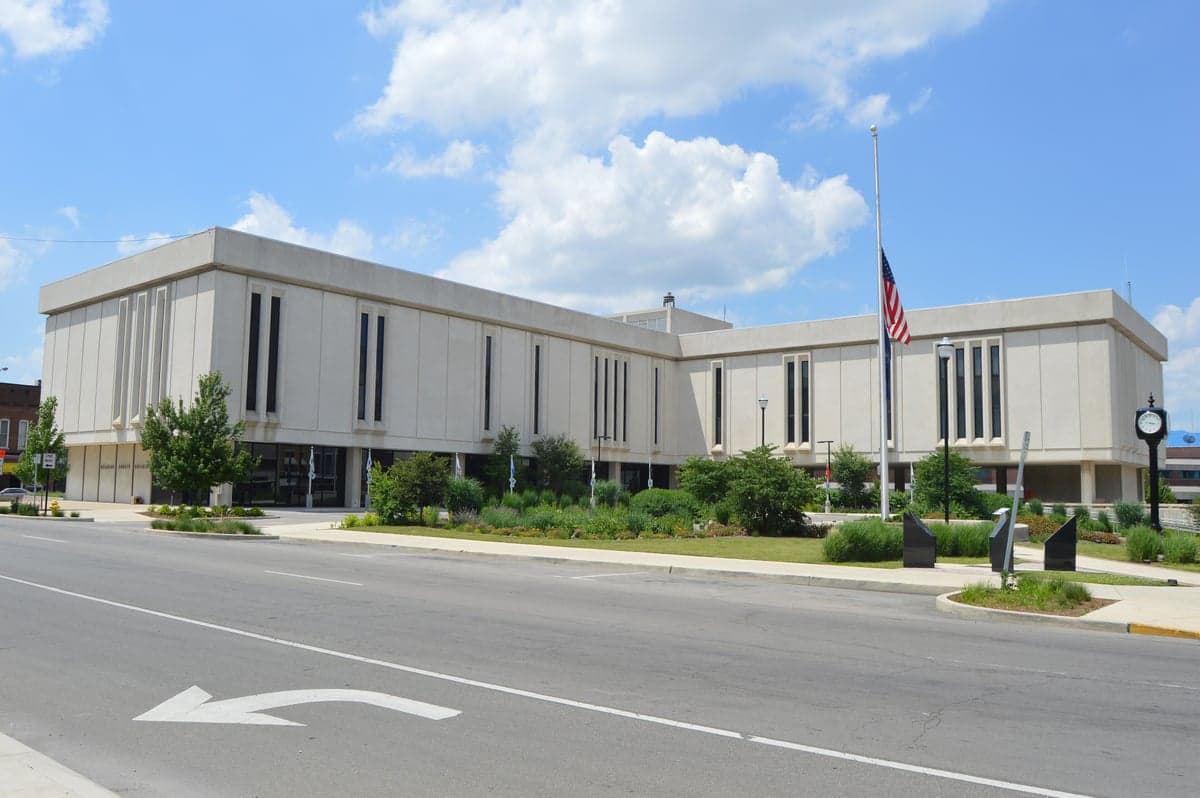
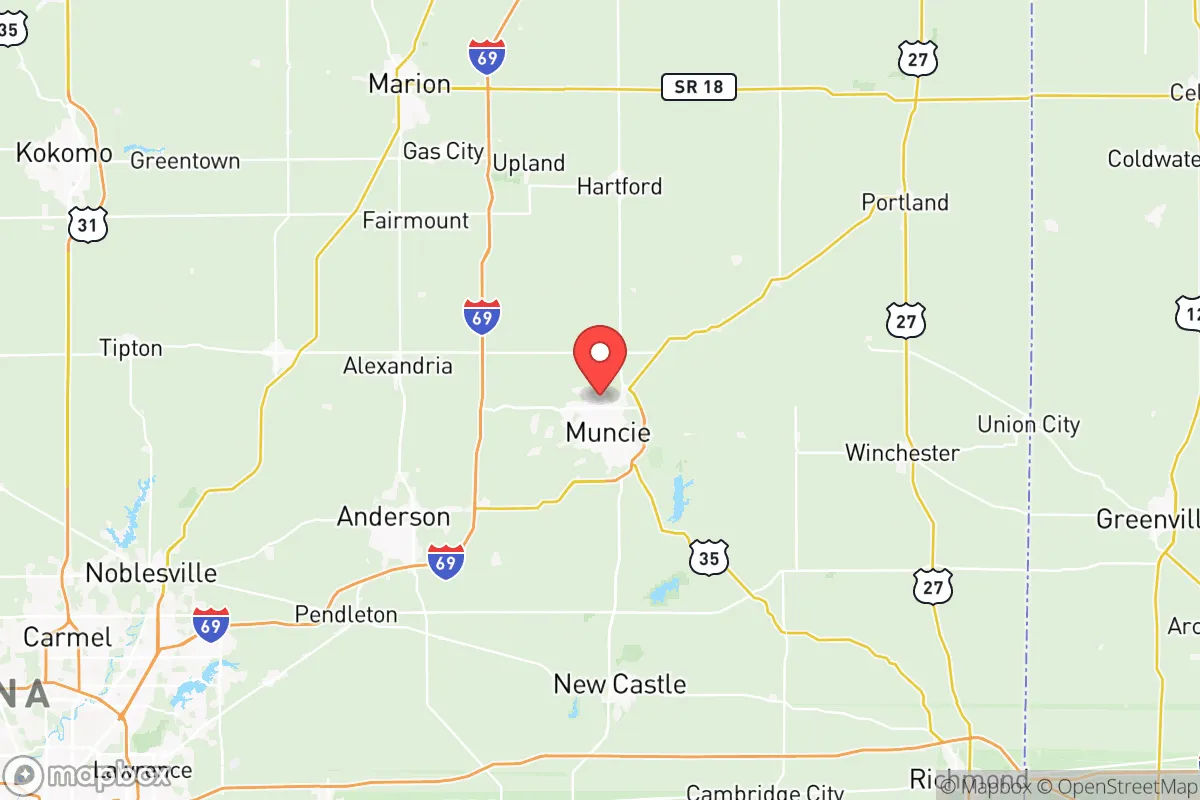
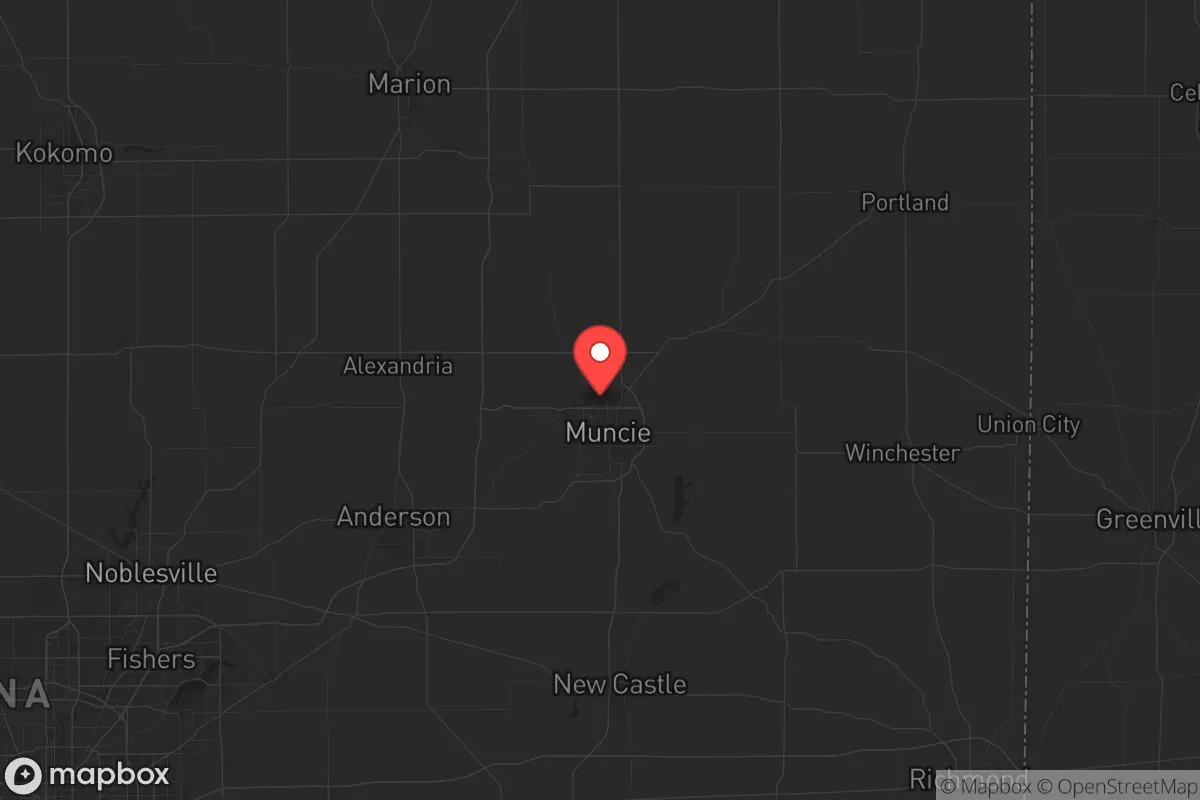
Photo: Wikipedia
Find The Best Places To Live in Delaware County
PRO TIP! You can paste a Zillow or Redfin link to get info on that property.
Best Places to Live in Delaware County
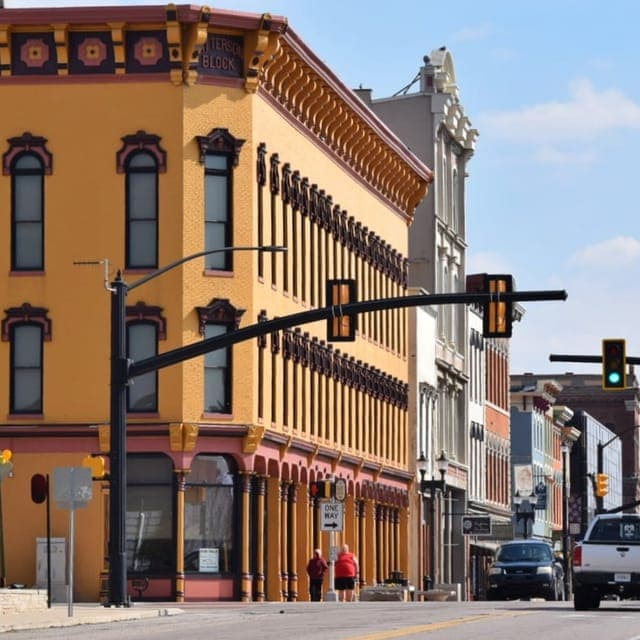
Cities & Towns in Delaware County
Cities in Delaware County
What It's Like Living in Delaware County, IN
Living in Delaware County means trading the breakneck pace of a major metro for a slower, more affordable rhythm where Muncie is still the anchor but the smaller towns—Yorktown, Daleville, Eaton, Albany—each carry their own distinct personality. It’s a place where you can own a median-priced home for around $127,600, your commute averages just over 22 minutes, and the cost of living sits at 63 out of 100 (well below the national average). If you’re looking for a corner of Indiana where the cardigan-and-conservative vibe of the countryside meets the worn-in practicality of a former industrial city, you’ve found it.
The Daily Rhythm: Work, Weekend, and Where You Grab a Bite
Most days in Delaware County feel predictable in a good way. People commute from subdivisions in Yorktown or the quieter streets of Albany into Muncie, where the biggest employers are Ball State University, IU Health Ball Memorial Hospital, and Magna Powertrain. The median income here sits at $56,932—modest by national standards, but the low cost of living means that paycheck stretches noticeably further than it would in Fishers or Indianapolis. After work, the local gathering spots are a mix of chain restaurants along McGalliard Road in Muncie and beloved dives like The Guardian Brewing Company in downtown Muncie or Scotty’s Brewhouse (a local chain that started in Muncie). Friday nights in the fall, you’ll see families heading to Ball State football games at Scheumann Stadium or catching the Muncie Central Bearcats under the lights—high school sports are genuinely a community anchor, especially in the smaller towns like Daleville and Eaton, where the whole town shows up for a home game.
The weather here delivers the full Midwest package: humid summers, crisp autumns, and winters that are reliably cold with 20-30 inches of snow annually. You’ll need a decent snow shovel, and the county’s plow crews are generally on top of main routes but slower on rural roads outside Muncie. Spring and fall are the sweet spots for taking advantage of the Cardinal Greenway, a 62-mile paved trail that cuts through the county and connects Muncie to Richmond—a favorite for cyclists and runners on weekends.
Sports, Festivals, and the Quirks of Local Culture
Ball State University isn’t just a campus—it’s the cultural and social engine of the county. The Cardinals’ basketball and football programs draw a loyal, if not huge, crowd, and the university’s Emens Auditorium brings touring Broadway shows and concerts that you’d otherwise drive to Indy for. Beyond college athletics, the local identity is shaped by events like the Delaware County Fair in Muncie each July (think 4-H competitions, carnival rides, and the kind of fried dough you only get once a year) and the more artsy Muncie Downtown Farm Stand during summer weekends. For music, the Be Here Now venue in the village of Yorktown books live acts ranging from bluegrass to tribute bands, giving the outer towns a reason to stay out past 9 p.m.
A quirky local marker: Delaware County is the longtime home of the Muncie Children’s Museum and the David Owsley Museum of Art on Ball State’s campus—both small but beloved by families. You won’t find a thriving nightclub scene, but you will find Vera Mae’s Bistro in Muncie for date-night dinners and the Heorot Pub & Draught House for a beer selection that punches above the county’s weight class.
Who Fits In Here (and Who Might Not)
This county works best for people who value stability over flash. The population of roughly 112,000 skews younger than much of rural Indiana—the median age is 35.7—thanks to the student body at Ball State, but outside of Muncie, you’ll find a more conservative, family-oriented crowd. Yorktown, in particular, is known for its strong schools and newer subdivisions, attracting families priced out of the Indy suburbs. Eaton and Albany feel more like traditional farm towns where folks know each other’s trucks. About 25.7% of adults hold a bachelor’s degree or higher, so you’re not in a college town bubble, but there is a solid core of educated professionals working in healthcare, education, and manufacturing.
The honest trade-off: the violent crime rate is 228.1 per 100,000 residents, which is slightly above the national average. Most of that is concentrated in parts of Muncie, not the outer towns. Families in Yorktown or Daleville will tell you they rarely worry about it, but urban-side living requires more street smarts than you might expect in a county of this size.
Pros and Cons of Calling It Home
- Pro: Housing is genuinely affordable. A $127,600 median home value gets you a starter home or a fixer-upper with a yard—a deal that’s vanishingly rare in most of the country.
- Con: Good jobs are concentrated in a few sectors (education, healthcare, manufacturing). If you’re in tech or finance, you’ll likely commute to Indy or work remote.
- Pro: The 22-minute average commute means you’re never wasting hours in traffic. You can live in Albany, work in Muncie, and still make it home for dinner with ease.
- Con: Nightlife and dining options are limited. What exists is good, but you’ve only got maybe a dozen “destination” restaurants county-wide. Date night variety gets stale fast.
- Pro: School systems like Yorktown Community Schools and Burris Laboratory School on Ball State’s campus draw strong parent involvement and decent outcomes.
- Con: Property taxes in Delaware County are moderate, but the county’s declining industrial base (think: former GM plants) means city services in Muncie have faced budget strains.
In the end, Delaware County isn’t trying to be a hip relocation hotspot. It’s a place where you can buy a house in your 20s, raise kids in Daleville with a backyard and good schools, and still catch a Ball State basketball game without breaking the bank. The trade-off is that you’ll have to drive to Indianapolis for an IKEA or a major concert—but for a lot of people here, that’s a trade they make gladly.

* Values derived from national, state, county, city and local statistics and may differ in a specific area. Last updated: 2026-07-02T09:48:15.000Z
Narrative content on this page is AI-generated and may contain mistakes. Verify any details that matter before acting on them.
ReloMaps may earn a commission from affiliate links at no extra cost to you.

