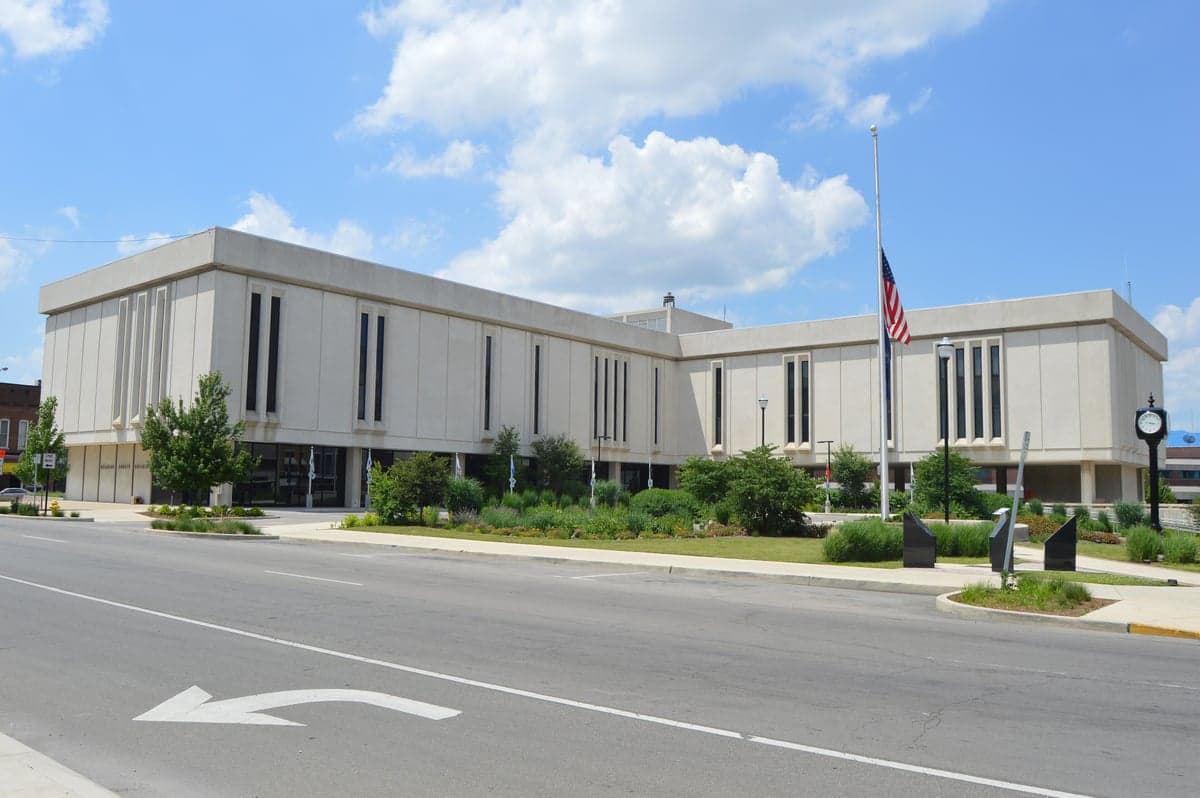
Photo: Wikipedia
Demographics of Delaware County
Affluence Level in Delaware County
A below-average socioeconomic profile. Incomes, home values, and educational attainment trail the U.S., with higher poverty and unemployment.
People of Delaware County
Delaware County, Indiana, home to 112,109 residents, is a predominantly white, working-to-middle-class community anchored by the city of Muncie and shaped by its industrial and educational history. With a population that is 85.0% white, 5.3% Black, 3.2% Hispanic, and 1.0% East/Southeast Asian, the county retains a distinctly Midwestern character—less diverse than the national average, yet quietly evolving. Its identity is marked by a blend of Rust Belt resilience, a strong Ball State University presence, and a conservative-leaning political culture that values self-reliance and community stability.
Settlement & growth (pre-1960)
The area now known as Delaware County was originally inhabited by the Miami and Lenape (Delaware) nations, for whom the county is named. The Lenape were forcibly relocated westward through a series of treaties in the early 1800s, most notably the 1818 Treaty of St. Mary's, which opened the land to American settlement. The first permanent white settlers—primarily of Scots-Irish and English stock—arrived in the 1820s, drawn by cheap land and the promise of farming along the White River. They founded the county seat of Muncie in 1827, along with smaller farming hamlets like Albany, Eaton, and Selma.
The county's character shifted dramatically in the 1880s with the discovery of natural gas. The Indiana Gas Boom brought a wave of European immigrants—mostly German and Irish laborers—who built Muncie into a manufacturing hub. Factories producing glass, iron, and steel sprang up, and the population surged from 11,000 in 1880 to over 40,000 by 1900. German immigrants concentrated in Muncie's south side, while Irish workers settled near the railroad yards. The boom also attracted a small number of Italian and Polish families, who formed tight-knit neighborhoods around the industrial plants in Muncie and Yorktown.
The Great Migration brought a significant Black population to Delaware County between 1910 and 1950. Southern Black families, primarily from Kentucky and Tennessee, moved north for factory jobs at companies like the Muncie-based Ball Corporation (famous for canning jars) and the Delco Remy division of General Motors. By 1950, Muncie's Black community had grown to roughly 7% of the city's population, concentrated in the Whitely and Industry neighborhoods. This era also saw the founding of Ball State University in 1918, which began attracting faculty and students from across the Midwest, adding a modest professional class to the county's blue-collar base.
Modern era (post-1965)
The post-1965 period brought slower demographic change to Delaware County compared to the rest of the nation. The 1965 Hart-Cellar Act, which opened immigration from Asia and Latin America, had a muted effect here. As of the latest data, only 1.3% of the population is foreign-born, far below the national average of roughly 14%. The county's industrial base began contracting in the 1970s and 1980s, with GM and Ball Corporation layoffs, leading to population stagnation and out-migration of younger residents to Indianapolis and other Sun Belt cities.
Despite this, some new groups have arrived. A small but growing Hispanic community (3.2%) has formed since the 1990s, primarily Mexican and Central American families drawn to low-cost housing and agricultural work in the county's rural towns like Gaston and Daleville. The East/Southeast Asian population (1.0%) is largely tied to Ball State University, with Chinese, Korean, and Vietnamese graduate students and faculty settling near campus in Muncie. The Indian subcontinent community (0.5%) is similarly small and university-connected, with families concentrated in the Ball State area and the Northwest Muncie suburbs. The Black population has held steady at 5.3%, though many younger Black residents have left for larger cities, leaving an older, more established community in the Whitely neighborhood.
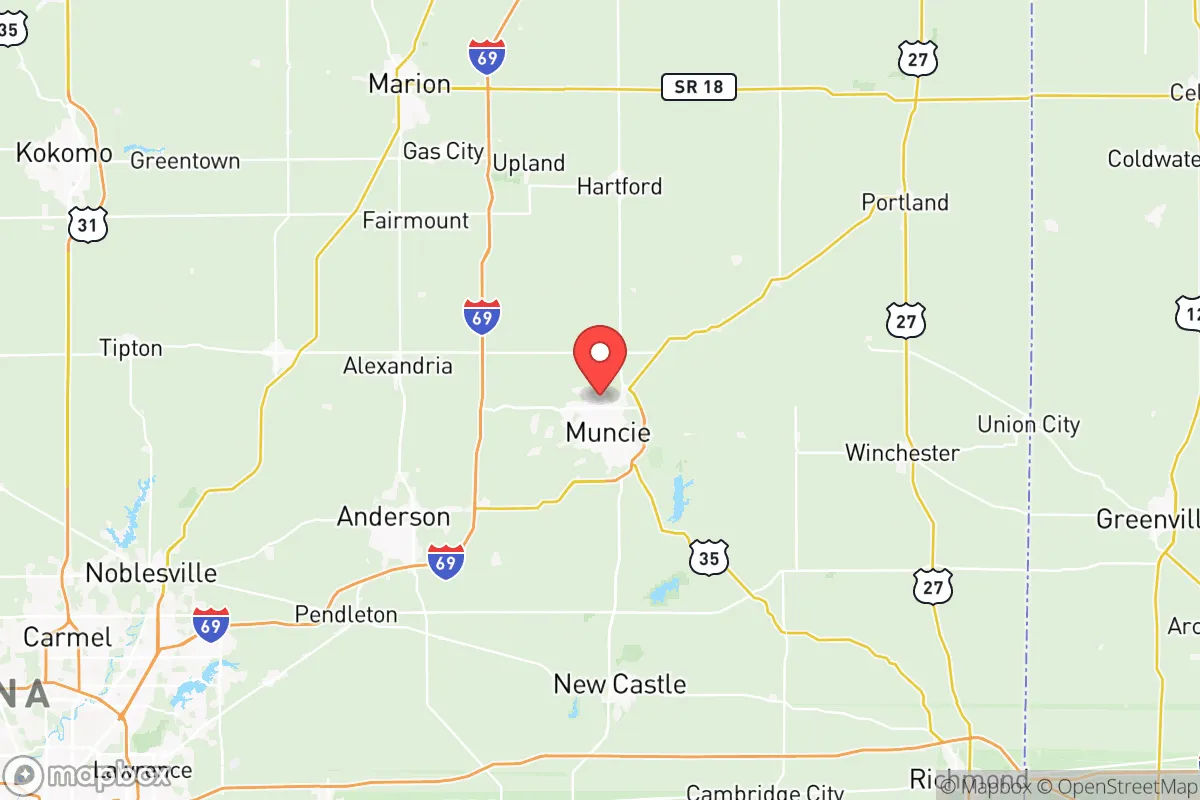
Domestic migration has been the bigger story. Since 2000, Delaware County has seen a net outflow of residents to Indianapolis (about 60 miles southwest) and to fast-growing Indiana suburbs like Fishers and Noblesville. However, the county has also attracted a modest influx of retirees and remote workers seeking lower property taxes and a slower pace, particularly in Yorktown and Eaton. Suburbanization has been limited; Muncie's population has declined from a peak of 77,000 in 1970 to roughly 65,000 today, while the county's rural towns have held steady.
The future
Delaware County is projected to become slightly more diverse over the next 10-20 years, but at a slow pace. The Hispanic share is expected to rise to 5-6% by 2040, driven by natural increase and continued migration for service-sector jobs in Muncie and Yorktown. The East/Southeast Asian and Indian communities will likely grow modestly as Ball State expands its international student recruitment, though most graduates leave after finishing their degrees. The white population will continue to age and shrink, as younger residents move to larger metros for employment.
The county's cultural identity is likely to remain predominantly white and Midwestern, with a conservative tilt that values tradition and fiscal caution. The biggest wildcard is the potential for new manufacturing or logistics investment—the Muncie area has been courting electric vehicle battery plants and distribution centers, which could attract a younger, more diverse workforce. If such projects materialize, towns like Albany and Selma could see new subdivisions and a modest demographic shift. Without them, the county will continue its slow decline in population and diversity, becoming an older, whiter, and more insular community.
For someone moving in now, Delaware County offers a stable, affordable, and safe environment with a strong sense of local identity, but limited economic opportunity and cultural diversity. It is a place where the past—the gas boom, the factory era, the university's influence—still shapes daily life, and where change comes slowly. New residents will find a community that is welcoming to those who fit its established patterns, but less so to those seeking a rapidly evolving, cosmopolitan environment.

* Values derived from national, state, county, city and local statistics and may differ in a specific area. Last updated: 2026-07-02T09:48:15.000Z
Narrative content on this page is AI-generated and may contain mistakes. Verify any details that matter before acting on them.
ReloMaps may earn a commission from affiliate links at no extra cost to you.

