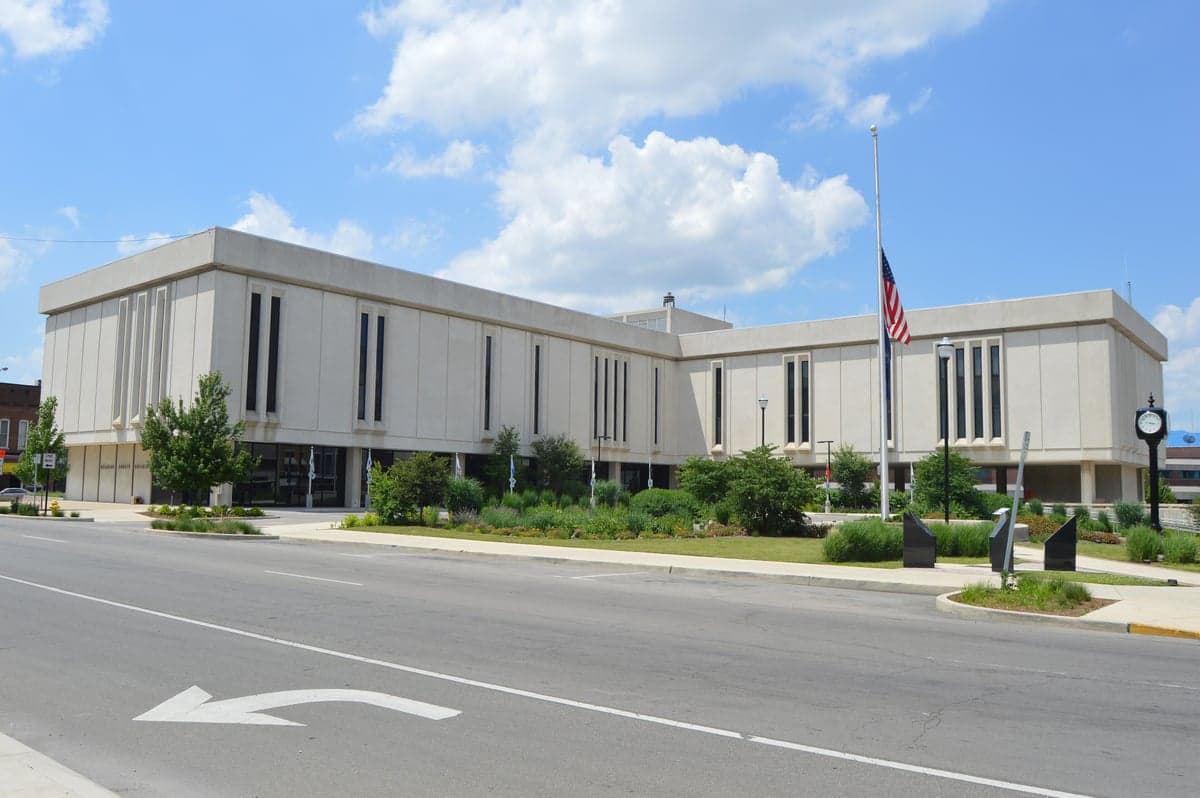
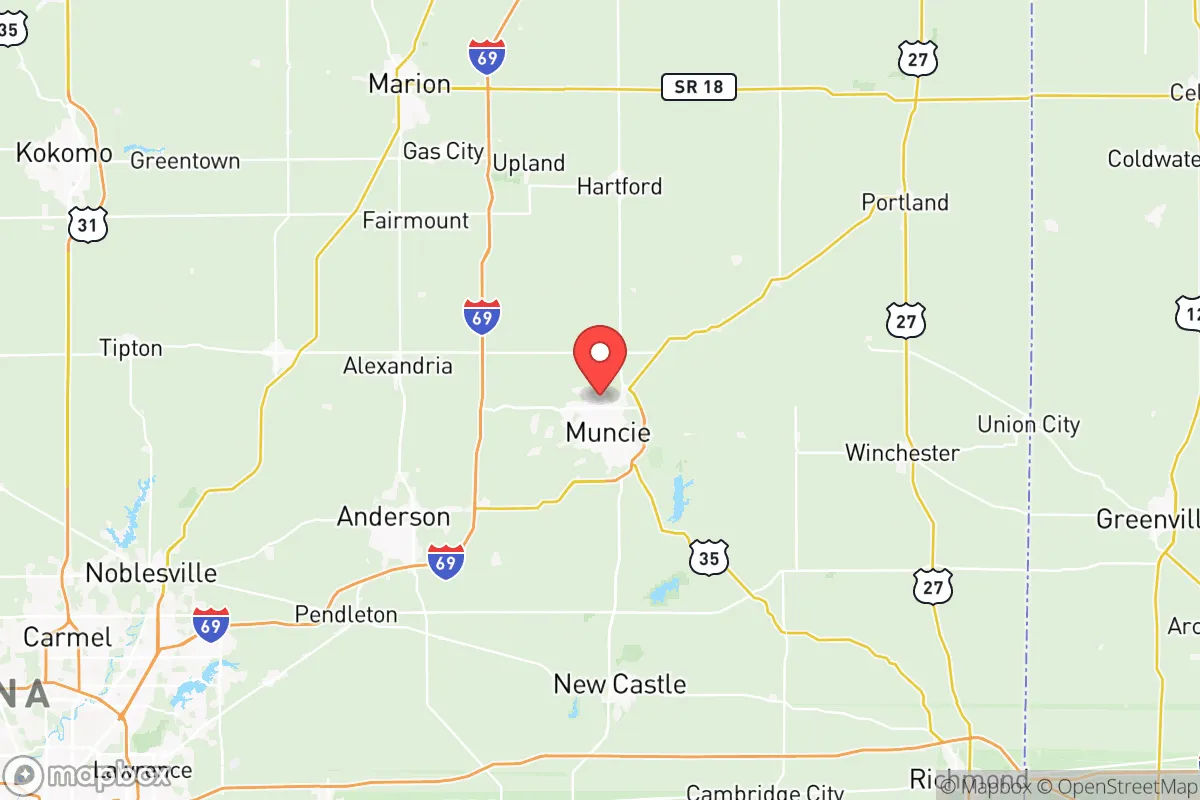
Photo: Wikipedia
Personal Sovereignty in Delaware County
Viable for self-reliance. Generally workable, though some barriers may limit total independence.
What does Personal Sovereignty tell us?
Personal Sovereignty measures your capacity for self-reliance and independence with minimal government friction. Higher scores mean fewer barriers between you and the way you want to live... but it assumes you have the space you need and good neighbors.
What does this tell us?
Personal Sovereignty measures your capacity for self-reliance and independence with minimal government friction. Higher scores mean fewer barriers between you and the way you want to live... but it assumes you have the space you need and good neighbors.
State Policy
Energy independence: Importer (35% of energy produced in-state)
Personal Liberty
Homesteading

Personal Liberty Analysis
Delaware County, Indiana, offers a notably high degree of personal sovereignty, grounded in a state legal framework that prioritizes local control, low taxes, and strong individual liberties. The county's mix of the Muncie urban core with surrounding rural townships like Mount Pleasant, Hamilton, and Perry creates a varied landscape where personal freedom is shaped more by municipal ordinances than by county or state overreach. For those prioritizing autonomy, the key factors are a light regulatory touch, permissive self-defense laws, and a cost of living that enables self-reliance without the bureaucratic friction found in more heavily governed metro areas.
Tax burden and regulatory posture: How Delaware County compares to the rest of Indiana
Indiana is a low-tax state, and Delaware County operates within that framework without adding excessive county-level burdens. The combined state and local sales tax is 7%, with no county-specific surtax. Property taxes in Delaware County average roughly 0.85% of assessed value, slightly below the state median of 0.91%, meaning a $200,000 home carries an annual tax bill of about $1,700. The county's regulatory posture is relatively hands-off, particularly outside the Muncie city limits. Zoning in unincorporated areas like Perry Township or Mount Pleasant Township is minimal, with no county-wide building codes for agricultural structures and limited permit requirements for residential additions. Muncie itself has more standard municipal codes—including rental inspection programs and occupancy limits—but the surrounding townships allow much greater flexibility. Indiana’s right-to-work status and lack of statewide red tape on small businesses mean entrepreneurs in Daleville or Yorktown can operate with fewer licensing hurdles than in neighboring states like Illinois or Michigan. The state's flat 3.05% income tax is one of the lowest in the Midwest, and Delaware County does not levy an additional local income tax, keeping take-home pay high.
Self-defense and gun law specifics: Constitutional carry and castle doctrine in Delaware County
Indiana has some of the most permissive firearm laws in the nation, and Delaware County fully reflects this. Since 2022, the state has allowed constitutional carry, meaning no permit is required to carry a handgun openly or concealed. The county's sheriff, typically elected and responsive to rural voters, is generally pro-Second Amendment; permits for firearm purchases and NFA items (suppressors, short-barreled rifles) are processed without undue delay. Indiana’s castle doctrine explicitly removes any duty to retreat in one’s home, vehicle, or place of business, and self-defense immunity is strong—civil liability protections apply to lawful use of force. Muncie has a higher crime rate than the surrounding townships, which has led to a visible gun-owning culture among residents in Albany and Eaton. There are no county-level firearm-specific ordinances beyond state law; no waiting periods, no magazine capacity limits, and no firearm registration. For those who prioritize self-defense, the only pragmatic limitation is that carry in schools (K–12) remains prohibited unless you are an authorized security officer. Overall, Delaware County offers one of the most unencumbered environments in the Midwest for lawful gun owners.
Self-reliance and homesteading viability: Lot sizes, zoning, and off-grid feasibility
Homesteading and off-grid living are very feasible in Delaware County, particularly outside Muncie’s urban service area. In unincorporated townships like Harrison Township and Mount Pleasant Township, minimum lot sizes for rural residential parcels are typically 1 to 5 acres, with many parcels available at prices well below $10,000 per acre. Zoning in these areas does not require minimum square footage for primary residences, and there are no county-wide restrictions on rainwater collection, composting toilets, or solar panel installation. Off-grid solar is legal under Indiana’s net metering policy (though net metering is capped), and standalone battery systems are entirely unregulated. Keeping backyard chickens, goats, or bees is allowed in all unincorporated areas and even within some Muncie neighborhoods that have passed urban agriculture ordinances. Selma, a smaller town in the county, has particularly relaxed enforcement—many residents run small farms or workshops without permits. The main limitation is well and septic: new wells require a permit from the county health department (typically a matter of weeks), and septic systems must meet state standards, but these are routine processes, not prohibitions. For those seeking to live largely off-grid, Delaware County offers low land costs, minimal bureaucracy, and a tolerant enforcement culture—especially compared to stricter counties in the Indianapolis metro area.
Personal liberties: Parental rights, medical autonomy, speech, and property
Delaware County reflects Indiana’s broader tilt toward personal liberty across several domains. Parental rights are strong: Indiana law guarantees parents authority over their children’s education, medical decisions, and religious upbringing, and the state has no abusive parental notification laws that would override family consent. School boards in Yorktown and Daleville have been responsive to parental concerns regarding curriculum transparency. Medical autonomy is less settled—Indiana has not enacted broad medical freedom laws, but there are no state mandates for vaccines beyond routine school requirements, and exemptions (religious and medical) are available. In Muncie, mask and vaccine mandates during public health emergencies have been limited and short-lived, reflecting local resistance to broad health orders. Free speech and property rights are well-protected: no county noise ordinances that restrict political speech, no overly restrictive sign ordinances, and no special taxing districts that burden property owners. The county planning commission exercises limited eminent domain, primarily for road projects. For those concerned about government overreach, Delaware County’s relatively small government footprint—combined with Indiana’s constitutional protections for property rights and parental autonomy—makes it a favorable environment for individuals who prefer to make their own choices without heavy-handed intervention.
In comparison to the rest of Indiana and the Midwest, Delaware County stands out as a moderately high-sovereignty area. It lacks the ultra-libertarian pockets of southern Indiana’s more remote counties, but it compensates with a practical balance: low taxes, permissive gun laws, viable homesteading options, and few regulatory constraints on daily life. For a family or individual moving from a high-regulation state like California, New York, or Illinois, the transition to Delaware County will feel like a notable expansion of personal freedom—particularly in the area of self-defense and property use. While Muncie itself has urban density and corresponding municipal codes, the surrounding townships, small towns, and unincorporated areas offer a genuine alternative for those seeking to live with minimal government interference.

* Values derived from national, state, county, city and local statistics and may differ in a specific area. Last updated: 2026-07-02T09:48:15.000Z
Narrative content on this page is AI-generated and may contain mistakes. Verify any details that matter before acting on them.
ReloMaps may earn a commission from affiliate links at no extra cost to you.

