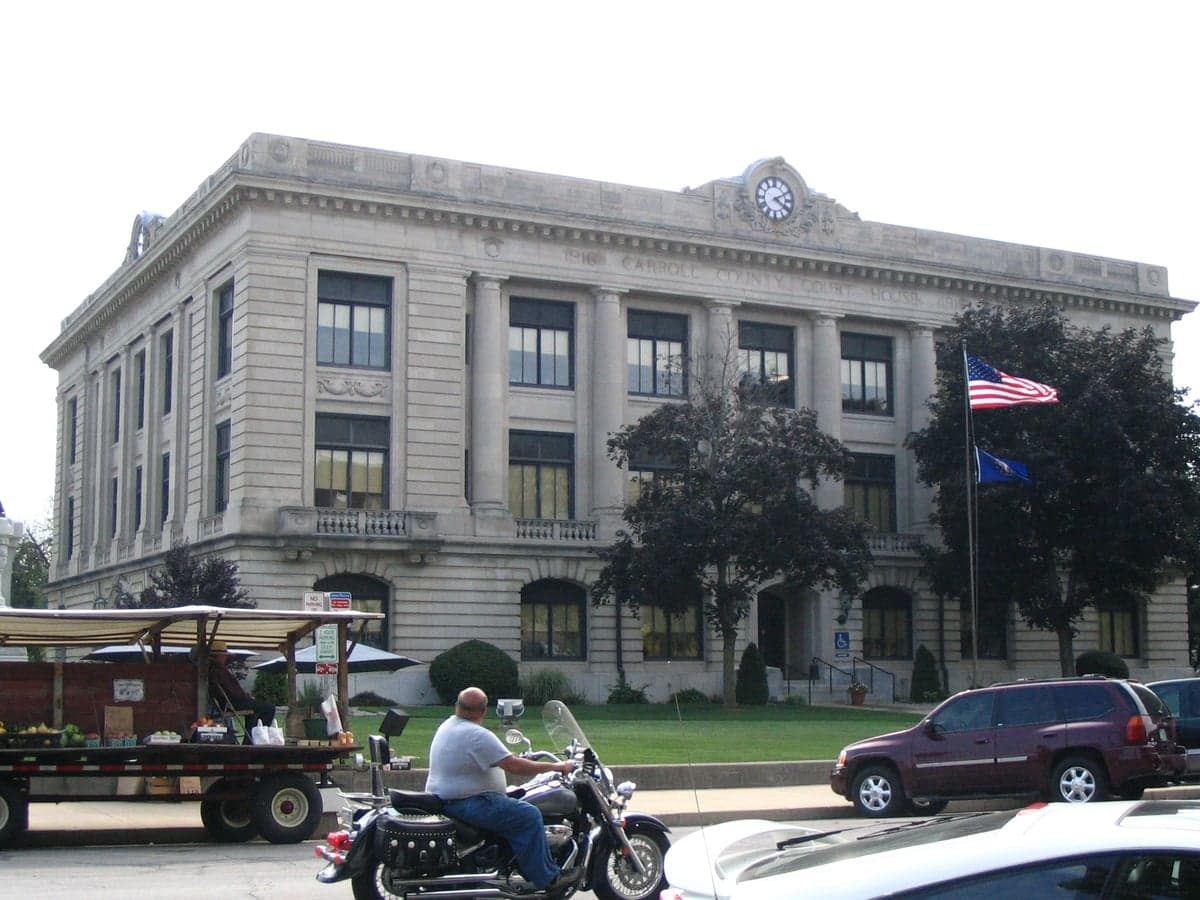
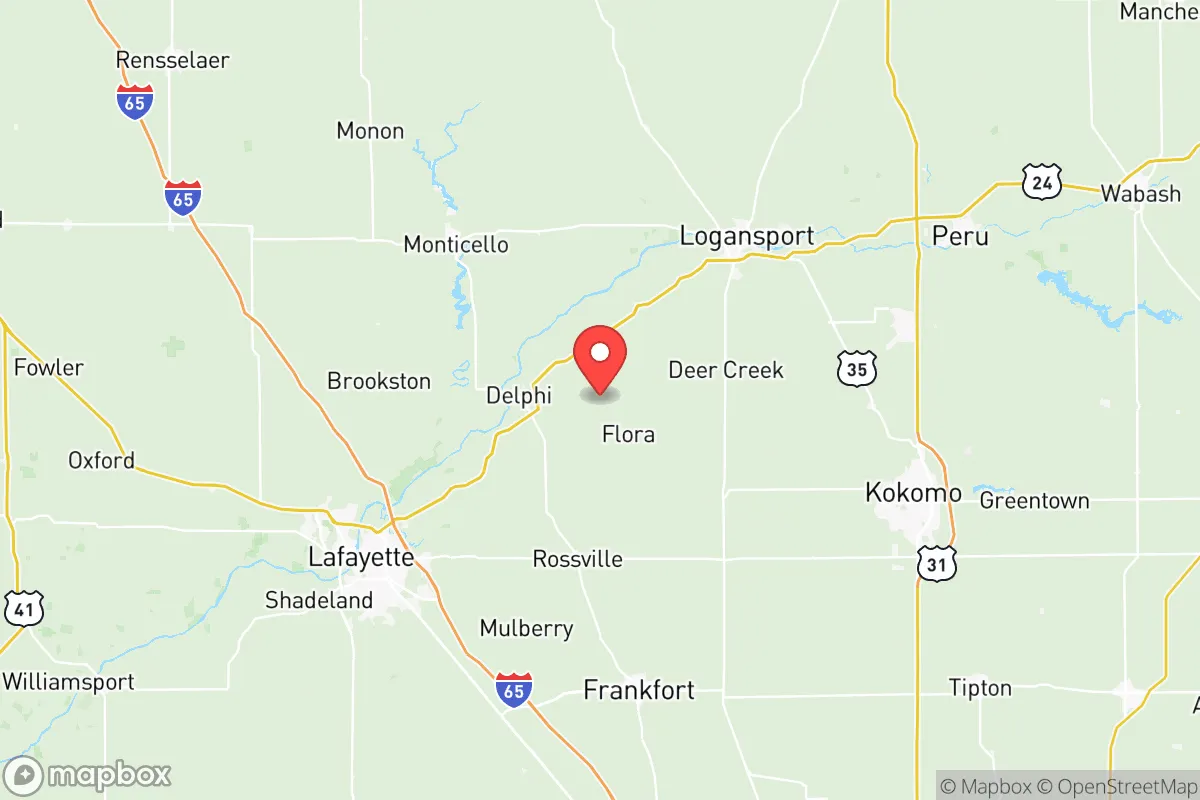
Photo: Wikipedia
Quality of Life in Carroll County
A livable area that tracks near national norms for affordability, walkability, and neighborhood health.
What does Quality of Life tell us?
Quality of Life measures an area by evaluating factors like cost of living, nearby amenities, country club access, airport proximity, socioeconomic signals and neighborhood character. For large states, this is a general average — quality of life can vary dramatically between metro areas, suburbs, and rural communities within the same state.
What does this tell us?
Quality of Life measures an area by evaluating factors like cost of living, nearby amenities, country club access, airport proximity, socioeconomic signals and neighborhood character. For large states, this is a general average — quality of life can vary dramatically between metro areas, suburbs, and rural communities within the same state.
Cost of Living
31% below national average
134%
The Real Cost of Living in Carroll County for 2026
| Tier | Individual | Family (4) |
|---|---|---|
| Survival | $14k | $26k |
| Comfortable | $33k | $48k |
| Luxury | $106k+ | $165k+ |
| Elite (Top 5%) | $125k+ | $194k+ |
Quality-of-Life Analysis
Carroll County, Indiana, offers a quality-of-life spectrum that spans from the walkable, historic river town of Delphi to deeply rural agricultural hamlets, attracting both commuters seeking affordable housing and families wanting a quiet, land-based lifestyle. The county’s overall cost of living index sits at 69 (31% below the U.S. average), with a median home value of $167,700 and median rent of $874, making it one of the more budget-friendly options in north-central Indiana. The average commute of roughly 25 minutes means residents can access jobs in Lafayette or Logansport while living in a distinctly small-town or rural setting.
Largest town(s) & population centers
Delphi, the county seat and largest town (population roughly 3,000), is the primary population center and the hub of daily life. Its compact downtown along the Wabash River features a historic courthouse square, locally owned restaurants, and the Delphi Opera House. The town is also the northern terminus of the Hoosier Heartland Industrial Corridor (SR 25), providing a direct 20-minute commute to Lafayette and Purdue University. Daily life in Delphi centers on the Carroll County School Corporation, the county’s largest employer, and a mix of small manufacturing and agribusiness. The town offers basic grocery, pharmacy, and medical services, but residents typically drive to Lafayette for major retail, healthcare, and entertainment. Flora, the second-largest town (population about 2,000), sits 10 miles east of Delphi and has a quieter, more residential feel, with a small downtown anchored by a hardware store and a public library. Flora’s proximity to the Interstate 65 corridor (via SR 18) makes it a practical choice for commuters working in Lafayette or Frankfort.
Smaller towns & rural pockets
Beyond the two main towns, Carroll County is dotted with unincorporated communities and tiny villages that define its rural character. Burlington (population roughly 600) is a classic agricultural crossroads with a grain elevator, a post office, and a handful of homes along the railroad tracks. Camden (population about 600) sits on the Tippecanoe River and offers a few small businesses and a strong sense of community centered on the local volunteer fire department. Yeoman and Bringhurst are even smaller unincorporated places, each with fewer than 200 residents, where life revolves around farming, church, and family. The county’s rural pockets are overwhelmingly agricultural, with corn and soybean fields stretching between these hamlets. Many residents in these areas live on acreage, raising livestock or maintaining large gardens, and rely on Delphi or Flora for most errands.
Cost & lifestyle range
The cost and lifestyle spread across Carroll County is significant, though the baseline remains affordable by national standards. At the higher end, Delphi’s historic district features Victorian-era homes on tree-lined streets, with prices ranging from $180,000 to $250,000 for a well-maintained four-bedroom house. These homes offer walkability to the courthouse square and the Wabash & Erie Canal interpretive center. In contrast, rural acreage near Camden or Burlington can be had for under $150,000 for a modest three-bedroom home on 1–3 acres, though buyers should budget for well and septic maintenance. Renters find the most options in Delphi and Flora, where two-bedroom apartments typically run $750–$900 per month, well below the national median. The lifestyle trade-off is clear: Delphi and Flora provide sidewalks, schools, and a few amenities within walking distance, while the rural pockets offer privacy, land, and lower property taxes but require driving 15–25 minutes for groceries or a pharmacy. The county lacks a hospital; the nearest emergency care is in Lafayette (20–30 minutes from most locations).
Carroll County is best suited for people who value affordability, space, and a slower pace over urban convenience. Commuters who work in Lafayette or Logansport find the 25-minute average drive a reasonable trade for a median home price nearly $100,000 below the national median. Families with school-age children benefit from the county’s single, well-regarded school district and low crime rates. Retirees and remote workers are drawn to the low cost of living and the ability to own land without a mortgage. However, those seeking walkable nightlife, diverse dining, or specialized healthcare will find the county too quiet and will need to look toward Lafayette or West Lafayette for those amenities.

Crime in Carroll County
Generally safer than 58% of comparable U.S. locations.
Violent CrimeViolent Crime Analysis
Property CrimeProperty Crime Analysis
Crime Analysis
Carroll County, Indiana, presents a mixed safety profile for prospective residents, with property crime rates that exceed state and national averages while violent crime remains slightly below the national benchmark. Located in north-central Indiana, the county’s roughly 20,000 residents experience crime patterns that vary significantly between its small towns and rural stretches. Understanding these dynamics is essential for anyone considering a move to communities like Delphi, Flora, Camden, or Burlington.
Crime in context
According to the most recent data, Carroll County reports a violent crime rate of 264.2 incidents per 100,000 residents, which is below the national average of roughly 380 per 100,000 but above the Indiana state average of about 240 per 100,000. Property crime, however, is a more pressing concern at 1,101.6 per 100,000—significantly higher than both the national rate (approximately 1,950 per 100,000) and the Indiana average (around 1,600 per 100,000). This means residents face a notably elevated risk of burglary, theft, and vehicle break-ins compared to the rest of the state. The county’s rural character does not insulate it from property crime, which often concentrates in areas with easier access to state highways and less dense surveillance.
What residents experience
Daily life in Carroll County is shaped by the contrast between its quiet agricultural towns and the property crime that disproportionately affects them. Delphi, the county seat and largest town (population ~3,000), sees a concentration of reported incidents, particularly thefts from vehicles and outbuildings, partly due to its role as a regional commercial hub along U.S. Route 421. Flora and Camden, smaller communities with populations under 2,000 each, report lower violent crime but still experience periodic property crimes, often tied to transient populations passing through on nearby State Road 75. Burlington, the county’s smallest incorporated town, typically logs the fewest incidents, but its residents still report occasional break-ins at unoccupied farmhouses. Violent crime is rare and usually involves domestic disputes or isolated assaults rather than random stranger-on-stranger attacks. The county’s judicial system, overseen by locally elected prosecutors and judges in Carroll County Superior Court, tends to take a traditional, law-and-order approach—a factor that generally reassures residents concerned about progressive leniency in larger urban jurisdictions.
Neighborhood-level variation
Safety in Carroll County is not uniform, and informed residents pay attention to neighborhood-level patterns. Delphi’s historic downtown core and newer subdivisions near the Tippecanoe River see lower property crime rates than areas along the U.S. 421 corridor, where transient traffic is heavier. Flora’s residential streets east of Main Street are considered safer than the commercial strip near the railroad crossing, where thefts from vehicles are more common. Camden and Burlington benefit from strong community watch networks and low population density, but their isolation also means slower emergency response times—a trade-off for rural living. For families and retirees, the safest choices are typically the quieter residential blocks away from major roads, where neighbors know each other and suspicious activity is quickly reported. Overall, while Carroll County is not a high-crime area by national standards, its property crime rate demands proactive precautions—locking vehicles, securing outbuildings, and participating in local watch programs—especially in the more accessible towns.
* Values derived from national, state, county, city and local statistics and may differ in a specific area. Last updated: 2026-11-15T20:51:06.000Z
Narrative content on this page is AI-generated and may contain mistakes. Verify any details that matter before acting on them.
ReloMaps may earn a commission from affiliate links at no extra cost to you.

