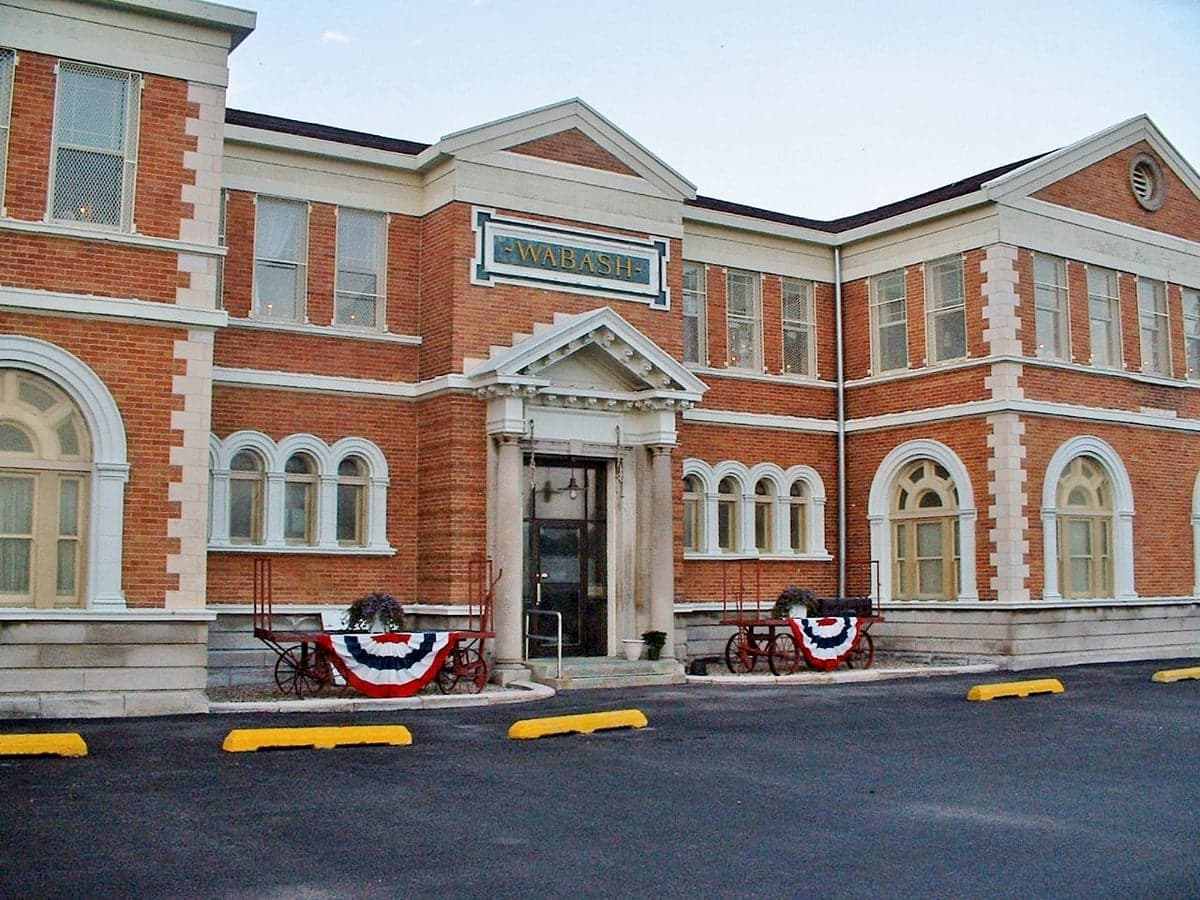
Photo: Wikipedia
Personal Sovereignty in Macon County
Viable for self-reliance. Generally workable, though some barriers may limit total independence.
What does Personal Sovereignty tell us?
Personal Sovereignty measures your capacity for self-reliance and independence with minimal government friction. Higher scores mean fewer barriers between you and the way you want to live... but it assumes you have the space you need and good neighbors.
What does this tell us?
Personal Sovereignty measures your capacity for self-reliance and independence with minimal government friction. Higher scores mean fewer barriers between you and the way you want to live... but it assumes you have the space you need and good neighbors.
State Policy
Energy independence: Importer (45% of energy produced in-state)
Personal Liberty
Homesteading

Personal Liberty Analysis
Macon County, Illinois, offers a meaningful degree of personal sovereignty within a Midwestern context, defined by a blend of relatively low-cost land, a permissive state-level firearms framework, and a regulatory environment that is less intrusive than metro areas like Chicago but carries Illinois-specific constraints. For the liberty-minded individual or family, the county provides a practical, grounded autonomy—not a frontier-style freedom, but a real ability to control one's property, defend oneself, and minimize state interference in daily life when compared to more progressive regions of the state.
Tax burden and regulatory posture in Macon County
Macon County's tax and regulatory climate is a study in trade-offs. The area avoids the aggressive local regulation seen in cities like Champaign or Bloomington, but operates under Illinois's high state-level tax burden. Property taxes in Macon County are a significant consideration—the average effective rate hovers around 2.15%, which is above the national average but typical for central Illinois. The county has not adopted onerous local business licensing regimes common in Cook County; for instance, starting a small home-based operation in Decatur (the county seat) requires only a straightforward business license rather than a multi-agency approval process. The county's zoning code is largely countywide, with Harristown and Mount Zion maintaining their own modest overlay districts, but no area enforces the kind of aesthetic or operational codes found in Illinois suburbs. Income tax is a flat 4.95% at the state level, and property tax assessments are handled at the county level without the contentious reassessment cycles seen in some downstate counties. The regulatory posture is best described as "hands-off, with state-imposed speed bumps"—you won't face local pesticide bans or strict energy codes in Blue Mound or Long Creek, but you will pay more in state fuel taxes and vehicle registration fees.
Self-defense law and gun-friendly culture in Macon County
Illinois is a "shall-issue" state for concealed carry, and Macon County reflects that with a deeply rooted gun culture. The county sheriff's office in Decatur is known for a straightforward, non-ideological approach to Firearm Owner's Identification (FOID) card approvals—processing times are generally within the 30-60 day window typical for downstate Illinois. The county has not adopted any local "assault weapon" bans or magazine capacity restrictions; Illinois state law preempts local firearm ordinances, meaning what is legal in Oakley or Decatur is defined by state law alone. Stand-your-ground doctrine does not exist in Illinois in the form found in Texas or Florida; Illinois law imposes a "duty to retreat" if safely possible before using deadly force. However, inside one's home or vehicle, there is no duty to retreat, and Macon County juries are considered sympathetic to self-defense claims in residential and rural contexts. Ranges and gun clubs operate freely; the Macon County Conservation District allows shooting on designated ranges, and private landowners in Forsyth and Warrensburg can shoot on their own property provided they follow the 300-foot setback from occupied dwellings. For the self-defense-minded, Macon County offers a permissive environment relative to any Illinois non-rural county.
Homesteading and off-grid living feasibility in Macon County
Macon County presents strong viability for self-reliant living, especially compared to the suburbs of Chicago or St. Louis. Minimum lot sizes in unincorporated areas are generally 1 acre for a single-family dwelling, but agricultural parcels (2.5 acres or more) face virtually no zoning restrictions on farm animals, gardens, or workshops. In Elwin and Boody, many properties are sold with existing wells and septic systems, and Illinois code for private wells is straightforward (< 100 feet requires a simple permit; deeper requires a licensed driller). Solar panels are legal without HOA approval in unincorporated areas, and net metering is available from Ameren Illinois, though the state's electricity market is vertically integrated, so full off-grid disconnection is legal but limits resale options. Rainwater collection is unrestricted in Illinois for non-potable uses. Composting toilets are permitted with a variance, though most prefer septic. The county does not have a building code requirement for owner-built dwellings in rural areas if the structure is for personal use—only electrical and plumbing must meet state codes. For a family wanting to raise chickens, keep goats, or grow a market garden, Macon County is one of the more accommodating areas in central Illinois, with Decatur itself allowing backyard chickens within city limits (limit 6 hens, no roosters). Off-grid feasibility is high, with the main constraint being Illinois's cold winters requiring significant heating fuel storage or generation.
Personal liberties: parental rights, medical autonomy, and property rights
Macon County's courts and local governance lean toward individual liberty in several specific areas. Parental rights in education are well-protected: the county's school districts—including Decatur Public Schools, Mount Zion Community Unit School District 3, and Warrensburg-Latham—have not adopted the kind of "critical race theory" or gender-identity curricula seen in larger Illinois districts, and school board elections are contested on local issues rather than statewide culture war proxies. Medical autonomy is a gray area: Illinois state law mandates insurance coverage for abortion and gender-transition procedures, but Macon County has no local hospitals or clinics that actively promote such services beyond legal requirements; the local hospital system, HSHS St. Mary's, operates under Catholic directives that restrict certain procedures. COVID-era mandates were largely enforced by state orders rather than local will, but Macon County had one of the lowest vaccine mandate compliance rates in the state, reflecting a population that values medical choice. Property rights are respected—eminent domain is rare, and the county does not impose transfer taxes or rent control. A notable freedom is the ability to sell raw land or home-kitchen goods (under Illinois's Cottage Food Law) without business licensure, allowing a side hustle in Cerro Gordo or Dalton City without state approval.
Overall, Macon County offers a level of personal sovereignty that is significantly higher than Illinois's metropolitan counties (Cook, DuPage, Lake) but lower than what one would find in similarly rural states like Indiana or Missouri. The county's strength lies in its low-density, low-surveillance culture combined with a legal landscape that respects firearms, property use, and parental rights. For the family or individual seeking to live largely free from local government overreach while accepting the baseline of Illinois state taxation and regulation, Macon County represents a solid, realistic option—not a libertarian paradise, but a place where self-reliance is still the normal expectation, not a political statement.

* Values derived from national, state, county, city and local statistics and may differ in a specific area. Last updated: 2026-07-01T10:47:46.000Z
Narrative content on this page is AI-generated and may contain mistakes. Verify any details that matter before acting on them.
ReloMaps may earn a commission from affiliate links at no extra cost to you.

