Photo: Wikipedia
Strategic Assessment of Dupage County
Multiple tactical vulnerabilities. Population density, target proximity, or disaster risk are likely compounding. A retreat property and exit planning is required.
What does the Strategic Assessment tell us?
Our Strategic Assessment grades tactical survivability of an area. Major population centers, military targets, fallout zones, natural disasters, and border exposure all drive risk — lower exposure means a more defensible position in a crisis.
This is heavily inspired by Joel Skousen's Strategic Relocation book. Highly recommended you checkout the book ($)What does this tell us?
Our Strategic Assessment grades tactical survivability of an area. Major population centers, military targets, fallout zones, natural disasters, and border exposure all drive risk — lower exposure means a more defensible position in a crisis.
This is heavily inspired by Joel Skousen's Strategic Relocation book. Highly recommended you checkout the book ($)Strategic Pillars

Key Distances
Strategic Assessment Analysis
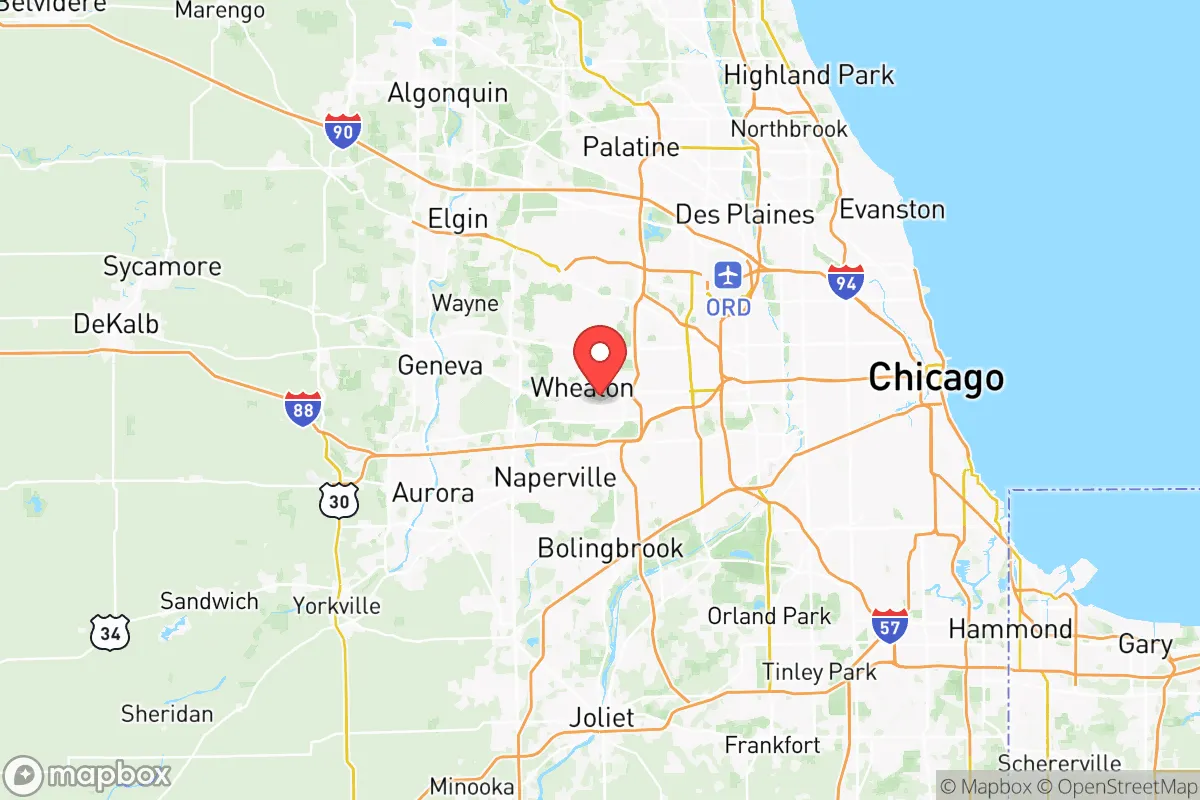
DuPage County, Illinois, offers a strategic paradox for the conservative relocator seeking resilience: it sits in the shadow of a major urban center (Chicago) while maintaining a surprising degree of self-sufficiency and community cohesion. The county’s location—roughly 25 miles west of Chicago’s Loop—provides access to regional resources without the daily exposure to the city’s escalating crime, political dysfunction, and civil unrest risks. With a population of roughly 930,000 spread across towns like Naperville, Wheaton, Downers Grove, and Elmhurst, DuPage is dense enough to sustain infrastructure but not so dense that it becomes a target or a tinderbox. For the prepper or survivalist, the key question is whether the county’s advantages—strong local governance, diversified economy, and geographic buffer—outweigh its proximity to a major metropolitan area and its associated fallout dangers.
Geographic position and natural advantages for long-term stability
DuPage County sits on the western edge of the Chicago metropolitan area, a position that offers a meaningful buffer from the worst of the city’s problems while still allowing access to its economic engine. The county is bisected by the East Branch of the DuPage River and contains several forest preserves—Waterfall Glen, Blackwell, and the DuPage County Forest Preserve District’s 60+ sites—which provide natural water sources, game, and timber for long-term sustainability. The terrain is flat to gently rolling, typical of the Midwest, which limits defensible high ground but also means no natural chokepoints that would funnel unrest or military movements. The county’s position relative to major infrastructure is a double-edged sword: it’s within 30 miles of O’Hare International Airport and the region’s major rail hubs, which is a vulnerability in a crisis, but it also means that DuPage residents can tap into supply chains and evacuation routes (I-88, I-355, I-290) if needed. For a relocator, the key natural advantage is the abundance of fresh water—the county sits atop the Mahomet Aquifer, one of the largest groundwater reserves in the Midwest, and the DuPage River system provides surface water for filtration. This is not a desert or a coastal floodplain; it’s a place where you can dig a well, hunt deer, and grow a garden without immediate existential threats from climate or geography.
Risks, exposures, and proximity to fallout-relevant landmarks
The biggest risk for DuPage County is its proximity to Chicago, a city that has seen a 35% increase in homicides since 2020 and is a perennial flashpoint for civil unrest, looting, and political violence. In a mass casualty event or societal collapse, Chicago’s 2.7 million residents would likely push westward along I-290 and I-88, directly into DuPage’s suburbs. The county also sits within 50 miles of the Argonne National Laboratory in Lemont, a nuclear research facility that, while not a reactor, could be a target for sabotage or a source of radiological contamination in a worst-case scenario. Additionally, the county is within 60 miles of the Zion Nuclear Power Station (decommissioned but still storing spent fuel) and the Braidwood Generating Station (active), both of which are potential fallout sources if targeted or compromised. On the industrial side, DuPage is not home to major refineries or chemical plants—those are concentrated in the southeast (Whiting, IN) and south (Joliet)—but it does have several large data centers and logistics hubs (e.g., the Amazon fulfillment center in Aurora) that could attract cyberattacks or physical disruption. For the survivalist, the most immediate concern is the county’s dense suburban layout: there are few rural redoubts, and most homes are within walking distance of a neighbor. This makes OPSEC (operational security) difficult and increases the risk of looting or refugee pressure during a breakdown. The county’s law enforcement is well-funded—DuPage County Sheriff’s Office has a budget of over $50 million—but in a widespread crisis, they would be stretched thin protecting 900,000 people across 334 square miles.
Practical resilience for a relocator: food, water, energy, and defensibility
For a relocator looking to hunker down, DuPage County offers a mixed bag. Water is the strongest suit: the county’s groundwater is plentiful and generally clean, with the DuPage Water Commission serving most municipalities via Lake Michigan water, but private wells are common in unincorporated areas and older subdivisions. A prepper should budget for a deep well or a high-capacity filtration system (Berkey or RO) because municipal supply could be disrupted by grid failure or contamination. Food resilience is moderate: the county has several large-scale farms (mostly corn and soy) in its western reaches near West Chicago and Warrenville, but the majority of food is trucked in from outside. Local farmers’ markets and CSAs exist (e.g., the Naperville Farmers Market), but they are not sufficient to feed the population in a crisis. A serious prepper would need to establish a private garden, raise chickens (allowed in most towns with permits), and stockpile at least 6–12 months of shelf-stable food. Energy is a vulnerability: DuPage is served by ComEd, which has a history of outages during storms and peak demand. Solar is viable—the county gets about 190 sunny days per year—but most homes are not equipped for off-grid living. A generator, battery bank, or small-scale solar setup is essential. Defensibility is the weakest link: the county’s suburban layout means that most homes are on grid streets with multiple access points, making perimeter defense difficult. However, some neighborhoods in Naperville and Wheaton have cul-de-sacs and larger lots that offer better chokepoints. The best bet for a relocator is to buy a property on the western edge of the county (near the Kane County line) where lot sizes increase and population density drops. The county’s gun laws are a concern: Illinois has a Firearm Owners Identification (FOID) card requirement, a 72-hour waiting period for long guns, and a ban on “assault weapons” (enacted in 2023). This means that a prepper cannot legally stockpile AR-15s or high-capacity magazines without risking felony charges. Concealed carry is possible with a license, but the process is onerous. For those willing to operate outside the law, the county’s proximity to Indiana (a more gun-friendly state) is a strategic advantage—a 45-minute drive to the state line can yield unrestricted purchases.
Overall, DuPage County is a viable but not ideal location for the conservative survivalist. Its strengths—water, economic diversity, and a buffer from Chicago’s worst—are real, but they are offset by high population density, restrictive gun laws, and proximity to multiple fallout-relevant targets (Chicago, Argonne, nuclear plants). For a single individual or a family willing to invest in a well, solar, and a deep pantry, and who can navigate the legal landscape, DuPage offers a stable base with access to resources. But for those seeking true redoubt living—low population, defensible terrain, and minimal regulatory burden—the county is a compromise. It’s a place to ride out a moderate crisis, not a total collapse. The smart play is to treat DuPage as a staging ground: live here, build your supplies, and have a bug-out plan for a more remote location in Wisconsin or Michigan if the situation deteriorates beyond the county’s capacity to absorb refugees and maintain order.

* Values derived from national, state, county, city and local statistics and may differ in a specific area. Last updated: 2026-05-12T08:50:46.000Z
Narrative content on this page is AI-generated and may contain mistakes. Verify any details that matter before acting on them.
ReloMaps may earn a commission from affiliate links at no extra cost to you.

