
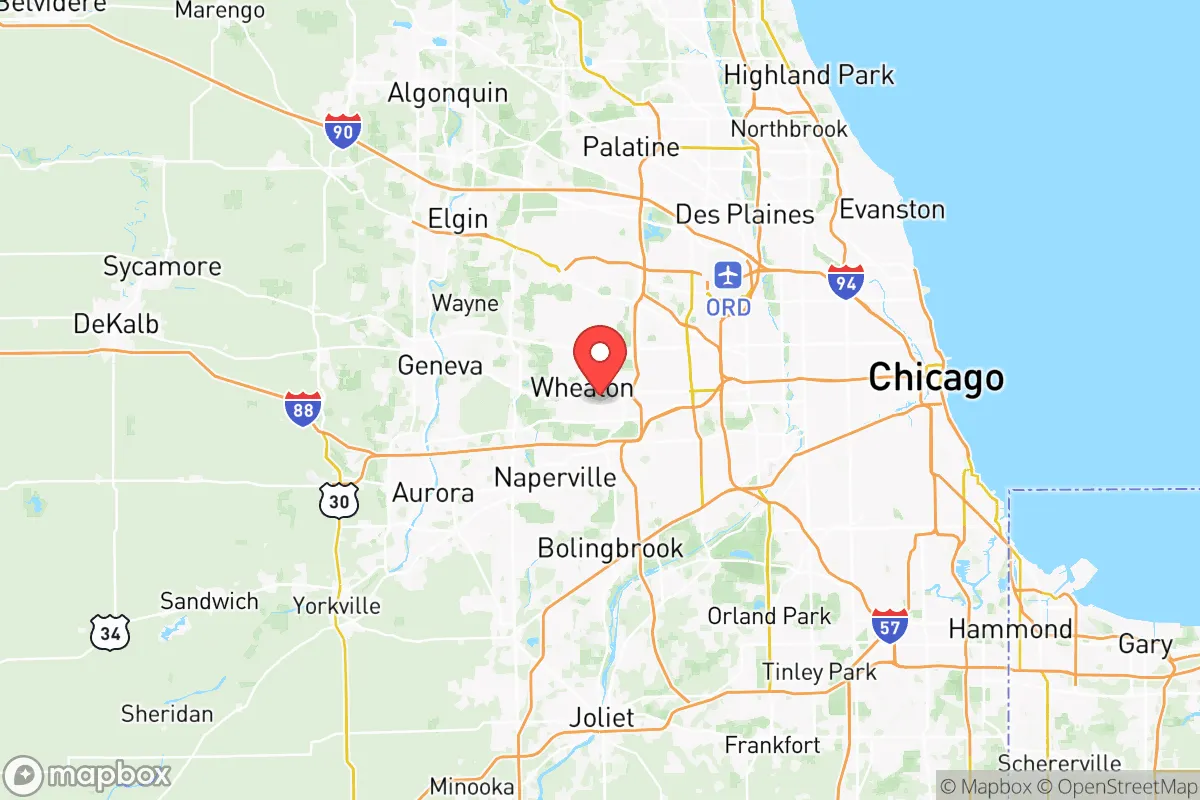
Photo: Wikipedia
Personal Sovereignty in Dupage County
Viable for self-reliance. Generally workable, though some barriers may limit total independence.
What does Personal Sovereignty tell us?
Personal Sovereignty measures your capacity for self-reliance and independence with minimal government friction. Higher scores mean fewer barriers between you and the way you want to live... but it assumes you have the space you need and good neighbors.
What does this tell us?
Personal Sovereignty measures your capacity for self-reliance and independence with minimal government friction. Higher scores mean fewer barriers between you and the way you want to live... but it assumes you have the space you need and good neighbors.
State Policy
Energy independence: Importer (45% of energy produced in-state)
Personal Liberty
Homesteading

Personal Liberty Analysis
DuPage County, Illinois presents a complex and often contradictory environment for personal sovereignty, where the promise of affluent suburban stability clashes with a state-level regulatory apparatus that increasingly encroaches on individual autonomy. For the conservative-leaning individual or parent evaluating relocation, the county offers pockets of relative freedom within a broader context of expanding government control, particularly from Springfield. While the immediate quality of life—good schools, low crime, and robust infrastructure—is undeniable, the strategic question is whether the erosion of self-reliance and the high cost of liberty in taxes and compliance make it a viable long-term stronghold. The answer depends heavily on which specific town you choose and how much you are willing to fight for your rights within a system that is not naturally aligned with a survivalist or prepper mindset.
Tax burden and regulatory posture: the cost of living under state control
The single greatest threat to personal sovereignty in DuPage County is the cumulative tax burden. Property taxes are among the highest in the nation, routinely exceeding 2% of assessed value, which directly undermines the ability to build wealth and self-reliance. A home in Naperville or Hinsdale valued at $500,000 can carry an annual tax bill of $10,000 to $12,000, a permanent drain on resources that could otherwise fund land, supplies, or investment. This is compounded by Illinois’ flat state income tax of 4.95% and a sales tax that, when combined with county and municipal rates, can approach 9% in towns like Wheaton and Downers Grove. The regulatory posture is equally burdensome: the state mandates strict building codes, environmental regulations, and licensing requirements that make even minor home improvements or small-scale agricultural projects a bureaucratic ordeal. For the prepper, this means that any attempt to build a root cellar, install a backup generator, or keep backyard chickens will likely require permits and inspections, creating a paper trail that invites further oversight. The county’s posture is one of managed compliance, not freedom, and the cost of that compliance is a direct subtraction from your personal autonomy.
Self-defense and gun law specifics: navigating a hostile state landscape
On the surface, DuPage County is more gun-friendly than Cook County to the east, but it operates entirely within the constraints of Illinois’ restrictive state laws. The Firearm Owners Identification (FOID) card is a mandatory, state-run registry that creates a barrier to ownership and a database that many conservatives view as a precursor to confiscation. The county does have a strong concealed carry culture, with many residents in towns like Glen Ellyn and Lombard holding valid licenses, but the process is expensive, time-consuming, and subject to arbitrary delays by the Illinois State Police. The 2023 ban on so-called "assault weapons" and high-capacity magazines, signed by Governor Pritzker, is actively enforced in DuPage, meaning that preppers cannot legally own the most effective tools for home defense or community protection. Local sheriffs, including DuPage County Sheriff James Mendrick, have publicly stated they will not enforce certain aspects of the ban, but this offers only temporary and fragile protection against a state that has shown a willingness to revoke licenses and prosecute violators. For the individualist, the message is clear: your right to self-defense is conditional, subject to the whims of a state government that views firearms as a public health risk rather than a fundamental right. The safest bet for a gun owner in DuPage is to live quietly, avoid drawing attention, and hope the political winds shift before the registry becomes a list for confiscation.
Self-reliance and homesteading viability: lot sizes, zoning, and off-grid feasibility
True self-reliance in DuPage County is a near-impossibility for most residents due to dense suburban zoning and small lot sizes. The county is dominated by subdivisions with quarter-acre to half-acre lots, particularly in central areas like Addison and Villa Park, where homeowners' associations (HOAs) often prohibit vegetable gardens, clotheslines, and any structure that deviates from the manicured norm. Even in more rural pockets like Wayne or the unincorporated areas near West Chicago, where lots can reach 2 to 5 acres, county zoning codes restrict livestock, limit the height of fences, and require connection to municipal water and sewer systems, making true off-grid living illegal. Rainwater harvesting is permitted but heavily regulated, and solar panel installations must meet strict aesthetic and structural guidelines. For the prepper seeking to dig a well, install a composting toilet, or build a storm shelter, the path is littered with permit fees, inspections, and potential legal challenges from neighbors. The county’s infrastructure is designed for dependency on the grid, not resilience. The only viable strategy for a degree of self-reliance is to purchase land in the far western reaches of the county, near the Kane County line, where zoning is slightly more permissive, and to keep all projects low-profile to avoid triggering enforcement.
Personal liberties: parental rights, medical autonomy, speech, and property
DuPage County is a battleground for personal liberties, with local school boards and health departments often acting as proxies for state-level progressive mandates. Parental rights have been under sustained assault, with school districts in Naperville and Wheaton implementing curriculum and policies on gender identity and sexual education that bypass parental consent, forcing families to either opt out or move. Medical autonomy is similarly constrained: Illinois mandates vaccination for school attendance, and during the COVID-19 pandemic, DuPage County health officials enforced mask mandates and business closures with vigor, demonstrating a willingness to override individual choice in the name of public health. Free speech is nominally protected, but the county’s political culture is increasingly hostile to conservative viewpoints, with public meetings often dominated by progressive activists and local media that frames traditional values as bigotry. Property rights are the most secure of the liberties, but even here, the county’s use of eminent domain for infrastructure projects and its aggressive code enforcement create a climate of uncertainty. For the parent who wants to raise children without government interference, or the individual who values medical choice and the right to speak freely, DuPage offers a constant low-grade war of attrition against those who resist the prevailing orthodoxy.
Overall, DuPage County offers a high baseline of safety and prosperity but at the cost of significant personal sovereignty. Compared to rural counties in Missouri, Indiana, or even downstate Illinois, where taxes are lower, gun laws are more permissive, and zoning allows for genuine self-reliance, DuPage is a poor choice for the serious prepper or survivalist. It is a place to live well within the system, not to escape it. For the conservative individual or family who values community and convenience over absolute freedom, and who is willing to pay the price in taxes and compliance, it can work—but only if you are prepared to fight for every inch of your autonomy against a state that views your independence as a problem to be managed. The strategic relocation advice is clear: if sovereignty is your priority, look west or south. If you must stay in DuPage, choose a town like Wayne or West Chicago for slightly more breathing room, and keep your head down while you build your resilience in the shadows of the system.

* Values derived from national, state, county, city and local statistics and may differ in a specific area. Last updated: 2026-05-12T08:50:46.000Z
Narrative content on this page is AI-generated and may contain mistakes. Verify any details that matter before acting on them.
ReloMaps may earn a commission from affiliate links at no extra cost to you.

