
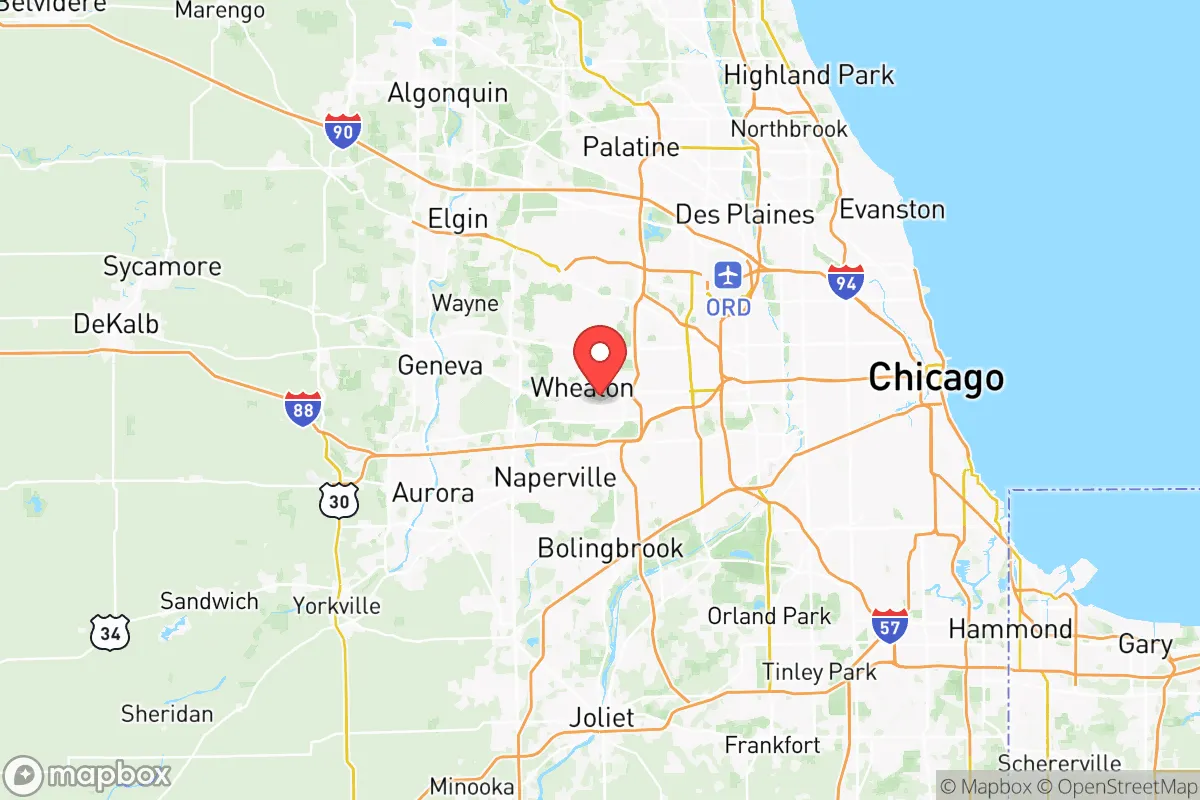
Photo: Wikipedia
Quality of Life in Dupage County
A livable area that tracks near national norms for affordability, walkability, and neighborhood health.
What does Quality of Life tell us?
Quality of Life measures an area by evaluating factors like cost of living, nearby amenities, country club access, airport proximity, socioeconomic signals and neighborhood character. For large states, this is a general average — quality of life can vary dramatically between metro areas, suburbs, and rural communities within the same state.
What does this tell us?
Quality of Life measures an area by evaluating factors like cost of living, nearby amenities, country club access, airport proximity, socioeconomic signals and neighborhood character. For large states, this is a general average — quality of life can vary dramatically between metro areas, suburbs, and rural communities within the same state.
Cost of Living
37% above national average
103%
The Real Cost of Living in Dupage County for 2026
| Tier | Individual | Family (4) |
|---|---|---|
| Survival | $26k | $49k |
| Comfortable | $73k | $107k |
| Luxury | $200k+ | $309k+ |
| Elite (Top 5%) | $240k+ | $371k+ |
Quality-of-Life Analysis
DuPage County offers a broad spectrum of living environments, from dense, transit-oriented suburbs to quiet, semi-rural townships, attracting a mix of Chicago commuters, corporate professionals, and families seeking top-ranked schools. The county’s character shifts noticeably from the high-rise corridors along I-88 and I-355 to the farm-adjacent blocks of its western and southern edges. With a cost of living index of 137 (100 = US average) and a median home value of $374,100, the county commands a premium over national averages, but the value varies dramatically depending on which specific community a resident chooses.
Largest town(s) & population centers
Naperville is the county’s largest city and its economic and cultural anchor, home to roughly 150,000 residents and a dense downtown with the Riverwalk, high-end dining, and a Metra station offering a 28-minute average commute to Chicago. Daily life here revolves around the highly rated Naperville Community Unit School District 203 and Indian Prairie School District 204, with families drawn to the city’s extensive park system and the Nichols Library. Wheaton, the county seat, is more conservative and quieter, centered on Wheaton College and a historic downtown square; its housing stock leans toward older single-family homes with median values above the county average. Downers Grove and Lombard function as major employment nodes along the I-88 corridor, with Downers Grove offering a vibrant downtown with the Tivoli Theatre and a strong sense of community, while Lombard is known for the Lilacia Park and a more suburban, car-oriented layout. Elmhurst, on the county’s eastern edge, blends a walkable downtown with the Elmhurst Art Museum and a direct Metra line to Chicago, attracting professionals who want an urban feel without leaving the suburbs.
Smaller towns & rural pockets
Beyond the population centers, DuPage retains several smaller communities and unincorporated areas that offer a distinctly different pace. Warrenville, tucked along the West Branch DuPage River, has a small-town feel with its historic downtown and the nearby Blackwell Forest Preserve, yet remains within 10 minutes of Naperville’s amenities. West Chicago, historically a railroad and farming hub, is more diverse and affordable, with a median home value closer to $300,000 and a growing Latino population that shapes its local businesses and festivals. Winfield is a quiet village of roughly 10,000 residents, known for the Central DuPage Hospital and its large forest preserves, offering a semi-rural atmosphere with no downtown commercial core. The unincorporated areas of Milton Township and Wayne Township (the latter partially in DuPage) contain pockets of farmland, horse properties, and large-lot subdivisions where residents trade walkability for acreage and privacy. Clarendon Hills and Hinsdale are small, wealthy villages with historic homes and top-tier schools, but their populations are under 10,000, giving them a village-like intimacy despite high property values.
Cost & lifestyle range
The cost spread across DuPage is wide. At the high end, Hinsdale and Oak Brook post median home values above $700,000, with Oak Brook offering luxury estates, the Oakbrook Center mall, and corporate headquarters for companies like McDonald’s and Ace Hardware. At the moderate end, Addison and Wood Dale have median home values around $280,000–$320,000, with a more industrial feel and a higher proportion of rental units; median rent in the county is $1,628, but in Addison it can dip below $1,400. Bensenville, near O’Hare Airport, is the most affordable entry point, with older housing stock and a median home value near $250,000, though residents contend with airport noise and longer commutes. Lifestyle amenities also vary: Naperville and Downers Grove offer robust restaurant scenes and farmers markets, while smaller towns like Itasca and Roselle rely on neighboring communities for shopping and entertainment. The average commute of 28 minutes is achievable from most towns via Metra or I-88, but residents in western towns like West Chicago or Winfield may face 35–40 minutes to downtown Chicago.
DuPage County is best suited for families and professionals who prioritize school quality, safety, and access to Chicago over urban density or extreme affordability. Those who thrive here are typically willing to pay a premium for top-rated districts (many in the top 10% of Illinois) and for the convenience of a 28-minute train ride to the Loop. The county’s diversity of town sizes means a young couple can start in a rental in Addison, move to a starter home in Warrenville, and eventually settle into a larger property in Naperville or Hinsdale without leaving the county — a rare range of options within a single suburban jurisdiction.

Crime in Dupage County
WARNING: The crime statistics are unreliable for this jurisdiction. Local authorities have either not reported or under reported their data to the FBI. This could be due to bad intentions, incompetence or technical issues. Regardless, we suggest skepticism.
Higher crime rates than 63% of comparable U.S. locations.
Violent CrimeViolent Crime Analysis
Property CrimeProperty Crime Analysis
Crime Analysis
DuPage County, Illinois, maintains a safety profile that is markedly better than both the state and national averages, though property crime remains a more tangible concern for residents than violent offenses. With a violent crime rate of 225.9 per 100,000 residents and a property crime rate of 1,423.1 per 100,000, the county offers a relatively secure environment compared to the broader Chicago metropolitan area. However, the influence of progressive judicial policies in nearby Cook County and within some DuPage courtrooms has introduced a degree of unpredictability for law-abiding residents, particularly regarding repeat property offenders.
Crime in context
DuPage County’s violent crime rate is roughly half the national average and significantly lower than Illinois’ statewide rate, which is elevated by violent crime in Chicago and its inner-ring suburbs. The property crime rate, while higher than the violent crime rate, still sits below the national median. This favorable comparison is largely driven by the county’s affluence and robust local police presence in communities like Naperville, Wheaton, and Glen Ellyn, which consistently report some of the lowest crime figures in the state. By contrast, areas closer to the Cook County border—such as Addison, Bensenville, and parts of Elmhurst—experience higher property crime rates, often linked to their proximity to O’Hare International Airport and major interstate corridors that facilitate transient criminal activity. The county’s overall safety picture is strong, but residents in these border communities face a noticeably different reality than those in the western suburbs.
What residents experience
For the average DuPage resident, the most common safety concern is property crime—specifically theft from vehicles, package theft, and burglary—rather than violent confrontation. The county’s property crime rate of 1,423.1 per 100,000 translates to roughly one property crime per 70 residents annually, a figure that feels manageable in affluent suburbs but can be disruptive in denser, more transient areas. Violent crime is rare in most neighborhoods, but it is not absent: incidents tend to cluster in a handful of municipalities, including West Chicago, Glendale Heights, and Carol Stream, where socioeconomic pressures are higher. A growing frustration among residents is the perceived leniency of the local court system. The 18th Judicial Circuit Court, which covers DuPage County, has seen a shift toward progressive prosecution philosophies in recent years, with some judges favoring diversion programs and reduced sentences for property and drug offenders. While intended to reduce incarceration rates, this approach has led to a visible increase in repeat offenders cycling through the same communities, undermining the sense of security that long-time residents expect.
Neighborhood-level variation is significant and worth examining before relocation. The safest enclaves are found in the county’s western and southern portions: Naperville, Wheaton, and Hinsdale routinely post violent crime rates below 100 per 100,000 and property crime rates under 1,000 per 100,000. In contrast, the northeastern corridor—Addison, Wood Dale, and Bensenville—sees property crime rates approaching 2,000 per 100,000, driven by hotel thefts, vehicle break-ins, and retail crime. The county’s overall numbers are respectable, but the gap between its safest and least safe communities is wide, and the trend toward progressive judicial policies in the circuit court is a legitimate concern for families prioritizing long-term safety and accountability.
* Values derived from national, state, county, city and local statistics and may differ in a specific area. Last updated: 2026-05-12T08:50:46.000Z
Narrative content on this page is AI-generated and may contain mistakes. Verify any details that matter before acting on them.
ReloMaps may earn a commission from affiliate links at no extra cost to you.

