Photo: Wikipedia
Personal Sovereignty in Twin Falls County
Moderate friction. Expect trade-offs in some aspect of personal liberty and independence.
What does Personal Sovereignty tell us?
Personal Sovereignty measures your capacity for self-reliance and independence with minimal government friction. Higher scores mean fewer barriers between you and the way you want to live... but it assumes you have the space you need and good neighbors.
What does this tell us?
Personal Sovereignty measures your capacity for self-reliance and independence with minimal government friction. Higher scores mean fewer barriers between you and the way you want to live... but it assumes you have the space you need and good neighbors.
State Policy
Energy independence: Importer (25% of energy produced in-state)
Personal Liberty
Homesteading

Personal Liberty Analysis
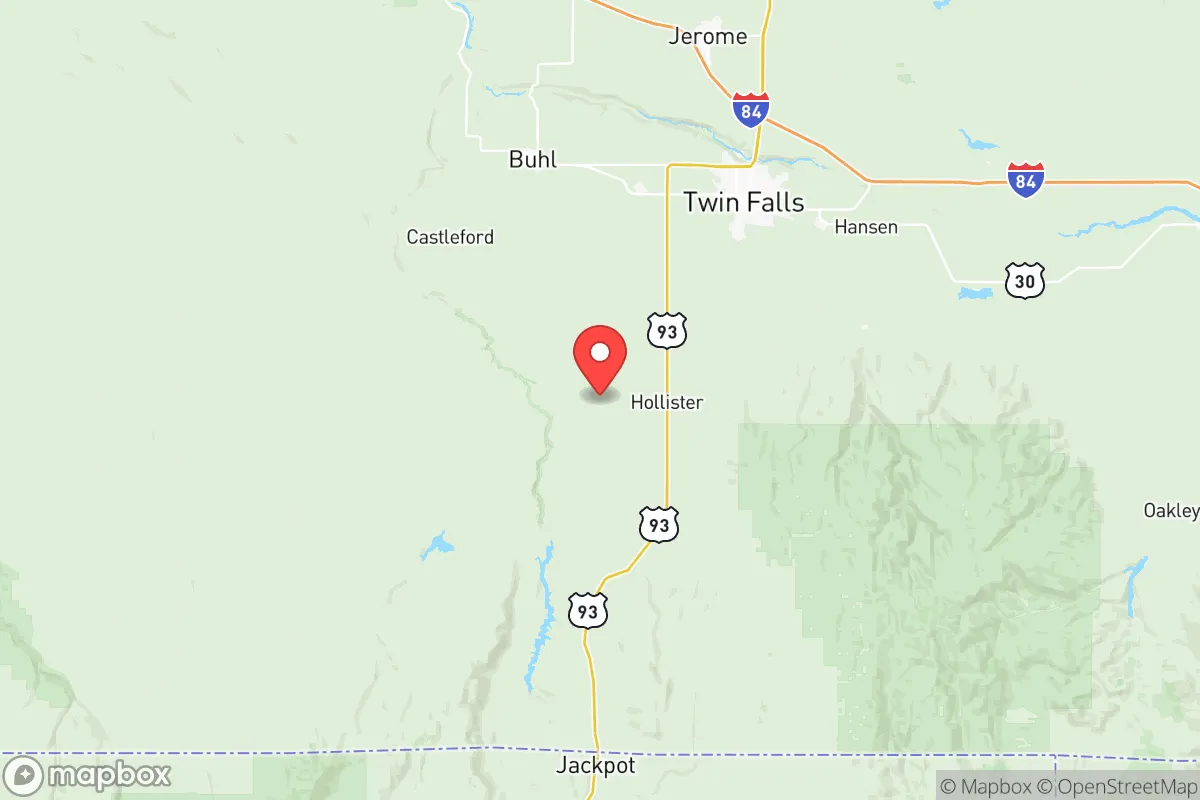
Twin Falls County offers one of the more robust personal sovereignty environments in the Intermountain West, combining Idaho’s famously light-touch state governance with a local culture that prizes self-reliance and minimal interference. For individuals and families who prioritize autonomy—whether in taxation, self-defense, homesteading, or personal lifestyle choices—the county presents a regulatory landscape that is deliberately restrained, though not entirely uniform across its geography. The city of Twin Falls itself, the county seat and largest population center, tends to have slightly more municipal oversight than the outlying communities of Filer, Buhl, Kimberly, and the rural expanses near Castleford and Hollister, where county jurisdiction and a stronger libertarian ethos prevail.
Tax burden and regulatory posture in Twin Falls County
Idaho’s state-level tax structure is among the most favorable in the nation for those seeking to keep more of their earnings and property. The state levies a flat income tax of 5.8% (as of 2025, with scheduled reductions toward 5.695% in 2026), and Twin Falls County’s property tax rates are moderate by national standards, with an effective rate around 0.7% of assessed home value. There is no inheritance tax, no estate tax, and no tax on Social Security benefits. The regulatory posture at the county level is deliberately hands-off: there is no countywide zoning in the unincorporated areas, meaning that outside city limits, property use is governed primarily by state health and safety codes rather than local land-use ordinances. This is a critical distinction for those considering homesteading or small-scale agriculture. In the city of Twin Falls, building permits and business licenses are required, but the process is streamlined compared to many Western cities. The smaller towns of Filer and Buhl are even more permissive, with minimal business licensing requirements and a general attitude of "come and do." For a reader comparing regulatory burden, Twin Falls County sits firmly on the light-touch end of the spectrum, closer to rural Nevada or Wyoming than to the coastal states many relocators are leaving.
Self-defense and gun law specifics in the region
Idaho is a constitutional carry state, meaning that as of July 1, 2016, any law-abiding adult 18 or older may carry a concealed firearm without a permit. Twin Falls County fully reflects this state posture. There is no county-level firearm registry, no waiting periods for purchase, and no local ordinances that restrict magazine capacity or firearm types—state preemption law prohibits cities and counties from enacting their own gun regulations. The sheriff’s office in Twin Falls County is known for a pro-Second Amendment stance; concealed carry permits are issued to those who still want them for reciprocity purposes, and the process is straightforward. Stand-your-ground and castle doctrine laws are codified in Idaho Code § 19-202A, providing broad legal protection for the use of deadly force in self-defense, with no duty to retreat in any place where the individual is lawfully present. For practical context, the city of Twin Falls has a few posted "no firearms" signs at government buildings and schools (as required by law), but the surrounding communities of Kimberly, Hansen, and the rural areas near Rock Creek have an overwhelmingly gun-friendly culture. Open carry is common and unremarkable in grocery stores and gas stations throughout the county. For a family or individual prioritizing the right to self-defense, Twin Falls County offers one of the most permissive legal environments in the country.
Self-reliance and homesteading viability across the county
The viability of a self-reliant lifestyle varies significantly within Twin Falls County, driven primarily by water access and land parcel size rather than by regulatory barriers. In the unincorporated areas—particularly south of the Snake River toward Hollister and west toward Castleford—parcels of 5 to 40 acres are common and affordable, with raw land prices ranging from $3,000 to $8,000 per acre as of 2025. There is no countywide zoning, so building a primary residence, keeping livestock, or establishing a small farm does not require a conditional use permit. However, the critical constraint is water: the county sits in a high desert environment (average 10 inches of precipitation annually), and groundwater rights are administered by the Idaho Department of Water Resources. New wells require a permit, and in some areas of the Magic Valley, groundwater availability is limited. The city of Twin Falls and the town of Buhl have municipal water and sewer, but rural homesteaders must budget for well drilling ($15,000–$30,000) and septic systems. Off-grid solar is entirely legal and common; net metering is available through Idaho Power, but many rural residents opt for fully independent systems. The county’s building code applies only within city limits; outside them, structures must meet basic safety standards but are not subject to aesthetic or energy code requirements. For a family seeking to build a self-sufficient homestead with minimal government oversight, the areas around Filer, Kimberly, and the unincorporated Magic Valley are among the most accommodating in the lower 48.
Personal liberties: parental rights, medical autonomy, speech, and property
Idaho has enacted several laws that reinforce personal sovereignty in areas of family and medical decision-making. The Parental Rights in Education Act (2023) and related statutes affirm that parents have the fundamental right to direct the upbringing, education, and healthcare of their children, including the right to opt out of any school curriculum or activity. Twin Falls County’s school districts—Twin Falls School District, Filer School District, and Buhl School District—generally defer to parental authority in practice, with minimal friction reported. On medical autonomy, Idaho is one of the most restrictive states regarding vaccine mandates (prohibited by state law for public employment and school attendance) and has no state-level mask or lockdown authority that can override individual choice. The Idaho Freedom Act (2023) prohibits enforcement of any federal directive that would restrict the sale or possession of firearms, ammunition, or magazines. Property rights are strongly protected: there is no statewide rent control, no inclusionary zoning, and the state’s eminent domain authority is narrowly defined. The county’s planning department is small and its staff are known for a "how can we help you make this work" rather than a "how can we prevent this" approach. Speech is protected under both the U.S. and Idaho constitutions, and the county has no local ordinances restricting signs, leafleting, or public assembly. For a reader weighing personal liberties, Twin Falls County offers a legal environment that consistently sides with individual choice over collective mandates.
Overall, Twin Falls County ranks among the top-tier locations in the United States for personal sovereignty, comparable to rural Nevada, western Wyoming, or the Texas Panhandle in terms of regulatory lightness and cultural respect for self-reliance. The combination of no county zoning, constitutional carry, flat income tax, strong parental rights, and a homestead-friendly land market creates an environment where individuals and families can largely live as they see fit, provided they can secure water and manage the high desert climate. The primary trade-off is that this autonomy comes with minimal public services in rural areas—no county trash pickup, limited public transit, and a sheriff’s office that covers a large geographic area with modest staffing. For those who value freedom over convenience, that is a feature, not a bug.

* Values derived from national, state, county, city and local statistics and may differ in a specific area. Last updated: 2026-06-15T15:49:04.000Z
Narrative content on this page is AI-generated and may contain mistakes. Verify any details that matter before acting on them.
ReloMaps may earn a commission from affiliate links at no extra cost to you.

