Photo: Wikipedia
Demographics of Twin Falls County
Affluence Level in Twin Falls County
A middle-class area roughly in line with national averages across income, home values, education, and employment.
People of Twin Falls County
The people of Twin Falls County, Idaho, today number 92,121, forming a community that is predominantly white (76.2%) with a significant and growing Hispanic minority (17.5%). The county is defined by its agricultural roots, a strong sense of local independence, and a population that is less diverse and less college-educated (23.0%) than the national average, with a foreign-born share of just 4.0%. This is a region where the legacy of early 20th-century irrigation projects and a steady stream of domestic migrants has created a stable, family-oriented culture centered on the Magic Valley's agricultural economy.
Settlement & growth (pre-1960)
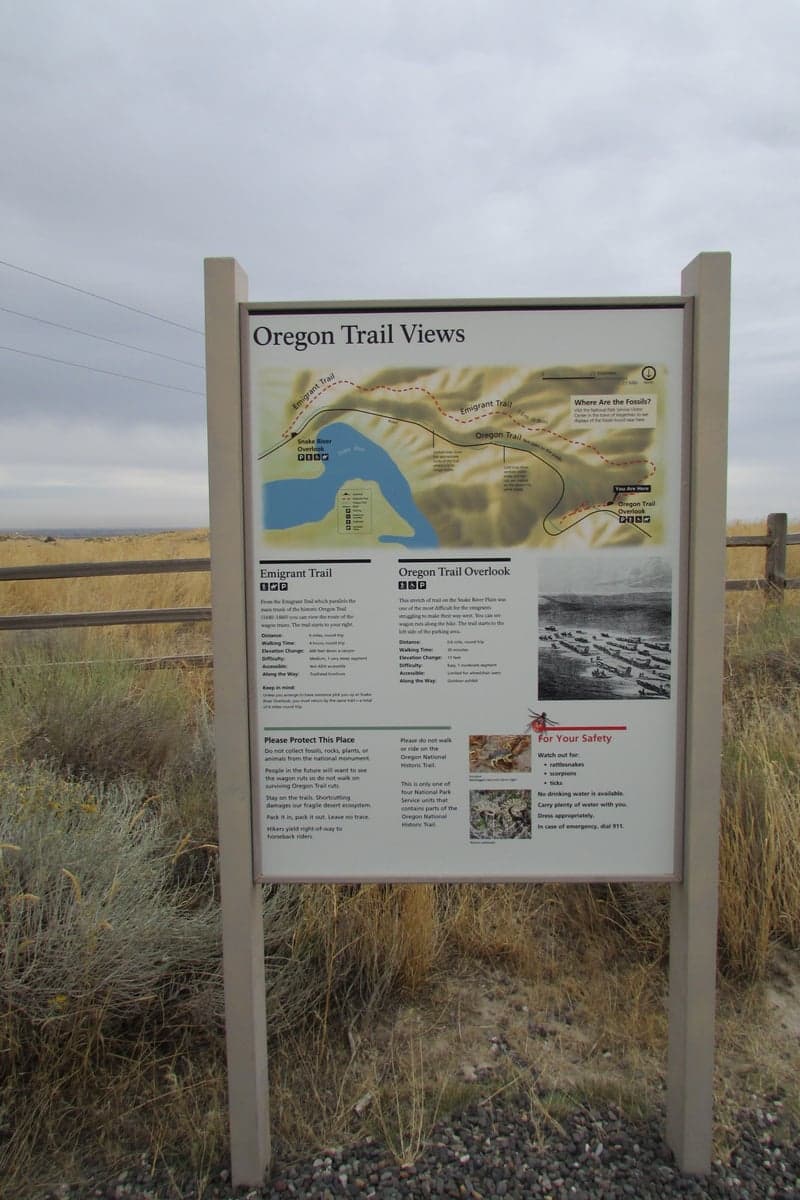
Before American settlement, the area now known as Twin Falls County was part of the traditional territory of the Shoshone and Bannock peoples, who followed seasonal game and fish along the Snake River. The first permanent American presence came in the 1860s with the establishment of the Oregon Trail, which passed through the northern edge of the county near present-day Hollister and Rock Creek. However, the region remained sparsely populated until the early 1900s, when the federal government's Carey Act and the construction of the Milner Dam (completed in 1905) transformed the arid Snake River Plain into irrigated farmland.
The county was officially created in 1907, and the city of Twin Falls was platted the same year as a planned agricultural hub. The first major wave of settlers were Anglo-American farmers from the Midwest and Great Plains—particularly from Iowa, Nebraska, and Kansas—who were drawn by the promise of cheap land and reliable irrigation. These were largely Protestant, family-oriented homesteaders who established the county's foundational agricultural economy, growing sugar beets, potatoes, and alfalfa. The town of Buhl was founded in 1906 as a railroad stop and quickly became a center for dairy farming and sugar beet processing, while Filer (1910) and Castleford (1911) grew as farming communities serving the surrounding irrigated tracts.
A smaller but notable wave of Basque immigrants arrived in the 1910s and 1920s, finding work as sheepherders on the vast rangelands south of the Snake River. Their descendants remain a distinct cultural presence, particularly in the Kimberly and Hansen areas, where Basque surnames and a handful of traditional festivals persist. The Dust Bowl of the 1930s brought a second wave of domestic migrants—Okies and Arkies fleeing the devastated Southern Plains—who settled in the county's rural areas and provided labor for the expanding sugar beet and potato harvests. By 1950, the county's population had reached 40,000, and the economy was firmly anchored in agriculture, with Twin Falls serving as the commercial and transportation center for the entire Magic Valley.
Modern era (post-1965)
The post-1965 period saw Twin Falls County's population more than double, from roughly 42,000 in 1960 to 92,000 today, driven almost entirely by domestic migration rather than foreign immigration. The 1965 Hart-Cellar Act, which reshaped immigration nationwide, had a relatively muted effect here: the county's foreign-born share remains just 4.0%, far below the national average. The most significant demographic shift has been the growth of the Hispanic population, which rose from a negligible share in 1970 to 17.5% today. This growth is primarily the result of chain migration from rural Mexico, with families settling in Twin Falls and Buhl to work in the dairy industry, meatpacking plants, and potato processing facilities. The Chobani yogurt plant, opened in Twin Falls in 2012, has further accelerated Hispanic in-migration, as the facility employs hundreds of workers in production and logistics.
Domestic migration has been the other major driver of population change. Since the 1990s, the county has attracted a steady stream of retirees and remote workers from California, Oregon, and Washington, drawn by lower housing costs, a conservative political climate, and outdoor recreation opportunities along the Snake River Canyon. These newcomers have concentrated in newer subdivisions on the outskirts of Twin Falls, particularly in the south and west sides of the city, as well as in the bedroom community of Kimberly. The county's Black population remains very small (0.7%), and East/Southeast Asian communities (0.6%) and Indian-subcontinent residents (0.7%) are present in tiny numbers, mostly in professional roles in healthcare and education in Twin Falls proper.
Suburbanization has reshaped the county's geography since the 1980s. While the historic downtown of Twin Falls has seen some reinvestment, most new retail, housing, and employment has shifted to the corridors along Pole Line Road and Blue Lakes Boulevard. The smaller towns—Buhl, Filer, Castleford, and Hollister—have grown more slowly, retaining their agricultural character and older housing stock. The county remains overwhelmingly white (76.2%) and native-born, but the Hispanic share is now large enough to be visible in local schools, churches, and small businesses, particularly in the Twin Falls and Buhl school districts.
The future
Twin Falls County is projected to continue growing at a moderate pace, likely reaching 110,000-120,000 by 2040, driven by continued domestic in-migration from the West Coast and natural increase among the Hispanic population. The county is becoming slightly more diverse, but the change is gradual: the Hispanic share is expected to rise to roughly 22-25% by 2040, while the white share will decline correspondingly. The East/Southeast Asian and Indian-subcontinent populations will likely remain very small, as the county lacks the professional job base and ethnic infrastructure to attract significant numbers of immigrants from those groups.
The cultural identity of the county is evolving, but not transforming. The dominant Anglo-Protestant agricultural culture is being slowly leavened by Hispanic Catholic and evangelical influences, particularly in Twin Falls and Buhl, where bilingual signage and Mexican grocery stores are increasingly common. The county's politics remain solidly conservative, but the growing Hispanic electorate may shift local dynamics on issues like immigration enforcement and bilingual education. Newcomers from California and the Pacific Northwest are also bringing slightly more moderate views on environmental and land-use issues, creating a subtle but real cultural tension between long-time locals and recent arrivals.
For someone moving in now, Twin Falls County offers a stable, family-oriented community with a strong agricultural identity, low crime rates, and a cost of living that remains below the national average. The population is becoming more diverse, but slowly, and the county's character is likely to remain predominantly white, native-born, and conservative for the foreseeable future. The key question for newcomers is whether they are comfortable in a place where the pace of change is deliberate, the economy is tied to the land, and the social fabric is built around church, school, and family rather than urban amenities or ethnic enclaves.

* Values derived from national, state, county, city and local statistics and may differ in a specific area. Last updated: 2026-06-15T15:49:04.000Z
Narrative content on this page is AI-generated and may contain mistakes. Verify any details that matter before acting on them.
ReloMaps may earn a commission from affiliate links at no extra cost to you.

