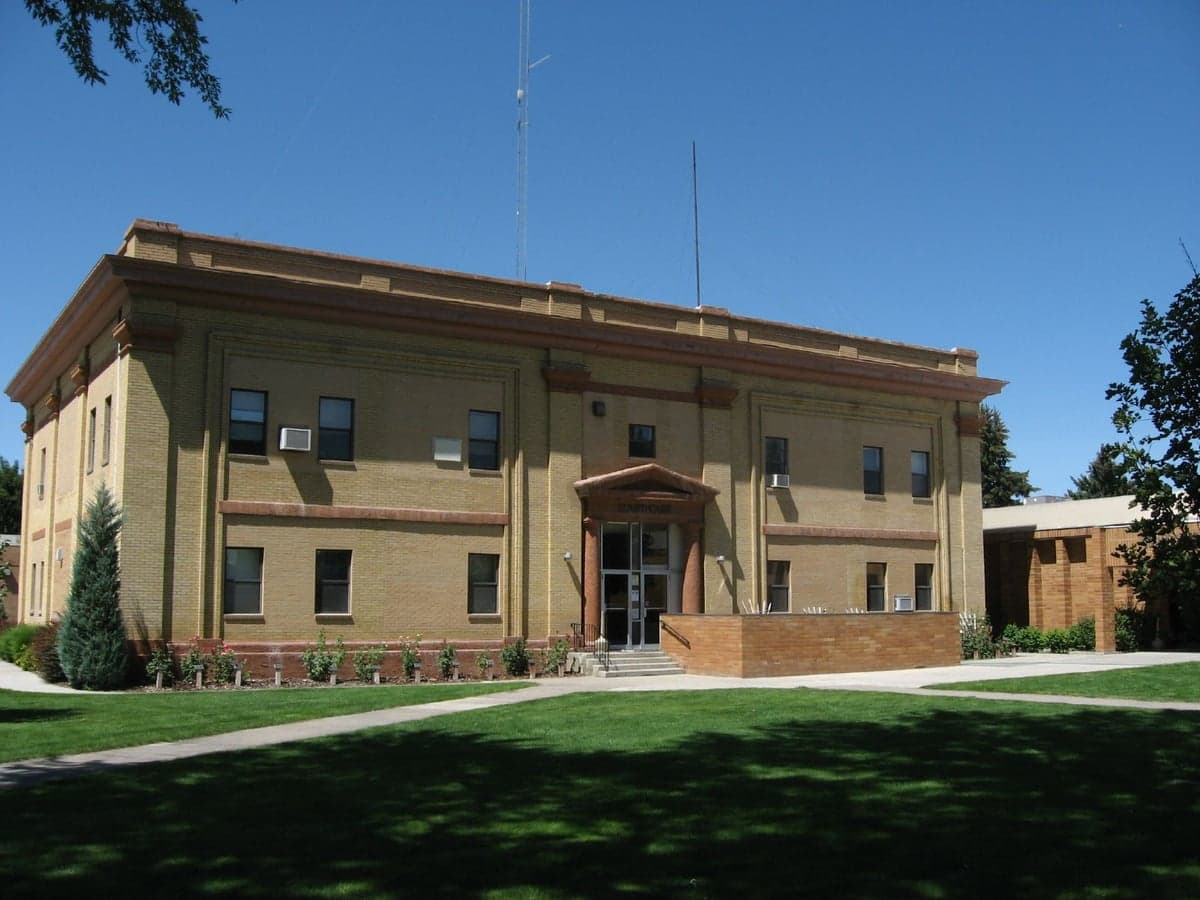
Photo: Wikipedia
Personal Sovereignty in Minidoka County
Moderate friction. Expect trade-offs in some aspect of personal liberty and independence.
What does Personal Sovereignty tell us?
Personal Sovereignty measures your capacity for self-reliance and independence with minimal government friction. Higher scores mean fewer barriers between you and the way you want to live... but it assumes you have the space you need and good neighbors.
What does this tell us?
Personal Sovereignty measures your capacity for self-reliance and independence with minimal government friction. Higher scores mean fewer barriers between you and the way you want to live... but it assumes you have the space you need and good neighbors.
State Policy
Energy independence: Importer (25% of energy produced in-state)
Personal Liberty
Homesteading

Personal Liberty Analysis
For individuals and families prioritizing personal sovereignty, Minidoka County, Idaho, offers a notably high degree of autonomy compared to much of the Pacific Northwest and Intermountain West. This rural agricultural county, anchored by the city of Rupert and including the towns of Heyburn, Paul, and Acequia, operates within a state framework that consistently ranks among the most liberty-oriented in the nation. The county’s culture, shaped by farming, food processing, and a strong Latter-day Saint community, leans heavily toward self-reliance, limited government, and a live-and-let-live ethos. While no location is a perfect libertarian utopia, Minidoka County’s combination of low taxes, minimal zoning, permissive gun laws, and a hands-off regulatory environment makes it a serious contender for those seeking to escape the encroaching overreach seen in blue states and even some parts of the West.
Tax burden and regulatory posture: How Minidoka County compares to surrounding areas
Minidoka County’s tax and regulatory climate is a major draw for sovereignty-minded relocators. Idaho has no state-level business inventory tax, no corporate income tax on pass-through entities, and a flat individual income tax rate of 5.8% (as of 2025, with ongoing legislative pressure to lower it further). Property taxes in Minidoka County are among the lowest in the state, with an average effective rate around 0.6% of assessed value—roughly half what you’d see in Boise or Kootenai County. A home valued at $300,000 in Rupert or Heyburn typically carries an annual tax bill under $2,000. The county’s regulatory posture is equally light. There is no county-wide building code enforcement outside of the few incorporated cities, and even within Rupert and Heyburn, code requirements are minimal compared to urban areas. Zoning is largely agricultural, with large swaths of unincorporated land where you can park an RV, build a shop, or keep livestock without bureaucratic hassle. The Idaho Department of Environmental Quality (DEQ) has a presence, but enforcement on private wells and septic systems is far less aggressive than in states like Oregon or Washington. For a prepper or homesteader, this means fewer inspections, fewer permits, and fewer opportunities for the state to interfere with your property use.
Self-defense and gun law specifics: What the Second Sanctuary status means for residents
Minidoka County is a Second Amendment Sanctuary, a designation the county commission passed in 2020, signaling that local resources will not be used to enforce federal gun laws deemed unconstitutional. This is not just symbolic; it reflects a deep cultural commitment to firearm ownership. Idaho is a constitutional carry state—no permit is required to carry a concealed handgun for anyone 18 or older who can legally possess a firearm. There is no state-level magazine capacity ban, no assault weapon registry, and no waiting period. In practice, this means you can walk into a gun shop in Rupert or Heyburn, purchase a rifle or handgun, and carry it immediately. The county sheriff’s office, led by Sheriff Eric Snarr, is known for a pro-Second Amendment stance and a general reluctance to act as an arm of federal agencies. For those concerned about federal overreach, Minidoka County offers a buffer that many coastal states have systematically dismantled. The nearest major city with restrictive gun policies is Boise, which has a city-level ordinance against discharging firearms within city limits—but that’s 150 miles away. In Minidoka, target shooting on private land is common, and the Minidoka Shooting Range near Paul provides a public facility. The legal environment here is as close to unfettered as you’ll find in the lower 48.
Self-reliance and homesteading viability: Lot sizes, zoning, and off-grid feasibility
For those serious about self-reliance, Minidoka County’s land use policies are a green light. The county is dominated by irrigated farmland, but there are ample parcels of 5 to 40 acres available in unincorporated areas, particularly around Acequia, Paul, and the rural stretches between Rupert and the Snake River. Zoning in these areas is typically Agricultural (A-1), which permits single-family dwellings, accessory structures, livestock, and even small-scale commercial operations like a roadside produce stand or a home-based welding shop. There is no county-wide requirement for a minimum square footage on a dwelling, meaning you can legally live in a tiny home, a yurt, or an RV while you build. Off-grid living is feasible, though not without practical challenges. The county does not require connection to municipal water or sewer; private wells and septic systems are standard. Solar panels are common, and net metering is available through the local utility, Minidoka Rural Electric Cooperative, though they do have interconnection standards. Rainwater collection is legal without a permit. The main constraint is water rights—Idaho follows prior appropriation, so if you buy land without an existing water right, you may need to drill a well (typically $10,000–$20,000) and prove a beneficial use. But for a prepper, this is a solvable problem. The towns of Rupert and Heyburn have municipal services, but the real opportunity lies in the unincorporated areas where you can build a self-sufficient compound with minimal government oversight.
Personal liberties: Parental rights, medical autonomy, speech, and property
Minidoka County sits within a state that has become a national leader in protecting parental rights. Idaho Code § 33-138 explicitly affirms that parents have the fundamental right to direct the education, upbringing, and health care of their children. This means no mask mandates in schools, no vaccine passports, and no government interference in homeschooling or private school choice. The Minidoka County School District, which serves Rupert, Heyburn, and Paul, has a conservative board that has resisted federal overreach on curriculum and health policies. Medical autonomy is similarly strong. Idaho has banned nearly all forms of government-mandated vaccination, and the state’s Medical Freedom Act prohibits discrimination based on vaccination status. You can refuse any medical treatment for yourself or your child without fear of losing custody or employment. On speech, Idaho has no hate speech laws, and the county’s public meetings are a forum for unfiltered citizen input. Property rights are protected by Idaho’s strict eminent domain laws, which require just compensation and a public purpose. The county assessor’s office is transparent, and property tax appeals are straightforward. For someone fleeing the erosion of First and Fourth Amendment rights in states like California or New York, Minidoka County offers a tangible alternative where the government is more likely to leave you alone than to intrude.
In the broader landscape of American personal sovereignty, Minidoka County ranks among the top-tier locations for those seeking to minimize government contact. It lacks the extreme libertarian enclave status of, say, rural Montana or the Idaho Panhandle, but it compensates with a more stable agricultural economy, lower land prices, and a community that is both welcoming and fiercely independent. Compared to the regulatory thicket of the Pacific Coast or the Northeast, Minidoka County is a breath of fresh air—literally and figuratively. For the prepper, the homesteader, or the parent who simply wants to raise a family without the state looking over their shoulder, this corner of south-central Idaho deserves a hard look. The trade-offs are real: harsh winters, limited healthcare infrastructure, and a 45-minute drive to the nearest Walmart in Burley. But for those who value freedom over convenience, those trade-offs are a small price to pay.

* Values derived from national, state, county, city and local statistics and may differ in a specific area. Last updated: 2026-05-08T19:05:20.000Z
Narrative content on this page is AI-generated and may contain mistakes. Verify any details that matter before acting on them.
ReloMaps may earn a commission from affiliate links at no extra cost to you.

