Photo: Wikipedia
Demographics of Minidoka County
Affluence Level in Minidoka County
A middle-class area roughly in line with national averages across income, home values, education, and employment.
People of Minidoka County
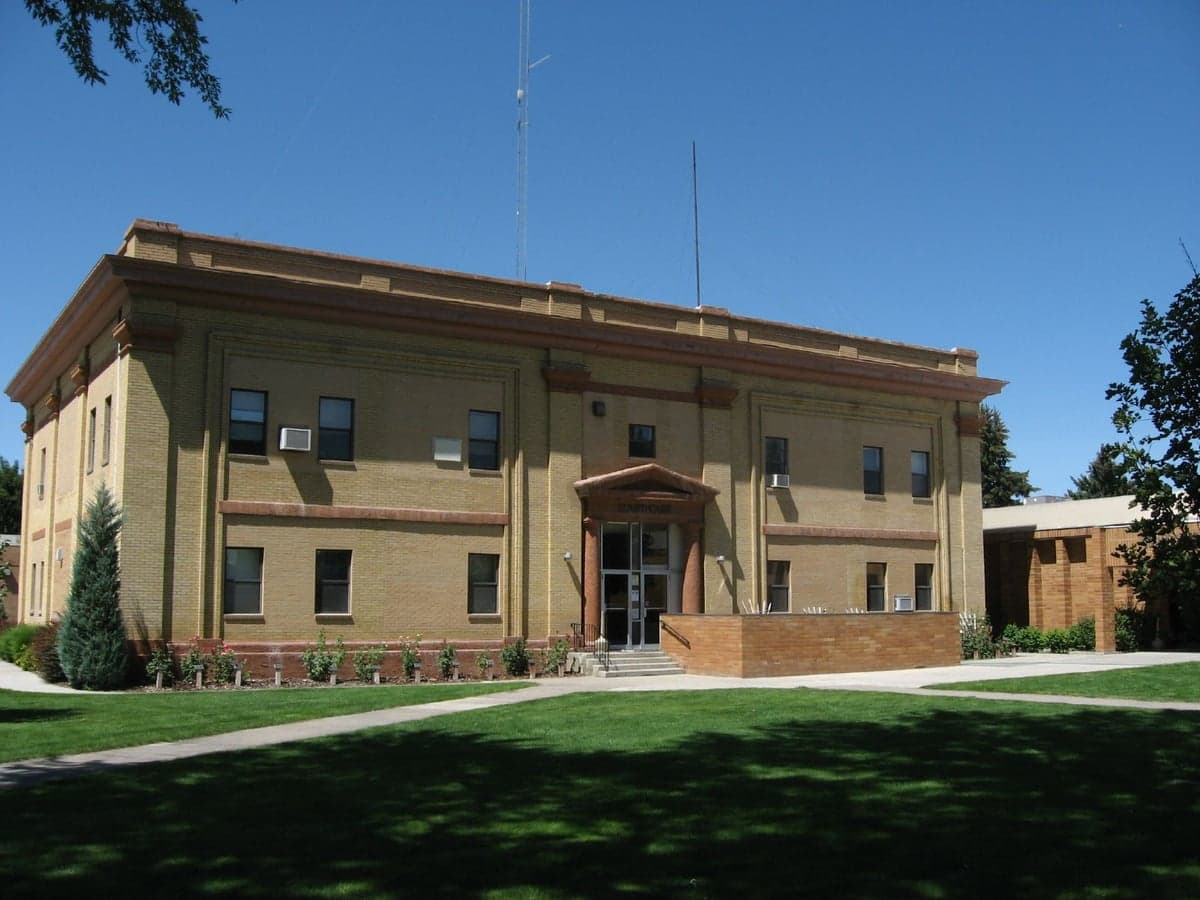
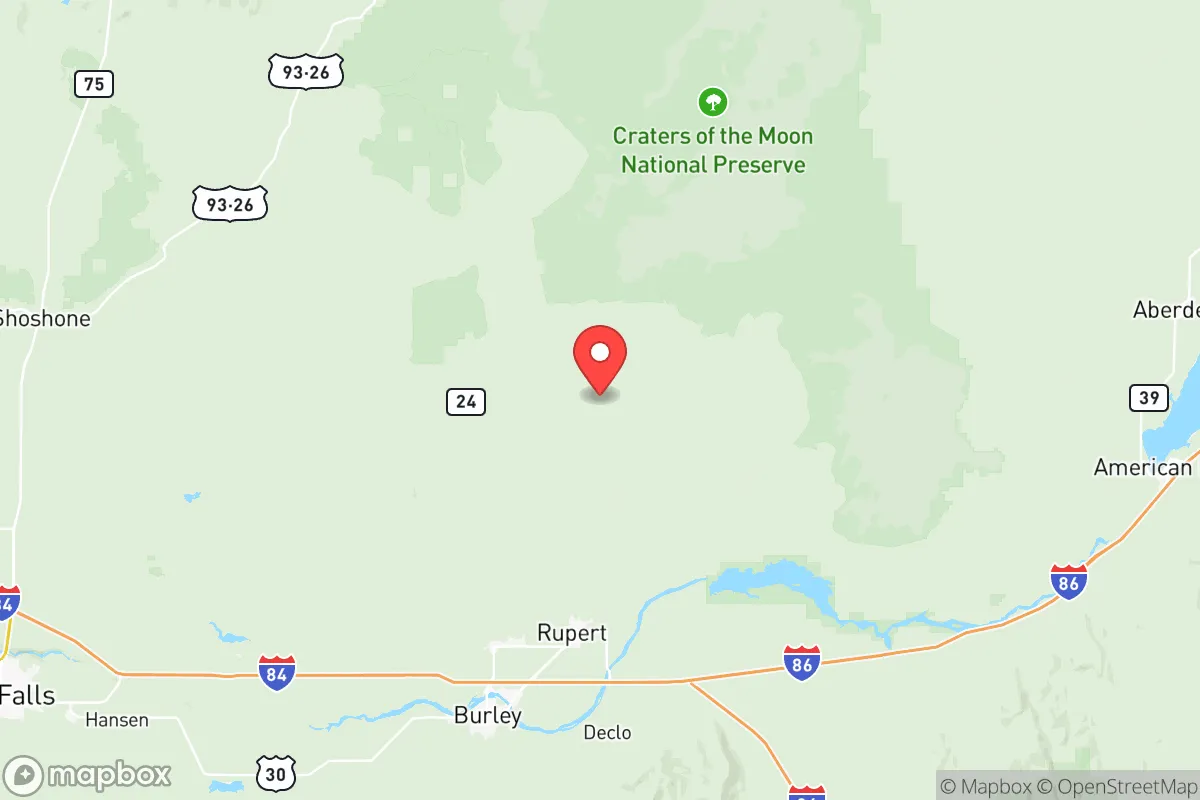
Minidoka County, Idaho, is a rural, working-class community of 21,922 residents defined by its agricultural roots and a rapidly diversifying population. The county’s character is shaped by a white majority (59.7%) and a substantial Hispanic population (36.7%), a demographic shift driven by decades of farm labor and food processing employment. With a low college attainment rate of 16.8% and a foreign-born share of 6.0%, the county remains a place where family, hard work, and local industry—not urban amenities—anchor daily life. The population is concentrated in the county seat of Rupert and the larger town of Burley, with smaller settlements like Paul, Heyburn, and Acequia forming the rural fabric.
Settlement & growth (pre-1960)
The area now known as Minidoka County was originally inhabited by the Shoshone and Bannock peoples, who followed seasonal game and fishing along the Snake River. The first permanent American settlement began after the passage of the Carey Act in 1894, which encouraged irrigation projects in the arid West. The Minidoka Project, a federal reclamation effort launched in 1904, diverted water from the Snake River and transformed the sagebrush desert into productive farmland. This engineering feat drew the county’s first major wave of settlers: Midwestern farmers of Northern European descent—primarily English, German, and Scandinavian stock—who arrived between 1905 and 1915 to take up homesteads. They founded the towns of Rupert (established 1906 as the county seat), Burley (1905), and Paul (1907), each laid out as agricultural service centers along the Oregon Short Line Railroad.
A second, smaller wave arrived during the Great Depression and Dust Bowl era of the 1930s. Displaced farmers from Oklahoma, Texas, and the Great Plains—the so-called “Okies” and “Arkies”—moved into the county seeking work in the expanding sugar beet and potato fields. Many settled in Heyburn and Acequia, where they found employment at the Utah-Idaho Sugar Company factory. This group was culturally similar to the earlier settlers—white, Protestant, and rural—and reinforced the county’s conservative, self-reliant ethos. By 1940, the county’s population had reached roughly 10,000, almost entirely white and native-born.
World War II brought a brief but significant disruption: the Minidoka War Relocation Center, located near Hunt (a now-unincorporated area), interned over 13,000 Japanese Americans from the West Coast between 1942 and 1945. After the war, most internees did not remain in Minidoka County, but the camp’s legacy is preserved at the Minidoka National Historic Site. The post-war decades saw steady agricultural growth, with the county’s population reaching 14,000 by 1960. The labor force remained overwhelmingly white, with a small number of Mexican migrant workers employed seasonally in the fields.
Modern era (post-1965)
The 1965 Hart-Cellar Act, which ended national-origin quotas and prioritized family reunification, had a delayed but profound effect on Minidoka County. The first significant Hispanic settlement began in the 1970s, as Mexican-American farmworkers who had previously followed seasonal circuits began to settle year-round. The expansion of the potato processing industry—particularly the J.R. Simplot Company plant in Heyburn and the McCain Foods facility in Burley—created stable, year-round jobs that anchored families. By 1990, the Hispanic share of the county’s population had risen to roughly 15%, concentrated in Burley and Rupert’s older neighborhoods near the processing plants.
The 1990s and 2000s saw accelerated Hispanic growth, driven by both continued immigration from Mexico and high birth rates among settled families. The county’s Hispanic population reached 36.7% by the 2020 Census, making Minidoka one of the most Hispanic counties in the Intermountain West outside of New Mexico. This growth has been almost entirely Mexican-American, with very small numbers of Central American or other Latino groups. The community is integrated into the local economy—Hispanic workers dominate the food processing and dairy sectors—and has established Spanish-language churches, grocery stores, and a bilingual presence in public schools. The towns of Paul and Acequia have seen particularly high Hispanic concentrations, with some neighborhoods approaching majority-Hispanic status.
Domestic migration since 1965 has been minimal. The county has not attracted significant numbers of retirees, remote workers, or out-of-state transplants from the West Coast or Rust Belt. The white population has aged in place, with many younger adults leaving for college or jobs in Boise or Twin Falls. The county’s foreign-born share (6.0%) is almost entirely Mexican-born, with negligible numbers of East/Southeast Asian (0.2%), Black (0.3%), or Indian-subcontinent (0.0%) residents. The county remains culturally conservative, with a strong Mormon presence (roughly 25% of the population) and a Republican voting record that has held steady even as the ethnic composition has shifted.
The future
Minidoka County’s population is projected to grow slowly, reaching roughly 25,000 by 2040, driven almost entirely by natural increase among the Hispanic population. The white population is declining in absolute numbers due to an aging demographic and out-migration of young adults. The county is not homogenizing into a single cultural identity; rather, it is developing a stable, bicultural character in which English remains the dominant public language but Spanish is increasingly common in schools, retail, and local government. There is no evidence of ethnic enclaves forming in the sense of self-segregation—neighborhoods are mixed, and intermarriage between white and Hispanic residents is rising, particularly among the second generation.
Immigration from Mexico has slowed since 2010, but the existing Hispanic community is young and has a higher birth rate than the white population, ensuring continued growth in its share. The county is unlikely to attract significant new immigrant groups from Asia, Africa, or the Middle East, as the local economy offers few opportunities beyond agriculture and food processing. The cultural identity of the county is shifting from a purely Anglo-American, Mormon-influenced rural society to a more diverse, working-class community where Hispanic traditions—such as quinceañeras, soccer leagues, and Catholic feast days—are becoming mainstream. For a conservative-leaning newcomer, this means moving into a place where traditional values of family, faith, and hard work are still central, but where the language and customs of daily life are increasingly bilingual.
Minidoka County is becoming a stable, bicultural rural community where agricultural work and family ties anchor the population. For someone moving in now, the county offers low housing costs, a slow pace of life, and a community where neighbors still know each other—but also a place where the demographic future is already written in the young faces filling the schools in Burley and Rupert.

* Values derived from national, state, county, city and local statistics and may differ in a specific area. Last updated: 2026-05-08T19:05:20.000Z
Narrative content on this page is AI-generated and may contain mistakes. Verify any details that matter before acting on them.
ReloMaps may earn a commission from affiliate links at no extra cost to you.

