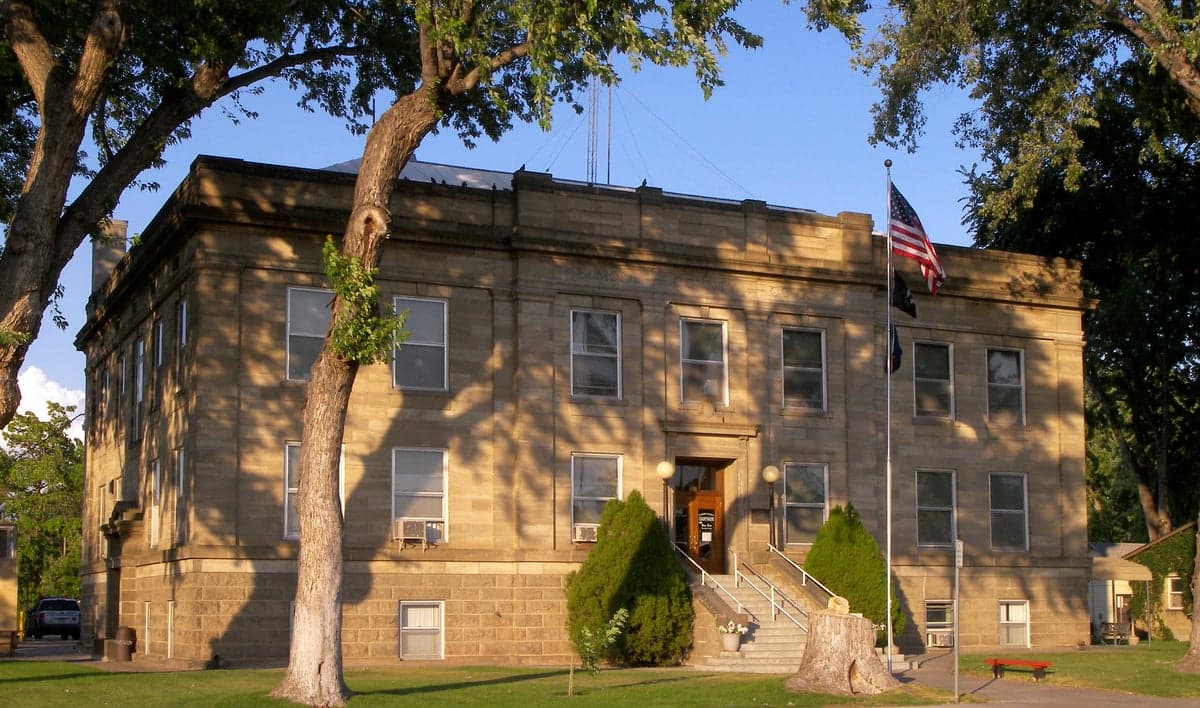
Photo: Wikipedia
Political ClimatePolitical Climate in Elmore County
Showing district-level results — no local-only data available.
Local Political AnalysisPolitical Analysis of Elmore County
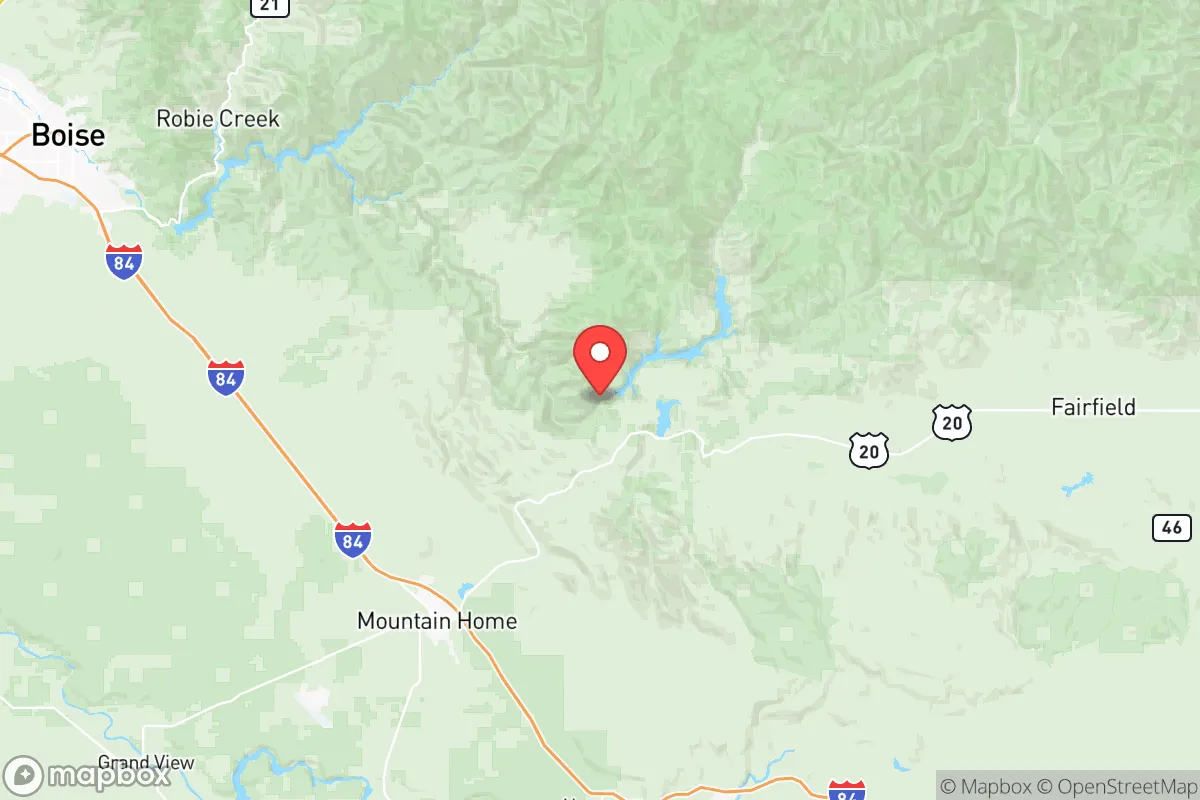
Elmore County, Idaho, is a reliably conservative area with a Cook PVI of R+13, though it is noticeably less deep-red than the state of Idaho as a whole, which sits at R+18. The county has been trending rightward in presidential races, but local voting patterns reveal a more nuanced picture than the statewide average suggests. Mountain Home, the county seat and largest city, anchors the Republican vote, while smaller communities like Glenns Ferry and the rural precincts around Hammett show even stronger conservative margins. The swing precincts tend to be in the more transient, military-affiliated neighborhoods near Mountain Home Air Force Base, where younger and more diverse voters occasionally tip a race closer to the middle.
How it compares
Elmore County's R+13 rating makes it one of the less conservative counties in a deeply red state. For context, neighboring Ada County (Boise) is R+9, while rural counties like Camas and Clark push past R+50. The difference comes down to the Air Force base and the small but visible Democratic presence in Mountain Home proper. In the 2020 presidential election, Elmore County gave Trump 68% of the vote, compared to Idaho's statewide 74%. That 6-point gap has held steady for several cycles, meaning Elmore is not catching up to the state's redder counties—it's staying consistently a few points more moderate. Glenns Ferry and the unincorporated areas along the Snake River tend to vote even more Republican than Mountain Home, while the base precincts and a handful of precincts near the county's western edge show the highest Democratic percentages.
What this means for residents
For conservative residents, Elmore County is a comfortable place to live politically, with Republican candidates winning every countywide race and local offices dominated by the GOP. The county commission, sheriff, and most school board seats are held by Republicans, and policy debates tend to focus on growth management, water rights, and support for the base rather than ideological battles. For liberal residents, the political reality is more isolating. Democratic candidates rarely break 30% in countywide races, and there is no organized local party infrastructure to speak of. However, the presence of the base and the steady trickle of newcomers from bluer states has kept the county from becoming as uniformly conservative as its eastern neighbors. Socially, most residents report that political differences rarely come up in daily life—people are more concerned with the cost of living, access to healthcare, and the quality of local schools than with national politics.
Culturally, Elmore County stands apart from the rest of Idaho in one key way: the Air Force base brings in a rotating population from across the country, which softens the insularity found in many rural Idaho counties. You'll find more chain restaurants, a wider variety of accents, and a slightly younger demographic in Mountain Home than you would in, say, Gooding or Burley. The county also has a more pragmatic, less ideological approach to local governance—water and land-use decisions are made with an eye toward economic development rather than partisan purity. For anyone moving here, the takeaway is simple: Elmore is red, but it's a practical, live-and-let-live kind of red, not the fire-breathing variety you might find deeper in the state.

State Political ClimatePolitical Climate in Idaho
State Political AnalysisPolitical Environment in the State
Idaho is one of the most reliably Republican states in the country, with a Cook Partisan Voting Index of R+18, meaning it votes about 18 points more Republican than the national average. The state hasn't voted for a Democratic presidential candidate since 1964, and that streak isn't going anywhere. Over the last 10-20 years, the dominant coalition has shifted from a mix of traditional Western libertarians and moderate Republicans to a much more solidly conservative, Trump-aligned GOP, driven by explosive growth in the Boise metro area and an influx of out-of-state transplants who are often more conservative than the locals they're replacing.
Urban vs. rural divide
The political map of Idaho is a study in contrasts. The Treasure Valley, anchored by Boise, Meridian, and Nampa, is the population center and the only area with any real Democratic presence. Ada County (Boise) has been competitive in recent cycles, flipping blue for governor in 2018 and nearly doing so again in 2022, though it still leans right overall. Drive an hour in any direction, and you're in deep red territory. Coeur d'Alene in the north has seen a surge of conservative migration from California and Washington, pushing Kootenai County even further right. Meanwhile, Idaho Falls and Rexburg in the east are among the most conservative small cities in the nation, heavily influenced by the LDS Church and a strong agricultural base. The rural counties—like Lemhi, Clark, and Camas—routinely vote 80-90% Republican. The divide isn't just urban vs. rural; it's also a cultural split between the older, more libertarian-leaning natives and the newer, more socially conservative transplants.
Policy environment
Idaho's policy environment is aggressively conservative. There is no state income tax bracket below 5.8% (a flat tax), and property taxes are relatively low but vary by county. The state has a "constitutional carry" gun law, meaning no permit is needed to carry a concealed firearm. It's a right-to-work state with weak labor unions and minimal business regulation. Education policy has shifted hard toward school choice, with the 2023 expansion of the Empowering Parents microgrant program and a new education savings account (ESA) law passed in 2024, though it's currently tied up in court. Healthcare policy is limited: Idaho rejected Medicaid expansion initially, then voters passed it via ballot initiative in 2018, but the legislature has since added work requirements and other restrictions. Election laws have tightened, with strict voter ID requirements and a ban on ballot drop boxes in most counties.
Recent policy direction
The last few years have seen Idaho move decisively in one direction. In 2023, the legislature passed House Bill 71, one of the nation's strictest abortion bans, with no exceptions for rape or incest. On guns, Senate Bill 1165 (2023) prohibits local governments from enforcing any federal gun laws, a direct challenge to federal authority. Parental rights have been a major focus: House Bill 93 (2023) allows parents to sue school districts over instructional materials they deem harmful, and House Bill 314 (2024) bans transgender girls from participating in female sports. On privacy and surveillance, Idaho passed a law in 2023 restricting the use of facial recognition technology by law enforcement without a warrant. Property rights remain strong, with no statewide zoning mandates and a "private property protection" act that requires compensation for regulatory takings. Voting access has been restricted: House Bill 124 (2023) shortened the absentee ballot request window and banned private funding of election administration.
Civil unrest & political movements
Idaho has a visible and active far-right presence, particularly in the northern part of the state. The town of Sandpoint has been a hub for white nationalist and anti-government groups, including the Aryan Nations in the past, though that specific group has largely dissolved. More recently, the "People's Rights" movement led by Ammon Bundy has a strong following in the Treasure Valley, and there have been high-profile standoffs with law enforcement, including a 2023 incident at a Boise hospital. On the left, protests have been smaller and more sporadic, mostly centered on abortion rights and LGBTQ+ issues in Boise. Immigration politics are tense but not as flashpoint as in border states; Idaho has no sanctuary cities, and local law enforcement cooperates with ICE. Election integrity controversies have been minimal compared to states like Arizona or Georgia, though there was a brief push in 2022 for a full hand-count of ballots, which was ultimately rejected.
Projection
Over the next 5-10 years, Idaho will likely get even more conservative, but with a twist. The massive in-migration—Idaho was the fastest-growing state in the nation for several years running—is bringing in people from California, Washington, and Oregon who are often fleeing liberal policies. These newcomers tend to be more socially conservative and more anti-government than the native Idahoans, which is pushing the state's politics further right on cultural issues. However, they also bring higher housing costs and traffic, which is creating a backlash among long-time residents. The Democratic Party is essentially non-functional outside of Ada County and a few college towns like Moscow (home to the University of Idaho). The real political fight in the coming decade won't be between Republicans and Democrats; it will be between the traditional, live-and-let-live Idaho Republicans and the newer, more activist conservative faction. Expect more preemption laws stripping power from cities, more school choice expansion, and continued resistance to federal authority on guns and land use.
For a new resident, the bottom line is this: if you're conservative, you'll find Idaho deeply aligned with your values on taxes, guns, education, and individual liberty. If you're liberal, you'll find yourself in a clear minority, with limited political influence and a policy environment that can feel hostile, especially on reproductive rights and LGBTQ+ issues. Either way, the state is changing fast, and the political culture you encounter today may not be the one that exists in five years. The key is to understand that Idaho's conservatism is not monolithic—it's a mix of Western independence, religious social conservatism, and anti-government populism, and the balance among those forces is shifting.
* Values derived from national, state, county, city and local statistics and may differ in a specific area. Last updated: 2026-07-18T13:42:35.000Z
Narrative content on this page is AI-generated and may contain mistakes. Verify any details that matter before acting on them.
ReloMaps may earn a commission from affiliate links at no extra cost to you.

