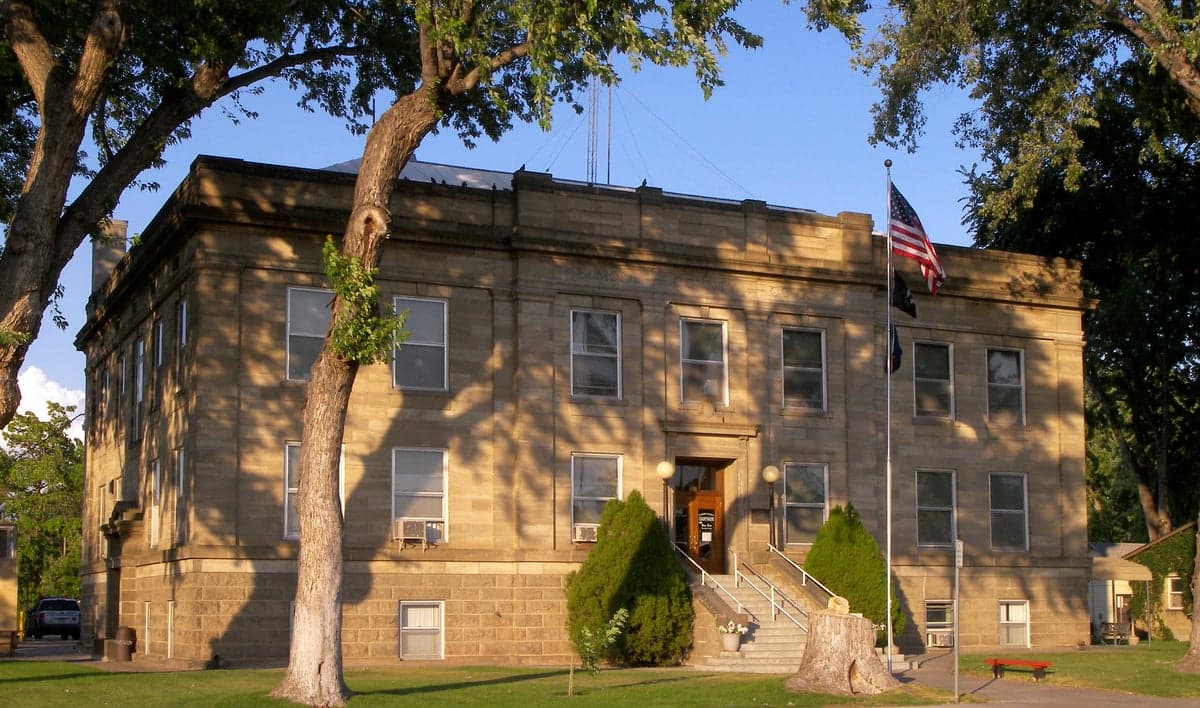
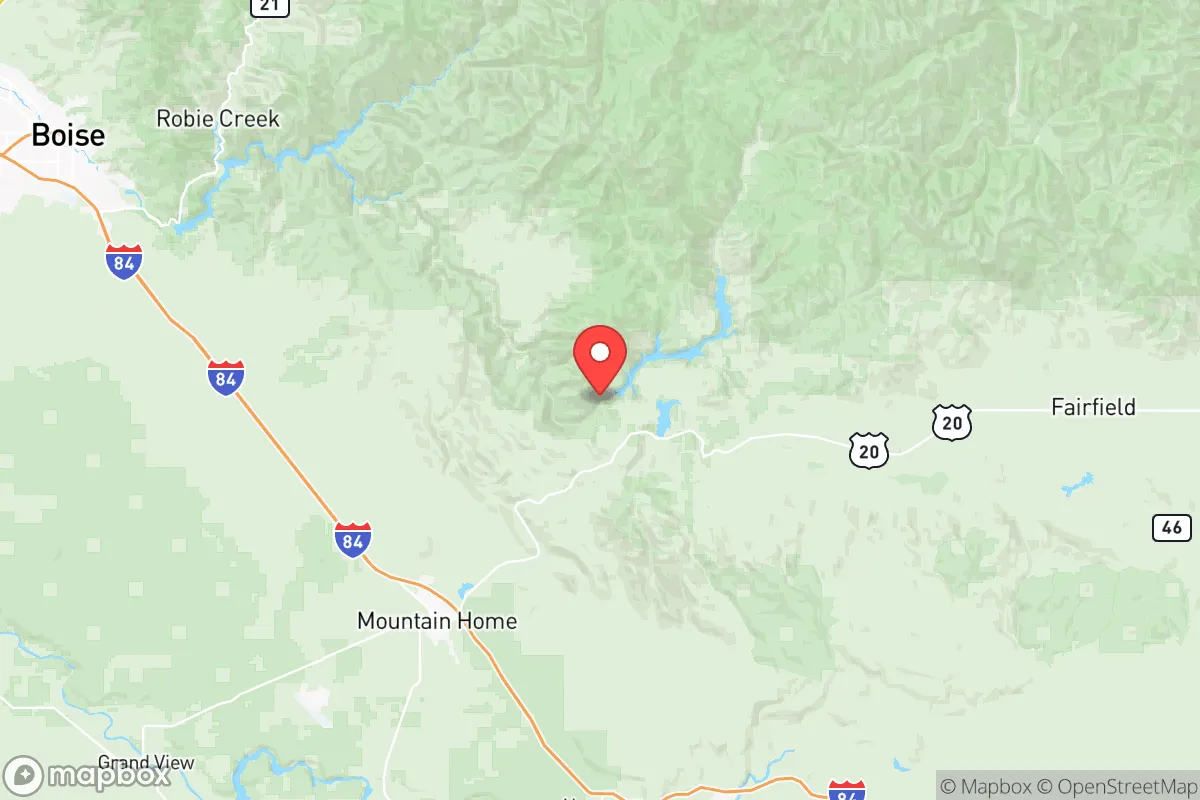
Photo: Wikipedia
Demographics of Elmore County
Affluence Level in Elmore County
A middle-class area roughly in line with national averages across income, home values, education, and employment.
People of Elmore County
Elmore County, Idaho, is home to 29,046 residents, a population shaped by its role as a rural crossroads where the Mountain West meets the Snake River Plain. The county is notably less diverse than the national average, with a 70.6% white population and a significant 18.0% Hispanic community, while foreign-born residents make up just 4.7% of the populace. Its character is defined by a mix of agricultural roots, a strong military presence at Mountain Home Air Force Base, and a growing number of families seeking affordable land and a slower pace of life. The population is concentrated in the county seat of Mountain Home, with smaller historic settlements like Glenns Ferry, Hammett, and Pine scattered along the river corridors and mountain valleys.
Settlement & growth (pre-1960)
Long before American settlement, the area now known as Elmore County was inhabited by the Shoshone and Bannock peoples, who followed seasonal game and fish runs along the Snake River and its tributaries. The first permanent American settlers arrived in the 1860s, drawn by gold and silver discoveries in the Boise Basin and the Owyhee Mountains. Prospectors and ranchers established small supply stations along the Oregon Trail, which cut through the southern part of the county, leading to the founding of Glenns Ferry (named for a ferry operator) and King Hill as river crossings and stage stops.
The arrival of the Oregon Short Line Railroad in the 1880s transformed the region, enabling large-scale ranching and irrigated agriculture. Homesteaders, many of them of Northern European descent—English, German, and Scandinavian—took up land along the Snake River and in the foothills around Mountain Home, which was officially platted in 1883. The town grew as a commercial hub for sheep and cattle operations, with Basque shepherds also arriving in small numbers to work the high desert ranges. By 1900, the population was overwhelmingly white and native-born, with a small but established Hispanic presence tied to railroad and agricultural labor.
The most transformative event for Elmore County came in 1942 with the establishment of Mountain Home Army Airfield (now Mountain Home Air Force Base). The base brought thousands of military personnel and civilian workers from across the country, many of whom stayed after their service ended. This influx diversified the county's population slightly and spurred the growth of Mountain Home itself, which doubled in size between 1940 and 1960. The post-World War II era also saw the expansion of irrigation projects, including the Anderson Ranch Dam, which opened new farmland and attracted additional settlers to areas like Pine and Featherville in the county's mountainous northern reaches.
Modern era (post-1965)
The 1965 Hart-Cellar Act had a modest impact on Elmore County compared to urban areas, but it did contribute to a gradual increase in Hispanic immigration. From the 1970s onward, families from Mexico and Central America moved into the region to work in agriculture, meatpacking, and construction, settling primarily in Mountain Home and Glenns Ferry. Today, the Hispanic population stands at 18.0%, making it the largest minority group and a growing cultural force, with Spanish-language services and businesses visible in the county's commercial corridors.
Domestic migration has been the dominant demographic driver since the 1990s. Retirees and remote workers from California, Oregon, and Washington have relocated to Elmore County seeking lower housing costs and a more conservative political environment. This "coastal flight" has concentrated in Mountain Home and newer subdivisions around the base, as well as in recreational areas like Pine and Featherville, where second homes and vacation properties have proliferated. The county's Black population (2.7%) and East/Southeast Asian population (2.7%) are small but present, largely tied to the military community at Mountain Home Air Force Base, which brings in families from across the country and overseas.
Suburbanization has been limited but noticeable. Mountain Home has expanded with new housing developments and big-box retail, while the unincorporated areas remain rural and agricultural. The county's college-educated share is just 21.2%, below the national average, reflecting a workforce still heavily oriented toward blue-collar and service-sector jobs. The Indian subcontinent population is effectively zero, and Arab communities are negligible, making Elmore County one of the least ethnically diverse counties in Idaho outside of the Boise metro area.
The future
Elmore County is projected to become slightly more diverse over the next decade, driven primarily by natural increase within the Hispanic community and continued domestic migration from more diverse states. The Hispanic share is expected to rise toward 22-25% by 2035, while the white non-Hispanic share will decline gradually. New arrivals are likely to continue concentrating in Mountain Home and along the I-84 corridor, with some spillover into Hammett and Glenns Ferry as housing prices in the Boise area push families farther east.
The county's cultural identity will likely remain conservative and rural, but with a growing bilingual and bicultural character. The military base will continue to anchor the economy and bring in a transient population that adds modest racial and ethnic variety. For someone moving in now, Elmore County offers a stable, affordable, and politically traditional environment, with a population that is slowly diversifying but remains far more homogeneous than the national average.
Elmore County is becoming a slightly more diverse, steadily growing rural community where the military, agriculture, and in-migration from the West Coast shape daily life. For a family or individual seeking affordable land, a conservative social climate, and access to outdoor recreation, the county presents a straightforward choice—one where change is gradual and the character remains firmly rooted in its frontier and farming heritage.

* Values derived from national, state, county, city and local statistics and may differ in a specific area. Last updated: 2026-07-18T13:42:35.000Z
Narrative content on this page is AI-generated and may contain mistakes. Verify any details that matter before acting on them.
ReloMaps may earn a commission from affiliate links at no extra cost to you.

