Photo: Wikipedia
Personal Sovereignty in Elmore County
Moderate friction. Expect trade-offs in some aspect of personal liberty and independence.
What does Personal Sovereignty tell us?
Personal Sovereignty measures your capacity for self-reliance and independence with minimal government friction. Higher scores mean fewer barriers between you and the way you want to live... but it assumes you have the space you need and good neighbors.
What does this tell us?
Personal Sovereignty measures your capacity for self-reliance and independence with minimal government friction. Higher scores mean fewer barriers between you and the way you want to live... but it assumes you have the space you need and good neighbors.
State Policy
Energy independence: Importer (25% of energy produced in-state)
Personal Liberty
Homesteading

Personal Liberty Analysis
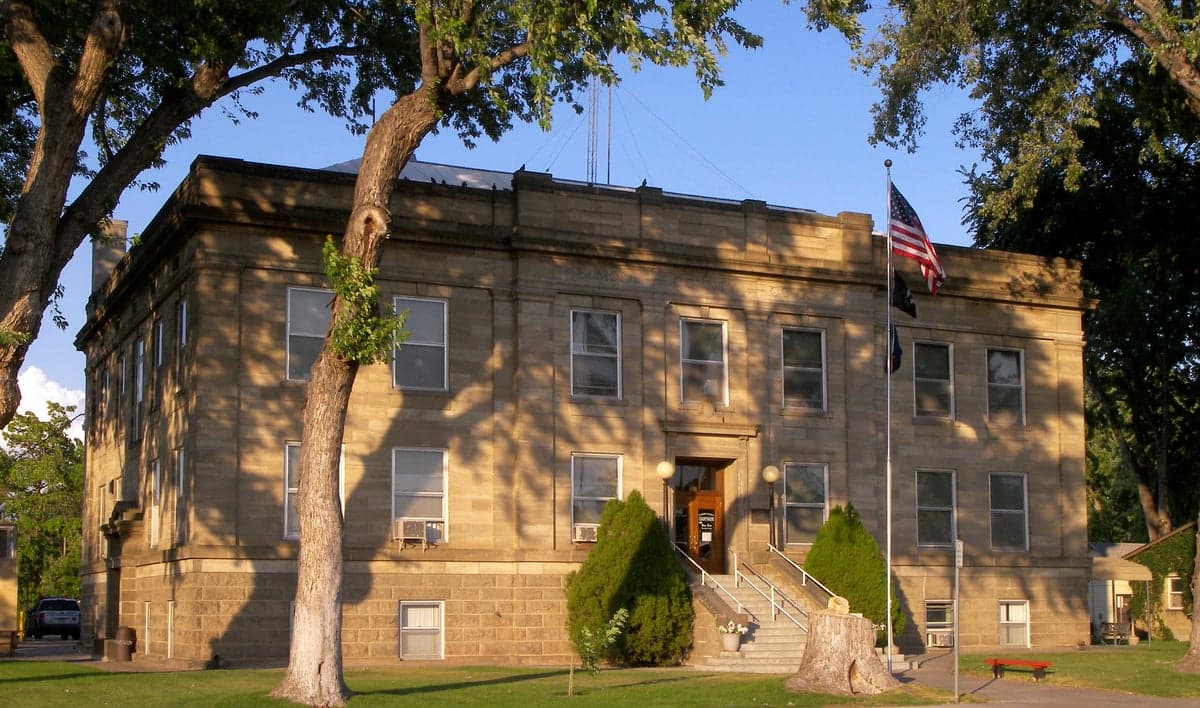
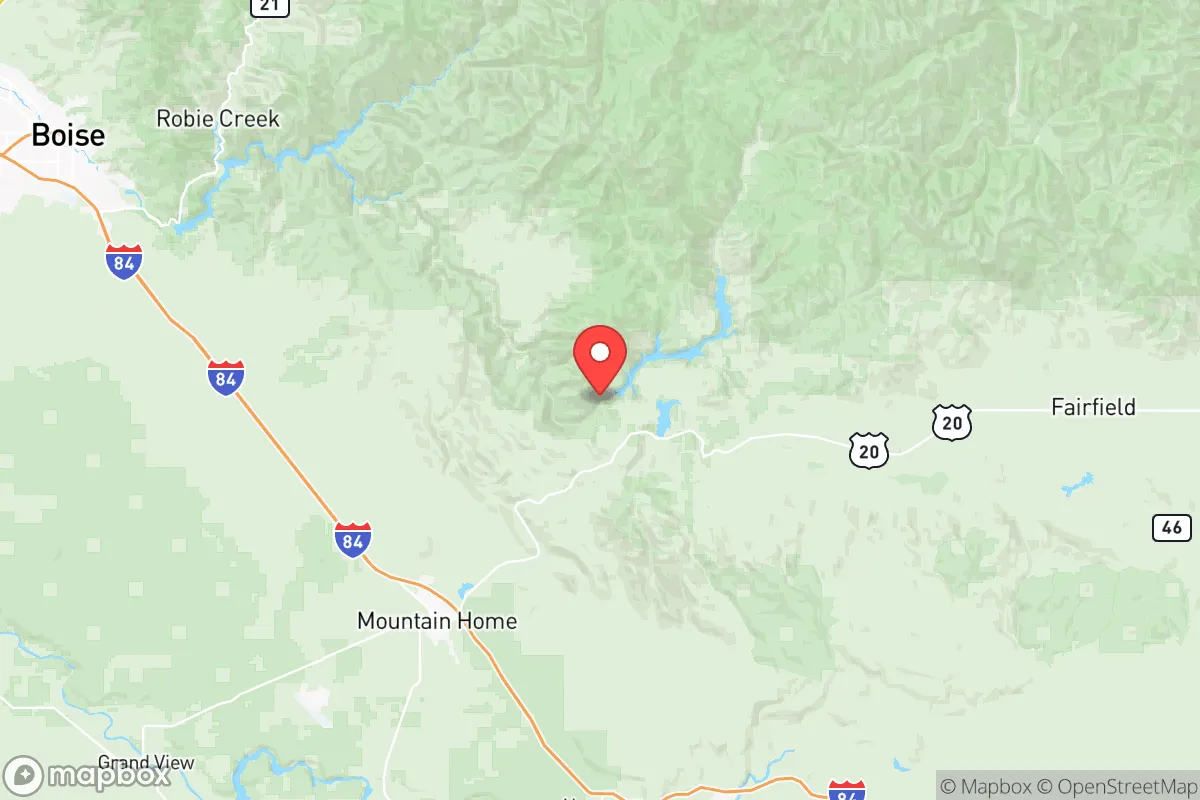
Elmore County, Idaho, offers one of the most robust personal sovereignty environments in the Intermountain West, combining a deeply ingrained culture of self-reliance with a state-level legal framework that consistently prioritizes individual autonomy over government intervention. The county’s regulatory posture is notably light-touch, and its tax burden is among the lowest in the nation, creating a baseline of economic freedom that attracts both families and single individuals seeking to maximize personal control over their lives. This analysis examines the specific dimensions of that sovereignty—taxation, self-defense law, homesteading viability, and personal liberties—to provide a concrete picture of what daily autonomy looks like in communities from Mountain Home to the remote reaches of the Sawtooth Valley.
Tax burden and regulatory posture in Elmore County
Elmore County operates under Idaho’s state-level constraints, which are among the most taxpayer-friendly in the country. There is no state corporate income tax, no state-level inventory tax, and a flat individual income tax rate of 5.8% (as of 2025). Property taxes in the county are assessed at a relatively low rate, with the average effective property tax rate hovering around 0.65% of market value—significantly below the national average of roughly 1.1%. The county itself has no local sales tax beyond the state’s 6% rate, and there are no special municipal sales taxes in Mountain Home, the county seat, or in smaller communities like Glenns Ferry or Hammett. The regulatory environment is characterized by minimal zoning restrictions outside of the incorporated city limits. Burnett County’s approach to land use is permissive: there are no county-wide building codes for unincorporated areas, and the permitting process for structures like barns, workshops, or accessory dwellings is streamlined. This contrasts sharply with more regulated counties in the Boise metro area, where environmental and subdivision regulations can add months to development timelines. For a reader prioritizing economic sovereignty, Elmore County represents a jurisdiction where the government takes a small slice and largely stays out of the way.
Self-defense and gun law specifics in Elmore County
Idaho is a constitutional carry state, and Elmore County fully reflects that legal reality. No permit is required to carry a concealed firearm for any law-abiding adult 18 years or older. The county sheriff’s office in Mountain Home issues enhanced permits for reciprocity purposes, but there is no local ordinance that restricts open or concealed carry in public spaces beyond state preemptions. Stand-your-ground and castle doctrine laws are codified in Idaho Code § 19-202A, and there is no duty to retreat in any place where a person has a lawful right to be. The practical effect in Elmore County is that gun ownership is near-universal in rural areas, and firearm culture is integrated into daily life—from hunting in the Boise National Forest to personal defense in remote homesteads. The county has no local gun registration, no waiting periods, and no magazine capacity restrictions. For individuals moving from states with more restrictive regimes, the transition is seamless: a person can legally carry a firearm on their person the day they establish residency. The communities of Pine and Featherville, deep in the mountains, are particularly known for a culture where firearms are treated as everyday tools rather than political symbols.
Self-reliance and homesteading viability in Elmore County
Elmore County is one of the most viable locations in Idaho for off-grid living and self-reliant homesteading, largely due to its permissive zoning and abundant undeveloped land. In unincorporated areas, there are no county-wide minimum lot size requirements for residential development, though subdivision regulations apply for parcels under 5 acres in certain zones. The county allows for owner-built dwellings without mandatory professional inspections, provided the structure meets basic safety standards for occupancy. Off-grid utilities are explicitly legal: rainwater catchment, composting toilets, and solar power systems are common and unregulated at the county level. The communities of Prairie and King Hill, located along the Snake River plain, offer affordable land parcels ranging from 5 to 40 acres with direct access to irrigation water rights, making small-scale agriculture feasible. In the mountain communities of Atlanta and Rocky Bar, remote parcels often lack road maintenance and utility infrastructure, which lowers land prices but demands a higher degree of self-sufficiency. The county’s planning department in Mountain Home is known for a pragmatic, hands-off approach: as long as a property does not create a public nuisance or violate state health codes for septic systems, the county generally does not intervene. For a family or individual seeking to build a homestead with minimal bureaucratic friction, Elmore County’s regulatory posture is a significant asset.
Personal liberties in Elmore County
Personal liberties in Elmore County are shaped by Idaho’s strong protections for parental rights, medical autonomy, and property rights. Idaho Code § 32-1010 establishes that parents have the fundamental right to direct the upbringing, education, and health care of their children, and the state has no mandatory vaccination laws for school attendance—parents may claim a personal or religious exemption without a notarized statement. Medical freedom is further supported by the Idaho Freedom Act, which prohibits state and local mandates for COVID-19 vaccines or vaccine passports. In Elmore County, these state-level protections are reinforced by a local culture that values individual choice: the Mountain Home School District does not require masks or vaccines for students, and there is no county health order that overrides parental consent for medical treatment. Property rights are robust under Idaho’s eminent domain statutes, which require just compensation and a demonstrated public necessity. The county has no rent control, no inclusionary zoning mandates, and no short-term rental restrictions outside of the city of Mountain Home’s limited zoning code. Speech and assembly are protected under the Idaho Constitution, which explicitly guarantees the right to keep and bear arms and the right to freely communicate. For a reader who prioritizes personal autonomy in medical decisions, education, and property use, Elmore County presents a legal environment where the default is permission rather than prohibition.
Compared to other areas in the Intermountain West, Elmore County stands out for its combination of low taxes, minimal regulation, and strong legal protections for individual choice. While counties in the Boise metro area have adopted more restrictive land-use and public health policies, Elmore County has maintained a consistently libertarian-leaning posture that appeals to those seeking maximum personal sovereignty. The county’s remote communities—from the high desert of Hammett to the alpine valleys of Featherville—offer a range of environments where self-reliance is not just possible but culturally expected. For a single individual or family evaluating relocation based on personal freedom, Elmore County represents one of the most permissionless jurisdictions in the region, where the government’s role is limited to essential services and the individual’s right to live as they see fit is the operating principle.

* Values derived from national, state, county, city and local statistics and may differ in a specific area. Last updated: 2026-07-18T13:42:35.000Z
Narrative content on this page is AI-generated and may contain mistakes. Verify any details that matter before acting on them.
ReloMaps may earn a commission from affiliate links at no extra cost to you.

