Photo: Wikipedia
Political ClimatePolitical Climate in Idaho Springs, CO
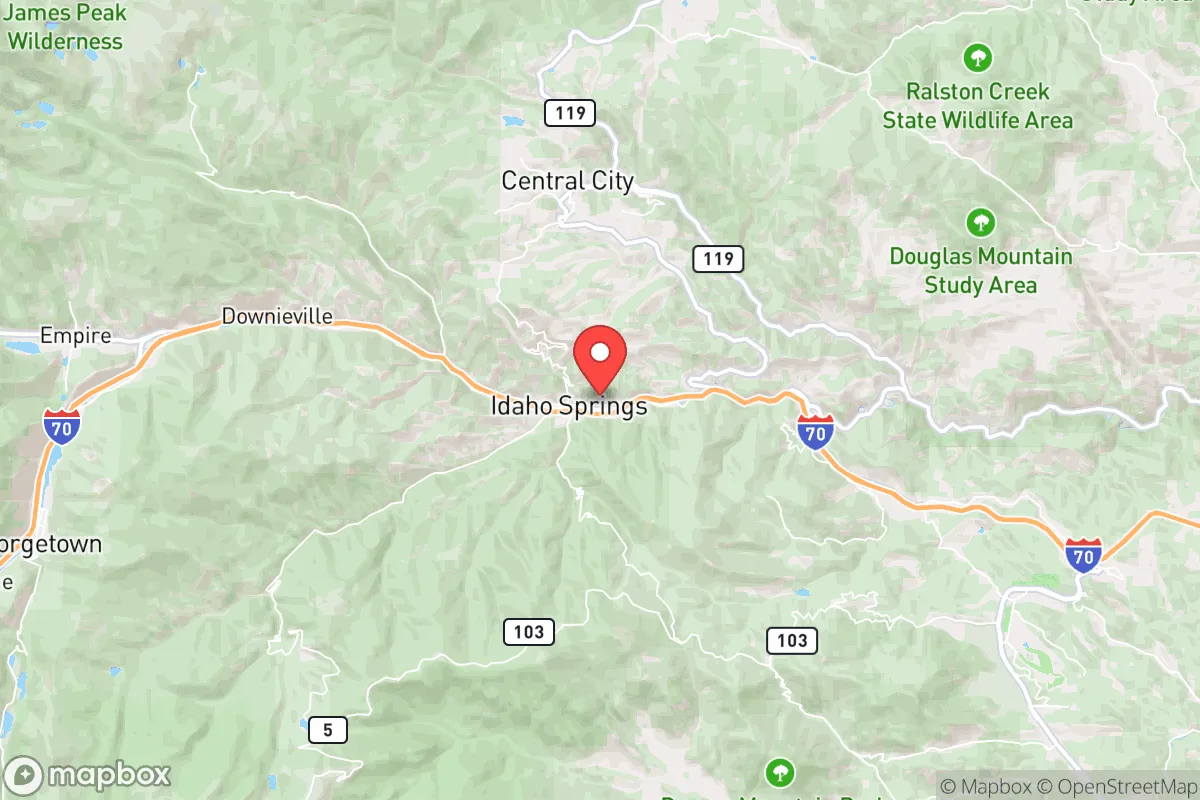
District shown is the primary district for this city’s centroid. Cities may span multiple districts.
Local Political AnalysisPolitical Analysis of Idaho Springs, CO
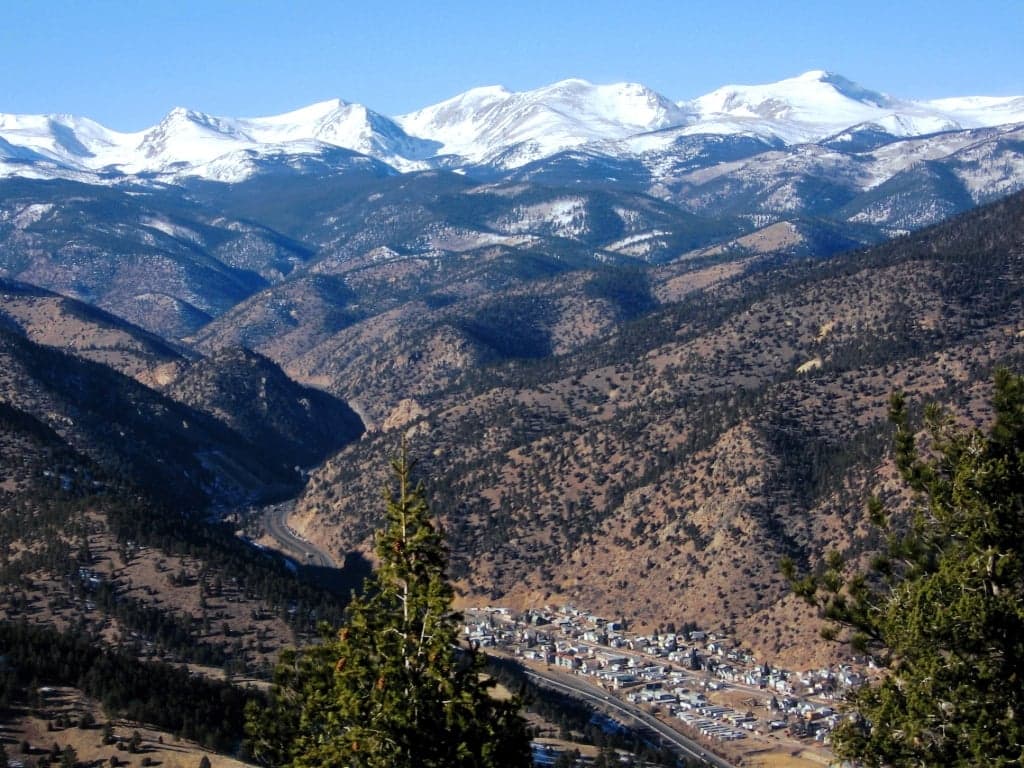
Idaho Springs is a solidly blue dot in a state that has been trending Democratic for years, with a Cook Partisan Voting Index of D+20 that puts it among the most liberal small towns in the Rocky Mountain region. This isn't a recent flip—the town has leaned left for decades, driven by a mix of outdoor-oriented transplants, mining history turned progressive activism, and a local economy tied to tourism and small-scale entrepreneurship. If you're coming from a deep-red rural county in the Midwest or even from neighboring Clear Creek County's more conservative pockets, you'll notice the difference the moment you step into a coffee shop or a town council meeting.
How it compares
Compared to the rest of Colorado, Idaho Springs is significantly more liberal than the state average. While Colorado as a whole has a Cook PVI of D+9, Idaho Springs clocks in at D+20—more than double the statewide Democratic lean. That puts it in the same political territory as Boulder or Denver's core neighborhoods, not the suburbs or exurbs. Drive 15 minutes east to Evergreen, and you'll find a more moderate-to-conservative mix; head west toward Georgetown or Silver Plume, and you'll see a similar blue tilt but with a quieter, less activist vibe. The real contrast comes when you go 30 minutes north to Black Hawk or Central City, where casino-driven economics and a more transient workforce create a less politically engaged, more libertarian-leaning atmosphere. In Idaho Springs, the politics are front and center—yard signs, local ballot measures, and town hall attendance are part of daily life.
What this means for residents
For liberal residents, Idaho Springs feels like a natural fit: local government is generally aligned with progressive priorities on land use, environmental protection, and social services. The town has been proactive on affordable housing initiatives and has pushed back against large-scale mining and development projects that threaten the watershed. Conservative residents aren't shut out, but they often feel like a vocal minority. You'll find plenty of hunters, off-roaders, and small-business owners who lean right, but they tend to keep their politics quieter in public settings. The practical effect is that local policy leans left—zoning favors density over sprawl, the town invests in bike and pedestrian infrastructure, and there's a strong emphasis on preserving public lands. If you're conservative, you'll still find your people, but you might need to seek them out through specific clubs, churches, or the county GOP rather than assuming they're the default.
One cultural distinction worth noting: Idaho Springs has a long history as a mining town, and that working-class identity still runs deep, even as the population has become more educated and environmentally conscious. This creates a unique blend of old-school pragmatism and new-school progressivism that you don't see in places like Boulder or Denver. The town's politics are less about abstract ideology and more about concrete issues—water rights, wildfire mitigation, and keeping the downtown corridor alive. That means even the most liberal residents tend to be practical rather than dogmatic, and even the most conservative residents often find common ground on local issues like maintaining the historic district or supporting small businesses. Looking ahead, Idaho Springs will likely stay blue, but the real story is how that blue manifests: not as coastal-style activism, but as a mountain-town version of progressive politics that still respects its roots.

State Political ClimatePolitical Climate in Colorado
State Political AnalysisPolitical Environment in the State
Colorado has shifted from a classic purple swing state to a solidly blue-leaning state over the past two decades, but it’s a far cry from a one-party monopoly. The Democratic coalition is powered by the booming Front Range urban corridor—Denver, Boulder, and the suburbs—while the rest of the state, particularly the Eastern Plains, Western Slope, and mountain communities, remains deeply conservative. The 2024 presidential election saw Colorado vote for the Democratic candidate by roughly 8 points, a margin that has held steady since 2016, but Republicans still hold significant local power in over half the state’s counties. For a conservative-leaning relocator, the reality is that you’ll find a welcoming community in many areas, but you’ll be living under a state government that has moved decisively left on taxes, energy, and social policy.
Urban vs. rural divide
The political map of Colorado is a tale of two landscapes. The Denver metro area—including Denver, Aurora, Lakewood, and the surrounding suburbs—drives the state’s blue lean, accounting for over half the state’s population. Boulder County is the epicenter of progressive activism, while Jefferson and Arapahoe counties have trended blue in presidential races but still elect moderate Republicans locally. The I-25 corridor south to Colorado Springs is the major exception: El Paso County, home to Colorado Springs, is a conservative stronghold, voting +15 points Republican in 2024, anchored by military installations like Fort Carson and Peterson Space Force Base. North of Denver, Weld County (Greeley) is reliably red, driven by agriculture and oil-and-gas interests. The Western Slope—places like Mesa County (Grand Junction) and Montrose—votes heavily Republican, as do the rural Eastern Plains counties like Yuma and Kit Carson. The mountain resort counties, like Pitkin (Aspen) and Summit (Breckenridge), are liberal enclaves, but the surrounding rural areas are not. The practical takeaway: if you move to Colorado Springs or Grand Junction, you’ll live in a conservative community; if you move to Denver or Boulder, you’ll be in a progressive environment.
Policy environment
Colorado’s state-level policy is shaped by Democratic control of the governorship and both legislative chambers, but with a moderate streak on fiscal matters. The state has a flat income tax rate of 4.4%, which was reduced from 4.55% in 2024 via a bipartisan bill, and the Taxpayer’s Bill of Rights (TABOR) still limits revenue growth and requires voter approval for tax increases—a legacy of conservative ballot initiatives. Property taxes are relatively low, but recent legislation (SB24-233) increased the residential assessment rate to fund schools, which has caused some sticker shock for homeowners. On energy, Colorado is a national leader in renewable mandates, requiring 100% clean electricity by 2040, while also being a top-10 oil-and-gas producer—a tension that plays out in local drilling debates. Education policy is mixed: school choice is robust, with charter schools and open enrollment widely available, but the state has also expanded funding for universal preschool and increased per-pupil spending. Healthcare is dominated by the state-run Connect for Health Colorado exchange, and the state has expanded Medicaid. Election laws are among the most accessible in the country: universal mail-in ballots, same-day registration, and automatic voter registration are the norm, which conservatives often criticize for security concerns.
Recent policy direction
The last five years have seen Colorado move decisively on several fronts that matter to relocators weighing personal liberties. On gun rights, the state passed a ban on “ghost guns” (SB21-078) and a 2024 law raising the purchase age for all firearms to 21 (HB24-1349), plus a three-day waiting period—measures that have drawn lawsuits from gun-rights groups. Self-defense law remains Castle Doctrine-based, but the state has no permitless carry. On parental rights, a 2023 law (SB23-095) requires school districts to notify parents of changes to a student’s health or well-being, but it was watered down from earlier versions and remains controversial among both progressives and conservatives. Medical and bodily autonomy: Colorado codified abortion rights into law in 2022 (HB22-1279) and passed a shield law protecting providers from out-of-state prosecution. Property rights are a flashpoint: the state has tightened oil-and-gas setback requirements (SB24-159) and expanded local control over land use, which has frustrated rural landowners. On privacy, the Colorado Privacy Act (CPA) gives residents control over their personal data, but the state has also expanded surveillance via automated traffic enforcement in cities like Denver and Aurora. Voting access remains expansive, with no voter ID requirement at the polls (though mail ballots require a signature match), which conservatives view as a vulnerability. The overall direction is toward more regulation on guns and energy, more individual rights on healthcare and privacy, and a tax structure that remains relatively friendly but is under pressure from rising property assessments.
Civil unrest & political movements
Colorado has seen its share of political flashpoints. The 2020 protests in Denver over George Floyd’s death were large and occasionally violent, leading to property damage and a lasting debate over police reform. The state has a strong sanctuary movement: Denver and Boulder County limit cooperation with federal immigration enforcement, and a 2019 law (HB19-1124) restricted local law enforcement from detaining individuals based solely on immigration status. On the right, the Colorado Republican Party has been riven by infighting between moderates and the more conservative “MAGA” wing, but grassroots activism remains strong in rural areas, particularly around Second Amendment sanctuary resolutions—over 30 counties have declared themselves “Second Amendment sanctuaries.” Election integrity controversies flared after 2020, with some rural clerks facing pressure over Dominion voting machines, but no major fraud was found. The most visible political movement in recent years has been the push for local control over energy development, with Western Slope communities fighting new oil-and-gas permits while also opposing renewable projects like solar farms on agricultural land. A new resident in Colorado Springs or Grand Junction will see a politically engaged, conservative community; in Denver, they’ll encounter active progressive organizing around climate and social justice.
Projection
Over the next 5-10 years, Colorado’s political trajectory points toward continued Democratic dominance at the state level, driven by in-migration to the Front Range from blue states like California and Illinois. The state is projected to gain a congressional seat after 2030, likely in the Denver suburbs, which will further entrench the Democratic majority. However, the rural-urban divide will deepen, with conservative counties pushing for more local autonomy on energy, land use, and gun laws. The state’s tax structure may face pressure: TABOR refunds are becoming more common as revenue grows, and there’s a growing push from progressives to repeal or reform TABOR, which would be a major shift. On energy, the tension between renewable mandates and oil-and-gas production will intensify, with potential for more local ballot initiatives restricting drilling. For a conservative relocator, the state will remain a place where you can find a like-minded community in the Springs, Grand Junction, or the Eastern Plains, but you’ll be voting against the state-level trend. The practical reality is that Colorado will likely become more like Oregon or Washington—blue statewide, with red islands—rather than flipping back to purple.
For a new resident, the bottom line is that Colorado offers a high quality of life with strong economic opportunities, but the political environment is increasingly polarized. If you’re conservative, you’ll want to target Colorado Springs, Grand Junction, or the rural counties, where your vote will matter locally and your values will be reflected in community life. If you’re liberal, Denver, Boulder, and the mountain towns will feel like home. Either way, expect to live under a state government that is progressive on social issues and energy, but still constrained by TABOR on taxes. The key is choosing your county wisely—Colorado’s political reality is far from uniform.
* Values derived from national, state, county, city and local statistics and may differ in a specific area. Last updated: 2026-10-17T04:06:29.000Z
Narrative content on this page is AI-generated and may contain mistakes. Verify any details that matter before acting on them.
ReloMaps may earn a commission from affiliate links at no extra cost to you.

