Photo: Wikipedia
Personal Sovereignty in Idaho Springs, CO
Viable for self-reliance. Generally workable, though some barriers may limit total independence.
What does Personal Sovereignty tell us?
Personal Sovereignty measures your capacity for self-reliance and independence with minimal government friction. Higher scores mean fewer barriers between you and the way you want to live... but it assumes you have the space you need and good neighbors.
What does this tell us?
Personal Sovereignty measures your capacity for self-reliance and independence with minimal government friction. Higher scores mean fewer barriers between you and the way you want to live... but it assumes you have the space you need and good neighbors.
State Policy
Energy independence: Net exporter (110% of energy produced in-state)
Personal Liberty
Homesteading

Personal Liberty Analysis
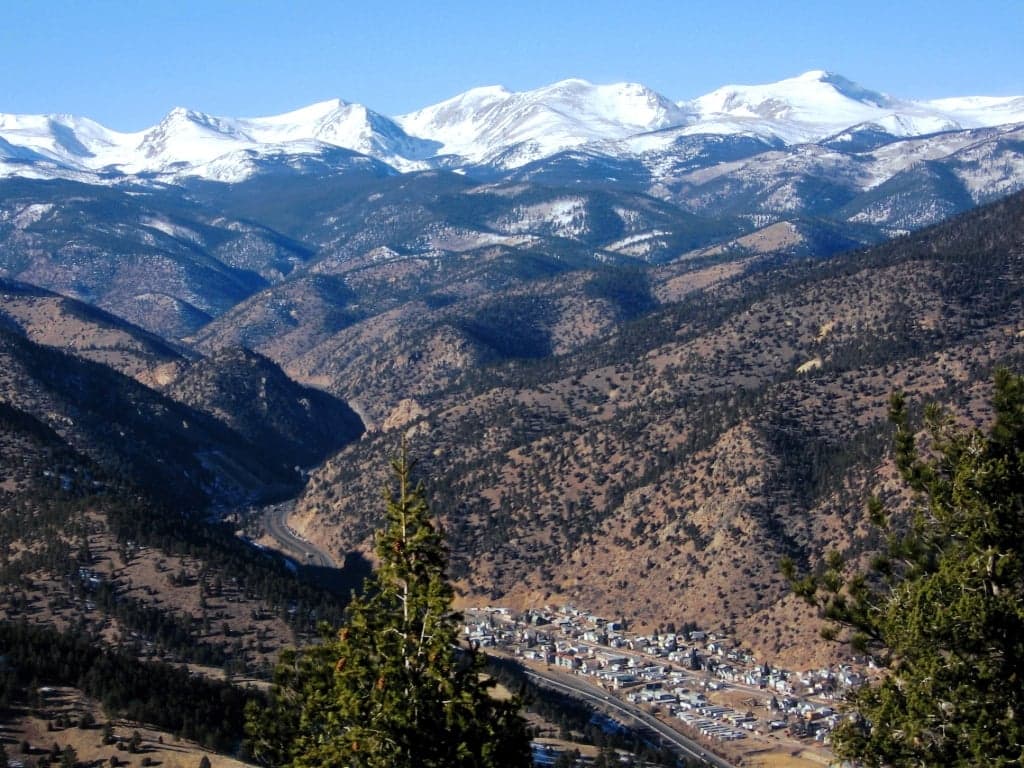
Idaho Springs, Colorado, offers a distinctive personal sovereignty environment that blends the state's strong constitutional protections with the practical realities of a small mountain town embedded in a politically mixed county. For those prioritizing personal freedom, the area provides a notably light-touch regulatory atmosphere on key fronts like self-defense and property rights, though it operates within Colorado's broader state-level tax and land-use frameworks. The town's character as a historic mining community with a modern outdoor-recreation economy fosters a self-reliant, live-and-let-live culture that appeals to both single individuals and families seeking independence from heavy-handed governance.
Tax burden and regulatory posture in Clear Creek County
Idaho Springs residents benefit from one of Colorado's more favorable tax environments, particularly for those who value keeping more of their earnings. The state levies a flat income tax rate of 4.4%, which is moderate nationally, and Clear Creek County's property tax rate is among the lowest in the Front Range region, typically hovering around 0.5% of actual value. This low property tax burden is a direct result of the county's relatively modest government spending and limited demand for new public infrastructure. Sales tax in Idaho Springs combines a 2.9% state rate with a 3.5% city rate and a 1% county rate, totaling 7.4% — higher than some unincorporated areas but reasonable for a town that relies on tourism and local commerce. The regulatory posture at the city and county level is generally permissive for small businesses and property owners. Zoning is straightforward, with no overlay districts or design review boards imposing aesthetic mandates on residential properties. Building permits are required for major structural work, but the process is streamlined compared to larger Front Range jurisdictions like Boulder or Denver. There are no county-level business license requirements for most home-based enterprises, and the city's code enforcement is complaint-driven rather than proactive, meaning residents are largely left alone unless they create a nuisance.
Self-defense and gun law specifics in Idaho Springs
Colorado is a shall-issue state for concealed handgun permits, and Clear Creek County's sheriff's office processes applications efficiently, typically within the statutory 90-day window. Idaho Springs itself has no local ordinances restricting firearm possession beyond state law, meaning no additional waiting periods, magazine capacity limits, or storage requirements beyond what Colorado mandates. The state does have a 15-round magazine capacity limit for handguns and a 10-round limit for shotguns, which applies statewide, but long guns and standard-capacity rifles remain unrestricted. Open carry is legal in Idaho Springs for anyone who can legally possess a firearm, and the town's police department has publicly stated they do not enforce any local gun restrictions beyond state law. The county sheriff is an elected official who has historically taken a strong pro-Second Amendment stance, and there are no local "red flag" extreme risk protection order initiatives beyond the state law passed in 2019. For self-defense in the home, Colorado's Castle Doctrine provides a legal presumption that a homeowner who uses deadly force against an intruder acted reasonably, and there is no duty to retreat in one's own residence. Stand Your Ground principles apply statewide, meaning no duty to retreat in any place where a person has a legal right to be. The practical reality for Idaho Springs residents is that they can carry, store, and use firearms with minimal local interference, though they must comply with state-level restrictions that are more moderate than those in coastal states but tighter than in neighboring Wyoming.
Self-reliance and homesteading viability in a mountain town
Idaho Springs presents a mixed picture for those seeking a self-reliant, off-grid lifestyle. The town itself is built on steep terrain with small lots typical of a historic mining community — most residential parcels range from 5,000 to 10,000 square feet, limiting space for substantial food production or livestock. However, the surrounding unincorporated areas of Clear Creek County offer significantly more opportunity. Properties zoned as "Agricultural" or "Forestry" allow for chickens, goats, and up to two horses per acre without special permitting, and there are no county-level restrictions on beekeeping or small-scale market gardening. Off-grid living is legally feasible in the county, but with important caveats. Colorado's state building code applies to all new construction, meaning a dwelling must meet minimum structural and safety standards even if it is not connected to the grid. Solar panels and wind turbines are permitted without special county approval, and rainwater collection is legal for outdoor use under state law, though indoor potable use requires a well permit. The county health department requires a septic system for any dwelling with plumbing, which can be a significant cost on remote properties. Water rights are a critical consideration — many older mining claims in the area have grandfathered water rights, but new wells require a permit from the state engineer and can be difficult to obtain in areas with known groundwater limitations. For those willing to navigate these requirements, the county's permissive zoning and low enforcement presence make it one of the more viable areas in the Front Range for a semi-self-sufficient lifestyle, though the high altitude (7,500 feet) and short growing season (roughly 60-90 frost-free days) limit what can be grown without a greenhouse.
Personal liberties: parental rights, medical autonomy, speech, and property
Idaho Springs and Clear Creek County maintain a strong tradition of personal liberty across several dimensions. Parental rights in education are robust — Colorado law grants parents the right to opt their children out of any curriculum they find objectionable, and Clear Creek School District R-1 has a policy of notifying parents before any health or sexuality education is provided. Homeschooling is straightforward, requiring only a simple notification to the school district with no standardized testing mandates or curriculum approval. Medical autonomy is more constrained by state law than local preference. Colorado has legalized recreational marijuana, and Idaho Springs has two dispensaries operating under local license, but the state mandates strict testing and labeling requirements. Vaccine mandates for school attendance follow state law, which requires standard childhood immunizations but allows for medical and personal belief exemptions. Medical freedom advocates will find the local culture supportive of alternative and holistic health practices, with several naturopathic practitioners and a wellness-oriented community. Free speech and assembly are protected under both the Colorado and U.S. Constitutions, and the town has no local ordinances restricting political signage, leafleting, or public gatherings beyond standard time-place-manner regulations for parades and large events. Property rights are strongly protected at the local level — Clear Creek County has no inclusionary zoning, no rent control, and no short-term rental moratoriums, though the town of Idaho Springs does require a license for vacation rentals. Eminent domain is rarely exercised, and the county's comprehensive plan explicitly prioritizes private property rights in its land-use policies.
Overall, Idaho Springs offers a level of personal sovereignty that is notably higher than in Colorado's urban Front Range corridor but somewhat more constrained than in the state's most rural western counties. The combination of low property taxes, permissive gun laws, viable off-grid options in the county, and strong protections for parental and property rights creates an environment where individuals and families can exercise substantial control over their lives with minimal government interference. For a relocation-minded reader who prioritizes personal freedom, Idaho Springs represents a practical middle ground — close enough to Denver for employment and amenities, but far enough removed in both distance and culture to maintain a genuinely independent way of life. The town's mining heritage and outdoor-recreation ethos reinforce a self-reliant mindset that aligns well with conservative values of limited government and personal responsibility, making it a compelling option for those seeking autonomy without complete isolation.

* Values derived from national, state, county, city and local statistics and may differ in a specific area. Last updated: 2026-10-17T04:06:29.000Z
Narrative content on this page is AI-generated and may contain mistakes. Verify any details that matter before acting on them.
ReloMaps may earn a commission from affiliate links at no extra cost to you.

