
Photo by Laura Peruchi on Unsplash
Political ClimatePolitical Climate in Hyde Park, VT
District shown is the primary district for this city’s centroid. Cities may span multiple districts.
Inherited from parent state — no local data available.
Local Political AnalysisPolitical Analysis of Hyde Park, VT
Hyde Park, Vermont, leans heavily Democratic, with a Cook PVI of D+17, meaning the area votes about 17 points more Democratic than the national average. This wasn't always the case—I remember when this town was a quiet, independent-minded place where folks kept to themselves and didn't much care for being told what to do. Over the last decade or so, the political winds have shifted hard left, driven by an influx of out-of-state transplants and a growing progressive activist base. The local Democratic Party machine is now firmly in control, and the old-school Yankee libertarian streak that once defined the Lamoille Valley has been largely drowned out by a more activist, government-first mindset.
How it compares
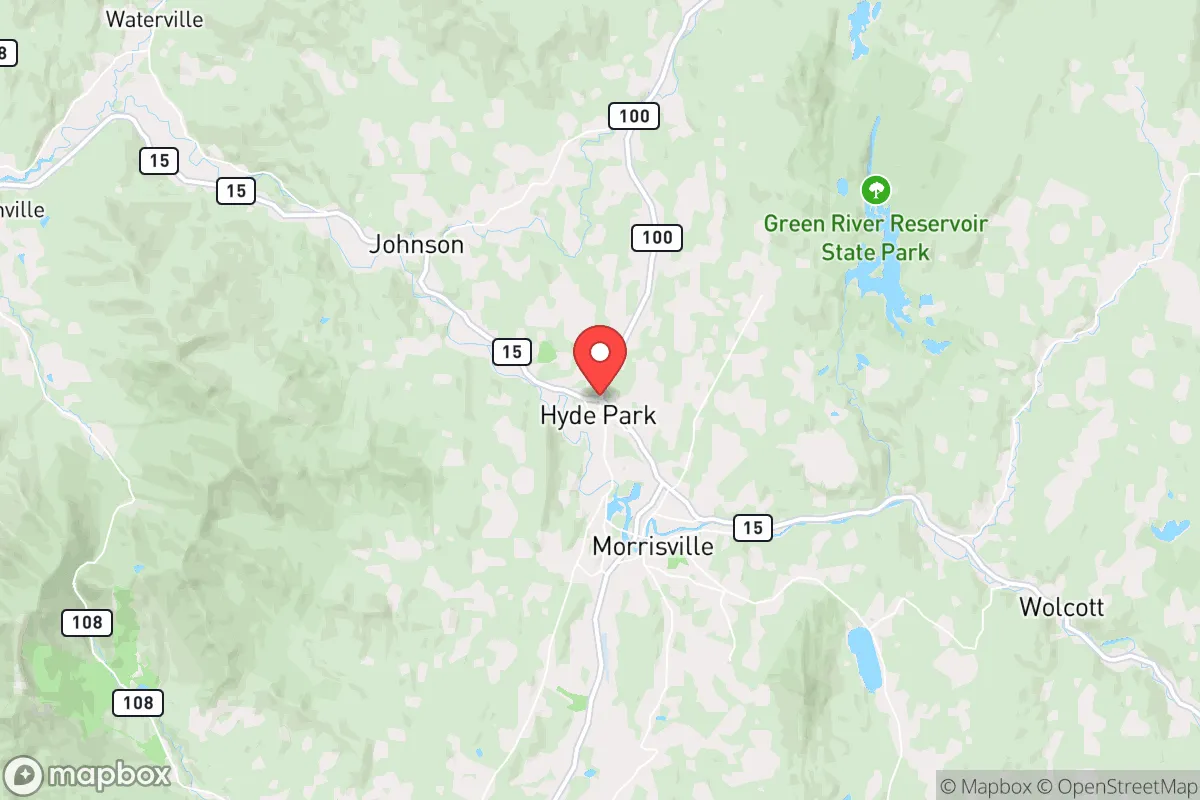
If you drive ten miles south to Morrisville, you'll find a similar story—another D+17 stronghold where the local government has embraced progressive policies like zoning overlays and climate action plans. But head west to Jeffersonville or Cambridge, and the political vibe shifts noticeably. Those towns still have a healthy mix of conservatives and independents who push back on new regulations, especially around property rights and land use. Even Stowe, though wealthy and liberal, has a more pragmatic, tourism-driven politics that avoids some of the ideological purity tests you see in Hyde Park. The contrast is stark: Hyde Park's town meetings have become battlegrounds over things like police funding and renewable energy mandates, while neighboring towns still focus on potholes and snow removal.
What this means for residents
For those of us who value personal freedom and limited government, the trend is concerning. The local school board has pushed diversity, equity, and inclusion initiatives that many feel prioritize ideology over academics. Town officials have also floated new rental registration schemes and short-term rental restrictions that would give the government more say over what you can do with your own property. Property taxes are already high—Vermont's are among the highest in the nation—and new state mandates on energy efficiency and electric vehicles are likely to drive costs up further. If you're a small business owner or a landowner who likes to make your own decisions, you'll find yourself increasingly at odds with the local political class. The long-term trajectory points toward more regulation, not less, as the progressive majority consolidates power.
Culturally, Hyde Park has lost some of its rough-around-the-edges character. The old hardware store and the diner where everyone knew your name have been replaced by a co-op and a yoga studio. The town's annual events, like the Lamoille County Field Days, still draw a crowd, but the political conversations at those events have grown more tense. There's a growing sense among long-time residents that the place they grew up in is being remade in someone else's image. If you're considering a move here, just know that the political climate is not neutral—it's actively shaping everything from school curriculum to land use policy. For those who prefer a hands-off government and a live-and-let-live ethos, this might not be the right fit.

State Political ClimatePolitical Climate in Vermont
State Political AnalysisPolitical Environment in the State
Vermont has long been known as one of the most reliably progressive states in the nation, but the reality on the ground is more complicated than the national headlines suggest. The state’s overall partisan lean is solidly Democratic at the presidential level — Joe Biden won Vermont by 35 points in 2020 — but the state legislature and governor’s office have historically been more moderate, with a Republican governor, Phil Scott, winning reelection by wide margins as recently as 2024. Over the past 10-20 years, the dominant coalition has shifted from a pragmatic, fiscally conservative Yankee Republicanism to a more assertive progressive agenda, driven largely by the Chittenden County metro area around Burlington. This trajectory has accelerated since 2020, with the legislature overriding Scott’s vetoes on major tax and regulatory bills, signaling a clear move leftward that many longtime residents find concerning.
Urban vs. rural divide
The political map of Vermont is a textbook case of urban-rural polarization. The Burlington metro area, centered in Chittenden County, is the state’s progressive engine — it cast roughly 40% of the state’s total votes in 2024 and went for Biden by over 60 points. Towns like Burlington, Winooski, and South Burlington are home to the University of Vermont, tech startups, and a dense concentration of government and nonprofit workers. In contrast, the rural northeast kingdom — counties like Essex, Orleans, and Caledonia — voted for Trump in 2020 and 2024, with some precincts going +30 points red. The divide isn’t just about party labels; it’s about culture and economics. Rural towns like St. Johnsbury and Newport rely on logging, dairy farming, and tourism, and they feel increasingly alienated from Montpelier’s policy priorities. Even in the more moderate suburbs like Colchester and Williston, you see a split: these towns vote blue but are more skeptical of the legislature’s tax-and-spend approach, often backing Republican candidates for local offices.
Policy environment
Vermont’s policy environment is a mixed bag that leans heavily toward government intervention. The state has a progressive income tax structure with a top rate of 8.75% on income over $213,150 (2025), and property taxes are among the highest in the nation — the effective rate is roughly 1.8% of home value, driven by school funding formulas that are heavily centralized. The regulatory posture is aggressive: Vermont was the first state to mandate paid family leave (2023), and it has some of the strictest land-use laws in the country under Act 250, which can delay construction projects for years. On education, the state has a universal school choice system through town tuitioning, but it’s being eroded by a push for more centralized control and a controversial “equity” funding formula that critics say penalizes rural districts. Healthcare is dominated by the state’s all-payer model, which caps hospital revenue growth and has led to long wait times and provider shortages. Election laws are among the most progressive: Vermont has automatic voter registration, same-day registration, and universal mail-in ballots for all elections since 2020. For a conservative-leaning individual, the biggest red flags are the high tax burden and the lack of parental opt-outs in education — the state has no school voucher program beyond the existing town tuition system, and curriculum decisions are increasingly made at the state level.
Trajectory & freedom
On the freedom front, Vermont is moving in a direction that many conservatives will find alarming. The most visible flashpoint is gun rights: in 2023, the legislature passed S.4, which bans the sale of “assault weapons” and large-capacity magazines, and requires a 72-hour waiting period for all firearm purchases. This came after a 2018 law that raised the purchasing age to 21 and banned magazines over 10 rounds. Parental rights took a hit with Act 1 (2023), which removed the requirement that schools notify parents if a child changes their gender identity or pronouns — a direct blow to family autonomy. On medical freedom, Vermont was one of the first states to mandate COVID-19 vaccines for schoolchildren (2021), though that mandate was later repealed in 2023 after public backlash. Property rights are constrained by Act 250, which gives state regulators broad authority to deny development based on “community impact” — a tool that’s been used to block housing projects and even small businesses in rural towns. Taxation is the biggest freedom killer: Vermont’s tax burden as a percentage of personal income is the second-highest in the nation (behind only New York), and the legislature recently passed a 0.5% payroll tax increase for the paid leave program. The trend is clear: more mandates, more taxes, and less local control.
Civil unrest & political movements
Vermont’s political activism is intense but largely non-violent. The left is highly organized through groups like the Vermont Progressive Party and the Vermont Workers’ Center, which have been instrumental in pushing the paid leave and minimum wage increases. On the right, the Vermont Republican Party is a shadow of its former self, but grassroots groups like the Vermont Federation of Republican Women and the Vermont Liberty Alliance have gained traction in rural areas, focusing on school board races and local zoning fights. Immigration politics are a flashpoint: Vermont is a “sanctuary state” under a 2017 executive order by Governor Scott, which limits cooperation with ICE — a policy that has caused friction in border towns like Derby Line, where cross-border traffic is a daily reality. There have been no major secession movements, but the “Second Vermont Republic” movement, which advocates for independence, has a small but vocal online presence. Election integrity has been a low-level concern: Vermont’s universal mail-in system has been criticized by some for lacking voter ID requirements, though no major fraud has been documented. The most visible flashpoint for a new resident would be the constant presence of protest signs and bumper stickers — in Burlington, you’ll see “Defund Police” and “Trans Rights” signs; in rural towns, you’ll see “Don’t Tread on Me” and “Trump 2024” flags. The cultural divide is real and visible.
Projection
Over the next 5-10 years, Vermont is likely to continue its leftward drift, but with some brakes. The demographic trend is concerning for conservatives: the state is losing young families to lower-tax states like New Hampshire and Florida, while gaining remote workers from New York and Boston who bring progressive politics with them. The Chittenden County metro area will continue to dominate state politics, meaning the legislature will likely pass more progressive policies — expect a push for a state-level wealth tax, a public option for healthcare, and stricter environmental regulations on agriculture. However, Governor Scott’s popularity (he won 70% of the vote in 2024) suggests there’s a ceiling on how far the legislature can go without backlash. The wild card is housing: Vermont’s housing crisis is so severe that it’s driving out the very people the state needs to sustain its economy. If the legislature can’t fix it, expect a populist backlash from rural voters that could flip some legislative seats in 2026 and 2028. For someone moving in now, the realistic expectation is that Vermont will remain a high-tax, high-regulation state with a strong progressive tilt, but with enough rural resistance to prevent a full California-style transformation.
For a conservative-leaning individual or family, Vermont offers beautiful landscapes and a slower pace of life, but the trade-offs are significant. You’ll pay high taxes, deal with a state government that is increasingly hostile to gun rights and parental autonomy, and live in a culture where your political views may be in the minority, especially if you’re near Burlington. The practical takeaway: if you value low taxes, local control, and personal freedom, Vermont is a tough sell. If you’re willing to fight for those values in a small but active conservative community, places like St. Johnsbury, Newport, or Rutland offer a more affordable and politically balanced alternative to the Chittenden County bubble. Just know that the state’s trajectory is not in your favor, and you’ll need to be engaged at the local level to protect what matters most.
* Values derived from national, state, county, city and local statistics and may differ in a specific area. Last updated: 2026-05-04T02:42:45.000Z
Narrative content on this page is AI-generated and may contain mistakes. Verify any details that matter before acting on them.
ReloMaps may earn a commission from affiliate links at no extra cost to you.

