Photo: Wikipedia
Political ClimatePolitical Climate in Howell, MI
District shown is the primary district for this city’s centroid. Cities may span multiple districts.
Local Political AnalysisPolitical Analysis of Howell, MI
Howell, Michigan, sits in a political sweet spot that’s more nuanced than its reputation suggests. The city itself leans slightly right of center, but the surrounding Livingston County is a deep-red stronghold—Trump won the county by roughly 30 points in 2020. Yet Howell’s Cook PVI is rated EVEN, meaning the city’s overall voting patterns are dead-even with the national average. That’s a big shift from even a decade ago, when the area was more reliably Republican. The trajectory is subtle but real: Howell is slowly trending toward the center, driven by an influx of younger families and remote workers from the Ann Arbor and Detroit metro areas who bring more moderate or even liberal leanings.
How it compares
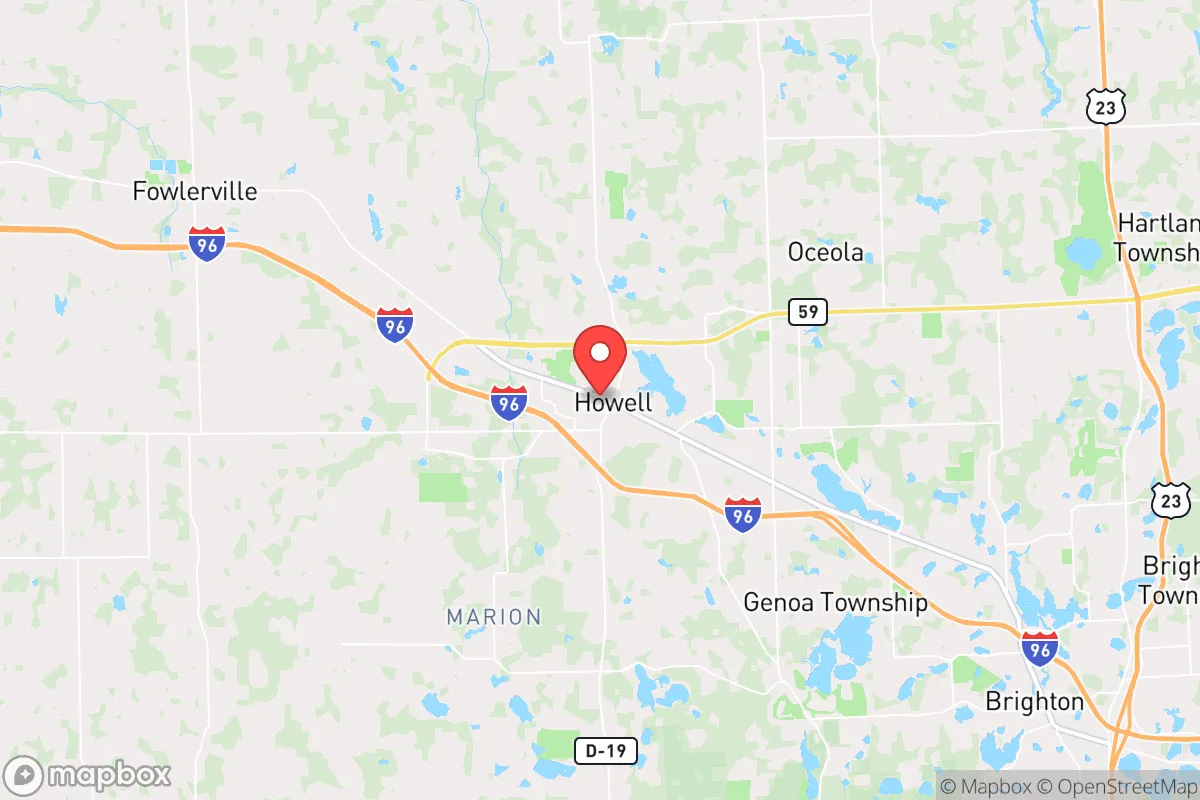
Compared to the rest of Michigan, which also carries a Cook PVI of EVEN, Howell is a microcosm of the state’s broader political split. Michigan as a whole is a classic swing state, flipping from Obama to Trump to Biden by razor-thin margins. Howell mirrors that tension, but with a local twist. Drive 15 minutes east to Brighton, and you’ll find a similar mix of conservative roots and creeping suburban moderation. Head 20 minutes west to Fowlerville, and the politics get noticeably redder—more rural, more Trump signs per acre. The real contrast is with Ann Arbor, 25 miles south, which is a deep-blue college town. That proximity means Howell residents live in a constant, low-grade cultural tug-of-war: conservative county policies on taxes and schools, but with a city council that’s increasingly willing to compromise on development and social services.
What this means for residents
For conservative residents, Howell still feels like home. The county commission is reliably Republican, gun rights are broadly supported, and local churches and veterans’ groups are active and influential. You’ll find plenty of “Don’t Tread on Me” flags in the rural outskirts, and the annual Howell Melon Festival is a wholesome, small-town affair. For liberal residents, it’s more of a mixed bag. You won’t face open hostility, but you’ll notice the absence of progressive infrastructure—no dedicated LGBTQ+ community center, fewer organic grocery options, and a school board that’s cautious about DEI initiatives. That said, the city itself is more tolerant than the county. The downtown area, with its craft breweries and indie coffee shops, attracts a younger, more diverse crowd. The real friction point is taxes: Livingston County prides itself on low property taxes, which keeps government services lean. That means fewer public transit options and a heavier reliance on volunteer fire departments, which can frustrate newcomers used to more robust municipal services.
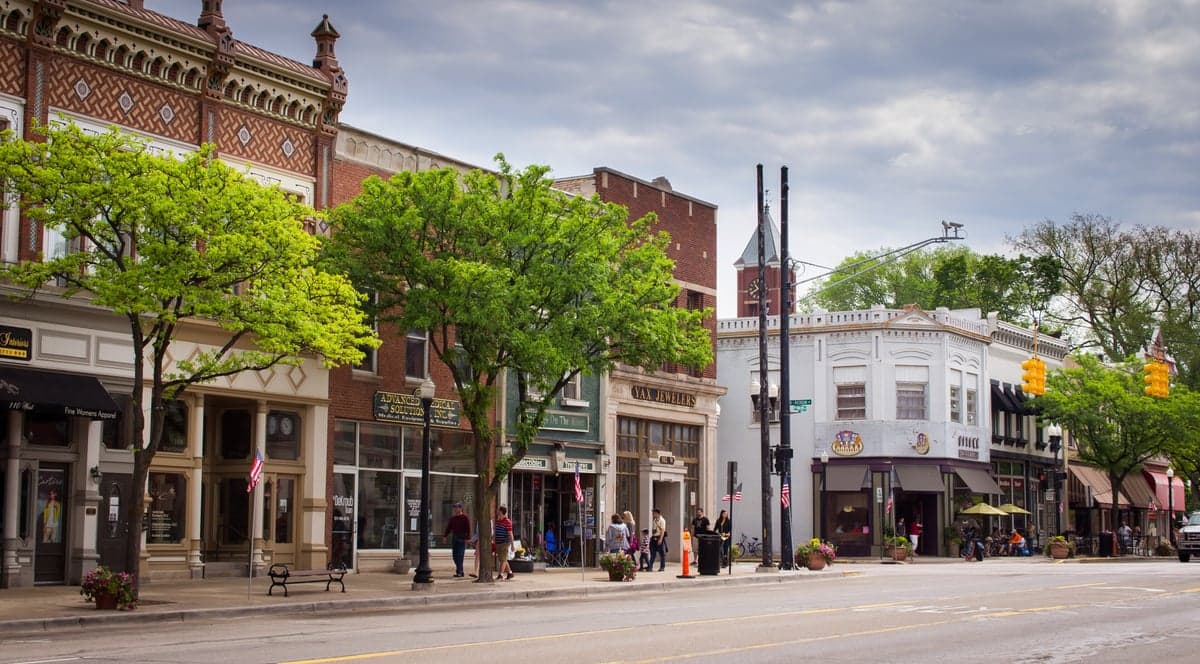
Culturally, Howell is a place where the past and future are still negotiating. The city’s historic downtown square, with its old courthouse and antique shops, feels like a Norman Rockwell painting. But the new housing developments on the outskirts are filling with people who work remotely for tech companies in Detroit or Ann Arbor, and they bring different expectations—better bike lanes, more diverse restaurants, and a willingness to vote for a Democrat if the Republican candidate seems too extreme. The long-term trend is toward moderation, but it’s slow. If you’re moving here, expect a community that’s friendly but politically aware, where conversations about zoning or school funding can get heated, but where neighbors still help each other shovel snow regardless of party affiliation. It’s not a battleground—it’s a place where the battle is fought politely, over coffee at the local diner.

State Political ClimatePolitical Climate in Michigan
State Political AnalysisPolitical Environment in the State
Michigan is a classic battleground state with a Cook PVI of EVEN, meaning it votes almost exactly in line with the national average. Over the last 20 years, the state has shifted from a reliably blue stronghold (voting Democratic in every presidential election from 1992 to 2012) to a true toss-up, flipping to Trump in 2016 by just 10,704 votes, then flipping back to Biden in 2020 by 154,188 votes. The dominant coalitions are a shrinking, union-heavy blue base in the southeast and a growing, culturally conservative red wave in the west and north, with the Detroit suburbs acting as the ultimate swing region.
Urban vs. rural divide
The political map of Michigan is stark. The urban core of Detroit and its inner-ring suburbs like Southfield and Warren are overwhelmingly Democratic, powered by Black voters, union households, and younger professionals. Ann Arbor (Washtenaw County) is the state’s most liberal city, regularly voting 75%+ Democratic. In contrast, rural northern Michigan and the western side of the state are deeply Republican. Grand Rapids (Kent County) was once a GOP stronghold but has shifted left in recent cycles due to an influx of young professionals and immigrants; it voted for Biden in 2020 after backing Trump in 2016. The real battleground is the suburban ring around Detroit — Oakland County (Bloomfield Hills, Royal Oak, Troy) and Macomb County (Sterling Heights, Clinton Township). Macomb County is the iconic "Reagan Democrat" territory that flipped hard to Trump in 2016 and has stayed competitive since. The Thumb region (Huron, Sanilac counties) and the Upper Peninsula (Gogebic, Houghton) are reliably red, though the UP has a libertarian streak that sometimes backs third-party candidates.
Policy environment
Michigan’s policy environment is a mixed bag that reflects its purple status. The state has a flat income tax rate of 4.25% (down from 4.35% in 2023 via automatic trigger), and no tax on Social Security benefits. Sales tax is 6%, and property taxes are moderate but vary wildly by district — expect 1.5-2.5% of assessed value. The regulatory posture is generally business-friendly in manufacturing and agriculture, but the state has a strong union legacy (Michigan is a "right-to-work" state only since 2012, and that law was repealed in 2023 by the Democratic trifecta). Education policy is a flashpoint: the state funds public schools through a foundation allowance system that leaves rural districts struggling, while charter schools are plentiful (Michigan has one of the highest charter school densities in the nation). Healthcare is dominated by the Big Three insurers (Blue Cross, Priority Health, McLaren), and the state expanded Medicaid under the Healthy Michigan Plan in 2014. Election laws are relatively accessible: no-excuse absentee voting was approved by voters in 2018, and same-day voter registration is available. Voter ID is required but can be satisfied with a signed affidavit if you don’t have one.
Recent policy direction
The 2023-2024 Democratic trifecta (Governor Gretchen Whitmer, Senate, House) pushed a flurry of legislation that shifted the state leftward on several fronts. On gun and self-defense law, Michigan passed universal background checks and safe storage requirements in 2023, and repealed the state’s preemption law that had prevented local governments from enacting their own gun ordinances — a major change for a state with a strong hunting culture. Parental and education rights saw the repeal of the 2012 right-to-work law, which union advocates celebrated but critics say reduces worker choice. The state also banned conversion therapy for minors and expanded the Elliott-Larsen Civil Rights Act to include sexual orientation and gender identity. On abortion and bodily autonomy, Proposal 3 (2022) enshrined reproductive rights in the state constitution, overturning a 1931 ban. Property rights remain relatively strong, with no statewide rent control and limited eminent domain abuse, though environmental regulations on shoreline development (especially around the Great Lakes) are strict. Voting and ballot access expanded with the 2018 and 2022 ballot initiatives: no-excuse absentee voting, same-day registration, and nine days of early voting are now law. Privacy and surveillance saw a win for conservatives with the 2023 repeal of the state’s "emergency powers" law that had given the governor broad lockdown authority during COVID — a bipartisan move that libertarians and civil libertarians both supported.
Civil unrest & political movements
Michigan has been a flashpoint for political activism on both sides. The Wolverine Watchmen militia group was involved in the 2020 plot to kidnap Governor Whitmer, which remains a live issue in local politics — the trial of the final defendant concluded in 2024. The Operation Gridlock protests in Lansing in April 2020, where thousands of armed protesters (including many from the Michigan Liberty Militia) surrounded the state capitol over COVID restrictions, were a national symbol of right-wing backlash. On the left, the Michigan Education Association and United Auto Workers remain powerful, organizing massive rallies for school funding and union rights. Immigration politics are quieter than in border states, but Dearborn (home to the largest Arab-American population in the U.S.) and Hamtramck have become centers of pro-Palestinian activism, with city council resolutions and protests that occasionally make national news. Election integrity controversies flared in 2020, with Trump’s legal team challenging results in Detroit (Wayne County), but no widespread fraud was found. The state’s Bureau of Elections is now under a Democratic secretary of state (Jocelyn Benson), which remains a partisan flashpoint for GOP voters.
Projection
Over the next 5-10 years, Michigan is likely to remain a toss-up but with a slight rightward drift. In-migration patterns show people moving from Illinois and California into western Michigan (Grand Rapids, Holland, Traverse City) — these are often fiscally conservative but socially moderate transplants who may shift the GOP primary electorate toward more libertarian positions. The Detroit suburbs are slowly diversifying and becoming more Democratic, but the rural exodus (young people leaving the UP and northern Michigan for jobs) is shrinking the GOP base. The wild card is the auto industry transition to EVs: if the shift kills union jobs in Macomb and Wayne counties, those voters could swing hard to a populist Republican message. Expect the state to remain competitive in presidential races, with the legislature likely flipping back to split control in 2026 or 2028. A relocator moving in now should expect continued partisan gridlock on major issues (education funding, energy policy, abortion access) but incremental changes via ballot initiatives — Michigan’s initiative process is robust and will remain a key battleground.
For a new resident, the bottom line is that Michigan offers a genuinely competitive political environment where your vote actually matters. Conservatives will find a welcoming culture in the western and northern parts of the state, with low taxes and strong property rights, but will need to accept that the state’s major cities and the state government in Lansing will lean left on social issues. Liberals will find a strong union and progressive infrastructure in the southeast, but will face a legislature that is often gridlocked by rural GOP representatives. The key practical takeaway: your experience will depend heavily on which county you choose — Oakland County is a purple suburb with good schools and moderate politics, Kent County (Grand Rapids) is a fast-growing conservative-to-moderate hub, and Macomb County is the ultimate swing area where elections are won and lost. If you want your vote to matter in a national context, Michigan is one of the few states left where it truly does.
* Values derived from national, state, county, city and local statistics and may differ in a specific area. Last updated: 2026-10-05T07:50:30.000Z
Narrative content on this page is AI-generated and may contain mistakes. Verify any details that matter before acting on them.
ReloMaps may earn a commission from affiliate links at no extra cost to you.

