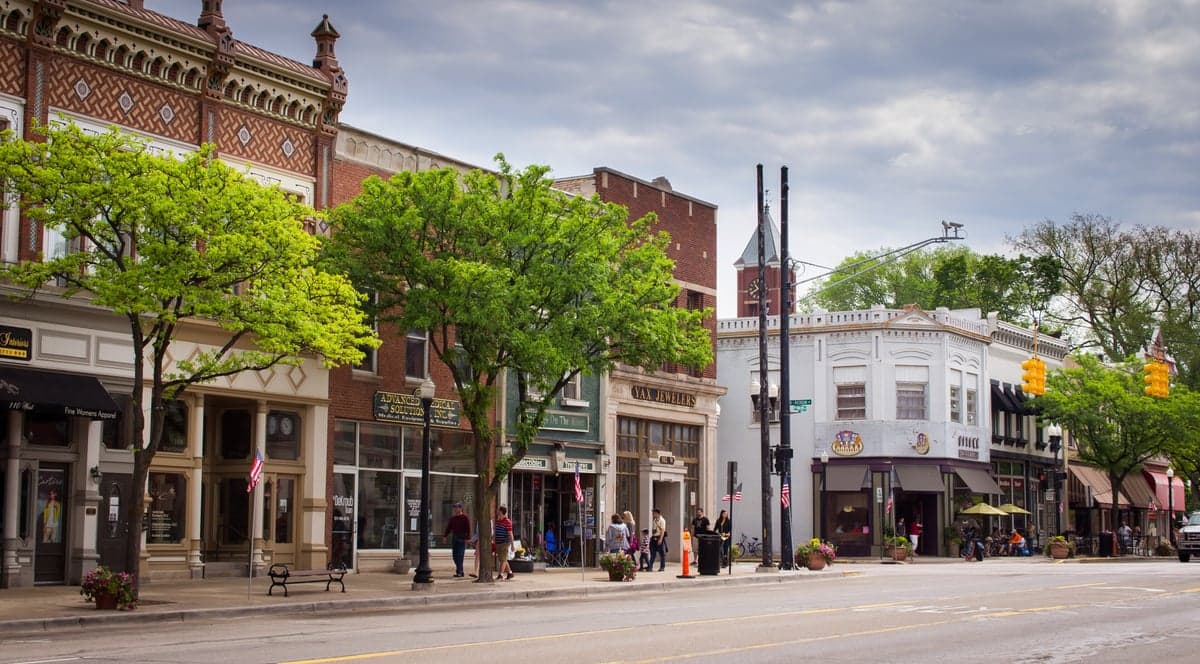
Photo: Wikipedia
Strategic Assessment of Howell, MI
Meaningful friction. Expect exposure to either population pressure, blast zones, or natural disaster risk. Consider buying a retreat property.
What does the Strategic Assessment tell us?
Our Strategic Assessment grades tactical survivability of an area. Major population centers, military targets, fallout zones, natural disasters, and border exposure all drive risk — lower exposure means a more defensible position in a crisis.
This is heavily inspired by Joel Skousen's Strategic Relocation book. Highly recommended you checkout the book ($)What does this tell us?
Our Strategic Assessment grades tactical survivability of an area. Major population centers, military targets, fallout zones, natural disasters, and border exposure all drive risk — lower exposure means a more defensible position in a crisis.
This is heavily inspired by Joel Skousen's Strategic Relocation book. Highly recommended you checkout the book ($)Strategic Pillars

Key Distances
Regional Safe Places
Below is our recommended "safe zones" in Michigan and the surrounding area based on our strategic heuristics. For most people, it's unrealistic to live in a “safe zone” full-time due to work, family or other personal reasons. They tend to be more rural. However, many of these areas are perfect for second homes and retreat properties that double as a vacation home or even a short-term rental.


Important Note: For informational purposes only. This does not mean nothing bad ever happens in the green zones. Please use common sense. This is based on public data and modeled with AI. We tried to take a conservative approach but mistakes happen. We update this regularly as new information becomes available.
Solar Generator Recommendations
Backup power matters more here than in safer locations. We've picked three solar generators across budgets and capacity tiers — start with the budget unit if you only need a few essentials, or step up if you want to run a fridge and HVAC for days at a time.

Jackery Portable Power Station Explorer 300
Budget OptionPower on the Go: Weighing only 11 lbs, it's convenient to set up and store with book-sized foldable solar panels

BLUETTI Portable Power Station AC180
Designed for both indoor and outdoor scenarios, AC180 is highly capable as it has a robost capacity and continuous output power.

EF ECOFLOW DELTA Pro Ultra Power Station
Upgraded PickEcoFlow DELTA Pro Ultra is a whole-home energy system designed to grow with your family. Integrated with the Smart Home Panel 2, it scales to meet your evolving energy needs — keeping your home powered, intelligent, and secure through every stage of life.
We earn a commission, at no additional cost to you.
Strategic Assessment Analysis
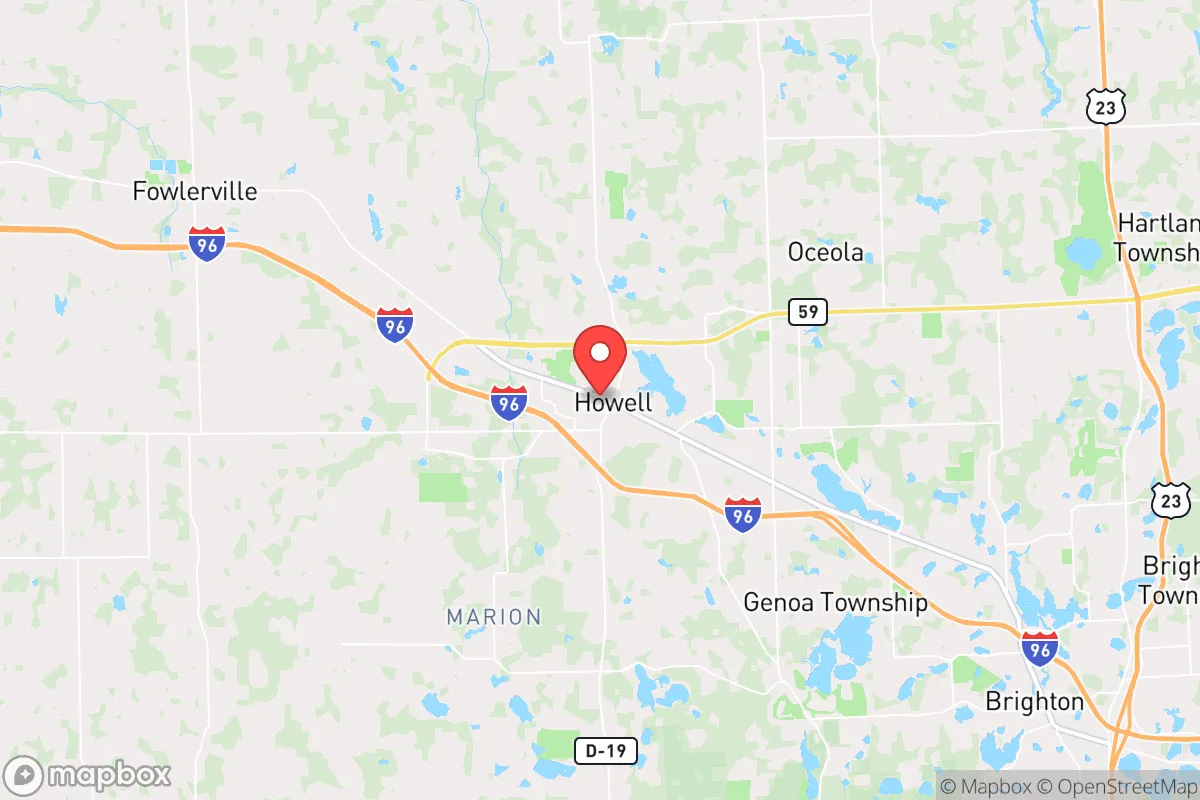
Howell, Michigan, offers a compelling mix of Midwestern stability and strategic positioning that makes it a serious candidate for relocation-minded individuals and families who prioritize resilience. Located in Livingston County, roughly 50 miles northwest of Detroit and 30 miles east of Lansing, Howell sits in a sweet spot: close enough to major employment and medical hubs, yet far enough to avoid the immediate chaos of a major metropolitan collapse. The area’s historical role as a county seat and agricultural center gives it a built-in governance and supply-chain backbone that many bedroom communities lack. For someone thinking about disaster readiness, self-sufficiency, and long-term stability, Howell presents a balanced picture—neither a fortress nor a vulnerability, but a place where practical preparation can go a long way.
Geographic position and natural advantages for long-term stability
Howell’s geography is its strongest card. Livingston County sits on the high ground of the Michigan Basin, with elevations around 900 feet, which means it’s less prone to flooding than areas along the Huron or Grand River corridors. The region is dotted with small lakes, wetlands, and woodlands—Thompson Lake, Lake Chemung, and the surrounding state game areas provide natural water sources and wildlife habitat. The area’s glacial till soils are well-drained and suitable for small-scale agriculture, a key advantage for anyone planning to grow food. The climate is typical of the Lower Peninsula: cold winters with reliable snowfall, moderate summers, and no hurricane, earthquake, or wildfire risk to speak of. Tornadoes are possible but rare; Livingston County averages less than one tornado touchdown per decade. For a relocator, the biggest natural risk is a prolonged winter storm knocking out power, which happens a few times per decade. The surrounding landscape—a mix of farmland, hardwood forests, and low-density residential—offers natural cover and defensibility without feeling isolated. You’re not in the wilderness, but you’re not in a target-rich urban environment either.
Risks, exposures, and proximity to fallout-relevant landmarks
The primary risk for Howell is its proximity to Detroit and Lansing, both of which are significant population centers and potential targets in a major conflict or economic collapse. Detroit is home to the Detroit Metropolitan Airport, the Ambassador Bridge, and the Detroit-Windsor Tunnel—critical infrastructure that could become chokepoints or targets. Lansing houses the state capitol and several large industrial facilities. Howell sits roughly 30 miles from the Lansing city limits and 50 miles from downtown Detroit, placing it within the potential fallout zone of a low-yield nuclear detonation or a major industrial accident. The area also lies within 20 miles of the Enbridge Line 5 pipeline, which runs under the Straits of Mackinac and is a frequent subject of environmental concern. A rupture or sabotage event could disrupt energy supplies across the region. On the plus side, Livingston County has no major military bases, no nuclear power plants (the nearest is Fermi 2 in Monroe County, about 70 miles away), and no major chemical storage facilities. The county’s population density is low—about 200 people per square mile—which reduces the risk of cascading failures from urban unrest or disease spread. For a relocator, the key takeaway is that Howell is not a primary target, but it is within the shadow of two major cities. A solid bug-out plan and a well-stocked pantry are prudent, not paranoid.
Practical resilience for a relocator: food, water, energy, and defensibility
Howell’s practical resilience is above average for a small Midwestern city. The area is surrounded by active farmland—corn, soybeans, and livestock operations are common within a 10-mile radius. The Howell Farmers Market runs from May to October, and several local farms offer CSA shares. For water, the city draws from groundwater wells, and most rural properties rely on private wells, which are less vulnerable to municipal system failures. The Huron River runs through the northern part of the county, and numerous small lakes provide backup sources. Energy is a mixed bag: DTE Energy provides electricity, and outages during storms are common but usually restored within 24 hours. Natural gas is widely available in town, but rural properties often use propane or heating oil. Solar potential is moderate—Michigan averages about 160 sunny days per year, so a solar array with battery storage is feasible but not optimal. Wood heat is a practical backup, and many homes in the area have fireplaces or wood stoves. Defensibility is decent: Howell’s layout is a traditional small-town grid with a compact downtown, surrounded by low-density residential and farmland. The county has a strong law enforcement presence—Livingston County Sheriff’s Office is well-regarded—and a network of volunteer fire departments. The local population is largely conservative, self-reliant, and community-oriented, which fosters a culture of mutual aid. For a relocator, the practical steps are straightforward: secure a property with a well and a wood stove, stockpile food and medical supplies, and build relationships with neighbors. The area’s biggest weakness is its reliance on the regional power grid and the I-96 corridor for supply chains. A prolonged grid-down scenario would require significant local food production and water storage, but the natural resources are there to support it.
Overall, Howell presents a solid strategic option for someone who wants to be within striking distance of urban resources while maintaining a defensible, self-sufficient base. It’s not a remote survivalist retreat—you’ll have neighbors, traffic on I-96, and the occasional Walmart run. But the combination of good soil, ample water, low population density, and a politically stable county government makes it a practical choice for families and individuals who take preparedness seriously. The risks are real but manageable: proximity to Detroit and Lansing means you need a plan for evacuation or shelter-in-place, and the winter climate demands robust energy and heating backups. If you’re looking for a place where you can build a resilient life without going off-grid, Howell is worth a serious look. It’s the kind of town where you can have a garden, a generator, and a good relationship with your neighbors—and that’s a solid foundation for whatever comes next.

* Values derived from national, state, county, city and local statistics and may differ in a specific area. Last updated: 2026-10-05T07:50:30.000Z
Narrative content on this page is AI-generated and may contain mistakes. Verify any details that matter before acting on them.
ReloMaps may earn a commission from affiliate links at no extra cost to you.

