Photo: Wikipedia
Strategic Assessment of Houghton, MI
Workable tactical position. Some exposure to population density or targets, but generally defensible in a crisis.
What does the Strategic Assessment tell us?
Our Strategic Assessment grades tactical survivability of an area. Major population centers, military targets, fallout zones, natural disasters, and border exposure all drive risk — lower exposure means a more defensible position in a crisis.
This is heavily inspired by Joel Skousen's Strategic Relocation book. Highly recommended you checkout the book ($)What does this tell us?
Our Strategic Assessment grades tactical survivability of an area. Major population centers, military targets, fallout zones, natural disasters, and border exposure all drive risk — lower exposure means a more defensible position in a crisis.
This is heavily inspired by Joel Skousen's Strategic Relocation book. Highly recommended you checkout the book ($)Strategic Pillars

Key Distances
Regional Safe Places
Below is our recommended "safe zones" in Michigan and the surrounding area based on our strategic heuristics. For most people, it's unrealistic to live in a “safe zone” full-time due to work, family or other personal reasons. They tend to be more rural. However, many of these areas are perfect for second homes and retreat properties that double as a vacation home or even a short-term rental.


Important Note: For informational purposes only. This does not mean nothing bad ever happens in the green zones. Please use common sense. This is based on public data and modeled with AI. We tried to take a conservative approach but mistakes happen. We update this regularly as new information becomes available.
Solar Generator Recommendations
Backup power matters more here than in safer locations. We've picked three solar generators across budgets and capacity tiers — start with the budget unit if you only need a few essentials, or step up if you want to run a fridge and HVAC for days at a time.

Jackery Portable Power Station Explorer 300
Budget OptionPower on the Go: Weighing only 11 lbs, it's convenient to set up and store with book-sized foldable solar panels

BLUETTI Portable Power Station AC180
Designed for both indoor and outdoor scenarios, AC180 is highly capable as it has a robost capacity and continuous output power.

EF ECOFLOW DELTA Pro Ultra Power Station
Upgraded PickEcoFlow DELTA Pro Ultra is a whole-home energy system designed to grow with your family. Integrated with the Smart Home Panel 2, it scales to meet your evolving energy needs — keeping your home powered, intelligent, and secure through every stage of life.
We earn a commission, at no additional cost to you.
Strategic Assessment Analysis
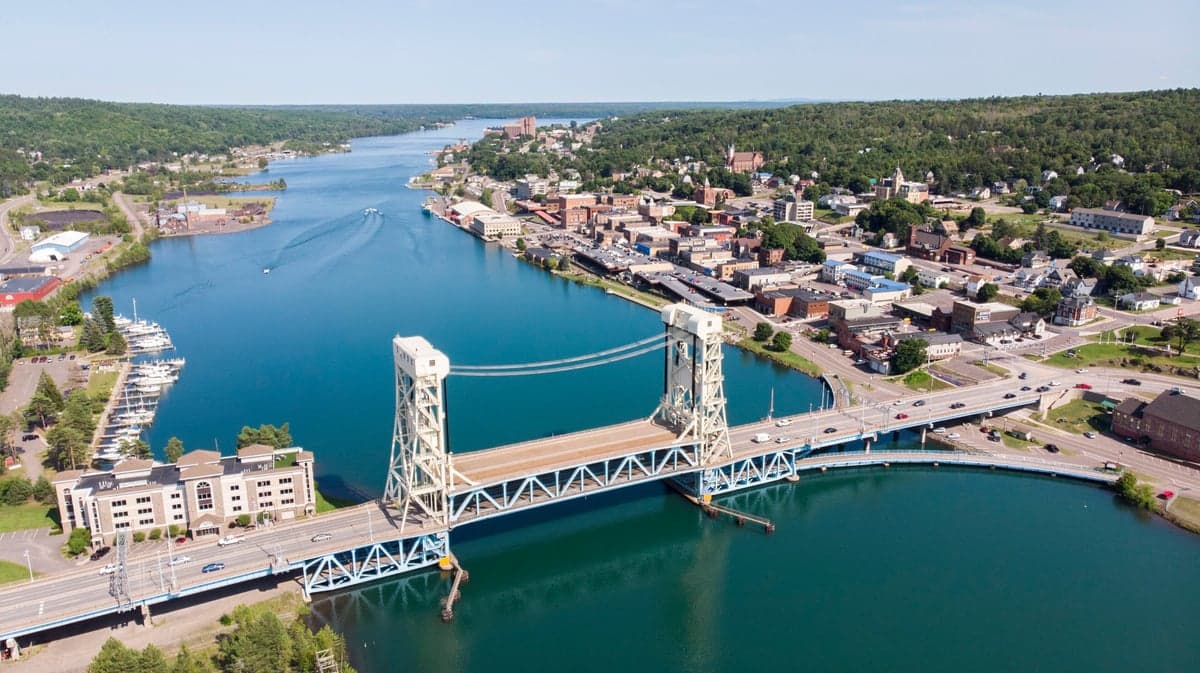
Houghton, Michigan, offers a compelling mix of geographic isolation and practical self-sufficiency that makes it a serious contender for those prioritizing disaster resilience and long-term preparedness. Situated deep in the Upper Peninsula on the Keweenaw Peninsula, this former copper mining hub of roughly 8,000 residents (with about 7,000 more in neighboring Hancock) sits far from major population centers and the fallout risks they carry. Its location on the south shore of Lake Superior, combined with a history of harsh winters and a culture of self-reliance, provides a foundation for strategic relocation that few other U.S. towns can match.
Geographic position and natural advantages for long-term security
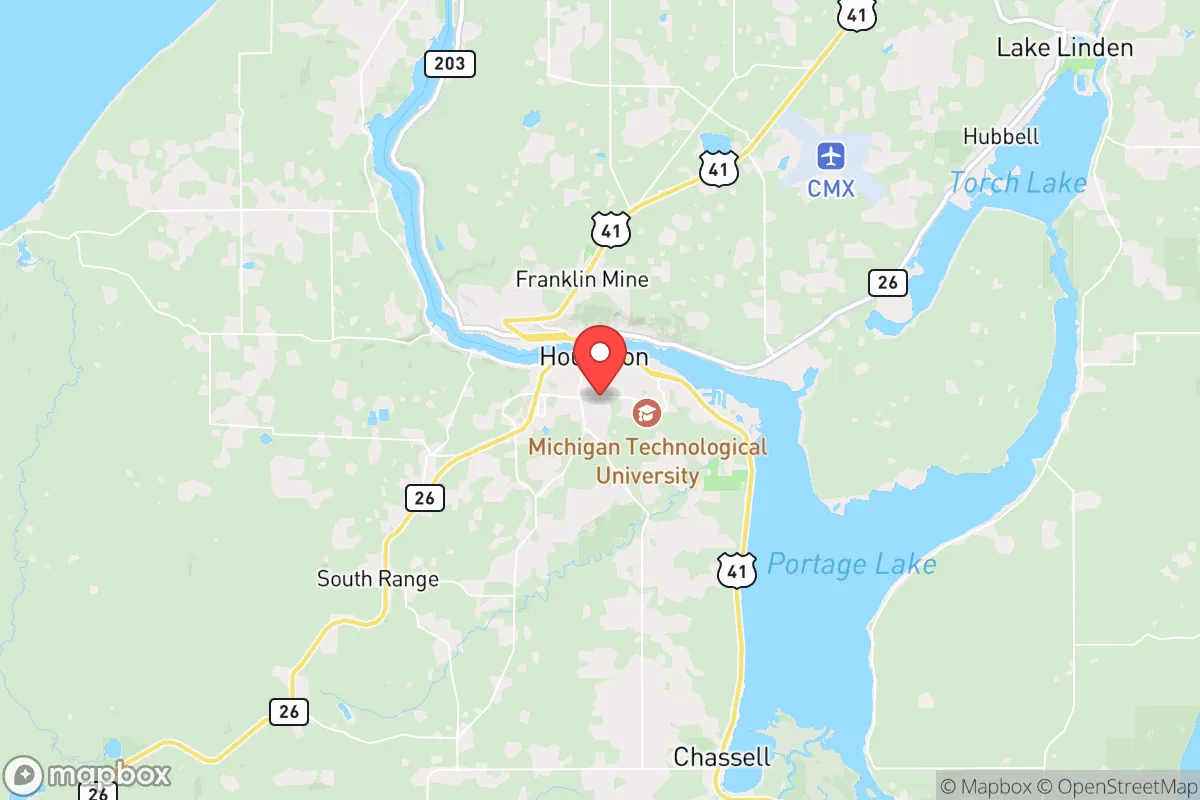
Houghton’s primary strategic asset is its remoteness. The nearest city of any significant size is Marquette, about 100 miles east, while Green Bay, Wisconsin, lies roughly 200 miles south. This distance from major metropolitan areas—Detroit is over 400 miles away—dramatically reduces exposure to the cascading effects of urban collapse, whether from economic disruption, civil unrest, or a nuclear event. The Keweenaw Peninsula itself is a natural fortress: bounded by Lake Superior on three sides, it has only a narrow land connection to the rest of the Upper Peninsula, making it inherently defensible against large-scale movement of people or goods. The region’s rugged, forested terrain, with elevations reaching 1,500 feet, offers numerous secluded valleys and lakefront properties that are difficult to access without local knowledge. For a relocator, this means a lower probability of refugee flows or supply chain interruptions compared to areas near interstate corridors or major cities.
Risks, exposures, and proximity to fallout-relevant landmarks
While Houghton’s isolation is a strength, it is not without vulnerabilities. The area’s primary natural risk is extreme winter weather: average snowfall exceeds 200 inches annually, and temperatures can drop below -20°F. This demands robust heating, snow removal equipment, and a home built for deep cold—a challenge for those unprepared. Flooding from spring snowmelt or heavy rain is a secondary concern, particularly in low-lying areas near the Portage Lake Canal. Man-made risks are minimal. The nearest nuclear power plant is the Palisades plant near South Haven, Michigan, over 350 miles south, and no major military installations or strategic targets exist within 200 miles. The closest potential fallout-relevant landmarks are the Soo Locks at Sault Ste. Marie (about 150 miles east), which could be a target in a conflict, but prevailing winds from the west would carry fallout away from Houghton. The region’s historical copper mines, now largely inactive, pose no radiological or chemical hazard. Overall, Houghton’s exposure to catastrophic events is low, with winter weather being the most consistent threat.
Practical resilience for a relocator: food, water, energy, and defensibility
For someone serious about self-sufficiency, Houghton’s practical resilience is strong but requires upfront investment. Water is abundant: Lake Superior provides an essentially unlimited supply of fresh water, though it requires treatment or boiling for safe drinking. Many homes have private wells, and the region’s high water table means shallow wells are viable. Food production is challenging but possible. The growing season is short—roughly 90 to 110 frost-free days—and the soil is sandy and acidic, typical of boreal forests. However, cold-hardy crops like potatoes, kale, carrots, and root vegetables thrive, and the area has a strong tradition of hunting (deer, bear, small game) and fishing (lake trout, whitefish, walleye). Local food networks exist through farmers’ markets in Houghton and Hancock, and the Michigan Tech University campus has a small agricultural research program. Energy resilience is a mixed picture. The grid is served by Upper Peninsula Power Company, which relies on a mix of natural gas, coal, and hydroelectricity from the nearby Jacobsville and Victoria dams. Power outages are common during winter storms, often lasting 12–48 hours, so a backup generator or solar array with battery storage is essential. Wood heating is widespread, with abundant firewood available on public lands (Houghton County is 70% forested). Defensibility is excellent. The Keweenaw’s geography—a peninsula with limited road access—means that a small, organized community could effectively control entry points. The main routes are US-41 and M-26, both two-lane roads that can be monitored or blocked. The area’s low population density (roughly 25 people per square mile in Houghton County) reduces competition for resources, and the culture of mutual aid among locals—rooted in mining and maritime traditions—fosters community resilience. For a relocator, the key is to arrive with skills: carpentry, mechanical repair, and food preservation are more valuable here than in suburban settings.
In the overall strategic picture, Houghton represents a high-reward, moderate-effort relocation for those prioritizing disaster readiness. Its isolation from major cities and fallout dangers, combined with abundant water and defensible terrain, makes it one of the most secure locations in the Midwest. The trade-offs are real: a harsh climate, limited economic opportunities outside of Michigan Technological University and healthcare, and a need for significant self-reliance in energy and food production. For a single individual or family willing to adapt to the cold and invest in infrastructure—a wood stove, a well, a greenhouse, and a 4WD vehicle—Houghton offers a realistic path to long-term security that few other places can match. It is not a bug-out location; it is a place to build a life that is inherently resilient by design.

* Values derived from national, state, county, city and local statistics and may differ in a specific area. Last updated: 2026-06-16T09:27:26.000Z
Narrative content on this page is AI-generated and may contain mistakes. Verify any details that matter before acting on them.
ReloMaps may earn a commission from affiliate links at no extra cost to you.

