 Popular
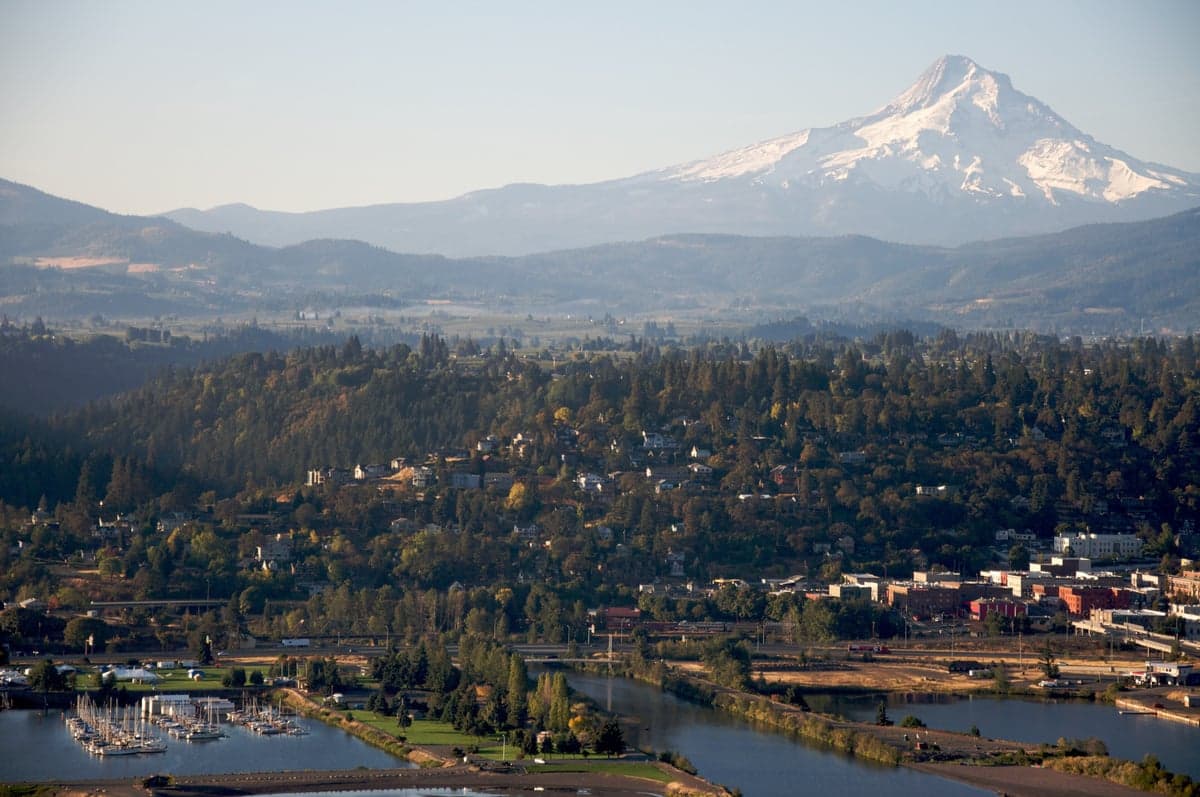
Photo: Wikipedia
Political ClimatePolitical Climate in Hood River, OR
District shown is the primary district for this city’s centroid. Cities may span multiple districts.
Local Political AnalysisPolitical Analysis of Hood River, OR
Hood River is about as blue as it gets in Oregon, with a Cook PVI of D+24 that puts it far to the left of the state as a whole (D+8). That’s not just a number on a map—it’s a lived reality shaped by decades of in-migration from Portland and California, a strong outdoor recreation economy, and a local culture that prizes environmentalism and progressive social values. The shift has been steady: twenty years ago, this was a more mixed agricultural and timber town; now, the county commission, school board, and city council are all reliably Democratic, and Republican candidates rarely crack 35% in local races. The trajectory is only getting bluer, especially as housing costs push younger, left-leaning professionals into the area.
How it compares
Compared to Oregon as a whole, Hood River is a political outlier. The state’s D+8 PVI already leans Democratic, but that average hides a deeply divided geography: rural eastern Oregon votes like Idaho, while the Willamette Valley and Portland metro drive the blue numbers. Hood River sits right on that fault line. Drive 20 minutes east to The Dalles (Wasco County) and you’ll find a more moderate-to-conservative electorate—Trump won Wasco by about 4 points in 2020. Head south to the orchards of Parkdale or the unincorporated areas of Hood River County, and you’ll still see Trump signs on farmhouses. But inside the city limits and the waterfront neighborhoods, it’s a different world: Biden won Hood River County by 38 points in 2020, and local races are often decided in the Democratic primary. The contrast with nearby towns like Cascade Locks (more working-class, slightly less blue) or Mosier (tiny but very progressive) reinforces the sense that Hood River is a progressive island in a region that’s politically mixed.
What this means for residents
For liberal residents, the political climate is comfortable and affirming. Local government is responsive on climate action, affordable housing (though progress is slow), and social equity initiatives. You’ll find strong support for public transit, bike infrastructure, and land-use restrictions that protect farmland and viewsheds. For conservative residents, life is more about accommodation. You can still own guns, run a farm, or attend a conservative church without hassle, but you’ll rarely see your values reflected in city council decisions or school curriculum. The local Republican Party is small and often frustrated, but not hostile—most political disagreements play out in letters to the editor and neighborhood Facebook groups rather than shouting matches. The practical effect is that conservatives here tend to keep their politics private, especially in social or professional settings tied to the tourism and outdoor industries, which lean heavily progressive.
Culturally, the biggest distinction between Hood River and the rest of Oregon is the intensity of its environmental politics. The city has banned new gas stations, pushed for 100% renewable electricity, and fought hard to limit development on the waterfront. That’s more aggressive than what you’ll find in most of the state, even in Portland. On the flip side, the local economy’s dependence on agriculture—especially fruit orchards that rely on H-2A labor—creates a pragmatic, pro-immigration stance that crosses party lines. Most residents, regardless of party, support the local farm workforce, which softens some of the usual immigration debates. Looking ahead, the political trajectory seems set: Hood River will keep getting bluer as housing pressures push out lower-income and older residents, but the rural-urban split within the county will keep things interesting. If you’re moving here, expect a place where progressive values dominate public life, but where the surrounding landscape—both literal and political—remains more complicated than the PVI suggests.

State Political ClimatePolitical Climate in Oregon
State Political AnalysisPolitical Environment in the State
Oregon is a reliably Democratic state at the presidential level, with a Cook PVI of D+8, but that number hides a deeply fractured political reality. The state hasn’t voted for a Republican presidential candidate since 1984, yet it’s home to some of the most intense urban-rural conflict in the country, with a strong libertarian streak that complicates the simple "blue state" label. Over the last 20 years, the Democratic lean has hardened in the Portland metro area and the Willamette Valley, while the rest of the state has swung hard right, creating a political landscape that feels like two different countries sharing a border.
Urban vs. rural divide
The political map of Oregon is a study in extremes. The Portland metro area — Multnomah, Washington, and Clackamas counties — generates roughly half the state’s population and votes overwhelmingly Democratic. In 2024, Multnomah County gave Biden 78% of the vote, while rural counties like Grant, Harney, and Lake delivered 75-80% for Trump. The divide isn’t just about Portland; Eugene (Lane County) and Bend (Deschutes County) are also blue-leaning college and recreation towns, but their surrounding rural areas are deep red. The I-5 corridor from Portland down to Medford is the Democratic spine, while everything east of the Cascades — plus the coastal counties like Curry and Coos — is solidly Republican. The only recent flip worth noting is Deschutes County (Bend), which went from reliably red to a competitive swing county in the last two cycles, driven by an influx of out-of-state remote workers and retirees.
Policy environment
Oregon’s policy environment is a mix of progressive ambition and practical constraints. There is no state sales tax, which is a major draw for conservatives, but income taxes are among the highest in the nation — the top marginal rate hits 9.9% for individuals earning over $125,000. Property taxes are capped by Measure 50 (1997), so they’re moderate compared to states like Texas. The regulatory posture is generally business-friendly in name but heavy in practice, especially on land use — Oregon’s Urban Growth Boundary system, unique in the U.S., restricts sprawl and drives up housing costs in metro areas. Education policy is mixed: per-pupil spending is above average, but graduation rates and test scores lag behind national medians. Healthcare is dominated by the Oregon Health Plan, the state’s Medicaid expansion, which covers about one in four residents. Election laws are among the most accessible in the country — automatic voter registration, same-day registration, and vote-by-mail (since 1998) are the norm. Ballot access is easy, and initiatives are a major force in state politics.
Recent policy direction
Oregon’s recent legislative direction has been a rollercoaster, with a clear progressive tilt that has sparked backlash. On gun and self-defense law, Measure 114 (passed 2022) requires a permit to purchase a firearm and bans magazines over 10 rounds, but it’s been tied up in court and not fully enforced. Parental and education rights saw a flashpoint in 2023 when the state passed a law requiring school districts to allow students to use preferred names and pronouns without parental notification — a major issue for conservative families. Speech and privacy are generally protected under the state constitution, but there’s been tension around public records and surveillance, particularly with Portland’s police reforms. Medical and bodily autonomy is strongly protected: Oregon was the first state to decriminalize possession of small amounts of all drugs (Measure 110, 2020), though that law was partially rolled back in 2024 due to overdose crises. Abortion and gender-affirming care are fully legal and protected by state law. Property rights are constrained by the land-use system, which can frustrate rural landowners. Taxation remains high, with no signs of a sales tax being adopted. Voting and ballot access are expansive, but conservatives have raised concerns about ballot security in the vote-by-mail system, though no major fraud has been proven.
Civil unrest & political movements
Oregon has a long history of civil unrest, from the 2020 Portland protests (which lasted for months and drew national attention) to the Malheur National Wildlife Refuge occupation in 2016, a standoff led by armed activists protesting federal land management. The sanctuary state law (1987) prohibits state and local law enforcement from using resources to enforce federal immigration law, making Oregon a flashpoint in immigration politics. The Pacific Northwest secession movement — the idea of forming a "Cascadia" nation — has a small but vocal following, though it’s more cultural than political. Election integrity controversies have been relatively muted compared to other states, but rural counties have passed resolutions calling for audits or expressing no confidence in the vote-by-mail system. A new resident would notice the stark political signage: in Portland, you’ll see "Defund Police" and "Free Palestine" signs; in Grants Pass or Klamath Falls, it’s "Trump 2024" and "Don’t California My Oregon." The divide is visible and real.
Projection
Over the next 5-10 years, Oregon’s political trajectory points toward continued polarization, with a few key shifts. The Portland metro area will likely stay deeply blue, but in-migration from California (which has slowed but not stopped) is pushing Bend and the Willamette Valley suburbs further left. Meanwhile, rural counties are aging and losing population, which could deepen their Republican margins but reduce their statewide influence. The wild card is housing: if the state fails to build enough homes, the cost of living could drive out the very voters who make Oregon blue, potentially creating a more competitive environment. The Democratic supermajority in the legislature is fragile — a few seats could flip in a bad cycle. Expect more fights over land use, drug policy, and education. For a conservative relocator, the state will remain a tough sell politically, but the lack of sales tax, the natural beauty, and the strong property rights protections in rural areas will continue to draw people willing to accept the trade-offs.
For a new resident, the bottom line is this: Oregon is a blue state with a red hinterland, and your experience will depend almost entirely on where you land. If you’re conservative, you’ll find like-minded communities in Central Oregon (outside Bend), the Rogue Valley (Medford, Grants Pass), and the eastern counties, but you’ll be voting in a state where your presidential vote doesn’t matter and your state legislature is controlled by the other side. If you’re liberal, you’ll feel at home in Portland, Eugene, or Corvallis, but you’ll face high taxes and a housing crisis. The practical takeaway: visit the specific city you’re considering, talk to locals, and understand that Oregon’s politics are as diverse as its geography. It’s not a place for someone who wants a uniform political experience — it’s a place for people who can handle living in a state that’s constantly arguing with itself.
* Values derived from national, state, county, city and local statistics and may differ in a specific area. Last updated: 2026-08-15T00:43:48.000Z
Narrative content on this page is AI-generated and may contain mistakes. Verify any details that matter before acting on them.
ReloMaps may earn a commission from affiliate links at no extra cost to you.

