 Popular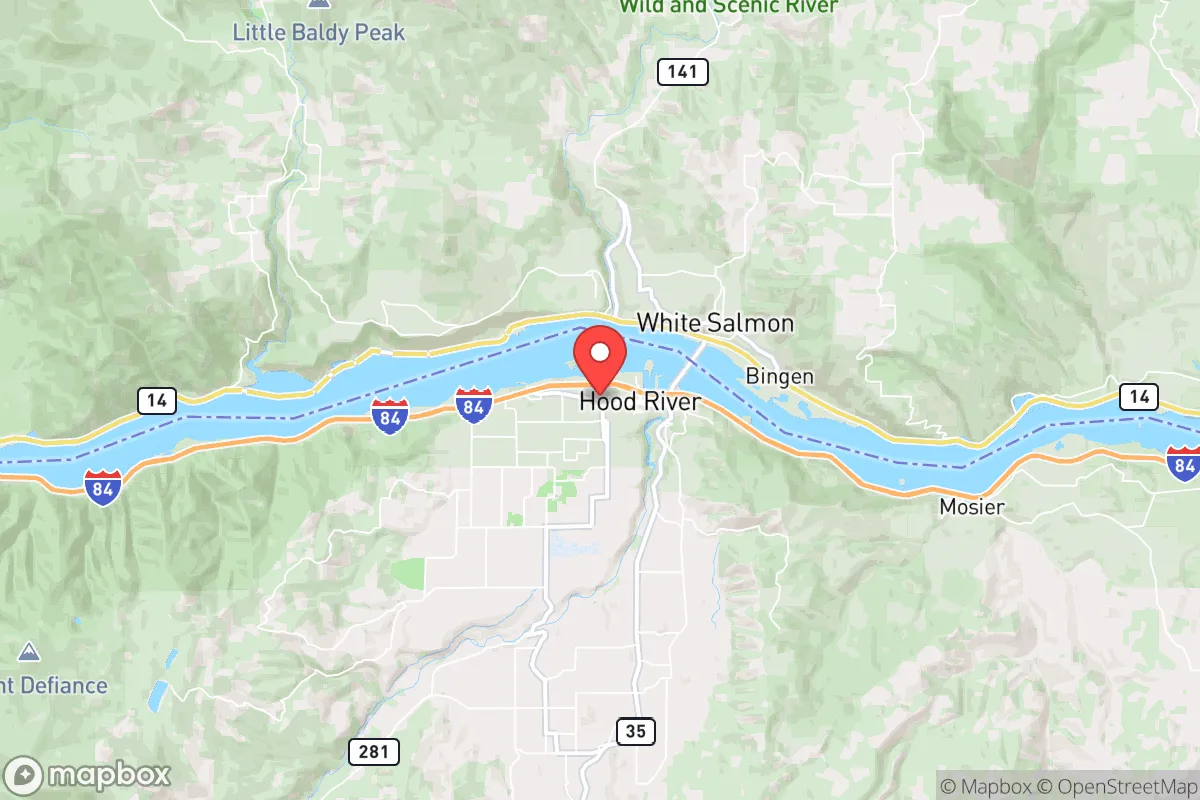
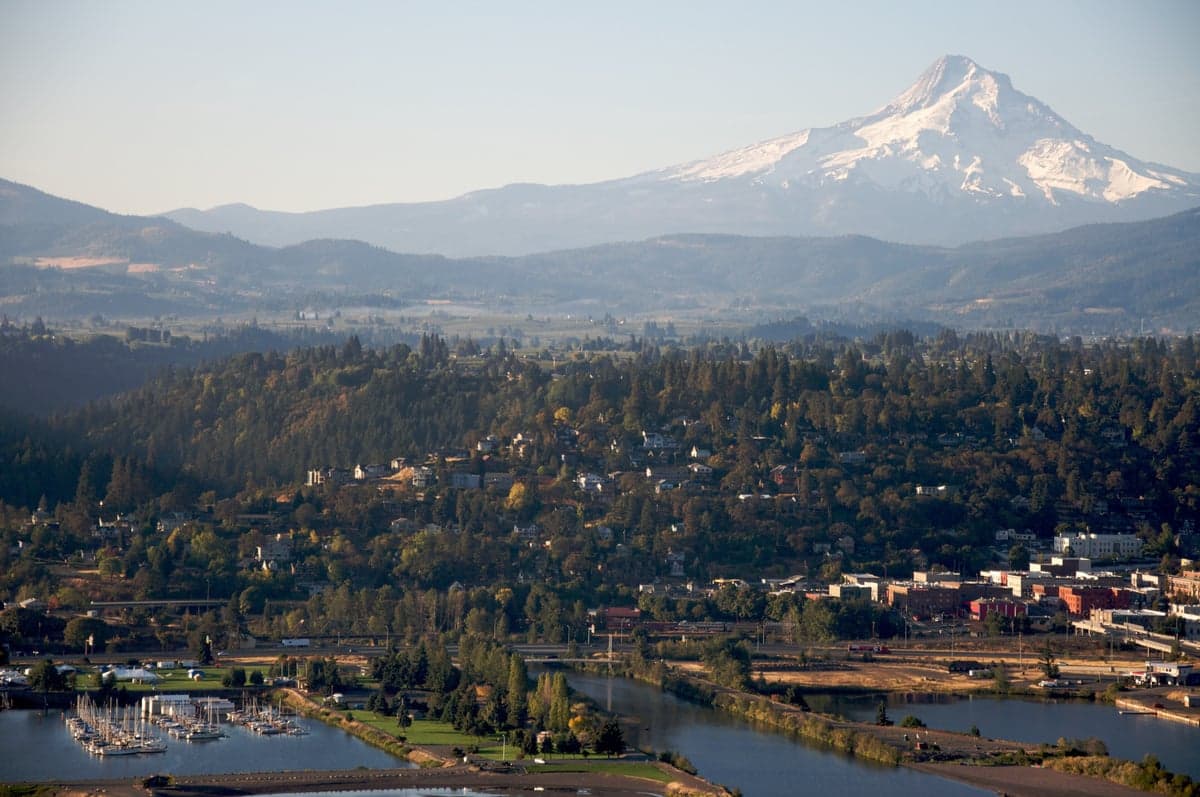
Photo: Wikipedia
Strategic Assessment of Hood River, OR
Workable tactical position. Some exposure to population density or targets, but generally defensible in a crisis.
What does the Strategic Assessment tell us?
Our Strategic Assessment grades tactical survivability of an area. Major population centers, military targets, fallout zones, natural disasters, and border exposure all drive risk — lower exposure means a more defensible position in a crisis.
This is heavily inspired by Joel Skousen's Strategic Relocation book. Highly recommended you checkout the book ($)What does this tell us?
Our Strategic Assessment grades tactical survivability of an area. Major population centers, military targets, fallout zones, natural disasters, and border exposure all drive risk — lower exposure means a more defensible position in a crisis.
This is heavily inspired by Joel Skousen's Strategic Relocation book. Highly recommended you checkout the book ($)Strategic Pillars

Key Distances
Regional Safe Places
Below is our recommended "safe zones" in Oregon and the surrounding area based on our strategic heuristics. For most people, it's unrealistic to live in a “safe zone” full-time due to work, family or other personal reasons. They tend to be more rural. However, many of these areas are perfect for second homes and retreat properties that double as a vacation home or even a short-term rental.


Important Note: For informational purposes only. This does not mean nothing bad ever happens in the green zones. Please use common sense. This is based on public data and modeled with AI. We tried to take a conservative approach but mistakes happen. We update this regularly as new information becomes available.
Solar Generator Recommendations
Backup power matters more here than in safer locations. We've picked three solar generators across budgets and capacity tiers — start with the budget unit if you only need a few essentials, or step up if you want to run a fridge and HVAC for days at a time.

Jackery Portable Power Station Explorer 300
Budget OptionPower on the Go: Weighing only 11 lbs, it's convenient to set up and store with book-sized foldable solar panels

BLUETTI Portable Power Station AC180
Designed for both indoor and outdoor scenarios, AC180 is highly capable as it has a robost capacity and continuous output power.

EF ECOFLOW DELTA Pro Ultra Power Station
Upgraded PickEcoFlow DELTA Pro Ultra is a whole-home energy system designed to grow with your family. Integrated with the Smart Home Panel 2, it scales to meet your evolving energy needs — keeping your home powered, intelligent, and secure through every stage of life.
We earn a commission, at no additional cost to you.
Strategic Assessment Analysis
Hood River, Oregon, occupies a unique strategic position in the Columbia River Gorge that offers a blend of natural defensibility and access to critical resources, but it also sits within a zone of significant risk from both natural disasters and man-made threats. For a relocator prioritizing resilience and self-sufficiency, the area presents a mixed picture: strong local food and water assets are offset by exposure to seismic hazards, wildfire corridors, and proximity to high-value infrastructure targets. This assessment examines Hood River’s geographic advantages, its exposure to risks, and the practical resilience factors that matter most for a conservative-leaning audience thinking seriously about preparedness.
Geographic position and natural advantages for self-sufficiency
Hood River’s location at the confluence of the Columbia and Hood Rivers, nestled against the Cascade Range, provides several structural advantages for long-term resilience. The city sits in a narrow valley flanked by steep forested slopes to the south and the Columbia River to the north, creating a natural funnel that limits approach routes—only two major highways (I-84 and OR-35) serve the area, which can be a defensive asset in a grid-down scenario. The surrounding terrain offers abundant timber for fuel and construction, and the Columbia River Gorge acts as a wind corridor, making small-scale wind generation viable for off-grid setups. The area’s volcanic soils support intensive agriculture, and the Hood River Valley is already a major producer of pears, apples, and cherries, with over 300 farms within a 20-mile radius. This agricultural base means that even in a supply-chain disruption, local food production could sustain a reduced population for weeks, though not indefinitely without inputs. The city’s elevation (roughly 500 feet at the river, rising to 1,000+ feet in the hills) provides some protection from coastal storm surges and tsunami risks, which are irrelevant here, but the real advantage is water: the Columbia River is a massive, year-round freshwater source, and the Hood River itself is fed by snowmelt from Mount Hood, offering reliable surface water for drinking and irrigation even during drought years.
Risks, exposures, and proximity to fallout-relevant landmarks
The most serious risk in Hood River is seismic. The city lies within the Cascadia Subduction Zone’s impact area, and a magnitude 9.0 earthquake would likely cause widespread liquefaction in the river valley, collapse of unreinforced masonry buildings (common in the historic downtown), and landslides on the steep slopes above town. The Columbia River Gorge is also a known tsunami hazard zone for riverine seiches—wave surges that can travel upstream—though the main tsunami threat from a Cascadia quake would hit the coast, not Hood River. Wildfire is a growing concern: the 2017 Eagle Creek Fire burned 48,000 acres just 10 miles east of town, and the surrounding national forests (Mount Hood, Gifford Pinchot) are increasingly dry, with fire seasons lengthening. The city’s location in a narrow canyon can trap smoke and limit evacuation routes if both I-84 and OR-35 are blocked. From a man-made risk perspective, Hood River’s proximity to Portland (60 miles west) and the Hanford Nuclear Reservation (120 miles east) is a double-edged sword. Hanford, a decommissioned nuclear weapons production site, contains 56 million gallons of radioactive waste in aging tanks; a major earthquake or terrorist attack could release a plume that, depending on wind direction, would travel directly through the Gorge. Portland, as a major population center and transportation hub, is a plausible target for EMP or cyberattacks that could cascade into the Gorge. The Bonneville Dam, just 5 miles west of Hood River, is a critical infrastructure node—its destruction (by earthquake or sabotage) would knock out power to much of the Pacific Northwest and could cause catastrophic flooding downstream. For a relocator, these factors mean that Hood River is not a remote, low-risk sanctuary; it is a corridor city with concentrated vulnerabilities.
Practical resilience for a relocator: food, water, energy, and defensibility
On the positive side, Hood River’s practical resilience is above average for a town of its size (roughly 8,000 residents, 25,000 in the county). The local food system is robust: the Hood River Farmers Market operates year-round, and the valley’s orchards and vineyards mean fresh produce is available for at least six months of the year. The Columbia River provides an essentially unlimited water supply, but treatment infrastructure is centralized and vulnerable to power loss; a well with a hand pump or a gravity-fed cistern would be a wise investment for anyone serious about self-sufficiency. The city’s energy grid is tied to Bonneville Power Administration hydroelectricity, which is relatively stable but not immune to cascading failures—the 2021 ice storm knocked out power to 40,000 homes in the Gorge for up to 10 days. Solar potential is moderate (the Gorge is often cloudy in winter), but micro-hydro from the many creeks draining Mount Hood is a viable off-grid option for properties with year-round flow. Defensibility is mixed: the limited road access (I-84 and OR-35) makes it easy to monitor and control entry points, but also means that a single landslide or bridge failure could isolate the town. The surrounding forest provides cover and resources, but also fuel for wildfire. The local population skews liberal and affluent, which may not align with a conservative relocator’s social preferences, but the area has a strong culture of outdoor skills, hunting, and fishing—the Hood River Valley is a prime steelhead and salmon fishery, and deer and elk are abundant in the national forests. Gun ownership is common, and the county sheriff’s office is generally supportive of Second Amendment rights, though Oregon’s Measure 114 (permitting and magazine restrictions) is in legal limbo as of 2026. For a family, the school system (Hood River County School District) is adequate but not exceptional, and the nearest trauma center is in Portland, 60 miles away—a serious consideration for medical emergencies in a disaster scenario.
The overall strategic picture for Hood River is one of calculated trade-offs. It offers genuine advantages in water, local food, and natural barriers that many inland towns lack, but it is not a remote bunker location. The risks from Cascadia earthquakes, wildfire, and proximity to Hanford and Portland are real and should be factored into any relocation decision. For a relocator willing to invest in seismic retrofitting, off-grid power and water systems, and a well-stocked pantry, Hood River can be a viable base for resilience. But it requires active preparation, not passive assumption of safety. The Gorge is a beautiful, productive corridor—but corridors are also conduits for danger. Treat it as a forward operating base, not a final redoubt, and you will be better positioned to handle what comes.

* Values derived from national, state, county, city and local statistics and may differ in a specific area. Last updated: 2026-08-15T00:43:48.000Z
Narrative content on this page is AI-generated and may contain mistakes. Verify any details that matter before acting on them.
ReloMaps may earn a commission from affiliate links at no extra cost to you.

