
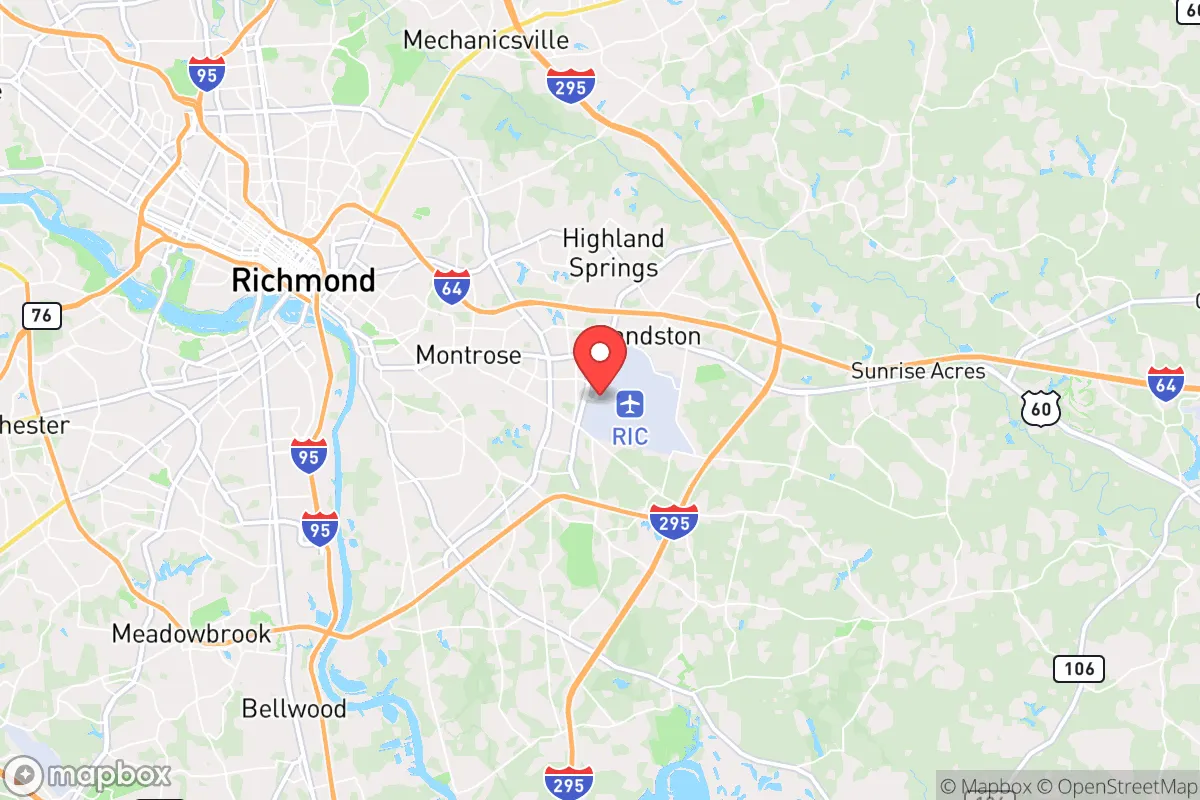
Photo by Matthew Lancaster on Unsplash
Political ClimatePolitical Climate in Henrico, VA
District shown is the primary district for this city’s centroid. Cities may span multiple districts.
Inherited from parent state — no local data available.
Local Political AnalysisPolitical Analysis of Henrico, VA
Henrico County has become one of the most reliably Democratic strongholds in Virginia, carrying a Cook Partisan Voting Index (PVI) of D+17. That’s a far cry from the county’s competitive past—as recently as the early 2000s, Henrico was a classic swing suburb that could go either way in a statewide race. The shift has been steady and demographic-driven, fueled by the growth of the Richmond metro area, an influx of younger and more diverse residents, and the professionalization of the local workforce. In the 2024 presidential election, Henrico voted for the Democratic candidate by a margin that mirrored its PVI, while the rest of Virginia—which sits at D+4 overall—was far more divided, with rural and exurban areas pulling the state toward the center.
How it compares
Henrico’s D+17 rating makes it significantly more liberal than Virginia as a whole (D+4). To put that in perspective, neighboring Chesterfield County leans Republican (roughly R+10), and Hanover County to the north is solidly red (R+20). Go west to Goochland or Louisa, and you’re in deep-red territory. Henrico is the progressive anchor of the Richmond region, alongside the city of Richmond itself (D+30). The contrast is stark: drive 15 minutes west from Henrico’s West End into Goochland, and the campaign signs, yard flags, and local political conversations shift dramatically. The county’s trajectory has been toward the left for over a decade, and there’s no sign of reversal—population growth continues to favor the urban-core suburbs that lean Democratic.
What this means for residents
For liberal residents, Henrico feels like a comfortable place to live. Local elections are dominated by Democrats, county policies reflect progressive priorities—such as investments in public transit, affordable housing initiatives, and diversity programs—and there’s a general sense that the county government aligns with their values. For conservative residents, the picture is more mixed. They are a clear minority in countywide elections, but they still hold influence in specific districts, particularly in the far western and northern parts of the county. Many longtime conservative families have adapted by focusing on local school board races or civic associations, where individual relationships still matter more than party labels. The practical reality is that Henrico is not a place where conservatives feel silenced, but they do feel outnumbered. The county’s politics are not radical—it’s a mainstream, professional-class Democratic suburb, not a progressive activist hub like parts of Arlington or Alexandria.
One cultural distinction worth noting: Henrico’s Democratic lean is more moderate than Richmond’s. The county has a strong tradition of fiscal conservatism on local issues, even as it votes blue in national races. Property tax rates are relatively low for the region, and the county has maintained a AAA bond rating for decades. That blend—socially liberal, fiscally pragmatic—is what makes Henrico feel different from both the deep-red counties to its west and the more activist-left city to its south. Looking ahead, the county will likely continue its leftward drift as new development brings in more residents from out of state, but it will remain a place where the political temperature is warm, not boiling.

State Political ClimatePolitical Climate in Virginia
State Political AnalysisPolitical Environment in the State
Virginia has shifted from a reliably purple swing state to a solidly Democratic-leaning one over the past two decades, carrying a Cook Partisan Voting Index of D+4. The transformation is driven almost entirely by explosive population growth in the Washington, D.C. suburbs, which now overwhelm the conservative lean of the rest of the state. For a conservative relocator, this means the state-level political environment is increasingly hostile to their views, but the experience on the ground varies dramatically depending on whether you land in Loudoun County or Lynchburg.
Urban vs. rural divide
The political map of Virginia is a tale of two commonwealths. The urban crescent—Northern Virginia, Richmond, and Hampton Roads—generates the vast majority of the state's Democratic votes. Fairfax County alone, with over 1.1 million residents, delivers a net Democratic margin larger than the entire population of many rural counties. The D.C. suburbs of Loudoun, Prince William, and Arlington counties have flipped from red to deep blue since 2008, driven by highly educated, affluent professionals who work in federal government and tech. Meanwhile, Richmond and Norfolk anchor Democratic strongholds in central and coastal Virginia. Outside this crescent, the political landscape is deeply conservative. Southwest Virginia, from Roanoke to Bristol, votes Republican by margins of 60-70% in statewide races. The Shenandoah Valley counties like Rockingham and Augusta are reliably red. The real battlegrounds have shrunk to a handful of suburban and exurban counties—Chesterfield, Hanover, and Spotsylvania—where Republicans still compete but are losing ground as D.C.-area commuters push further out. The 2021 gubernatorial election saw Republican Glenn Youngkin win by flipping some of these exurban areas back, but the underlying demographic trend favors Democrats as the suburbs continue to densify and diversify.
Policy environment
Virginia's policy landscape reflects its divided government and recent Democratic dominance. The state income tax is a flat 5.75% on taxable income, with a standard deduction that has been rising. Sales tax is 5.3% (plus local add-ons), and groceries are exempt. Property taxes are set locally and vary widely—Loudoun County has some of the highest rates in the state, while Pittsylvania County is much lower. The regulatory posture is moderate overall, but recent Democratic control has shifted it leftward. Education policy has been a flashpoint: Governor Youngkin's administration pushed for "parents' rights" and eliminated the use of critical race theory in K-12 curriculum standards, but the Democratic-controlled Senate blocked many of his appointments and legislative priorities. Virginia has some of the most restrictive gun laws in the South, including a one-handgun-per-month limit, universal background checks, and a "red flag" law passed in 2020. Election laws are relatively accessible: no-excuse absentee voting, same-day voter registration, and early voting are all in place. The state has a right-to-work law, which keeps union influence limited, but Democrats have pushed to repeal it. Healthcare policy leans expansionist: Virginia expanded Medicaid under the Affordable Care Act in 2019, covering roughly 400,000 additional residents.
Recent policy direction
The last five years have seen Virginia swing hard on several fronts. In 2020, the Democratic-controlled General Assembly passed a sweeping package of gun control measures, including the red flag law, universal background checks, and a ban on assault weapons (though the ban was later struck down by a court). On education, the 2021 election of Glenn Youngkin as governor was a direct backlash to COVID school closures and critical race theory debates; his administration issued executive orders banning mask mandates and requiring parental notification of "sexually explicit" content in school libraries. On bodily autonomy, Virginia has become a safe haven for abortion access in the South, with no gestational ban in place and state funding for abortion services. The 2024 legislative session saw Democrats pass a constitutional amendment to enshrine abortion rights, which will go to voters in 2026. On property rights, Virginia has no statewide rent control, but localities in Northern Virginia have imposed their own. On privacy and surveillance, the state passed the Virginia Consumer Data Protection Act in 2021, one of the strongest state-level privacy laws in the country. On voting, the state has moved toward easier access: automatic voter registration, no-excuse absentee voting, and expanded early voting are all now law. For a conservative relocator, the direction is clear: the state is moving left on guns, abortion, and education, while remaining moderate on taxes and regulation.
Civil unrest & political movements
Virginia has been a flashpoint for political conflict. The 2017 "Unite the Right" rally in Charlottesville remains the most infamous event, resulting in the death of a counter-protester and a national reckoning over white nationalism. The city has since removed its Confederate statues, but the trauma lingers. In 2020, Richmond saw massive protests following George Floyd's death, with demonstrators clashing with police and toppling Confederate monuments on Monument Avenue. The city's Robert E. Lee statue became a national symbol of the debate over public memory. On the right, the "Parents Matter" movement has been particularly strong in Loudoun County, where school board meetings became nationally televised battlegrounds over transgender policies and critical race theory. The 2021 gubernatorial race was effectively a referendum on these issues, with Youngkin winning by focusing on parental rights. Immigration politics are less heated than in border states, but Northern Virginia's growing immigrant population has created tensions over sanctuary policies—Fairfax County is a "sanctuary city" that limits cooperation with ICE. Election integrity has been a persistent issue for conservatives, with many questioning the security of mail-in voting and the state's voter rolls. The 2020 election in Virginia was conducted smoothly by all official accounts, but distrust remains high among Republican voters.
Projection
Over the next five to ten years, Virginia will continue its slow but steady drift leftward. The demographic engine of Northern Virginia shows no signs of slowing—the region is adding jobs and residents faster than the rest of the state, and those new arrivals are overwhelmingly Democratic-leaning. The 2030 redistricting cycle will likely cement Democratic control of the General Assembly for the foreseeable future. However, the state's political geography means that conservative relocators can still find welcoming communities. The Shenandoah Valley, Southwest Virginia, and parts of Southside Virginia will remain deeply red, and exurban counties like Stafford and Fredericksburg may remain competitive for another cycle or two. The wild card is whether the national Democratic Party continues to alienate moderate suburban voters on cultural issues—if it does, Virginia could become more competitive again. But the baseline trend is clear: Virginia is becoming a safe Democratic state, and anyone moving here should expect that trajectory to continue.
For a conservative relocator, the bottom line is that Virginia offers a mixed bag. You can find a community that shares your values in the Shenandoah Valley or Southwest Virginia, but you will be living in a state where your vote for governor or senator is likely to be on the losing side. State-level policy will continue to move left on guns, abortion, and education, while remaining moderate on taxes. If you are willing to live in a red enclave within a blue state, Virginia still offers excellent schools, strong job markets, and beautiful geography. But if you want your state government to reflect your values, you may be better off looking further south or west.
* Values derived from national, state, county, city and local statistics and may differ in a specific area. Last updated: 2026-10-11T13:05:11.000Z
Narrative content on this page is AI-generated and may contain mistakes. Verify any details that matter before acting on them.
ReloMaps may earn a commission from affiliate links at no extra cost to you.

