
Photo by Matthew Lancaster on Unsplash
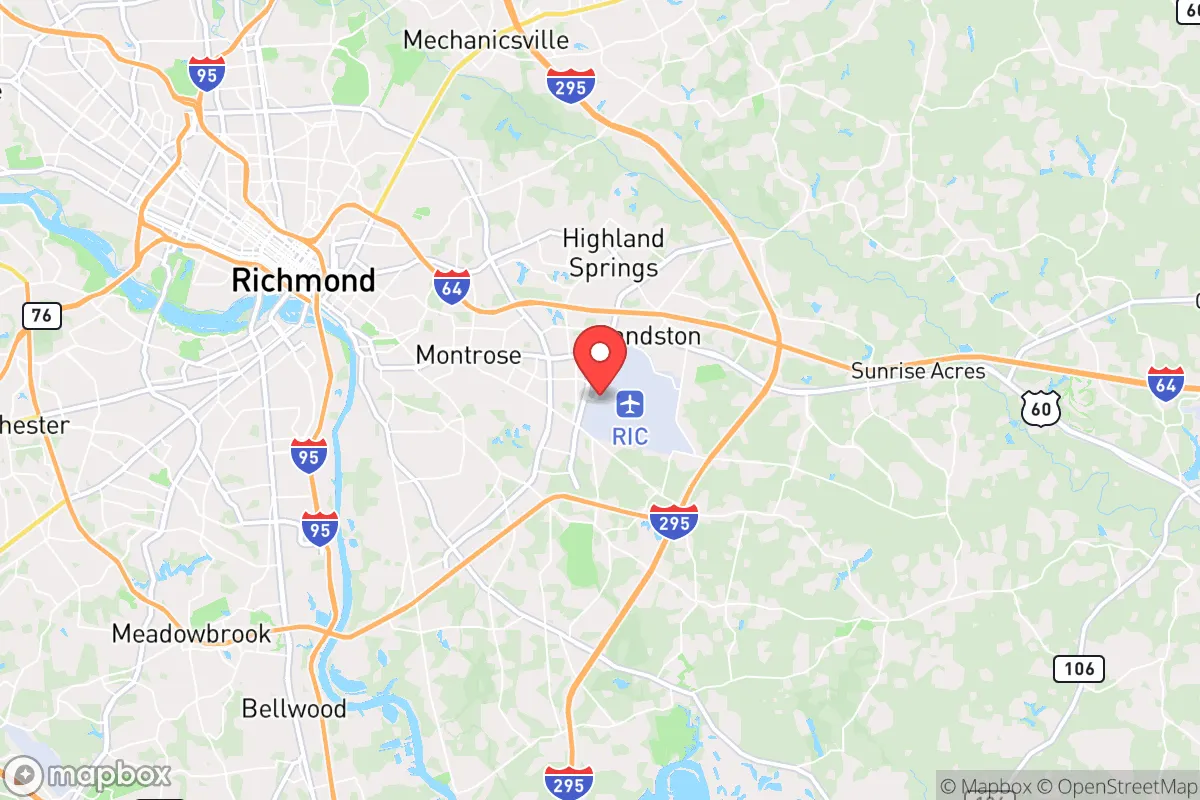
Demographics of Henrico, VA
Affluence Level in Henrico, VA
A middle-class area roughly in line with national averages across income, home values, education, and employment.
People of Henrico, VA
Henrico County’s roughly 335,000 residents form a diverse, largely suburban population that blends historic Southern roots with significant recent growth from domestic and international migration. The county is characterized by a mix of established single-family neighborhoods, rapidly developing mixed-use districts, and a strong sense of local identity distinct from neighboring Richmond. Its people are notably more educated and affluent than the national average, with a median household income exceeding $80,000 and a high proportion of families with children.
How the city was settled and grew
Henrico was not a city but a county from its founding in 1634, one of Virginia’s original shires. Its early population consisted almost entirely of English planters and their enslaved laborers, drawn by the tobacco economy and the vast land grants along the James River. The county’s historic core, Varina, was the site of the second English settlement in Virginia and remained a rural, agricultural hub through the 18th and 19th centuries. After the Civil War, freed Black families established communities like Highland Park and Glen Allen, often on land they purchased or inherited, forming the foundation of the county’s significant African American population. The first major suburban wave came in the early 20th century, when streetcar lines and later the automobile allowed white middle-class families to move from Richmond into new developments such as Lakeside and West End, seeking larger lots and lower taxes. These early suburbs were almost entirely white, reflecting the era’s restrictive covenants and segregation.
Modern era (post-1965)
The post-1965 period brought profound demographic change. The Immigration and Nationality Act opened the door to new arrivals, and Henrico’s growing economy—anchored by finance, healthcare, and government contracting—attracted skilled professionals from around the world. East/Southeast Asian communities, particularly Vietnamese and Korean families, began settling in the West Broad Street corridor and the Short Pump area, drawn by affordable housing and the presence of large employers like Capital One and HCA Healthcare. Indian professionals, many working in IT and medicine, concentrated in Glen Allen and Innsbrook, where newer, larger homes and top-rated schools were available. Domestic migration also reshaped the county: African American families moved from Richmond’s East End into neighborhoods like Fairfield and Sandston, while white families continued moving westward into Short Pump and Wyndham. By 2020, Henrico had become a majority-minority county, with non-Hispanic white residents making up about 52% of the population, Black residents about 29%, and Asian and Indian residents combined roughly 10%.
The future
Henrico’s population is projected to continue growing, driven by both domestic in-migration from other states and international arrivals. The county’s diversity is expected to increase, with the non-Hispanic white share declining gradually while Asian, Indian, and Hispanic populations grow. New development is concentrated in the West End and Short Pump areas, where large mixed-use projects like West Broad Village and Short Pump Town Center are attracting younger families and professionals. At the same time, the eastern part of the county, including Varina and Sandston, is seeing reinvestment and infill development, though at a slower pace. The county’s cultural identity is evolving from a collection of bedroom suburbs into a more self-contained region with its own employment centers, entertainment districts, and diverse community institutions. For new residents, Henrico offers a stable, family-oriented environment with strong schools and a growing economy, but the character of the county varies significantly by neighborhood—from the established, tree-lined streets of Lakeside to the fast-paced, commercial corridors of the West End.
Henrico is becoming a more diverse, more suburban, and more economically dynamic place than it was even a decade ago. For someone moving in now, the county offers a range of lifestyle options, from quiet, historic neighborhoods to bustling new developments, all within a region that is increasingly self-sufficient and culturally varied. The key is choosing the right area, as the experience of living in eastern Henrico differs markedly from the West End, and the county’s future growth will only sharpen those distinctions.

* Values derived from national, state, county, city and local statistics and may differ in a specific area. Last updated: 2026-10-11T13:05:11.000Z
Narrative content on this page is AI-generated and may contain mistakes. Verify any details that matter before acting on them.
ReloMaps may earn a commission from affiliate links at no extra cost to you.

