
Photo by Matthew Lancaster on Unsplash
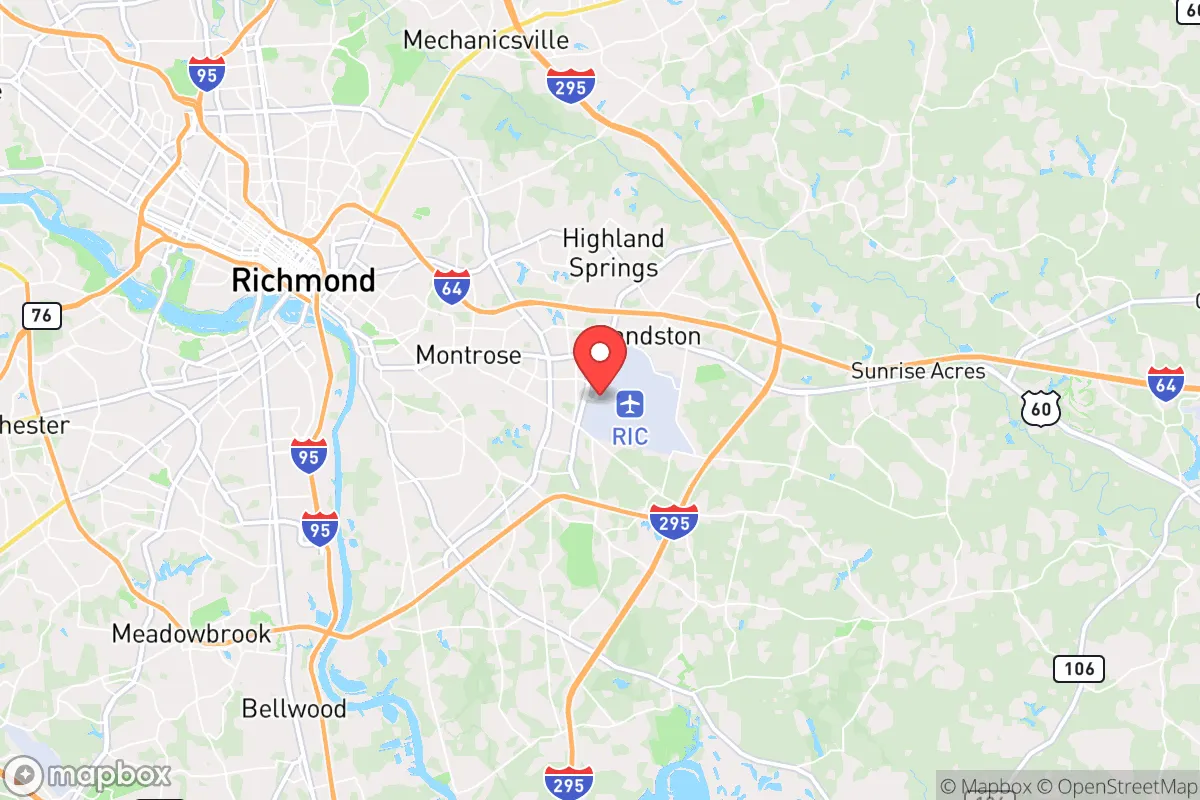
Personal Sovereignty in Henrico, VA
Viable for self-reliance. Generally workable, though some barriers may limit total independence.
What does Personal Sovereignty tell us?
Personal Sovereignty measures your capacity for self-reliance and independence with minimal government friction. Higher scores mean fewer barriers between you and the way you want to live... but it assumes you have the space you need and good neighbors.
What does this tell us?
Personal Sovereignty measures your capacity for self-reliance and independence with minimal government friction. Higher scores mean fewer barriers between you and the way you want to live... but it assumes you have the space you need and good neighbors.
State Policy
Energy independence: Importer (20% of energy produced in-state)
Personal Liberty
Homesteading

Personal Liberty Analysis
Henrico County, Virginia, offers a notably balanced personal sovereignty environment that blends the practical freedoms of a right-leaning state with the structured governance of a suburban jurisdiction. While Virginia as a whole has shifted toward Democratic control in recent years, Henrico’s status as a politically competitive county — it voted for Joe Biden by a narrow 52-46 margin in 2020 — means local policy often reflects a moderate compromise rather than a strict ideological agenda. For individuals and families prioritizing autonomy, the key question is whether Henrico’s regulatory posture, tax structure, and legal framework allow for genuine self-determination without excessive bureaucratic friction. The answer is nuanced: the county provides strong protections for self-defense and property rights, but its zoning and tax policies impose meaningful constraints on homesteading and off-grid living that a more rural Virginia county would not.
Tax burden and regulatory posture in Henrico County
Henrico’s tax burden is moderate by national standards but relatively high for Virginia, which ranks 13th lowest in the nation for combined state and local tax burden according to the Tax Foundation. The county’s real property tax rate is $0.85 per $100 of assessed value as of 2025, which is competitive with neighboring Chesterfield ($0.87) but notably higher than more rural counties like Goochland ($0.53) or Hanover ($0.62). Personal property tax on vehicles is assessed at $4.20 per $100 of value, a rate that can add several hundred dollars annually to the cost of car ownership compared to states without such taxes. Virginia’s state income tax is a flat 5.75% on all income above $17,000, which is moderate but not low. The regulatory environment in Henrico is characterized by a professional, code-enforced approach: the county requires building permits for most structural changes, has a stormwater management program that can add costs to new construction, and enforces a noise ordinance that restricts construction hours to 7 AM to 9 PM. For a homeowner wanting to run a small repair business from a garage or add a detached workshop, the county’s zoning and permitting requirements are manageable but not negligible — expect to file paperwork and pay fees. The overall regulatory posture is best described as light-touch suburban: not as burdensome as Arlington or Fairfax, but far more structured than rural counties where a handshake and a nod often suffice.
Self-defense and gun law specifics in Henrico
Virginia is a shall-issue state for concealed handgun permits, meaning Henrico County cannot deny a permit to a qualified applicant who passes a background check and completes a state-approved firearms safety course. The county processes permits through the Henrico Police Department, and as of 2025, the typical turnaround time is 45 to 60 days, which is slower than some rural counties but within statutory limits. Virginia law allows open carry of handguns without a permit for anyone 18 or older who can legally possess a firearm, and Henrico does not impose local ordinances restricting open carry in public spaces beyond state preemptions. The state’s firearm laws include a one-handgun-per-month purchase limit, universal background checks for private sales, and a red flag law (enacted in 2020) that allows law enforcement to seek an extreme risk protective order. These restrictions are more extensive than in states like Texas or Florida, but Henrico’s enforcement is generally measured: the red flag law is used sparingly, and the county does not have a reputation for aggressive gun control enforcement. For self-defense in the home, Virginia’s Castle Doctrine applies, and the state has a stand-your-ground law that removes the duty to retreat in any place where a person has a legal right to be. Henrico’s violent crime rate is 1.8 per 1,000 residents (2023 data), which is below the national average of 2.7, so the practical need for defensive firearm use is lower than in higher-crime jurisdictions, but the legal framework supports the right to carry and defend oneself.
Self-reliance and homesteading viability in Henrico
Henrico County’s zoning and lot size regulations significantly constrain traditional homesteading and off-grid living. The county is predominantly suburban, with minimum lot sizes of 20,000 square feet (roughly half an acre) in most residential zones, though some older neighborhoods have smaller lots. Agricultural zoning exists in the far western and eastern parts of the county, where minimum lot sizes can be 2 to 5 acres, but these areas are limited and increasingly developed. Raising chickens is permitted on lots of 20,000 square feet or more, with a maximum of six hens and no roosters; beekeeping is allowed with registration and setback requirements. Keeping larger livestock like goats or pigs requires a minimum of 2 acres and a special use permit, which is rarely granted in suburban zones. Off-grid living is effectively impossible within Henrico’s code: the county requires connection to public water and sewer where available, and all dwellings must have a permanent foundation and meet building code standards. Solar panels are permitted but must comply with the county’s zoning ordinance, which restricts ground-mounted systems in front yards and limits panel height. Rainwater collection is allowed for non-potable uses but is regulated by the Virginia Department of Health. For a family seeking genuine self-reliance — growing most of their own food, generating their own power, and minimizing dependence on utilities — Henrico is not the right fit. Goochland County, 20 minutes west, offers 3-acre minimums and far looser building codes, while Hanover County to the north allows more agricultural uses on smaller parcels. Henrico is best understood as a place for suburban self-reliance: a large garden, a few chickens, and a well-stocked pantry are feasible, but full homesteading is not.
Personal liberties in Henrico: parental rights, medical autonomy, speech, and property
Virginia law provides a mixed landscape for personal liberties that directly affects Henrico residents. Parental rights are generally strong: Virginia has a parental notification law for minors seeking abortions, and parents have broad authority over their children’s education, including the right to homeschool with minimal state oversight (a notice of intent and annual assessment or standardized test scores are required). Henrico County Public Schools has a standard curriculum that includes comprehensive sex education, but parents can opt their children out of specific lessons. Medical autonomy is more constrained: Virginia’s vaccine mandate for schoolchildren includes exemptions for medical and religious reasons, but not philosophical exemptions, and the state’s COVID-era policies included vaccine requirements for state employees that Henrico County largely followed. The state’s certificate of need (CON) laws limit the establishment of new healthcare facilities, which can restrict medical choice and competition. Free speech is protected under the First Amendment, and Henrico does not have local ordinances that significantly restrict speech beyond state law. Property rights are well-protected: Virginia is a title theory state, meaning lenders hold the deed until a mortgage is paid off, but eminent domain is used sparingly in Henrico and is subject to the state’s requirement for just compensation. The county’s zoning board of appeals provides a mechanism for property owners to seek variances from zoning restrictions, and the process is generally fair and transparent. The most notable liberty concern for conservative-leaning residents is the state’s red flag law and universal background check requirement, which some view as infringements on the Second Amendment. Overall, Henrico’s personal liberties environment is best described as suburban moderate: it respects traditional rights like property ownership and homeschooling, but it does not offer the expansive medical or educational autonomy found in states like Idaho or Tennessee.
Compared to other areas in the Richmond region and Virginia at large, Henrico County offers a solid but not exceptional level of personal sovereignty. Its tax burden is moderate, its gun laws are more restrictive than the national conservative baseline but less restrictive than Northern Virginia, and its zoning code effectively prevents off-grid living while allowing modest self-reliance. For a family that values personal freedom but also wants good schools, reliable infrastructure, and proximity to Richmond’s job market, Henrico represents a reasonable compromise. For those who prioritize maximum autonomy above all else, the rural counties west of Henrico — Goochland, Louisa, Fluvanna — offer lower taxes, looser zoning, and fewer regulatory constraints. Henrico’s advantage is that it provides a stable, well-managed environment where personal freedoms are respected within a framework of suburban order, making it a strong choice for the freedom-minded individual who is not seeking to live entirely outside the system.

* Values derived from national, state, county, city and local statistics and may differ in a specific area. Last updated: 2026-10-11T13:05:11.000Z
Narrative content on this page is AI-generated and may contain mistakes. Verify any details that matter before acting on them.
ReloMaps may earn a commission from affiliate links at no extra cost to you.

